Photos: Frankfurt by Thomas Wolf, CC BY-SA 3.0 DE, cropped; Rotterdam by Bas Geerlings, Pexels License.
Frankfurt or Rotterdam?
Our verdict in twelve categories, each scored against the same fixed benchmark cities, and the climate month by month, so you can choose for your trip.
Choose Frankfurt for
- nature and the outdoors
- live music and the arts
- wellness
Frankfurt suits a traveller who wants culture with some depth and green country close by. It has the stronger museums along the Main and a serious opera house. The Taunus hills are an easy ride from the centre, and the old spa towns of Wiesbaden and Bad Homburg are near enough for an afternoon in the thermal baths. It works best for an unhurried mix of galleries, evening performances, forest walks and wine country, timed to avoid the big trade fairs.
Choose Rotterdam for
- beaches
- families
Rotterdam is the better pick for anyone drawn to modern architecture, global street food and a North Sea strand you can reach by metro. It is flat, compact enough by bike and easy with children. It also makes a sensible base for Delft, The Hague and Amsterdam, with hotels that cost less than in those cities. Come for buildings, harbour views and the Dutch towns around it, not for hills or long spa days.
Scoreboard
Twelve categories on one fixed scale from 0 to 100. The shaded stretch is the gap between the two.
Your match
Pick a travel style or drag the sliders, and both match scores follow your weighting.
Too close to call, 1 point apart
Wins on nature and the outdoors and live music and the arts with your weighting.
Wins on beaches and families with your weighting.
What matters to you?
Category by category
What the scores mean for a trip.
Beaches & swimming
Rotterdam at least has a real shore. Hoek van Holland is a broad sandy strand with dunes behind it and container ships passing close by, and the metro gets you there in under an hour. The catch is the cool, windy North Sea, so most people walk the beach rather than swim.
Frankfurt is far from any coast. On a hot day the choice is an outdoor pool or a gravel-pit lake such as the Langener Waldsee in the southern forest, which is pleasant in July and August but no substitute for the seaside.
Food & drink
The food is equally good in both cities but very different. Frankfurt is about its own regional tradition: long tables in the apple-wine taverns of Sachsenhausen, stoneware jugs of tart cider, Grüne Soße and Handkäs, and the Kleinmarkthalle for sausages and Hessian produce.
Rotterdam's best eating comes from its port and its immigrant communities, not from Dutch cooking: Surinamese roti, Turkish bakeries, and Cape Verdean and Indonesian kitchens, with the Markthal and Witte de Withstraat as starting points. Go to Frankfurt for a local ritual, and to Rotterdam for range.
Culture & sights
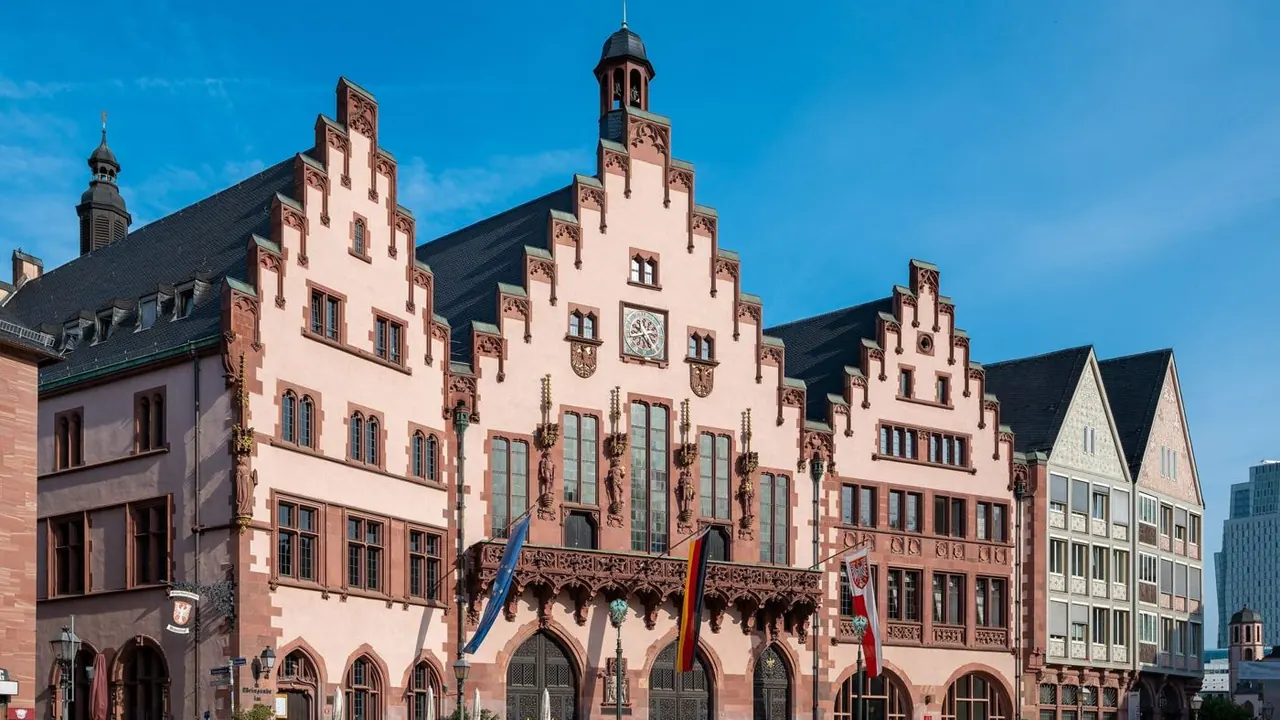
Both centres were largely destroyed in the war, and each makes about two or three days of sightseeing, but they rebuilt in opposite directions. Frankfurt reconstructed its gabled Römer, its old-town lanes and the Paulskirche, and its real draw is the Museumsufer, led by the Städel and backed by the Schirn and Senckenberg.
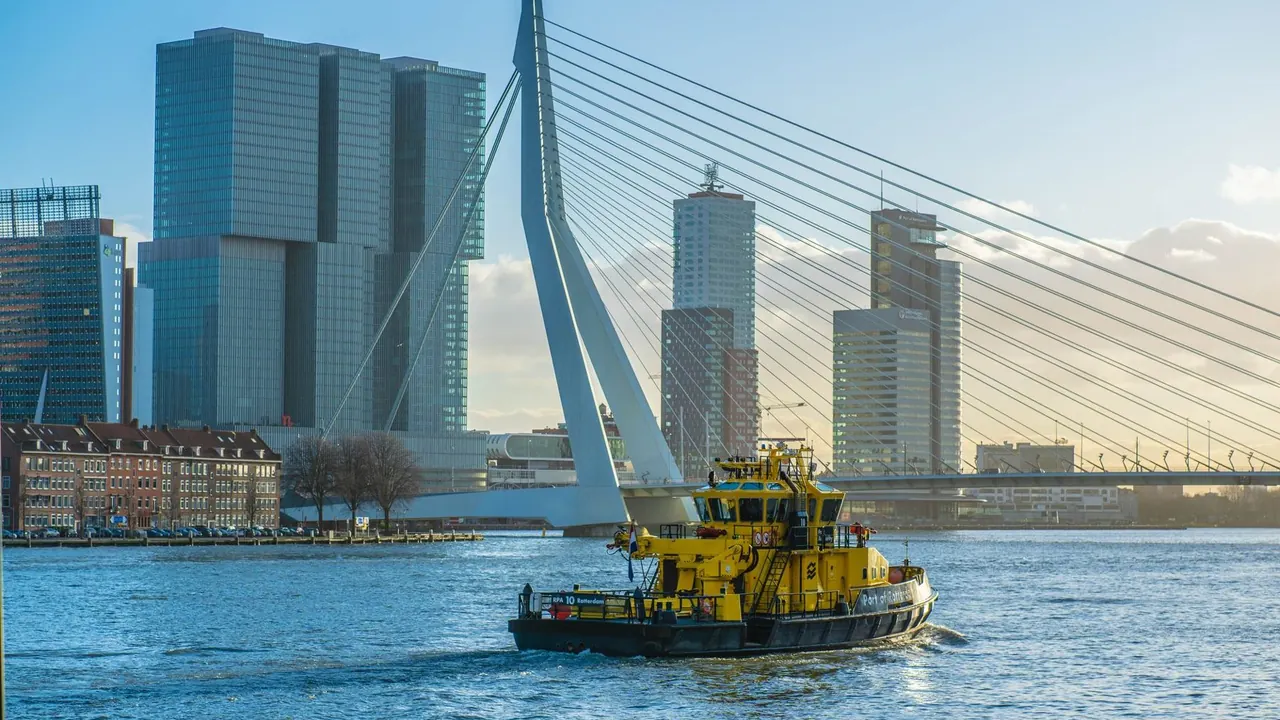
Rotterdam chose to build something new, and the buildings themselves are the sights: the Erasmus Bridge, the Cube Houses, the Markthal vault and the mirrored Depot Boijmans. Its museums are good rather than great, so pick Frankfurt for galleries and Rotterdam for architecture.
Nightlife
Both are weekend cities that go quiet early in the week, and both have a club history rooted in electronic music. Frankfurt's evenings are more about bars. The gritty Bahnhofsviertel has cocktail bars and late kiosks, Sachsenhausen has cider taverns and rowdier pubs, and Berger Straße has relaxed neighbourhood bars.
In Rotterdam the clubs are the stronger part. Gabber was born here, and harbour and warehouse techno nights draw people from across the Netherlands. Its bar terraces on Witte de Withstraat and the Oude Haven are more modest, though students keep weeknights from going completely dead.
Nature & outdoors
Frankfurt has far more landscape to offer. The Taunus starts at the northern suburbs, with the Großer Feldberg at about 880m, Roman frontier trails and mountain-bike routes under an hour away, plus the Odenwald and the Rhine Gorge vineyards further out.
Rotterdam's outdoors is flat and watery: the Kralingse Bos lake, bike rides along dykes into the polders, and canoeing among the tidal creeks of the Biesbosch. It suits cyclists and birdwatchers, but anyone hoping for a proper hike will be better off in Frankfurt.
Day trips
Both sit at the hub of a fast rail network, so either makes an excellent base. From Frankfurt the trips run to castles and wine: Heidelberg's castle ruin, boats through the Rhine Gorge, Cologne's cathedral and Würzburg's Residenz.
From Rotterdam they run to canal towns and Old Master cities: Delft and The Hague within a short ride, Amsterdam and Haarlem in about an hour, the Kinderdijk windmills by water bus, and Antwerp, Bruges or Ghent across the Belgian border.
Good for families
Both cities work for a few days with children, but in different ways. Frankfurt's centre is compact, so short legs don't have far to walk, and the trams and S-Bahn take pushchairs without fuss. Its best rainy-day answer is the hall of dinosaur skeletons at the Senckenberg, which nothing in Rotterdam quite matches, and the Palmengarten glasshouses make a quiet half-day. Its central zoo fits into a walk rather than being a day out in itself.\n\nRotterdam's sights are further apart, but the streets are flat, the pavements broad and cycle paths run separately almost everywhere, so the distances are easy with a pushchair or a child on a bike.
That is what makes it the more relaxed city to move around as a family. Blijdorp, with its ocean halls, is a bigger zoo day than Frankfurt's. At the Maritime Museum children play at running a harbour, while at the Senckenberg they mostly look, and the water taxis turn a river crossing into a ride. For an outing, Madurodam's miniature Netherlands is a short train ride away, where Frankfurt offers the wildlife park at Kronberg and a small fairy-tale park in the Taunus.
Getting around
Transport is equally good in both, and neither needs a car, but on foot they feel different. Frankfurt's sights sit close together, with the Römer, the cathedral and the Museumsufer minutes apart, and its airport is about a quarter of an hour from the centre by train.
Rotterdam's postwar centre is spread out, with wide, windy roads between the sights, so people mix walking with trams or a bike, which is how locals travel. Water taxis across the Maas make the river part of the network.
Shopping & style
They are on a par, with good high streets and no real speciality in either. Frankfurt has the edge for luxury: Goethestraße's fashion and jewellery houses sit next to the department stores of the Zeil, and Berger Straße has independent shops.
Rotterdam is thinner on designer labels. Its strengths are the early pedestrian street of the Lijnbaan and the vintage, record and design shops along the Meent and the Nieuwe Binnenweg.
Affordability
Overall the two cost about the same, but the costs fall in opposite places. In Frankfurt the hotels are the expense, especially during trade fairs, while cider taverns, Turkish grills and market stalls keep meals cheap. Weekends and summer bring room rates down.
In Rotterdam beds are easier to find and kinder to the budget than in Amsterdam, but eating and drinking out cost what they do across the Netherlands. Surinamese snack shops and Markthal counters are the way to save.
Live music & performing arts
Frankfurt offers more for an evening out. Its opera company is among Germany's most respected, the rebuilt Alte Oper is home to the radio symphony orchestra, and the Schauspiel, the contemporary dance stages and an English-language theatre add depth. Its season quietens in summer.
Rotterdam has no resident opera, and much of its theatre is in Dutch. It does have a fine philharmonic at De Doelen, and in July it hosts the North Sea Jazz Festival, one of the world's great jazz weekends.
Wellness & relaxation
Frankfurt has more for a slow day, thanks to the spa towns around it. Wiesbaden's Kaiser-Friedrich-Therme is fed by hot springs, Bad Homburg has a spa park and thermal baths, and Bad Nauheim keeps up the old practice of taking the waters.
Rotterdam relies on the Dutch sauna tradition instead. Large complexes on the edge of the city have pools and gardens, and the sauna areas are mostly textile-free. In the centre there are hotel spas, or a walk by the Kralingse Bos lake.
When should you go?
Pick your month. The climate figures are measured averages, not a forecast.
Frankfurt in July
Rotterdam in July
Daytime high, °C
Rainfall in the month, mm
Where the figures come from
Rotterdam has no rain gauge within 25 km of the centre, so its rainfall comes from a gridded climate dataset read at the city rather than from a gauge further away.
Rotterdam's sunshine is measured 52 km from the centre, at De Bilt.
Temperature and rainfall are climate normals, averaged over the years shown. Frankfurt: 1991-2020 normals, Frankfurt Westend (2 km from centre). Rotterdam: 1993-2020 (sunshine 1991-2020, rainfall 1991-2020) normals, Rotterdam Airport Zestienhoven (3.9 km from centre).
Frankfurt has the warmer, sunnier summer. From June to August afternoons reach about 26°C, July is the sunniest month, and late spring and early September are ideal for walking the streets and the Taunus trails. Rotterdam stays milder in summer at around 22°C. The North Sea warms to only about 19°C in August, so even the best beach weeks are for brave swimmers. Rotterdam is also the wetter city, with rain building through late summer and autumn to about 90mm a month, while Frankfurt's rain is lighter and more evenly spread.
Winter is grey and cold in both cities, with short days from November to February. Neither is pleasant for long walks then, although Rotterdam's sea air keeps it slightly less cold. For outdoor sightseeing, May to September is the window in both cities. Frankfurt gives you more warmth in those months and Rotterdam more breeze.
Which traveller are you?
For an outdoors trip, Frankfurt is the clear choice. The beech-forested Taunus, the Stadtwald within the city and the vineyard paths of the Rheingau give real walking and cycling. Rotterdam offers flat polder, dykes and the Biesbosch creeks.
On a relaxing and wellness trip, choose Frankfurt for the spa towns around it: Wiesbaden's Art Nouveau hot-spring bath, Bad Homburg's spa park and Bad Nauheim. Rotterdam has large Dutch sauna complexes, but no hot springs or historic spa towns.
On a beach and sun trip, only Rotterdam has a coast. The wide sands and dunes at Hoek van Holland are a metro ride from the centre. The water stays cool and the wind constant, but Frankfurt has only gravel-pit lakes.
Before you go
| Measure | Frankfurt | Rotterdam |
|---|---|---|
| Official language | German | Dutch |
| Currency | Euro (EUR) | Euro (EUR) |
| Sockets | CF230 V, 50 Hz | CF230 V, 50 Hz |
| Driving side | Right | Right |
| Time zone | UTC+1, UTC+2 in summer | UTC+1, UTC+2 in summer |
| Emergency number | 112 | 112 |
| Elevation | 101 m | 10 m |
| Main airport | Frankfurt Main Airport (FRA)13 km from centre281 non-stop destinations | Rotterdam The Hague Airport (RTM)5 km from centre53 non-stop destinations |
| Public holidays this year | 10 days | 11 days |
By the numbers
| Measure | Frankfurt | Rotterdam |
|---|---|---|
| City population | 760,656 | 664,311 |
| People per km² | 3,063 | 2,080 |
| Museums within 10 km | 53 | 40 |
| UNESCO World Heritage sites within 50 km | 4 | 5 |
| Swim season, months above 21 °C | - | None |
Where else could you go?
Every comparison below shares a destination with this one, so you can follow Frankfurt or Rotterdam somewhere new.