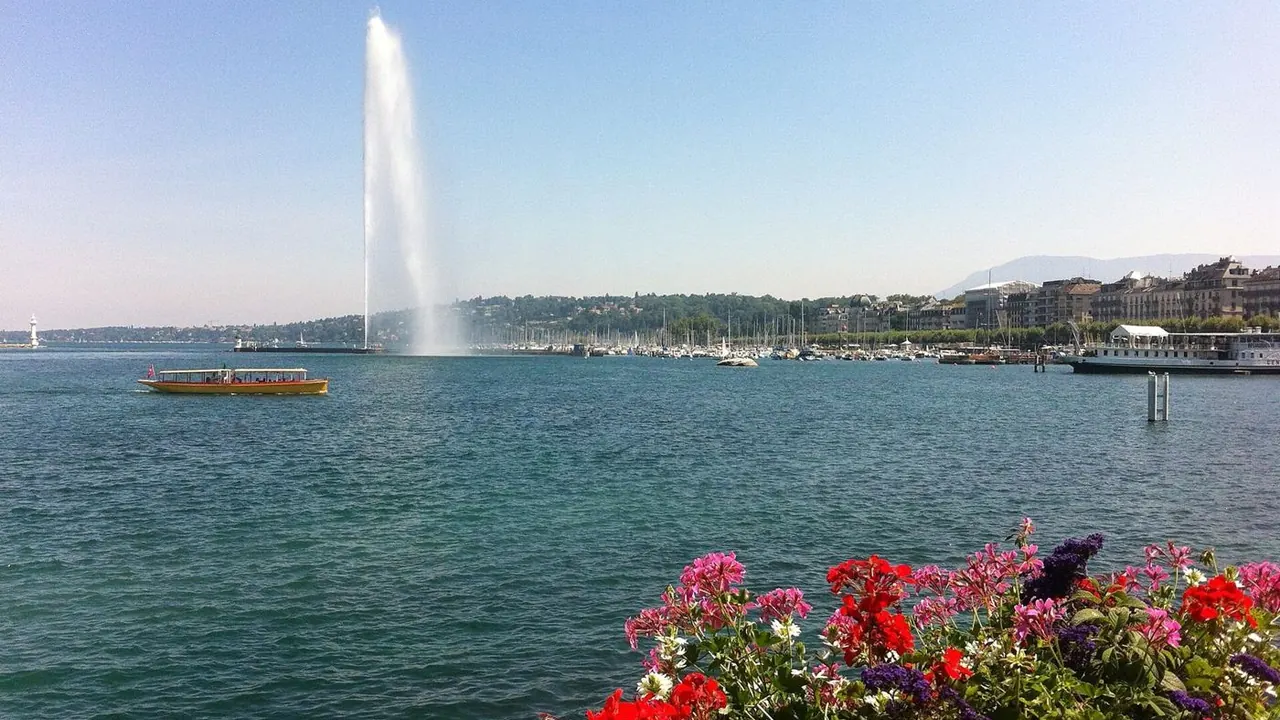
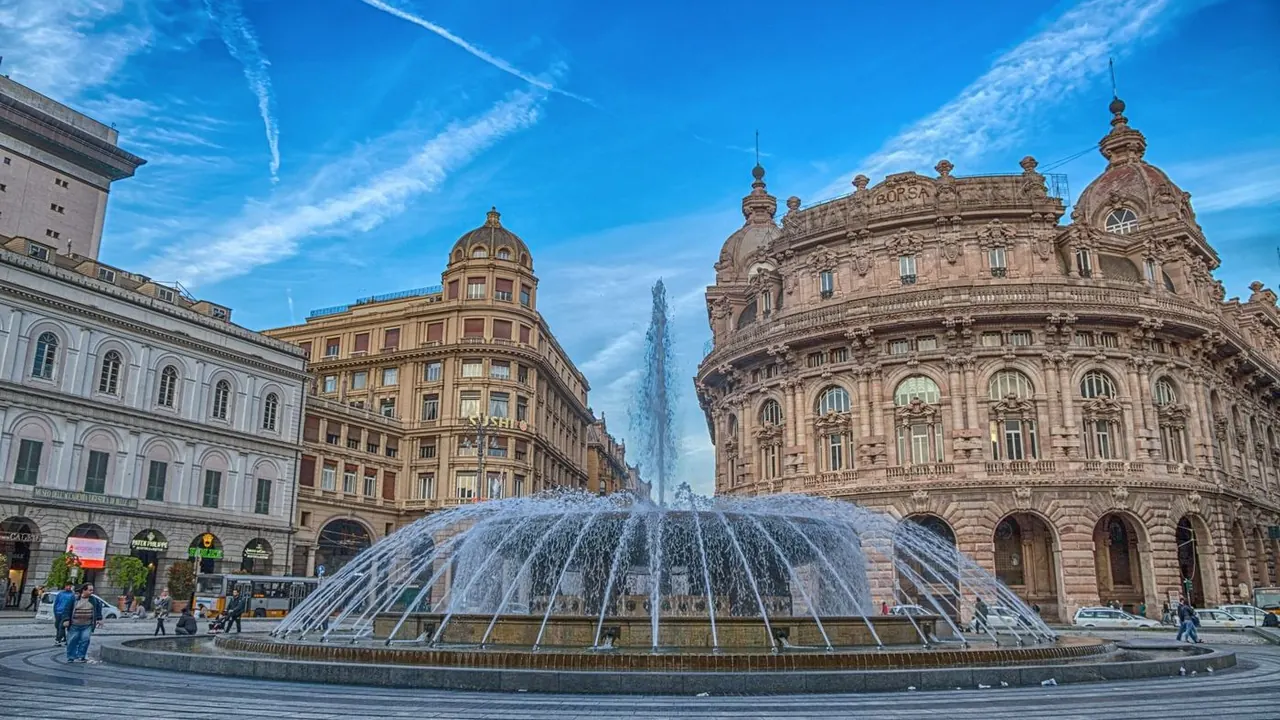
Photos: Geneva by Diviosen, CC BY-SA 3.0, cropped; Genoa by Faber1893, CC BY-SA 4.0, cropped.
Geneva or Genoa?
Our verdict in twelve categories, each scored against the same fixed benchmark cities, and the climate month by month, so you can choose for your trip.
Choose Geneva for
- getting around
- shopping
- wellness
Geneva suits a traveller who values ease, order and mountain air, and who isn't counting every coin. Trams, trains and lake boats make it effortless, the Rue du Rhône is a world address for watches, and the Salève, the Jura and Mont Blanc country are close enough for a morning's outing. It is a polished short stay or a comfortable base for the Alps, with a winter sauna by the lake for slow days.
Choose Genoa for
- prices
- culture and sights
- beaches
Genoa is the better pick for anyone who travels for food, old streets and the sea. Its medieval lanes and palace museums give it far more to explore on foot, pesto and focaccia are eaten where they were invented, and the Riviera villages are a short train ride away. It also costs much less, which matters a great deal next to Geneva. The price is steep hills, slower transport and less polish.
Scoreboard
Twelve categories on one fixed scale from 0 to 100. The shaded stretch is the gap between the two.
Your match
Pick a travel style or drag the sliders, and both match scores follow your weighting.
Wins on getting around and shopping with your weighting.
Wins on prices and culture and sights with your weighting.
What matters to you?
Category by category
What the scores mean for a trip.
Beaches & swimming
Neither city is a beach destination, but Genoa gives a swimmer much more. It has warm, clear sea from June into September, the little cove at Boccadasse, platforms below the cliffs at Nervi, and the Riviera towns from Camogli to Sestri Levante a short train ride along the coast. Expect pebbles, rented loungers and crowded summer weekends.
Geneva swims in its lake instead. Diving off the jetty at the Bains des Pâquis with the Jet d'Eau in view is a real pleasure, but the water stays cold until June, and the lido lawns and pools make it a summer extra rather than a reason to come.
Food & drink
Genoa is the more rewarding place to eat. Pesto, oily focaccia at breakfast, pansoti in walnut sauce and chickpea farinata from old-style friggitorie make up a strongly local table, and much of it is cheap street food. The Mercato Orientale and the harbour trattorias add seafood with a glass of Vermentino.
Geneva's strengths lie elsewhere: lake perch, fondue in wood-panelled brasseries, Chasselas from the canton's own vineyards, and a wider international and fine-dining range than Genoa's mostly regional cooking. It lacks casual street food, and every meal is expensive.
Culture & sights
Genoa has much more to see. The caruggi of its huge medieval quarter, the Rolli palaces along Via Garibaldi with their painted halls and Van Dycks, the striped cathedral and the marble of Staglieno can fill several unhurried days, and many visitors are surprised by how much there is.
Geneva tells a narrower but distinctive story: Calvin's St Pierre Cathedral and the Reformation Wall, then the Palais des Nations, the Red Cross museum and CERN on the city's world role. It is well presented and covered comfortably in two or three days.
Nightlife
Both cities wind down early on weeknights, and neither is a place for big nights out. In Geneva the late bars are in the slightly rough-edged Pâquis, Carouge has wine terraces, and the squat-born cultural centres around Plainpalais and Jonction host club nights and a small electronic scene.
Genoa's evenings are more about aperitivo with students in the medieval squares around Piazza delle Erbe, with waterfront bars at the Porto Antico and beach clubs along the coast in summer. Expect cheaper drinks and an older, more sociable street crowd, but fewer places to dance.
Nature & outdoors
Both are excellent bases for the outdoors, but the landscapes differ. Geneva is about mountains: the cable car up the Salève, forest trails and cross-country skiing on the Jura, Chamonix about an hour away and ski resorts close enough for a winter day. Sailing and paddleboarding on the lake fill the summer.
Genoa looks to the sea from steep hills, with fortress walks above the city, cliff paths to San Fruttuoso on the Portofino promontory and the Cinque Terre trails. Whale and dolphin trips into the Pelagos Sanctuary, kayaking and diving give it a marine side that Geneva cannot offer.
Day trips
Both have a long list of outings, so the choice comes down to what you want to see. From Geneva, lake steamers and trains reach Lausanne, the Lavaux vineyard terraces and the Château de Chillon, while France adds Yvoire and Annecy, so lakes, castles and two countries fill a week.
Genoa's railway runs along the coast past Camogli, Portofino and the Cinque Terre, with quieter walled towns such as Finale Ligure Borgo to the west. It also has the bonus of Milan and Turin, each about an hour and a half away, for a big-city museum day.
Good for families
Genoa has the stronger pull for children, thanks to the Porto Antico. Its aquarium is one of the largest in Europe, and next to it are the science centre, the biosphere and a submarine to walk through, with funiculars and public lifts as rides in their own right. The trade-off is steep, dark lanes and stairs that are hard with a pushchair.
Geneva is the easier city to handle, being flat, safe and tram-friendly, but it has less to aim at. The Natural History Museum's dioramas, small animal enclosures and the little yellow harbour boats last two or three days before a mountain outing is needed.
Getting around
Geneva is far simpler to get around. The centre is a flat walk from the station to Carouge, trams and buses run like clockwork, the harbour boats are part of the same network, and the airport is only minutes away by train.
In Genoa you walk a lot and climb a lot. Funiculars, a rack railway and lifts help with the hills, but there is only one short metro line and buses crawl through congested streets. The coastal railway is its best asset for reaching Nervi and the Riviera.
Shopping & style
Geneva is the shopping city of the two, and for watches and jewellery the boutiques of the Rue du Rhône are among the best anywhere. Carouge's small design workshops and the Plainpalais flea market add character, though ordinary high-street shopping is unremarkable.
Genoa is better for things to eat and small crafts: candied fruit, olive oil and pesto from long-established old-town shops, plus silver filigree and coral. Via XX Settembre covers the familiar Italian labels without much luxury.
Affordability
The gap here is very wide. Geneva is among the most expensive cities a visitor can choose, with costly rooms all year and meals priced well above most of Europe. Free museums, the free transport given to hotel guests and sleeping across the border in France ease the cost only a little.
Genoa feels like good value for northern Italy, with cheap focaccia and farinata, fair trattoria lunches and inexpensive funiculars. Costs rise mainly in the smart Riviera resorts in summer and with lounger rental on beach days.
Live music & performing arts
Geneva has the fuller classical calendar. Opera and ballet, the city's orchestra and French-language drama each have a stage of their own, so a music lover staying several nights can see something different each evening, and a French speaker can add an evening at the theatre.
Genoa puts opera, ballet and symphony together at the Carlo Felice, and its plays are performed in Italian. What it has that Geneva lacks is a musical identity of its own: concerts in honour of Paganini, who was born here, and small clubs where the Genoese songwriting tradition lives on. That fills an evening or two, but it is not a reason to choose the city.
Wellness & relaxation
Geneva is the more restful city. In winter the Bains des Pâquis turns into a sauna and hammam with plunges into the cold lake, the lakefront hotels have proper spas, Évian and Divonne are close by, and the city's quiet Sundays slow everything down.
Genoa's centre is all port traffic and crowded lanes, and its spas are mostly in hotels. For calm you head to Nervi's villa gardens or for long lunches in the Riviera villages, and for thermal water to Acqui Terme, a little over an hour away.
When should you go?
Pick your month. The climate figures are measured averages, not a forecast.
Geneva in July
Genoa in July
Daytime high, °C
Rainfall in the month, mm
Where the figures come from
Genoa has no rain gauge within 25 km of the centre, so its rainfall comes from a gridded climate dataset read at the city rather than from a gauge further away.
Genoa's sunshine is measured 80 km from the centre, at Capo Mele.
Temperature and rainfall are climate normals, averaged over the years shown. Geneva: 1991-2020 normals, Geneve-Cointrin (5.7 km from centre). Genoa: 1991-2020 normals, Genova / Sestri (6.7 km from centre).
The two cities have very different winters. Geneva is properly cold from December to February, with highs around 5°C in January and grey, short days, so street walking is brisk and the mountains are about skiing. Genoa stays mild, at about 12°C in January, and gets far more winter sun. Both are pleasant for walking in spring, and Genoa's May is no drier than Geneva's.
In summer both reach the high twenties, about 27°C in July, but they behave differently. In Geneva rain falls fairly evenly all year, so summer showers are common, and the lake only gets warm enough for swimming in July and August. Genoa has a dry summer, a sea that reaches about 25°C in August and swimming from June into September. Its autumn turns wet, though, with heavy downpours peaking at around 195mm in November, so late spring and September are its sweet spots. Geneva's best months are June to September.
Which traveller are you?
On a trip on a tight budget, Genoa is the clear choice. Focaccia and farinata make cheap meals, trattoria lunches are fair and central hotels are reasonable, while in Geneva even a simple meal or a glass of wine costs a lot by European standards.
For a shopping trip, choose Geneva. The flagship watch and jewellery boutiques along the Rue du Rhône, the craft workshops of Carouge and the Plainpalais flea market add up to far more than Genoa's arcades, food shops and filigree workshops.
On a relaxing and wellness trip, Geneva has the edge. The Bains des Pâquis winter sauna with its cold-lake plunge, serious hotel spas and the quiet calm of a Geneva Sunday are more restful than Genoa's busy port, where Nervi's gardens are the main calm corner.
Before you go
| Measure | Geneva | Genoa |
|---|---|---|
| Official language | French, German, Italian, Romansh | Italian |
| Currency | Swiss Franc (CHF) | Euro (EUR) |
| Sockets | CJ230 V, 50 Hz | CFL230 V, 50 Hz |
| Driving side | Right | Right |
| Time zone | UTC+1, UTC+2 in summer | UTC+1, UTC+2 in summer |
| Emergency number | 112 | 112 |
| Elevation | 403 m | 20 m |
| Main airport | Geneva International Airport (GVA)5 km from centre150 non-stop destinations | Genoa Cristoforo Colombo Airport (GOA)7 km from centre25 non-stop destinations |
| Public holidays this year | 9 days | 13 days |
By the numbers
| Measure | Geneva | Genoa |
|---|---|---|
| City population | 211,152 | 558,745 |
| People per km² | 13,280 | 2,325 |
| Museums within 10 km | 34 | 51 |
| UNESCO World Heritage sites within 50 km | 2 | 1 |
| Swim season, months above 21 °C | - | 4 months |
Where else could you go?
Every comparison below shares a destination with this one, so you can follow Geneva or Genoa somewhere new.