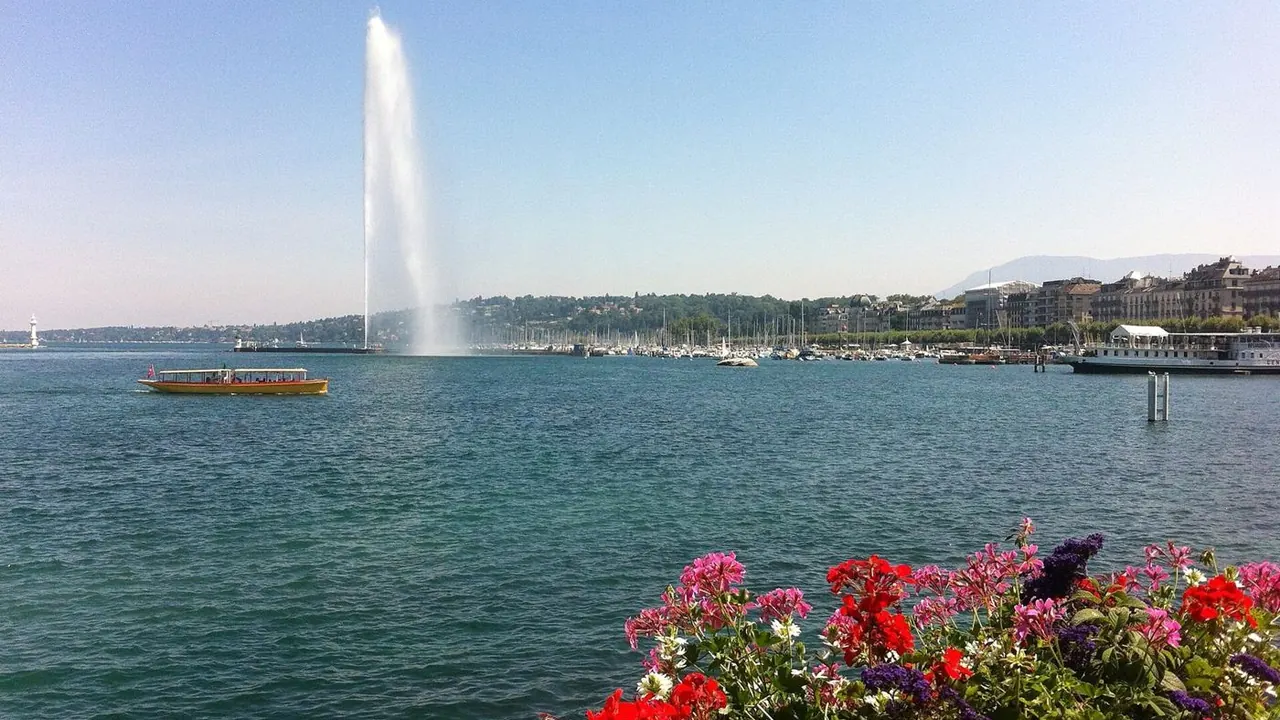
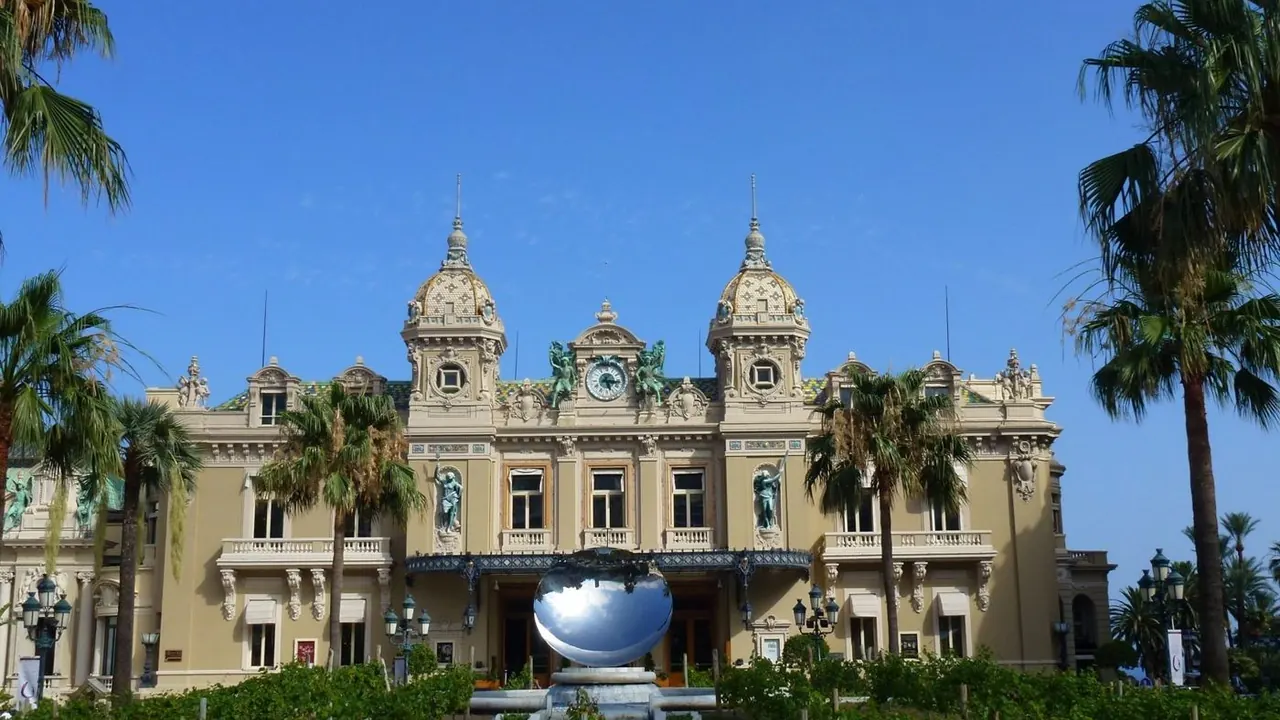
Photos: Geneva by Diviosen, CC BY-SA 3.0, cropped; Monaco by otterboris, CC BY 3.0, cropped.
Geneva or Monaco?
Our verdict in twelve categories, each scored against the same fixed benchmark cities, and the climate month by month, so you can choose for your trip.
Choose Geneva for
- shopping
- nature and the outdoors
- getting around
Geneva suits travellers who want mountains close at hand and a city that runs like clockwork. The Salève, the Jura and Chamonix are all within a day's reach. Trams and lake boats make getting about effortless, and the watch boutiques of the Rue du Rhône are among the finest anywhere. It works in every season, with ski days in winter and lake swimming in high summer.
Choose Monaco for
- beaches
- nightlife
- day trips
Pick Monaco for a sunlit Riviera stay with the sea at the door. The water is warmer and clearer than Geneva's lake, and the evenings have more glamour, though not much variety. The coastal train links Nice, Menton and Èze. Both cities cost about the same, so the choice comes down to Alpine air or Mediterranean light.
Scoreboard
Twelve categories on one fixed scale from 0 to 100. The shaded stretch is the gap between the two.
Your match
Pick a travel style or drag the sliders, and both match scores follow your weighting.
Too close to call, 1 point apart
Wins on shopping and nature and the outdoors with your weighting.
Wins on beaches and nightlife with your weighting.
What matters to you?
Category by category
What the scores mean for a trip.
Beaches & swimming
Neither is a classic beach destination, but Monaco has the sea while Geneva has a lake. In Geneva, swimming means the Bains des Pâquis jetty and the lawns and pools of Genève-Plage. It is a lido culture, with cold water until June and a short summer season.
Monaco's Larvotto is small and groomed, but the Mediterranean is warmer, clear to the bottom and fine for swimming into early October. Add the coves at Cap d'Ail and the long beaches of Menton and Nice a short train ride away, and beach days are far easier to arrange from Monaco.
Food & drink
Both cities eat expensively and well, but from different landscapes. Geneva cooks French with an Alpine edge: lake perch, fondue and raclette in wood-panelled brasseries, and Chasselas and Gamay from the canton's own vineyards. The diplomats keep a wide range of international cuisines in business.
Monaco looks to the sea and Liguria, with olive oil, fish and herbs in starred hotel dining rooms and on harbour terraces. Its humbler side, barbagiuan and socca from the Condamine market, makes for better grazing than anything Geneva sells on the street.
Culture & sights
Geneva's sights are about ideas, Monaco's about a dynasty and its setting. In Geneva you can climb the towers of St Pierre Cathedral, where Calvin preached, and go down to the excavations beneath it. Then you walk past the Reformation Wall, tour the Palais des Nations and the Red Cross museum, and see the science at CERN. Add the art and history museum and the watchmaking collection, and that fills two or three days.
Monaco's set is smaller and quicker, a day or two on the Rock and in Monte-Carlo. It covers the Prince's Palace, the cathedral where Grace Kelly is buried, the Oceanographic Museum on its cliff and the Casino with its Belle Époque square. Geneva gives you more to learn, and Monaco more to look at.
Nightlife
Geneva goes out quietly and Monaco goes out dressed up, and the dressed-up version has more to it. Geneva's late bars are in the Pâquis behind the station. Carouge has wine terraces, and the squat-born cultural centres around Plainpalais and Jonction hold a small electronic scene, but weeknights wind down early.
Monaco's evenings gather round the Casino square, the hotel bars and the clubs and lounges at Larvotto and the port, with the yachts as backdrop. In summer and on Grand Prix weekend the harbour becomes one long party. What it lacks is anything casual, with no pubs and no underground scene, so younger visitors head for Nice.
Nature & outdoors
Geneva has the better outdoors on its doorstep. There is the Salève by cable car and the Jura ridge with its forest trails and cross-country skiing. Chamonix is about an hour away, which puts serious mountains and winter sport within a day, with Mont Blanc on the skyline and sailing on the lake.
Monaco's surroundings are dramatic in a different way: steep limestone above the sea, the mule path up to Èze, the Tête de Chien viewpoint and the coastal walks round Cap Martin. Its clear water adds diving and snorkelling, which Geneva cannot offer, but the hinterland is smaller unless you drive to the Mercantour.
Day trips
Both make excellent bases, and the main difference is lake against coast. From Geneva, steamers and trains reach Lausanne, Montreux's Château de Chillon and the Lavaux vineyard terraces. Annecy is under an hour by road, and Gruyères and Bern make longer days.
From Monaco, the coastal train reaches Villefranche, Nice and Menton in minutes, and Èze sits up the hill. Antibes, Saint-Paul-de-Vence and Grasse lie further west, with Italian markets and villages over the border. Geneva's outings cover more varied landscapes, while Monaco's are closer together and almost all reachable by train or bus.
Good for families
Both are safe, clean and easy with children, and both run out of things to do after a few days. Geneva's best card is the Natural History Museum with its large dioramas, backed up by the small animal enclosures, the lakeside playgrounds and the yellow harbour boats.
Monaco has the aquarium in the Oceanographic Museum, Larvotto's gentle water for young swimmers and the guard ceremony at the palace. Geneva is flatter and easier with a pushchair. Monaco's steep streets and formal restaurants make it better as a short stop.
Getting around
Geneva is the easier of the two to get around. Its centre is flat and walkable, and trams, buses and the harbour boats form one punctual network. The airport is a few minutes away by train, and regional rail runs to France and the rest of Switzerland.
Monaco is tiny, about 3km end to end, but it is built on levels, so walking means climbing. Free public lifts and escalators help once you know where they are, and the station opens up the whole Riviera. Even so, its long tunnels and steep streets make Monaco harder work than Geneva.
Shopping & style
Both sell luxury, but Geneva has more around it. The Rue du Rhône is a world capital for watches and jewellery. Beyond it are the Old Town chocolatiers, Carouge's design and craft workshops and the Plainpalais flea market.
Monaco's Carré d'Or packs fashion houses and jewellers into a quarter-hour walk round the Casino gardens, and window-shopping is part of the evening scene. Beyond it there is a mall, some souvenir and olive-oil shops and little else. Monaco's shoppers head to Nice much as Geneva's cross into France.
Affordability
Geneva and Monaco are about equally hard on the wallet, and hotel rates in both climb further during conferences and big events. The difference lies in what softens the bill.
In Geneva many city museums are free, hotel guests usually get local transport free and the lake lidos cost little. Monaco's free pleasures are the public lifts and a walk round the Rock, the gardens and the harbour, and its buses are cheap. Each also has a cheaper neighbour over the border. Geneva's visitors sleep or eat in France, while Monaco's stay in Nice, Menton or Beausoleil and come in for the day.
Live music & performing arts
Both do well on the formal stage for places their size. Geneva has the Grand Théâtre for opera and ballet and the Orchestre de la Suisse Romande in Victoria Hall. There is French-language theatre at the Comédie and there are concerts at the Bâtiment des Forces Motrices in the Rhône, plus small jazz and rock venues for an ordinary weeknight.
Monaco's draw is prestige: the gilded Salle Garnier inside the Casino, the Monte-Carlo Philharmonic and Les Ballets de Monte-Carlo. Its season is mainly winter and spring, with summer shows by the sea, but spoken theatre and casual gigs are scarce.
Wellness & relaxation
In winter the Bains des Pâquis, Geneva's public lido, turns into a sauna and hammam, and regulars plunge from the heat straight into the cold lake. It is a shared local habit rather than a spa. For a full treatment day, Évian and Divonne are an easy trip across the French border.
Monaco's version is seawater and privacy. The large thalassotherapy centre beside the Casino has heated seawater pools and treatments, and the grand hotels run sizeable spas of their own. Both places are calm enough to slow down in. Geneva's quiet Sundays hold all year, while Monaco's Japanese Garden and the ramparts of the Rock are restful except in Grand Prix week and on the busiest summer weekends.
When should you go?
Pick your month. The climate figures are measured averages, not a forecast.
Geneva in July
Monaco in July
Daytime high, °C
Rainfall in the month, mm
Temperature and rainfall are climate normals, averaged over the years shown. Geneva: 1991-2020 normals, Geneve-Cointrin (5.7 km from centre). Monaco: 1991-2020 normals, Nice (19.9 km from centre).
Geneva has four distinct seasons. Winters are grey and cold, with highs around 5°C in January and little sun, so the city is best for walking from May to September. July and August, near 27°C, are the only months for swimming in the lake. Rain falls all year, a little heavier in autumn, and there is no dry season.
Monaco is milder all year. Its winter days are fine for strolling the Rock and the gardens, and spring comes earlier than in Geneva. Summer is hot, very sunny and almost rainless, with only about 13mm in July, and by August the sea reaches 25°C, so June to September is the beach season. The catch is autumn, when heavy rain sets in and peaks near 138mm in November, just as Geneva turns chilly.
Which traveller are you?
On a beach and sun trip, Monaco is the clear choice. Larvotto's sheltered water, the coves at Cap d'Ail and the beaches of Menton and Nice by train beat Geneva's short lake season, and summer sunshine on the coast is far more reliable.
For an outdoors trip, Geneva wins. The Salève cable car, Jura forest trails, paragliding, sailing on the lake and ski resorts within a day's reach offer more variety than Monaco's cliff paths and coastal walks, good as those are.
On a shopping trip, Geneva has more to offer. The Rue du Rhône is a world centre for watches and jewellery, and Carouge's craft workshops and the Plainpalais flea market add variety. Monaco's Carré d'Or is compact luxury with little beyond it.
Before you go
| Measure | Geneva | Monaco |
|---|---|---|
| Official language | French, German, Italian, Romansh | French |
| Currency | Swiss Franc (CHF) | Euro (EUR) |
| Sockets | CJ230 V, 50 Hz | CEF230 V, 50 Hz |
| Driving side | Right | Right |
| Time zone | UTC+1, UTC+2 in summer | UTC+1, UTC+2 in summer |
| Emergency number | 112 | 112 |
| Elevation | 403 m | 68 m |
| Main airport | Geneva International Airport (GVA)5 km from centre150 non-stop destinations | Nice-Côte d'Azur Airport (NCE)18 km from centre130 non-stop destinations |
| Public holidays this year | 9 days | 12 days |
By the numbers
| Measure | Geneva | Monaco |
|---|---|---|
| City population | 211,152 | 38,857 |
| People per km² | 13,280 | 18,503 |
| Museums within 10 km | 34 | 14 |
| UNESCO World Heritage sites within 50 km | 2 | 2 |
| Swim season, months above 21 °C | - | 4 months |
Where else could you go?
Every comparison below shares a destination with this one, so you can follow Geneva or Monaco somewhere new.