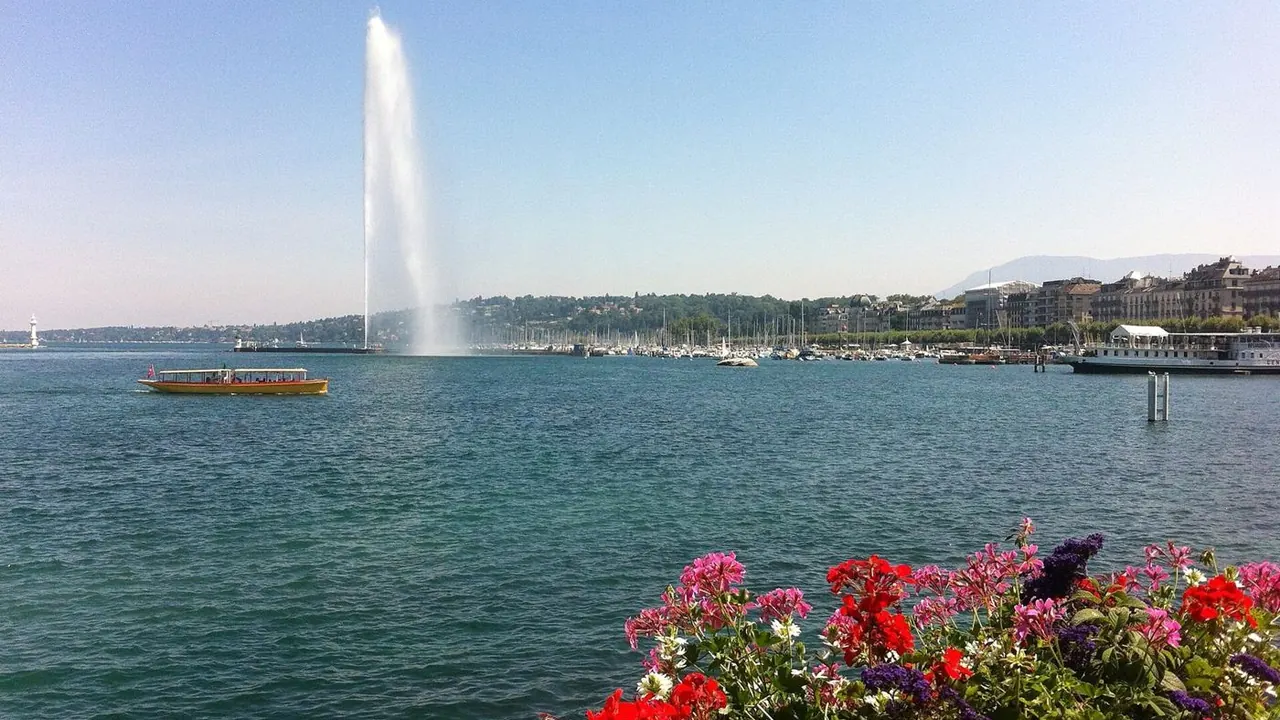
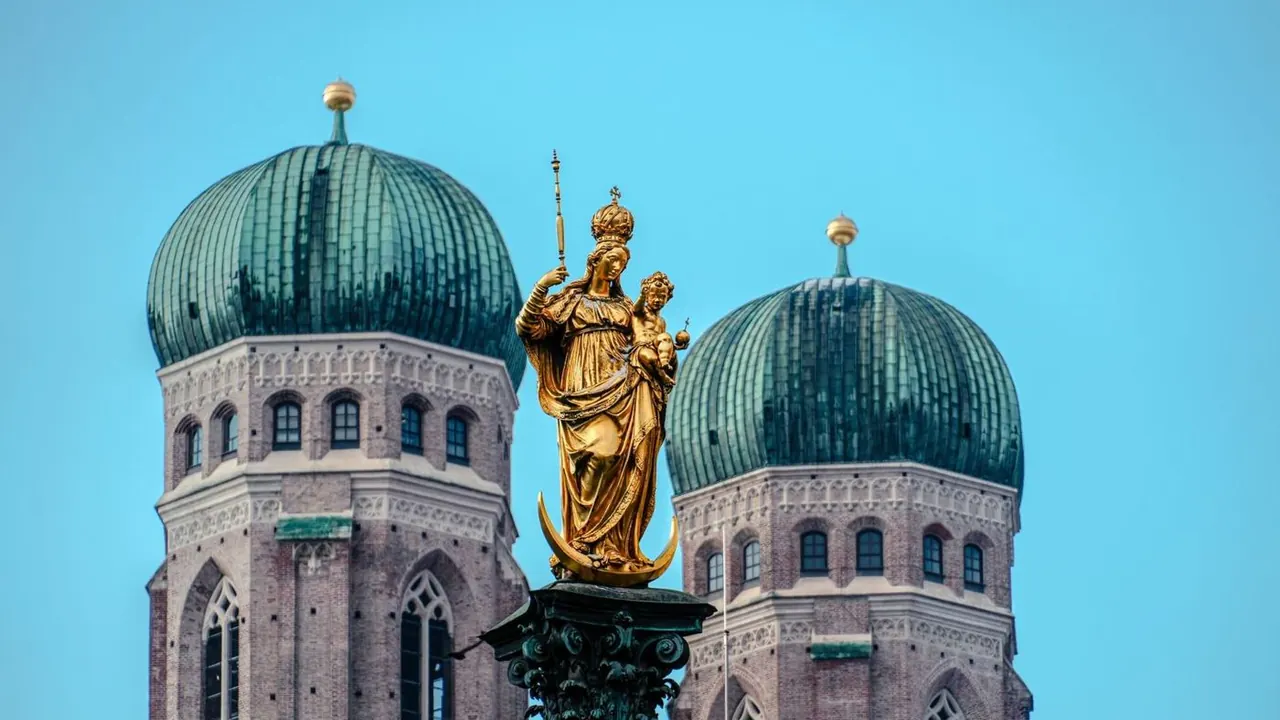
Photos: Geneva by Diviosen, CC BY-SA 3.0, cropped; Munich by 0xd1ma, Pexels License.
Geneva or Munich?
Our verdict in twelve categories, each scored against the same fixed benchmark cities, and the climate month by month, so you can choose for your trip.
Choose Geneva for
- beaches
Geneva is the better pick for a calm, scenic stay where the lake and the mountains do most of the work. You can swim off a jetty in the middle of town, take a cable car up the Salève and reach Annecy or Chamonix in a day. It also suits anyone who wants to see the city's diplomatic world or shop for a Swiss watch. Come for a few unhurried days, and expect to pay heavily for them.
Choose Munich for
- prices
- live music and the arts
- culture and sights
Munich offers a much fuller city trip. Its royal art collections, palaces and world-class opera give it real cultural weight, its beer gardens make evenings sociable and easy, and a zoo, an aquarium and hands-on museums keep children happy. It is far from cheap, but the bills are noticeably lighter than in Geneva, and it rewards a longer stay.
Scoreboard
Twelve categories on one fixed scale from 0 to 100. The shaded stretch is the gap between the two.
Your match
Pick a travel style or drag the sliders, and both match scores follow your weighting.
Wins on beaches with your weighting.
Wins on prices and live music and the arts with your weighting.
What matters to you?
Category by category
What the scores mean for a trip.
Beaches & swimming
Neither city has a coast, but Geneva makes lake swimming part of an ordinary summer day. The Bains des Pâquis jetty sits in the harbour within sight of the Jet d'Eau, and Genève-Plage and the Eaux-Vives lawns are only a short walk from the centre.
In Munich the water is further away. Inside the city there is mostly sunbathing on the Isar gravel at the Flaucher. For a real swim you take a train of under an hour to the Starnberger See or the Ammersee, where the water stays fresh even in high summer.
Food & drink
Munich is the more rewarding place to eat, mainly because its food culture is so easy to join in with. You can sit under chestnut trees in a beer garden with roast pork or white sausage, bring your own picnic, or graze through the stalls of the Viktualienmarkt.
Geneva's cooking is more refined and leans French, with lake perch, fondue in wood-panelled brasseries and its own Chasselas and Gamay wines. It also has the broader international range, thanks to the diplomatic community. What it lacks is anything casual or good value, so most meals feel like an occasion.
Culture & sights
Munich has far more to see. The Kunstareal alone brings together old masters, modern art, classical sculpture and the Blue Rider painters, and the Residenz, Nymphenburg and the vast Deutsches Museum could fill several more days.
Geneva's sights are fewer but distinctive. You can climb St Pierre Cathedral, where Calvin preached, see the Reformation Wall, visit the Palais des Nations and the Red Cross museum, and tour CERN. It is a coherent story of faith, diplomacy and science, and it is told in two or three days.
Nightlife
Munich makes for the better night out, though it is still tidy rather than wild. Evenings often begin and end in a beer hall. For later nights, the Glockenbachviertel has cocktail and gay bars and a few techno clubs run until morning at weekends, and the Oktoberfest takes over the city each autumn.
Geneva is quieter and more expensive. The Pâquis bars behind the station and the alternative centres around Plainpalais and Jonction are the main options, alongside summer drinks by the Rhône, and on weeknights the city goes to bed early.
Nature & outdoors
Both cities are excellent bases for the outdoors, but the mountains sit in different places. Geneva has them on its doorstep: the Salève cable car is just over the border, the Jura ridge is to the west, and you can sail or paddleboard on the lake in the middle of town.
Munich stands on a flat plain, with the Alps an hour or so south at Garmisch and the Zugspitze. Its strength inside the city is the green space instead: the huge English Garden, the surfers on the Eisbach and the cycle paths along the Isar.
Day trips
Munich has slightly the longer list of outings, with whole historic cities a short train ride away. You can go to Augsburg, Nuremberg, Regensburg or Salzburg, or out to the royal castles at Neuschwanstein and on the island of Herrenchiemsee.
Geneva's trips have a more scenic, lakeside character. Steamers run to Lausanne, Montreux and the Château de Chillon, past the Lavaux vineyard terraces, and on the French side Yvoire and Annecy are both close.
Good for families
Munich is much better set up for children. It has the Hellabrunn zoo along the Isar, a Sea Life aquarium, a children's area in the Deutsches Museum, a transport museum and beer gardens with playgrounds, and Legoland is within a day's drive.
Geneva is calm and safe, and the dioramas at the Natural History Museum and the yellow harbour boats are real hits. Beyond those, families tend to run short after two or three days, and a trip into the mountains usually fills the gap.
Getting around
Both are easy cities to get around without a car. Geneva's centre is small enough to cross on foot, its trams and lake boats share one network, and the airport is only minutes away by train. Munich spreads further, so you lean more on its U-Bahn and S-Bahn, but the city is flat and well suited to cycling.
Shopping & style
The two are close for shopping, but what you come home with differs. Geneva means watches and jewellery from the flagship boutiques on the Rue du Rhône, plus craft workshops in Carouge and the Plainpalais flea market.
Munich has a broader everyday range along its pedestrian high street. Its distinctive buys are Bavarian Tracht from specialist tailors, fine food from Dallmayr and crafts from the Christmas markets in December.
Affordability
Munich is expensive, but Geneva is in another league, as one of the costliest cities in the world for a visitor. In Geneva even a simple meal or a glass of wine hurts, and many budget travellers sleep or eat across the border in France. Free city museums, hotel transport passes and cheap lake lidos only soften it a little.
Munich's main burden is the price of hotel rooms. Its beer-hall meals, picnics in beer gardens, free parks and lakes and token Sunday museum fees keep daily spending far more manageable.
Live music & performing arts
Munich is one of Europe's great music cities. The Bavarian State Opera at the National Theatre, three major orchestras, the rococo Cuvilliés Theatre and a summer opera festival give it a depth that few cities can match.
Geneva has a respectable formal stage for its size. There is opera and ballet at the Grand Théâtre, the Orchestre de la Suisse Romande plays in Victoria Hall, and concerts are held in the old pumping station in the Rhône. Even so, you get fewer nights to choose from and fewer famous names.
Wellness & relaxation
Munich gives you more ways to unwind. You can swim in the Art Nouveau Müller'sches Volksbad, try German-style sauna rituals, or make the short trip to the huge thermal complex at Erding or the spa towns of Bad Tölz and Bad Reichenhall.
Geneva's best-loved ritual is in winter, when the Bains des Pâquis sauna and hammam open and regulars plunge from the heat into the cold lake. The rest is quiet promenades, hotel spas and day trips to Évian.
When should you go?
Pick your month. The climate figures are measured averages, not a forecast.
Geneva in July
Munich in July
Daytime high, °C
Rainfall in the month, mm
Temperature and rainfall are climate normals, averaged over the years shown. Geneva: 1991-2020 normals, Geneve-Cointrin (5.7 km from centre). Munich: 1991-2020 normals, München (1.9 km from centre).
Both cities have cold, grey winters, with daytime highs of about 5°C from December to February, so winter suits museums, concerts and day trips to the ski slopes better than long walks. Spring warms them at much the same pace. Summer is a little warmer in Geneva, which reaches about 27°C in July and is the sunnier of the two. June to August are the months for swimming in the lakes in both places.
Rain is where they differ. Munich's wettest stretch falls in early summer, at about 120mm a month from May to August, often in thundery downpours. Geneva's rain is spread more evenly and peaks in autumn, at about 94mm in October. That makes September a good month in Munich, dry and still mild, while in Geneva late spring and the height of summer are the safest bets.
Which traveller are you?
On a culture and arts trip, Munich is the clear choice. The Alte Pinakothek, the Residenz and Nymphenburg, together with the Bavarian State Opera and three major orchestras, give you far more to fill your days and evenings than Geneva's compact Reformation and diplomacy sights.
On a family trip with children, Munich is better again. It has the Hellabrunn zoo, a Sea Life aquarium, the Deutsches Museum's children's area and beer gardens with playgrounds. Geneva is safe and easy, but it has no zoo or aquarium and runs out of things for children quickly.
For a summer trip built around the water, Geneva has the edge. The lake is right in the city centre, so you can dive from the Bains des Pâquis or lie on the lawns at Genève-Plage. In Munich, proper swimming means taking the S-Bahn out to Starnberger See.
Before you go
| Measure | Geneva | Munich |
|---|---|---|
| Official language | French, German, Italian, Romansh | German |
| Currency | Swiss Franc (CHF) | Euro (EUR) |
| Sockets | CJ230 V, 50 Hz | CF230 V, 50 Hz |
| Driving side | Right | Right |
| Time zone | UTC+1, UTC+2 in summer | UTC+1, UTC+2 in summer |
| Emergency number | 112 | 112 |
| Elevation | 403 m | 519 m |
| Main airport | Geneva International Airport (GVA)5 km from centre150 non-stop destinations | Munich Airport (MUC)29 km from centre210 non-stop destinations |
| Public holidays this year | 9 days | 12 days |
By the numbers
| Measure | Geneva | Munich |
|---|---|---|
| City population | 211,152 | 1,505,036 |
| People per km² | 13,280 | 4,844 |
| Museums within 10 km | 34 | 74 |
| UNESCO World Heritage sites within 50 km | 2 | 1 |
Where else could you go?
Every comparison below shares a destination with this one, so you can follow Geneva or Munich somewhere new.