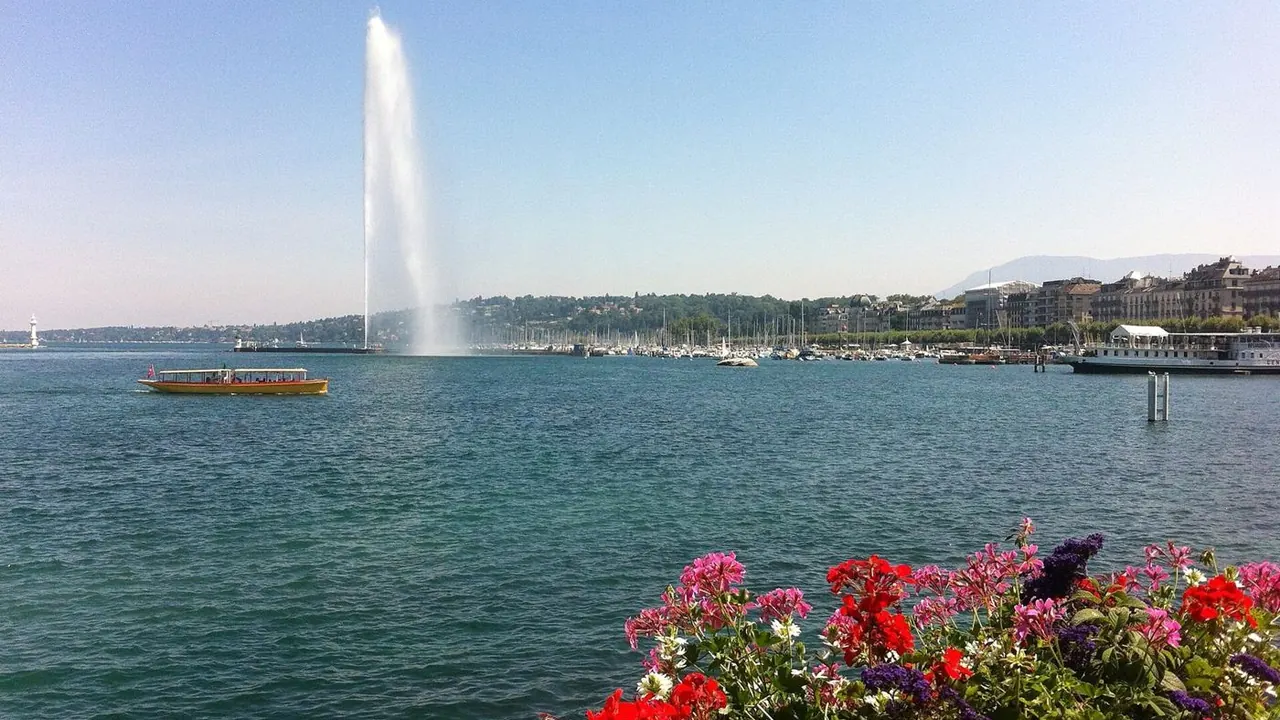
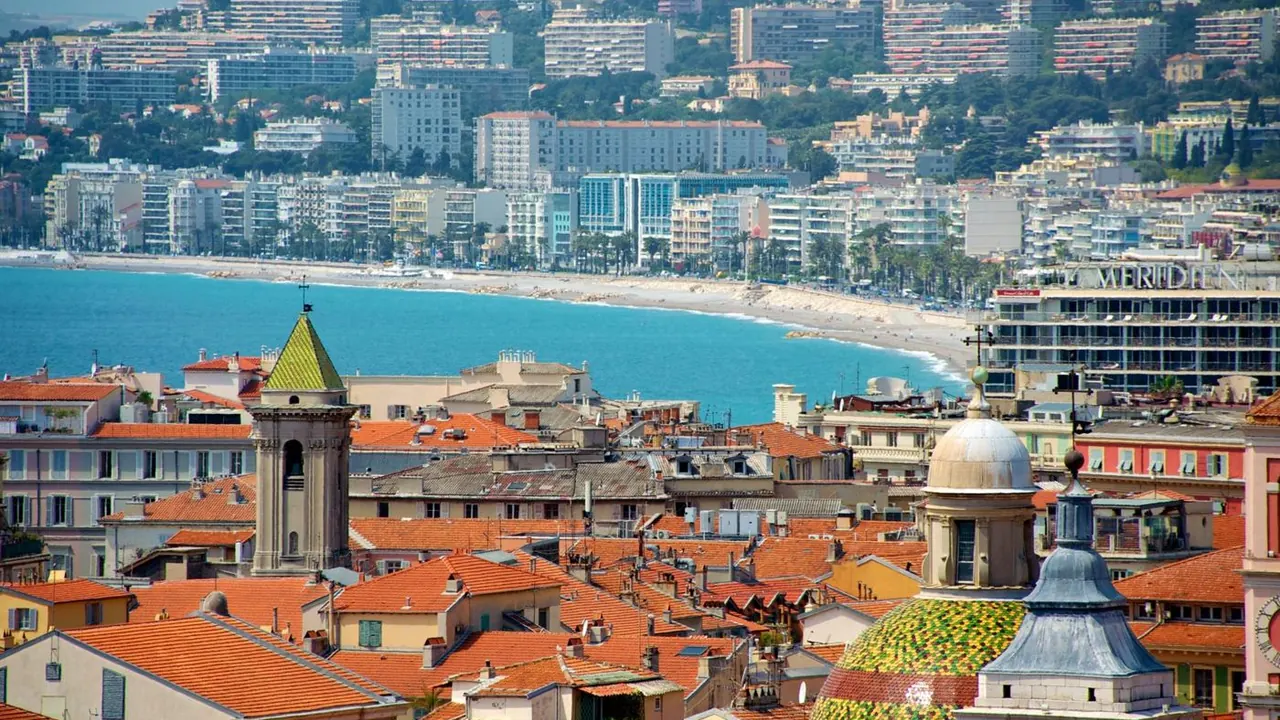
Photos: Geneva by Diviosen, CC BY-SA 3.0, cropped; Nice by Daniel Stockman, CC BY-SA 2.0, cropped.
Geneva or Nice?
Our verdict in twelve categories, each scored against the same fixed benchmark cities, and the climate month by month, so you can choose for your trip.
Choose Geneva for
- live music and the arts
- wellness
- shopping
Geneva is the better pick if you want mountains on the horizon and a city that runs like clockwork. Trains, trams and lake boats make everything easy, the Salève and the Jura are close enough for a morning hike, and Chamonix is near enough for a day in the high Alps. In the evenings there is opera, a fine orchestra and a lakeside sauna. It suits travellers who can absorb some of the steepest costs in Europe and prefer calm order to late nights.
Choose Nice for
- beaches
- prices
- food and drink
Choose Nice for sea, sun and a looser Mediterranean rhythm. You can swim off the long pebble shore for most of the summer and into autumn, the food has a character of its own, from socca to the Cours Saleya market, and the coastal railway puts Monaco, Èze, Antibes and even Italy within easy reach. It is far from cheap, but it costs a good deal less than Geneva, and the old town gives you more to do after dark.
Scoreboard
Twelve categories on one fixed scale from 0 to 100. The shaded stretch is the gap between the two.
Your match
Pick a travel style or drag the sliders, and both match scores follow your weighting.
Wins on live music and the arts and wellness with your weighting.
Wins on beaches and prices with your weighting.
What matters to you?
Category by category
What the scores mean for a trip.
Beaches & swimming
Geneva swims in its lake. The Bains des Pâquis jetty, where people dive off the concrete with the Jet d'Eau in view, and the lawns and pools of Genève-Plage make good summer afternoons. Still, the shore is more lido than beach, and the season is short.
Nice is a proper beach city. Its pebble shore runs below the Promenade des Anglais for about 7km, the water is clear and warm from June into October, and for sand you can take a short train ride to Villefranche, Beaulieu or Juan-les-Pins. The stones call for a rented lounger or water shoes, and in high summer the city stretches fill early.
Food & drink
Nice has the more distinctive and more affordable table. Its cooking leans towards Liguria: socca hot from wood ovens in the old town, pissaladière, stuffed vegetables and pan bagnat, with the Cours Saleya market and the little Bellet vineyards on the hills above. The best meals are in modest family places in Vieux Nice and around the port. Avoid the set menus on the promenade.
Geneva eats French with a Swiss accent: perch fillets from the lake, fondue and raclette in wood-panelled brasseries, and Chasselas and Gamay from the canton's own vineyards. Its fine dining in Carouge and the Old Town is polished, and the international crowd brings a wide range of cuisines. What it lacks is the cheap, casual street food Nice does so well.
Culture & sights
Nice has the edge, mostly because of its art. The Matisse Museum among the Roman ruins of Cimiez, the Chagall Museum's biblical cycle and MAMAC's Yves Klein rooms sit alongside the ochre lanes and baroque chapels of Vieux Nice and the Belle Époque villas of the old winter resort.
Geneva's story is the Reformation and diplomacy rather than painting. You can climb the towers of St Pierre Cathedral, where Calvin preached, see the Reformation Wall, and visit the Palais des Nations, the Red Cross and Red Crescent Museum and CERN. Both cities fill two or three days well, but Nice is the one for art lovers.
Nightlife
Nice is the livelier of the two, though neither is a party city. On most evenings the narrow lanes of Vieux Nice fill with wine bars, pubs and cocktail bars spilling onto the street, and in summer the beach clubs keep going late. Clubbers usually head for Monaco or Cannes.
Geneva is quieter and pricier, with its late bars in the slightly rough Pâquis and terraces in Carouge. Its one distinct offer is the alternative club nights in the squat-born cultural centres of Plainpalais and Jonction, which give it a small electronic scene that Nice does not really have.
Nature & outdoors
Both are excellent outdoor bases, but the outdoors is different in each. From Geneva the mountains are the focus: a cable car up the Salève, forest hikes and cross-country skiing in the Jura, Mont Blanc at the end of the lake and Chamonix about an hour away. On the water you get sailing and rowing on the lake.
Nice adds the sea. There are coastal paths around Cap Ferrat and Cap d'Ail, diving and kayaking, cycling on the corniches, and the Esterel's red rocks to the west. Its high country, the Mercantour, is a longer drive than Geneva's Alps, but you can ski at Isola 2000 in the morning and be back by the sea in the afternoon. Midsummer heat makes Nice best in spring and autumn.
Day trips
Both cities are strong for day trips, but Nice has the denser list and shorter journeys. One coastal railway strings together Villefranche, Monaco, Menton and Antibes, with buses up to Èze and Saint-Paul-de-Vence. The Italian markets at Ventimiglia are an easy ride, and almost everything is under an hour without a car.
From Geneva, lake steamers and fast trains reach Lausanne, the Lavaux vineyard terraces and the Château de Chillon, while Annecy and the village of Yvoire give a taste of France. The best Swiss outings, Gruyères and Bern, are about two hours each way, so a day out from Geneva takes more travelling.
Good for families
Both are equally manageable with children, and neither has a zoo or theme park. Geneva's best draw is the Natural History Museum and its huge animal dioramas, along with rides on the little yellow harbour boats and CERN for curious older children.
Nice has the beach, though the pebbles are hard on small feet, plus the water jets of the Promenade du Paillon and Parc Phoenix's greenhouses and animals. The Oceanographic Museum in Monaco is close by. Families should avoid its hottest, most crowded summer weeks, while in Geneva the lake parks are at their best then.
Getting around
Geneva is the smoother city to move through. The airport is a few minutes by train from the main station, the trams and buses run on time, and the harbour boats are part of the same network. Regional trains reach the rest of Switzerland easily, and the Old Town hill is the only climb.
Nice is also easy without a car. Its centre is a flat half-hour walk end to end, and a tram runs straight from the airport. The weak spot is summer, when the coastal trains and buses are packed and the Riviera roads slow down.
Shopping & style
Geneva is a world-class place to buy watches and jewellery, with the major Swiss houses lining the Rue du Rhône. Carouge's small design workshops and the Plainpalais flea market add a less polished side, although the everyday high street is ordinary.
Nice is better for browsing than for buying anything big. Avenue Jean Médecin has the chain stores, Vieux Nice sells olive oil, soaps and Provençal fabrics, and the Cours Saleya turns into an antiques market on Mondays. For serious luxury, Nice shoppers go to Monaco.
Affordability
Neither city is cheap, but Nice is clearly easier on your wallet. Trams and coastal trains cost little, many city museums are inexpensive, and socca and market food keep meals affordable if you avoid the seafront. Spring and late autumn bring hotel prices down.
Geneva is among the most expensive cities in the world for a visitor, from hotel rooms to a single glass of wine. Free museums, the transport pass hotel guests usually get and the cheap lake lidos help, but many budget travellers end up sleeping or eating in France.
Live music & performing arts
Geneva has the stronger year-round stage. The Grand Théâtre runs a full opera and ballet season, the Orchestre de la Suisse Romande plays in the gilded Victoria Hall, known for its acoustics, and the Bâtiment des Forces Motrices, a former pumping station in the Rhône, hosts concerts and dance.
Nice is more about its events. The Opéra de Nice has its own season, but the big moments are the Nice Jazz Festival in July and the long-running Carnival in February. Outside those dates you will mostly find small bar gigs in the old town.
Wellness & relaxation
Geneva is the better place to unwind, thanks to a real bathing habit. In winter the Bains des Pâquis becomes a sauna and hammam where regulars plunge straight into the cold lake, and the spa towns of Évian and Divonne are close by. Quiet Sundays add to the calm.
Nice has no bathing tradition of its own. For spa time you rely on the seafront hotels or the thalassotherapy centres towards Monaco and Antibes. Its appeal is the slow Riviera day of early swims and long lunches, which works best out of season, when the summer crowds and heat are gone.
When should you go?
Pick your month. The climate figures are measured averages, not a forecast.
Geneva in July
Nice in July
Daytime high, °C
Rainfall in the month, mm
Temperature and rainfall are climate normals, averaged over the years shown. Geneva: 1991-2020 normals, Geneve-Cointrin (5.7 km from centre). Nice: 1991-2020 normals, Nice (8 km from centre).
Geneva is a summer and early autumn city. Highs climb to about 27°C in July, which is warm enough for lake swimming without being too hot for walking, and June to August are also the sunniest months. Winters are cold, around 5°C in January, and often grey. Rain falls steadily all year rather than in one wet season, with autumn a little wetter. Late spring and September are the best months for hiking, and winter is mainly for skiing nearby.
Nice runs on a different calendar. Its summers are hotter, sunnier and almost dry, and the sea warms to about 25°C in August, so the beach season lasts from June well into October. The heat of July and August makes midday walking hard. Autumn brings the heavy rain, peaking at around 138mm in November. Winter stays mild, near 13°C in January and far sunnier than Geneva, which makes Nice the better choice for winter city walks. In spring both cities are pleasant, but Nice gets there weeks earlier.
Which traveller are you?
On a shopping trip, Geneva is the place, especially if a fine watch or a piece of jewellery is the goal and you want to compare the great Swiss makers in one afternoon. Nice is better for unhurried browsing and small gifts.
For a beach and sun trip, Geneva works only if a lake dip on a warm afternoon is enough. Nice is made for it, with long, bright days, months of sea swimming and a different bay or cove within reach most mornings.
On a trip on a tight budget, Geneva is hard to recommend. Even careful visitors spend fast, so a short stay makes the most sense. Nice is far more forgiving, especially outside high summer, when simple daily choices make the money last.
Before you go
| Measure | Geneva | Nice |
|---|---|---|
| Official language | French, German, Italian, Romansh | French |
| Currency | Swiss Franc (CHF) | Euro (EUR) |
| Sockets | CJ230 V, 50 Hz | CE230 V, 50 Hz |
| Driving side | Right | Right |
| Time zone | UTC+1, UTC+2 in summer | UTC+1, UTC+2 in summer |
| Emergency number | 112 | 112 |
| Elevation | 403 m | 0 m |
| Main airport | Geneva International Airport (GVA)5 km from centre150 non-stop destinations | Nice-Côte d'Azur Airport (NCE)6 km from centre130 non-stop destinations |
| Public holidays this year | 9 days | 11 days |
By the numbers
| Measure | Geneva | Nice |
|---|---|---|
| City population | 211,152 | 357,737 |
| People per km² | 13,280 | 4,975 |
| Museums within 10 km | 34 | 17 |
| UNESCO World Heritage sites within 50 km | 2 | 2 |
| Swim season, months above 21 °C | - | 4 months |
Where else could you go?
Every comparison below shares a destination with this one, so you can follow Geneva or Nice somewhere new.