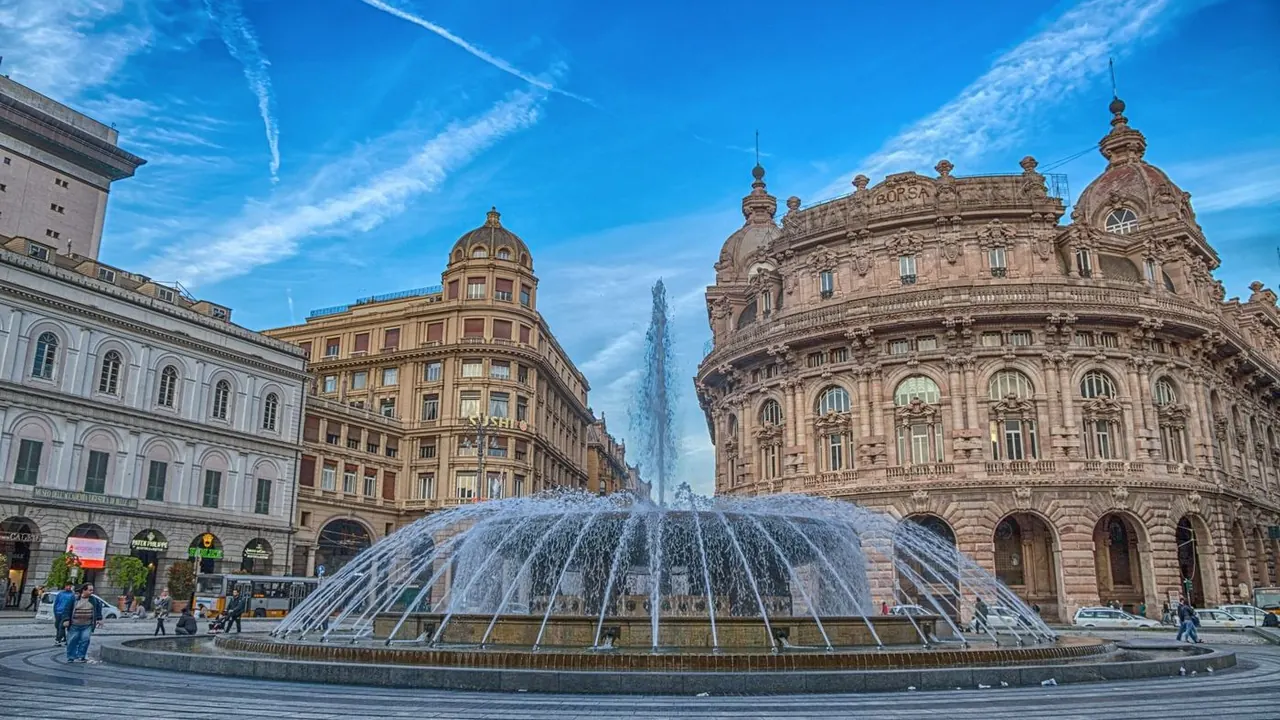
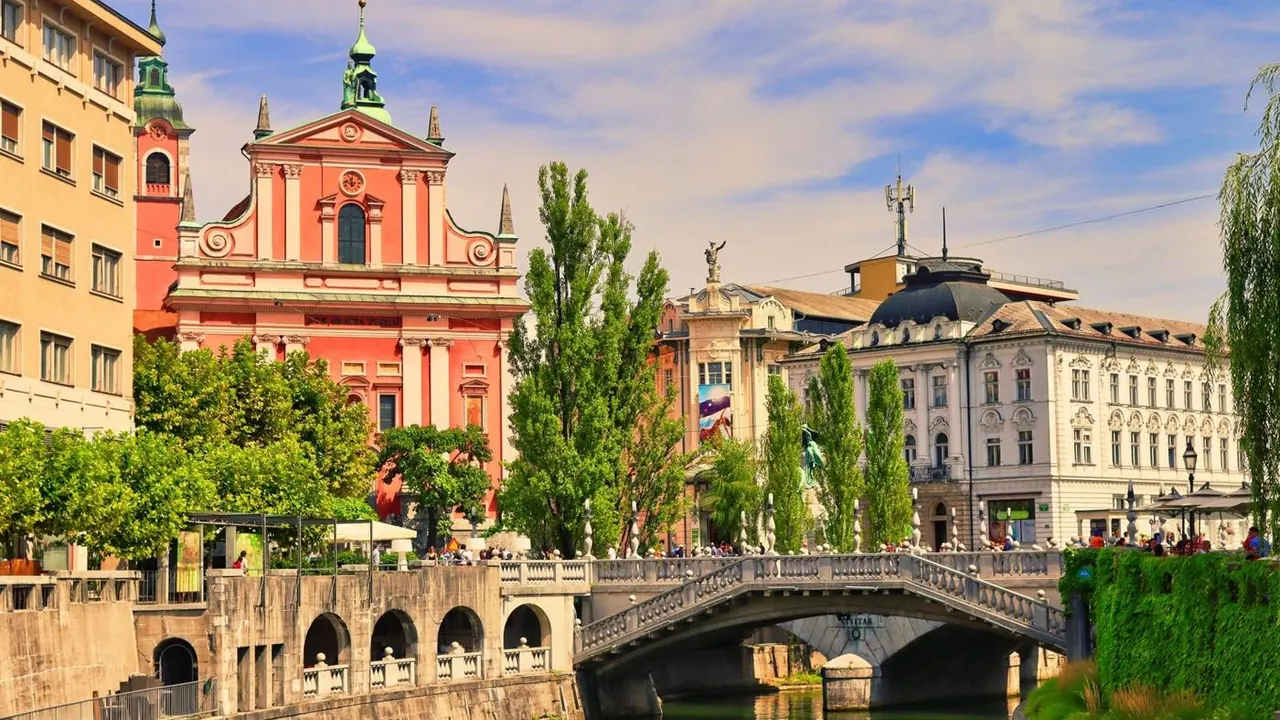
Photos: Genoa by Faber1893, CC BY-SA 4.0, cropped; Ljubljana by detait, Pexels License.
Genoa or Ljubljana?
Our verdict in twelve categories, each scored against the same fixed benchmark cities, and the climate month by month, so you can choose for your trip.
Choose Genoa for
- beaches
- culture and sights
- food and drink
Genoa suits the traveller who wants a city with real depth and the sea at its door. Its medieval caruggi and Rolli palaces give days of exploring, the cooking is some of the most distinctive in Italy, and the afternoon swim is never far away, whether at Boccadasse or a short train ride down the Riviera. It works best for a week or so of sights, long lunches and coast towns, for anyone who doesn't mind steep streets and a busy port.
Choose Ljubljana for
- getting around
- wellness
- nature and the outdoors
Choose Ljubljana for a calmer, greener stay where the pull is the landscape around the city more than the city itself. The car-free centre takes two or three relaxed days on foot, and after that the Julian Alps, Bled, the Soča valley and the karst caves are all close. It rewards hikers, cyclists and anyone who would rather spend the evening on a riverside terrace than in a palace museum, but it has no sea to speak of.
Scoreboard
Twelve categories on one fixed scale from 0 to 100. The shaded stretch is the gap between the two.
Your match
Pick a travel style or drag the sliders, and both match scores follow your weighting.
Wins on beaches and culture and sights with your weighting.
Wins on getting around and wellness with your weighting.
What matters to you?
Category by category
What the scores mean for a trip.
Beaches & swimming
Genoa is a seaside city where you can swim without leaving town. There are pebble coves at Boccadasse, bathing establishments along the Corso Italia and rock platforms under the Nervi promenade, and the Riviera bays are a short train ride further on. Expect pebbles, rented loungers and full beaches at summer weekends.
Ljubljana is inland, and swimming means a river or a lake: the Sava on the city's edge, or Bled and the colder Bohinj an hour or more away. The Slovenian coast at Piran is mostly concrete platforms and takes a day to get to and back.
Food & drink
Genoa eats with more character and more variety. You can have pesto at its source, focaccia for breakfast, farinata and fried fish by the slice from the old-town friggitorie, and seafood in the harbour trattorias and coast villages, with Vermentino to drink alongside.
Ljubljana's cooking is hearty and regional, with sausage, štruklji and jota from the gostilna inns, and the produce stalls at Plečnik's Central Market are worth a morning. Where it does stand out is wine, especially the orange wines of the west poured by the glass along the river, but the menus get repetitive sooner than Genoa's do.
Culture & sights
Genoa has far more to fill the days. There is the vast maze of shaded caruggi, the Rolli palaces of Via Garibaldi and Via Balbi with their painted halls and Flemish masters, the striped cathedral, the Palazzo Ducale and the marble of Staglieno, and many visitors are surprised by how much there is.
Ljubljana's appeal is the townscape as a whole. Plečnik's bridges, colonnades and library give the small baroque and Secession centre its look, the castle stands above it, and Metelkova adds a counter-cultural edge. Its museums are good, but none is a reason to come.
Nightlife
Both cities are made for a relaxed drink rather than a big night, and the difference is in the setting. Genoa's evenings revolve around aperitivo in the medieval squares around Piazza delle Erbe, and in summer they move out to the seafront and the coastal beach clubs.
Ljubljana's nights are spent on the terraces along both banks of the Ljubljanica. For something rougher and later there is Metelkova, whose small alternative clubs give the city a scene Genoa doesn't really have.
Nature & outdoors
Both are excellent bases for the outdoors, but the landscapes are very different. Genoa's is sea and cliff: the fortress trail above Righi, the Portofino park paths down to San Fruttuoso, the Cinque Terre terraces, and boat trips to watch whales and dolphins in the Pelagos Sanctuary.
Ljubljana looks to the mountains. Triglav National Park, the Vintgar gorge, rafting on the Soča and the Postojna and Škocjan caves are all within reach, and in winter there is skiing at small resorts, which Genoa can't offer.
Day trips
Both have a rich choice of outings, and what differs is the kind of trip. From Genoa, almost everything is a train ride along one coast line: Portofino and Camogli within an hour, the Cinque Terre a little further, and Milan and Turin close enough for a museum day.
From Ljubljana, the trips cover a whole small country: the island church at Bled, Predjama Castle in its cliff, the Lipizzaners at Lipica, the wine villages of Goriška Brda, and Trieste or Zagreb across the borders. A car makes the smaller places much easier.
Good for families
Genoa has more to entertain children, mostly gathered at the Porto Antico. The large aquarium, the science centre, the biosphere and the walk-through submarine fill whole days. Away from the harbour, though, the steep, dark lanes and endless stairs are hard work with a pushchair.
Ljubljana is the gentler place to push a buggy, with a flat centre largely free of cars. What there is to do is modest: the castle funicular, the Dragon Bridge, Tivoli's playgrounds, a small zoo and the puppet theatre, all easily seen in a few days.
Getting around
Ljubljana is simpler. Everything a visitor wants is within about 20 minutes' walk on flat, mostly pedestrianised streets, and the bike-share covers the rest.
Genoa is walkable too, but in a more tiring way, with a maze of lanes and a city that climbs steeply from the water. Its funiculars, rack railway and public lifts are fun, but the buses are slow. In its favour, the coastal railway puts the Riviera within easy reach without a car.
Shopping & style
Neither city is a shopping destination, but Genoa has more to offer. The arcades of Via XX Settembre and Via Roma carry the familiar Italian labels, and the old town has long-established shops for candied fruit and olive oil as well as workshops making silver filigree and coral.
Ljubljana's shopping is smaller and more homespun: pumpkin-seed oil, honey and salt from the Central Market, Idrija lace, a Sunday flea market on the embankment and a few design boutiques around Trubarjeva.
Affordability
Overall the two cost about the same, but the money goes in different places. In Genoa, focaccia and farinata keep meals very cheap and central hotels are fair, but the smart Riviera towns and paid loungers push up the cost of summer beach days.
In Ljubljana, the set lunch menus at the inns and a centre you can walk keep daily spending low. Summer rooms in the old town are the expense, so staying a little further out or avoiding July and August makes a clear difference.
Live music & performing arts
Both offer enough for an evening or two, and in both the theatre is in the local language. Genoa's strengths are opera and ballet at the Carlo Felice on Piazza De Ferrari and concerts in honour of Paganini, and its singer-songwriter tradition lives on in small clubs.
Ljubljana is stronger on summer music. The Ljubljana Festival brings orchestras to the open-air Križanke courtyard, and alongside it are the long-established Philharmonic, the opera house and the year-round programme at Cankarjev dom.
Wellness & relaxation
Neither city has a bathing culture of its own, but Ljubljana makes a spa day much easier to arrange. In Genoa, pampering mostly means a hotel spa, and real thermal water is a single option: Acqui Terme, across the hills in Piedmont and more than an hour away. On most days, the restorative part of a Genoa stay is a slow lunch in a Riviera village rather than a session in a pool.
Ljubljana has its own place for an afternoon of warmth: an indoor water park with a sauna complex on the city's eastern edge, which works in any weather. Beyond it there are several Slovenian spa towns with mineral pools and saunas, all within about an hour's drive, so you can pick the one that suits you rather than settling for the only one nearby.
When should you go?
Pick your month. The climate figures are measured averages, not a forecast.
Genoa in July
Ljubljana in July
Daytime high, °C
Rainfall in the month, mm
Where the figures come from
Genoa has no rain gauge within 25 km of the centre, so its rainfall comes from a gridded climate dataset read at the city rather than from a gauge further away.
Genoa's sunshine is measured 80 km from the centre, at Capo Mele.
Temperature and rainfall are climate normals, averaged over the years shown. Genoa: 1991-2020 normals, Genova / Sestri (6.7 km from centre). Ljubljana: 1991-2020 normals, Ljubljana / Bezigrad (1.9 km from centre).
Genoa has the gentler year. Its winters stay mild enough for walking the old town in a coat, and the summer is dry and sunny, with July bringing only 27mm of rain. The sea is warm enough for swimming from June into September and peaks around 25°C in August. Autumn is the wet season, and October is the rainiest month at 212mm, so late spring and September are the sweet spots for combining sights and swimming.
Ljubljana is a continental city with proper seasons. Winter days hover around 4°C and are often grey, so the city is at its best from May to September, when highs reach the high twenties. It is wetter than Genoa from April to September rather than in one season, with summer rain and a soggy autumn peaking at 159mm in September. Late spring and early autumn are the best for hiking in the mountains nearby.
Which traveller are you?
On a beach and sun trip, Genoa is the clear choice. You can swim in clear Ligurian water off the Corso Italia or at Nervi, and the pebble bays of Camogli and Sestri Levante are a train ride away. Ljubljana's nearest sea is a day trip.
For a culture and arts trip, Genoa has much more to see: one of Europe's largest medieval quarters, the UNESCO-listed palaces on Via Garibaldi with Van Dyck and Rubens, and the sculpture at Staglieno. Ljubljana's Plečnik cityscape is lovely but done in a couple of days.
On a relaxing and wellness trip, Ljubljana is the better fit. Its quiet, car-free centre and slow afternoons at riverside cafés set an easy pace, and Slovenia's thermal spa towns are close by. Genoa's port and crowded lanes are lively rather than restful.
Before you go
| Measure | Genoa | Ljubljana |
|---|---|---|
| Official language | Italian | Slovene |
| Currency | Euro (EUR) | Euro (EUR) |
| Sockets | CFL230 V, 50 Hz | CF230 V, 50 Hz |
| Driving side | Right | Right |
| Time zone | UTC+1, UTC+2 in summer | UTC+1, UTC+2 in summer |
| Emergency number | 112 | 112 |
| Elevation | 20 m | 309 m |
| Main airport | Genoa Cristoforo Colombo Airport (GOA)7 km from centre25 non-stop destinations | Ljubljana Jože Pučnik Airport (LJU)20 km from centre32 non-stop destinations |
| Public holidays this year | 13 days | 21 days |
By the numbers
| Measure | Genoa | Ljubljana |
|---|---|---|
| City population | 558,745 | 284,293 |
| People per km² | 2,325 | 1,736 |
| Museums within 10 km | 51 | 14 |
| UNESCO World Heritage sites within 50 km | 1 | 3 |
| Swim season, months above 21 °C | 4 months | - |
Where else could you go?
Every comparison below shares a destination with this one, so you can follow Genoa or Ljubljana somewhere new.