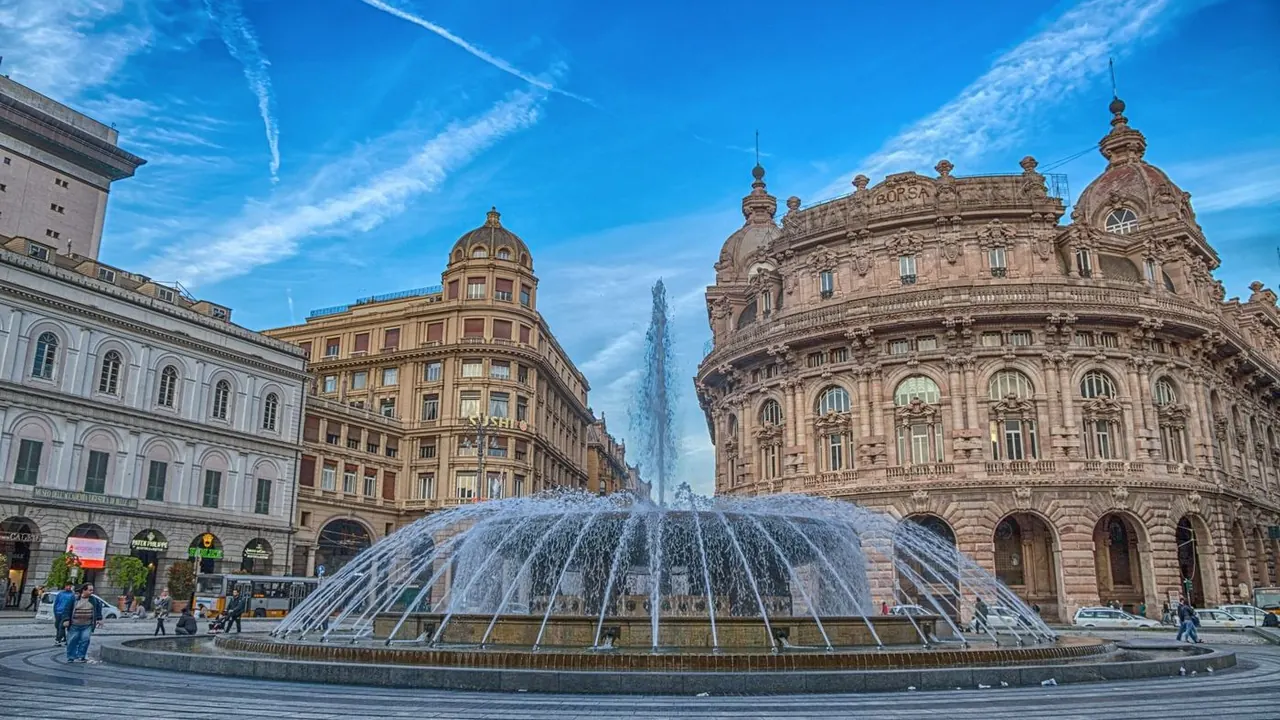
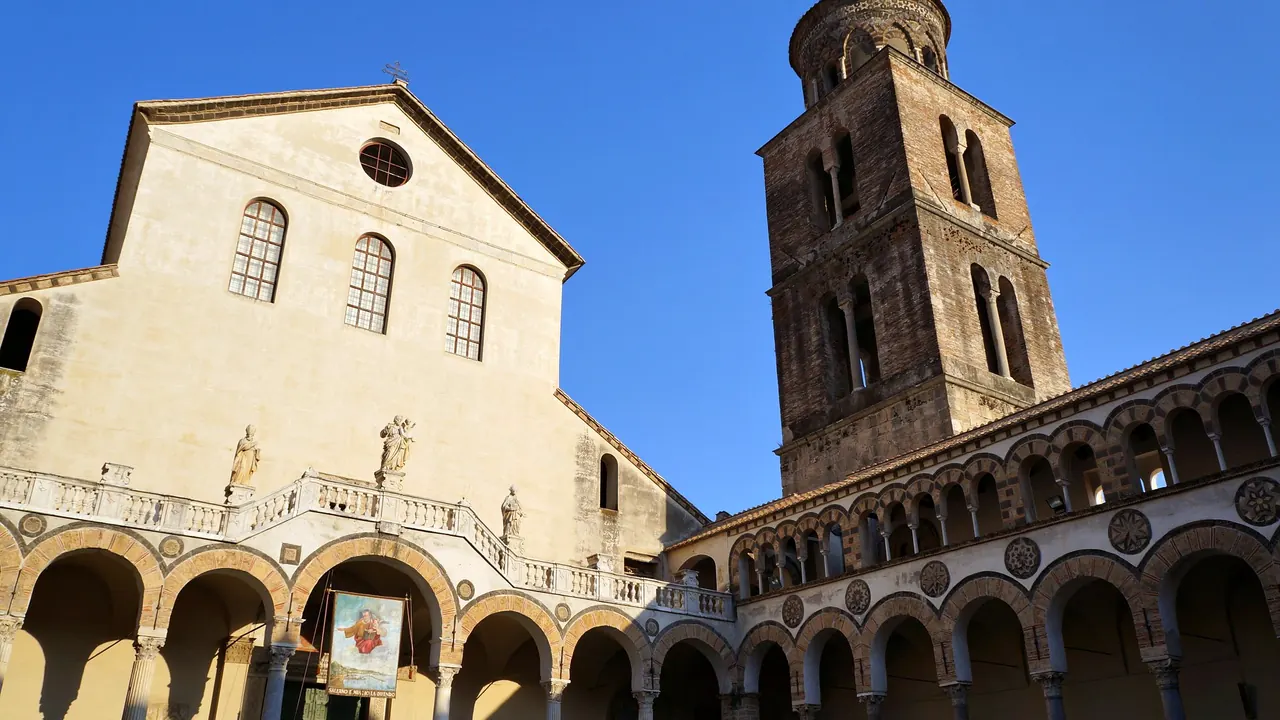
Photos: Genoa by Faber1893, CC BY-SA 4.0, cropped; Salerno by Leandro Neumann Ciuffo, CC BY 2.0, cropped.
Genoa or Salerno?
Our verdict in twelve categories, each scored against the same fixed benchmark cities, and the climate month by month, so you can choose for your trip.
Choose Genoa for
- culture and sights
- live music and the arts
- families
Genoa is the better pick if you want the city itself to be the reason for the trip. Its medieval caruggi, the palace museums of the Strade Nuove and the Staglieno cemetery give you several days of sightseeing on foot. It also has the stronger kitchen, a fuller stage programme, with the Carlo Felice's opera and symphony season and an established drama company, and an aquarium that keeps children busy. The Riviera villages are a train ride away for when you want the sea.
Choose Salerno for
- day trips
- prices
- beaches
Salerno works best as a base for the places around it. Paestum's temples, Pompeii, Amalfi by ferry and Naples by fast train are all close, and they matter more than anything in the town itself. Its rooms cost less than those in the cliff villages, the summers are hotter and sunnier, and the long sandy beaches to the south suit travellers who want days of excursions with a swim at the end.
Scoreboard
Twelve categories on one fixed scale from 0 to 100. The shaded stretch is the gap between the two.
Your match
Pick a travel style or drag the sliders, and both match scores follow your weighting.
Wins on culture and sights and live music and the arts with your weighting.
Wins on day trips and prices with your weighting.
What matters to you?
Category by category
What the scores mean for a trip.
Beaches & swimming
The two are about level for swimming, but the shores are very different. Near Genoa it is mostly pebble and rock: the little cove at Boccadasse, bathing decks along Corso Italia and platforms below the cliffs at Nervi, with Camogli and Sestri Levante a train ride along the Riviera.
Salerno's own grey-sand beaches are only good for a quick dip, but south towards Paestum there are kilometres of wide sand backed by pine woods, which suits a whole day on the beach. For clear water in rocky coves, head west to Cetara and the Amalfi Coast instead.
Food & drink
Genoa has the edge, mainly because its cooking is so specific to the place: pesto with trofie, pansoti in walnut sauce, and focaccia and farinata eaten by the slice in the caruggi. The Mercato Orientale shows the whole Ligurian larder in one covered market.
Salerno eats very well too, in a more southern style. You get wood-fired pizza, pasta with clams, buffalo mozzarella made the same morning on the Paestum plain and colatura from Cetara. Neither city goes in much for fine dining. Drink Vermentino in Genoa and Fiano or Aglianico in Salerno.
Culture & sights
This is where the two differ most. Genoa's historic centre is one of Europe's largest medieval quarters, and above it run the Rolli palaces of the Strade Nuove, whose painted halls are an attraction in their own right. Add the Palazzo Ducale, the Lanterna and the marble sculpture of Staglieno, and you need several days.
Salerno's high points are its Norman cathedral with the crypt of Saint Matthew, the Giardino della Minerva and the Arechi Castle above the gulf, and a day or two covers them. The region's great ancient sites lie outside the town, not inside it.
Nightlife
Evenings are quiet and sociable in both cities, and neither is a place for clubbing. In Genoa you drink aperitivo in the lanes around Piazza delle Erbe and at waterfront bars at the Porto Antico. Salerno's equivalent is the crowd of young locals drinking outside wine bars around Largo Campo, plus a lively passeggiata along the seafront. For a bigger night, Salerno has Naples close by, while Genoa's summer action moves out to the beach clubs along the coast.
Nature & outdoors
Both cities are about equally strong outdoors, with steep hills right behind the coast. From Genoa, a funicular takes you up to Righi and the ring of ridge forts, the Portofino promontory has cliff paths down to San Fruttuoso, and boats go out to look for whales in the Pelagos Sanctuary.
Salerno's landscape is the more dramatic of the two. You can walk the Path of the Gods and the Valle delle Ferriere in the Lattari mountains, or head south into the wooded hills and gorges of the Cilento. On both coasts, spring and autumn are the best seasons for walking.
Day trips
Genoa's railway line along the coast is excellent, with Portofino, Sestri Levante and the Cinque Terre in easy reach and Milan or Turin for a museum day. Still, Salerno does better here, and day trips are the main reason to stay there.
From Salerno, Paestum and Pompeii are each about half an hour by train and Naples is a little further. Ferries cross to Amalfi and Positano, and Herculaneum, Caserta and Ravello are all easy days out. Few bases in Italy have so much world-famous antiquity this close.
Good for families
Genoa is the easier city with children, thanks to the Porto Antico. The aquarium, a children's science centre, the biosphere and a submarine you can walk through all sit close together, and the old public lifts are fun for children in themselves.
Salerno has no aquarium, zoo or theme park. It makes up for some of that with its long car-free promenade, playgrounds and shallow sandy beaches for small swimmers. Both cities have steep, stepped old towns that are hard work with a pushchair.
Getting around
Getting around is about equally easy in both, but the ground is very different. In Genoa you climb: funiculars, a rack railway and public lifts carry you up hillsides above a maze of lanes, and the slow buses are best avoided.
Salerno's centre is a flat strip from the station to the old town that you can walk end to end. In summer the ferries are the best way along the Amalfi Coast, since the coast road is slow and crowded. In both cities the regional trains are the most useful link and a car is rarely needed.
Shopping & style
Neither city is worth a dedicated shopping trip, and the best things to buy are local in both. In Genoa that means silver filigree, coral, candied fruit and pesto from old shops in the old town, with smarter Italian labels on Via Roma. In Salerno it means Vietri's hand-painted majolica, lemon products from the coast and Cetara's colatura, while Corso Vittorio Emanuele has the chains.
Affordability
Both are mid-priced cities by Italian standards, and Salerno is slightly cheaper day to day. Its rooms cost much less than in the Amalfi villages it serves, and meals are priced for locals. Genoa is still good value for the north, especially if you live on focaccia and farinata.
In both places, the costs climb in summer on the coast nearby. Around Genoa it is the Riviera resorts and paid loungers. Around Salerno it is ferry fares that add up over several days and the entry fees at the big archaeological sites.
Live music & performing arts
Genoa offers more on stage. The Carlo Felice has a full season of opera, ballet and symphony concerts, the Teatro Nazionale is one of Italy's established drama companies, and there are Paganini concerts and small clubs that carry on the city's singer-songwriter tradition.
Salerno's gilded Teatro Verdi has a respectable opera season but little else around it. Its best musical evenings are often out of town, at the Ravello Festival's clifftop concerts or in Naples.
Wellness & relaxation
Neither city is somewhere to go for a retreat. Spas mean hotel spas in both, and the nearest thermal springs are about an hour away, at Acqui Terme for Genoa and Contursi Terme for Salerno. The calmest corners are different, though: Genoa has the villa gardens and promenade at Nervi, while in Salerno the long palm-lined seafront is the place for a slow walk at sunset.
When should you go?
Pick your month. The climate figures are measured averages, not a forecast.
Genoa in July
Salerno in July
Daytime high, °C
Rainfall in the month, mm
Where the figures come from
Genoa has no rain gauge within 25 km of the centre, so its rainfall comes from a gridded climate dataset read at the city rather than from a gauge further away.
Genoa's sunshine is measured 80 km from the centre, at Capo Mele.
Salerno's temperatures are measured 71 km from the centre, at Grazzanise.
Salerno has no rain gauge within 25 km of the centre, so its rainfall comes from a gridded climate dataset read at the city rather than from a gauge further away.
Temperature and rainfall are climate normals, averaged over the years shown. Genoa: 1991-2020 normals, Genova / Sestri (6.7 km from centre). Salerno: 1991-2020 normals, Grazzanise (71.3 km from centre).
Both cities have warm, dry summers and wet autumns, but Salerno runs hotter. In July and August Salerno reaches about 31°C, which is heavy going for walking the old town or touring Pompeii in the middle of the day. Genoa peaks a few degrees lower and is easier on foot. The sea is warm enough to swim in at both from June to September, and Salerno has a little more sunshine in high summer.
Autumn arrives harder in Genoa. September is already wet there, and October brings about 212mm of rain, while Salerno's wettest stretch comes later, in November and December. For walking, May and early June suit both cities well. Late September and October are kinder in Salerno, where the days stay mild and the sea holds its warmth. Winters are cool and damp in both, and Salerno is slightly milder.
Which traveller are you?
On a culture and arts trip, choose Genoa. The UNESCO-listed palaces of Via Garibaldi, the Van Dyck and Rubens collections, the striped cathedral and a full opera season at the Carlo Felice give you far more to see than Salerno's cathedral and small museums.
On a family trip with young children, Genoa also comes out ahead. The aquarium, the walk-through submarine at the Galata museum and the funiculars make a full day around the Porto Antico, while Salerno has a pleasant promenade and playgrounds but no comparable big attraction.
For a beach and sun trip, Salerno is the better base. The summers are hotter and sunnier, and the wide, shallow sandy beaches towards Paestum make for a full day by the sea. Genoa mostly offers pebble coves and bathing decks on the rocks.
Before you go
| Measure | Genoa | Salerno |
|---|---|---|
| Official language | Italian | Italian |
| Currency | Euro (EUR) | Euro (EUR) |
| Sockets | CFL230 V, 50 Hz | CFL230 V, 50 Hz |
| Driving side | Right | Right |
| Time zone | UTC+1, UTC+2 in summer | UTC+1, UTC+2 in summer |
| Emergency number | 112 | 112 |
| Elevation | 20 m | 4 m |
| Main airport | Genoa Cristoforo Colombo Airport (GOA)7 km from centre25 non-stop destinations | Naples International Airport (NAP)46 km from centre131 non-stop destinations |
| Public holidays this year | 13 days | 13 days |
By the numbers
| Measure | Genoa | Salerno |
|---|---|---|
| City population | 558,745 | 127,186 |
| People per km² | 2,325 | 2,123 |
| Museums within 10 km | 51 | 9 |
| UNESCO World Heritage sites within 50 km | 1 | 5 |
| Swim season, months above 21 °C | 4 months | 5 months |
Where else could you go?
Every comparison below shares a destination with this one, so you can follow Genoa or Salerno somewhere new.