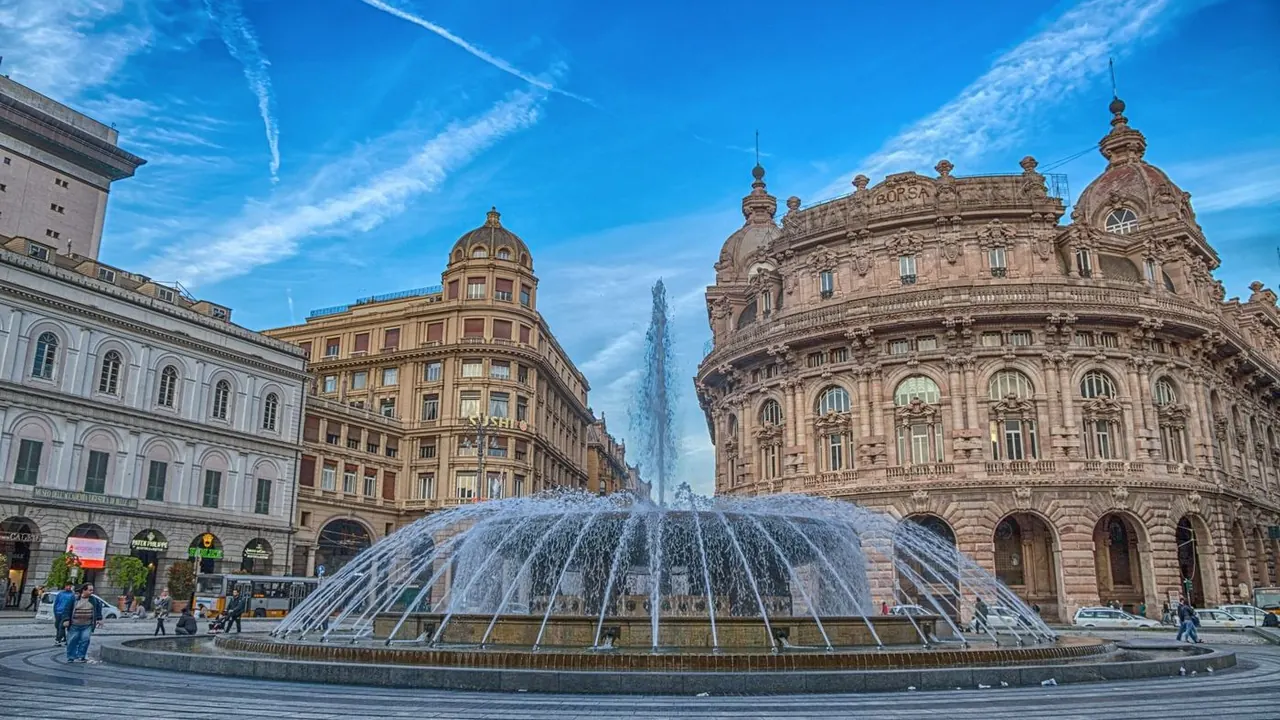
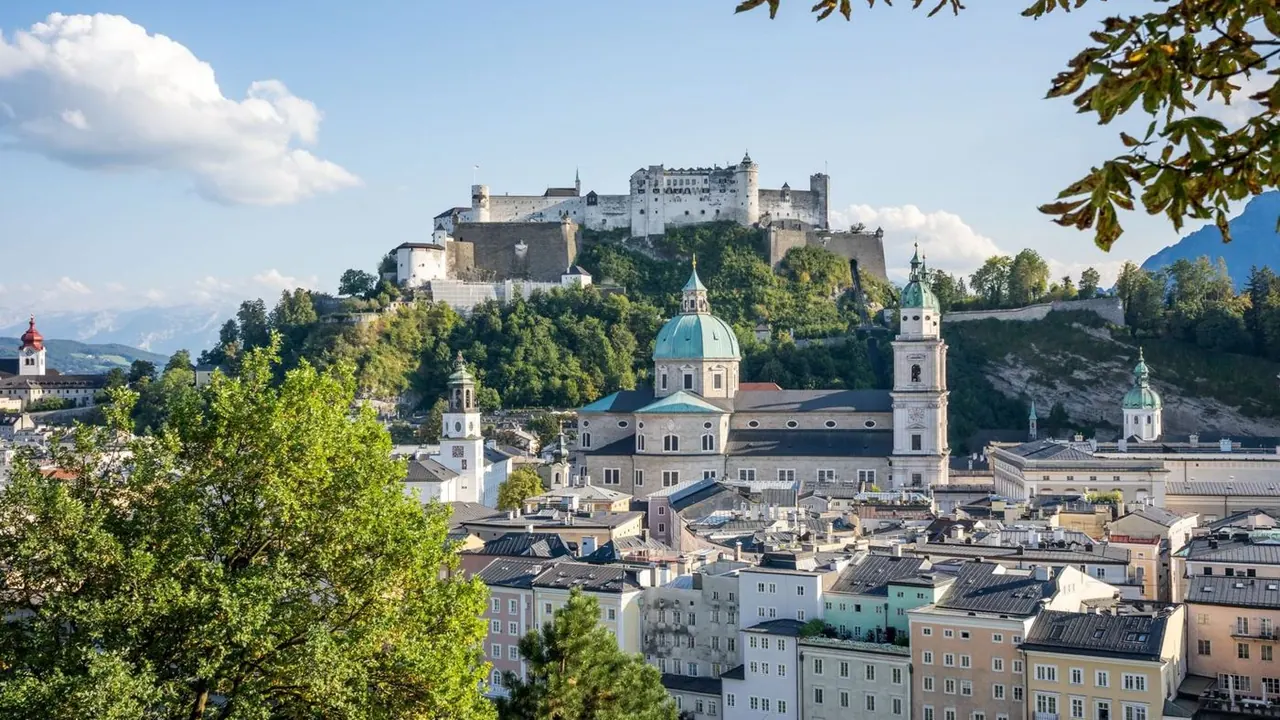
Photos: Genoa by Faber1893, CC BY-SA 4.0, cropped; Salzburg by Leonhard Niederwimmer, Pexels License.
Genoa or Salzburg?
Our verdict in twelve categories, each scored against the same fixed benchmark cities, and the climate month by month, so you can choose for your trip.
Choose Genoa for
- beaches
- food and drink
- prices
Genoa suits the traveller who wants a working Mediterranean port with the sea at the end of the street. You eat focaccia and pesto where they come from, swim off the rocks at Nervi or Boccadasse in the afternoon, and spend evenings over aperitivo in the old town squares. It is also the cheaper of the two, and the Riviera railway puts Portofino and the Cinque Terre within easy reach.
Choose Salzburg for
- live music and the arts
- wellness
- nature and the outdoors
Salzburg is the better pick for music lovers and for anyone who wants mountains on the doorstep. Its festivals and concert halls are in a different league from Genoa's, the Alps and the Salzkammergut lakes begin almost at the city edge, and the compact Baroque centre is calm and easy to walk. Expect to pay more, eat more simply and go to bed earlier.
Scoreboard
Twelve categories on one fixed scale from 0 to 100. The shaded stretch is the gap between the two.
Your match
Pick a travel style or drag the sliders, and both match scores follow your weighting.
Wins on beaches and food and drink with your weighting.
Wins on live music and the arts and wellness with your weighting.
What matters to you?
Category by category
What the scores mean for a trip.
Beaches & swimming
Genoa has real sea swimming inside the city limits: the pebble cove at Boccadasse, the bathing establishments along Corso Italia and the rock platforms at Nervi. Better beaches, including sand at Varazze, are a short train ride along the Riviera. Expect pebbles, rented loungers and crowded weekends, but you can swim most afternoons all summer.
Salzburg has no sea, and the Salzach is too cold to swim in. Swimming means a half-hour trip to Fuschlsee, Wolfgangsee or Mondsee, where you get into cooler green water from lawns and jetties. That is a pleasant extra, but it is not a swimming vacation.
Food & drink
Genoa has much the stronger food scene. It is the home of pesto, and the old town's friggitorie sell farinata and fried fish by the slice. Seafood is fresh from the harbour, and the Mercato Orientale sets out the region's produce. The range stays Ligurian, but eating well takes no effort.
Salzburg's best food experiences are its coffee houses and the beer garden at the Augustiner monastery brewery in Mülln. The cooking is hearty Austrian food, and the old town is full of restaurants serving the same menus to tour groups. The good meals are mostly in the outer inns, and a few days is enough to try everything.
Culture & sights
Both cities have a UNESCO-listed historic centre, but they feel very different. Genoa's sights are layered and sprawling: the shaded medieval caruggi, the painted palaces of the Rolli along Via Garibaldi, and the marble sculpture of Staglieno cemetery. It is a city to dig into, and it keeps surprising visitors who expected little.
Salzburg's centre is a single, compact Baroque set piece, with the cathedral, the Residenz, the Mozart houses and the Hohensalzburg fortress above it. It is easier to grasp and fits into two or three unhurried days, while Genoa rewards a longer stay.
Nightlife
Neither city is a party destination, but Genoa has more going on after dinner. Students and locals fill the bars around Piazza delle Erbe until late at weekends, and in summer people move on to waterfront bars and beach clubs along Corso Italia.
Salzburg's evenings usually mean a concert, a beer hall with long wooden tables and an early night, because the old town is quiet by midnight. There are a few student pubs on Rudolfskai, and serious clubbing means a train to Munich.
Nature & outdoors
Salzburg has the bigger landscape. The Untersberg cable car climbs to alpine ridge walks at about 1,800m, the Salzkammergut lakes offer sailing and paddling, and Berchtesgaden National Park and the Königssee are half an hour away. The ski areas are close enough for winter days out.
Genoa's outdoors is about where the hills meet the sea. You can walk the ridge of old fortresses above Righi, take the cliff path to San Fruttuoso on the Portofino promontory or hike the Cinque Terre terraces. It also adds something Salzburg cannot: whale and dolphin trips into the Pelagos Sanctuary.
Day trips
Both cities are excellent bases for day trips. From Genoa, most trips run along one railway line of seaside towns: Camogli, Portofino, Sestri Levante and the Cinque Terre to the east, and medieval Finale Ligure Borgo to the west. Milan and Turin are close enough for a museum day.
Salzburg's trips are about lakes, mountains and salt: Hallstatt, St Wolfgang, the salt mines at Hallein and Berchtesgaden, the clifftop fortress at Werfen and a day in Munich. The main practical difference is that Genoa's coast is easy by train, while some of Salzburg's lake villages are much easier to reach with a hire car.
Good for families
Both cities work about equally well for families, in different ways. Genoa puts its best family day in one place, the Porto Antico, with the large aquarium, a walk-through submarine and the biosphere. Swimming coves and funiculars help, but the steep, dark lanes and lack of parks make the rest of the city harder going.
Salzburg is smaller, calmer and largely car-free. It has the trick fountains and zoo at Hellbrunn, the Haus der Natur and the marionette theatre, and the miners' slides in nearby salt mines are a highlight for many children. Cobbles slow pushchairs in both places.
Getting around
Genoa's old town and Porto Antico are best explored on foot, but the lanes are a maze and the city climbs steeply from the water. Funiculars, a rack railway, public lifts and a single short metro line take the strain out of the hills, while buses crawl through the congested streets. The coastal railway is the most useful link, reaching Nervi and the Riviera towns without a car.
Salzburg is easier to manage. The old town, Mirabell and the Mozart houses are within about fifteen minutes' walk of each other, much of the centre is pedestrianised, and a funicular saves the climb to the fortress on its cliff. Trolleybuses cover the rest of the city and the riverside paths suit cycling. The weak spot is the lake villages, where slow regional buses lead many visitors to hire a car.
Shopping & style
Shopping is modest in both cities, and the best buys are local specialities. In Genoa that means candied fruit, olive oil and pesto from long-established old-town shops, silver filigree and coral from small workshops, and the Mercato Orientale for food to take home.
Salzburg's speciality is Tracht: dirndls and loden jackets, often made to measure, sold around Getreidegasse. In Advent, the Christmas market on Domplatz adds a seasonal reason to shop.
Affordability
Genoa is clearly the cheaper city. Focaccia and farinata make meals very cheap, trattoria lunches are fairly priced, and central hotels cost less than in Italy's most visited cities. Costs rise mainly in the Riviera resorts and with paid loungers on beach days.
Salzburg is expensive for its size. Old-town hotels are costly all year, and rooms get scarce and dear during the summer festival and the Advent markets. Staying across the river and eating in the beer halls and outer-district inns are the usual ways to keep costs down.
Live music & performing arts
For music and theatre, Salzburg offers far more than Genoa. Genoa has a respectable programme for an evening or two: opera, ballet and symphonic concerts at the Teatro Carlo Felice on Piazza De Ferrari, concerts honouring Paganini, and small clubs keeping its singer-songwriter tradition alive. Drama at the Teatro Nazionale is in Italian.
Salzburg is somewhere people plan a whole trip around. The summer festival brings leading performers to the Grosses Festspielhaus and the Felsenreitschule, Jedermann is staged outside the cathedral, and Mozart Week and the Easter Festival add two more seasons. Between festivals, the Mozarteum, the Landestheater and the Marionette Theatre keep the programme going, though jazz and contemporary music are thin.
Wellness & relaxation
Salzburg is the more restful choice. The city is slow-paced once the day-trippers leave, and the Paracelsus Bad has saunas in the city park. Bad Reichenhall's brine spas are twenty minutes away and the Gastein valley's thermal springs are within reach.
Genoa has no bathing culture of its own, and its nearest thermal waters are at Acqui Terme, over an hour inland. Its calm comes from the villa gardens and promenade at Nervi and long lunches in Riviera villages, while the port-side centre stays noisy.
When should you go?
Pick your month. The climate figures are measured averages, not a forecast.
Genoa in July
Salzburg in July
Daytime high, °C
Rainfall in the month, mm
Where the figures come from
Genoa has no rain gauge within 25 km of the centre, so its rainfall comes from a gridded climate dataset read at the city rather than from a gauge further away.
Genoa's sunshine is measured 80 km from the centre, at Capo Mele.
Temperature and rainfall are climate normals, averaged over the years shown. Genoa: 1991-2020 normals, Genova / Sestri (6.7 km from centre). Salzburg: 1991-2020 normals, Salzburg (3.4 km from centre).
Genoa has mild winters and a dry, sunny summer, with more sunshine than Salzburg in every month of the year. June to September is beach weather, with the sea reaching about 25°C in August, and July has barely any rain. Summer stays warm rather than oppressive, so the lanes are walkable all year, but May and late September are the most comfortable. Rain sets in from late September and peaks in November at about 122mm, which makes late autumn the city's dampest and greyest stretch.
Salzburg runs almost the other way. Winter is properly cold, with January highs near 3°C and snow often reaching the town, so it is a season for coffee houses and Advent markets rather than long walks. Summer is pleasantly warm but also the wettest time of year, with about 168mm in June and frequent heavy showers through August. For mild weather with less rain, April and October are the better bets, both at around 15°C.
Which traveller are you?
For a food and nightlife trip, Genoa is the clear choice. The farinata shops, harbour trattorias and Ligurian cooking go well beyond Salzburg's schnitzel and dumplings, and evenings in Piazza delle Erbe last longer than Salzburg's quiet midnight.
On a culture and arts trip, Salzburg wins on music. Both cities have a UNESCO-listed historic core, but the Salzburg Festival, Mozart Week and nightly concerts at Mirabell give it a performing arts calendar that Genoa's Carlo Felice cannot match.
On a relaxing and wellness trip, Salzburg is the calmer base. It has quiet ridge walks, the Paracelsus Bad and the brine spas of Bad Reichenhall twenty minutes away. Genoa's port and crowded lanes make for a busier, noisier stay.
Before you go
| Measure | Genoa | Salzburg |
|---|---|---|
| Official language | Italian | German, Austrian Sign Language |
| Currency | Euro (EUR) | Euro (EUR) |
| Sockets | CFL230 V, 50 Hz | CF230 V, 50 Hz |
| Driving side | Right | Right |
| Time zone | UTC+1, UTC+2 in summer | UTC+1, UTC+2 in summer |
| Emergency number | 112 | 112 |
| Elevation | 20 m | 424 m |
| Main airport | Genoa Cristoforo Colombo Airport (GOA)7 km from centre25 non-stop destinations | Salzburg Airport (SZG)3 km from centre64 non-stop destinations |
| Public holidays this year | 13 days | 16 days |
By the numbers
| Measure | Genoa | Salzburg |
|---|---|---|
| City population | 558,745 | 155,021 |
| People per km² | 2,325 | 2,360 |
| Museums within 10 km | 51 | 38 |
| UNESCO World Heritage sites within 50 km | 1 | 3 |
| Swim season, months above 21 °C | 4 months | - |
Where else could you go?
Every comparison below shares a destination with this one, so you can follow Genoa or Salzburg somewhere new.