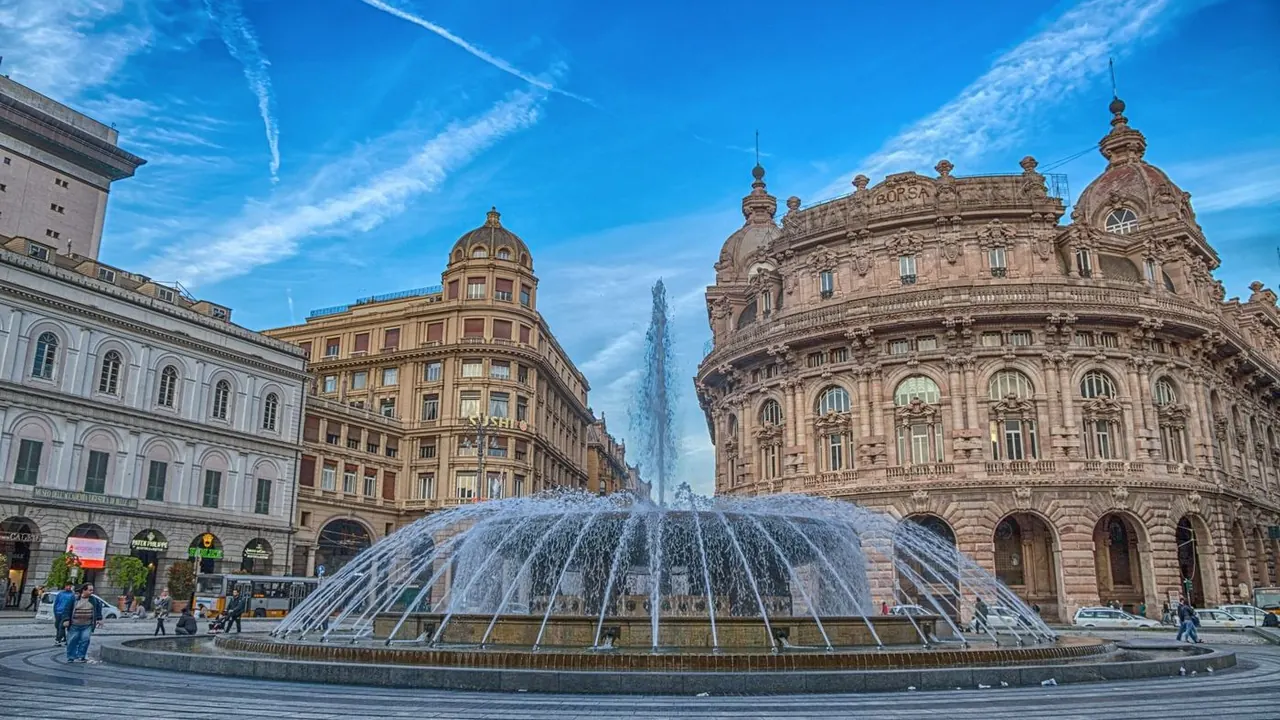
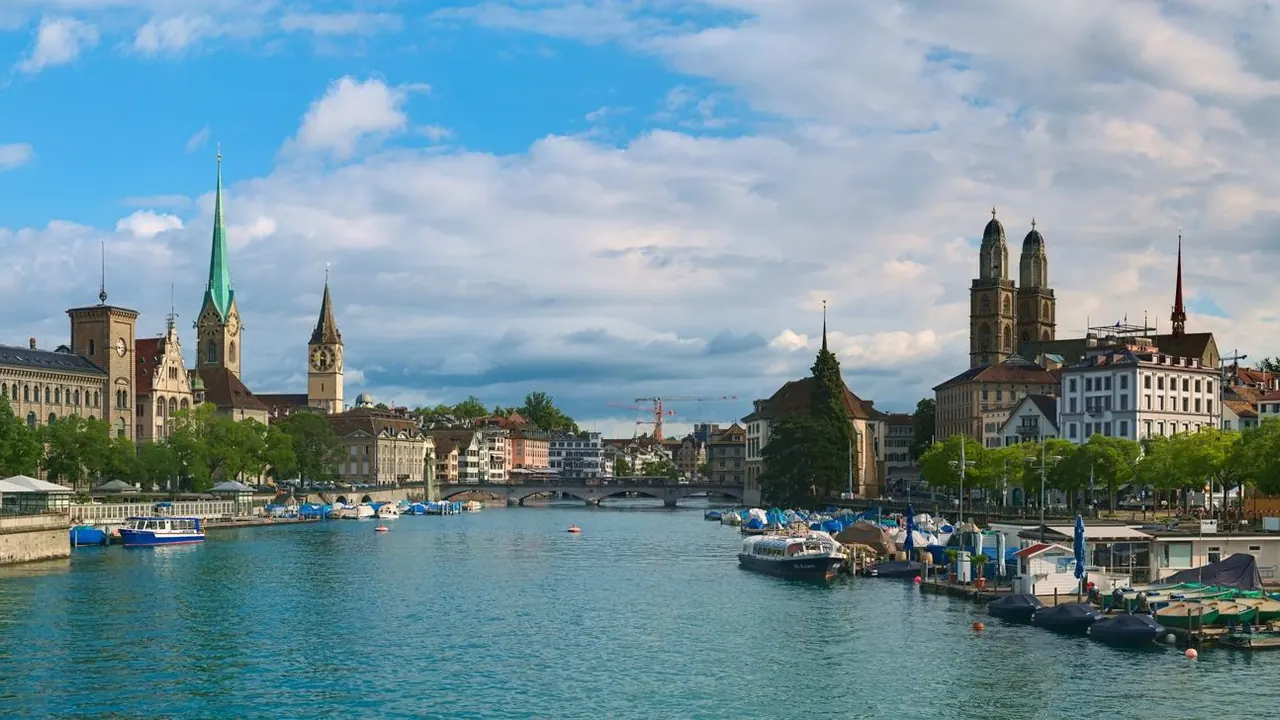
Photos: Genoa by Faber1893, CC BY-SA 4.0, cropped; Zurich by Daniel Kraft, CC BY-SA 3.0, cropped.
Genoa or Zurich?
Our verdict in twelve categories, each scored against the same fixed benchmark cities, and the climate month by month, so you can choose for your trip.
Choose Genoa for
- prices
- food and drink
- culture and sights
Genoa suits the traveller who wants a deep old city, a very good regional table and the sea at the end of the street. The caruggi and the palaces of the Strade Nuove reward slow wandering, focaccia and farinata cost little, and the Riviera trains put Camogli and the Cinque Terre within easy reach. It costs far less than Zurich. In return you need to cope with hills, stairs and quiet evenings.
Choose Zurich for
- getting around
- wellness
- nightlife
Choose Zurich if ease matters more than the bill. Trams, boats and trains all run on one ticket and children are well looked after. In the evening you can go from the Opernhaus to the techno clubs of Kreis 5. The lake, with the Alps an hour away, makes it a fine base in summer or winter. But it is among the most expensive places in Europe to stay, and its old town takes only a couple of days.
Scoreboard
Twelve categories on one fixed scale from 0 to 100. The shaded stretch is the gap between the two.
Your match
Pick a travel style or drag the sliders, and both match scores follow your weighting.
Too close to call, 2 points apart
Wins on prices and food and drink with your weighting.
Wins on getting around and wellness with your weighting.
What matters to you?
Category by category
What the scores mean for a trip.
Beaches & swimming
Genoa has the actual sea. In town there are the pebble cove at Boccadasse, the bathing establishments on the rocks of Corso Italia and the swimming platforms at Nervi. A short train ride brings Camogli, Sestri Levante or the sandier beaches of Varazze. The water is warmer than Zurich's and the season lasts into September.
Zurich swims in fresh water instead, from the wooden bathing houses at Utoquai and Mythenquai or by drifting down the Limmat at Letten. It is clean and sociable, but you lie on grass and decks, not a shore, and the summer is short. Neither city is a true beach destination.
Food & drink
Genoa eats better and far more locally. There is pesto with trofie, pansoti in walnut sauce and focaccia at breakfast. The old-town friggitorie sell farinata and fried fish by the slice, and the Mercato Orientale shows where it all comes from. Street food and seafood are its strengths.
Zurich offers veal in cream sauce with rösti, winter fondue in the guild houses and outstanding chocolate. Kreis 4 and 5 add a more international range, and the fine-dining tier is deeper than Genoa's. What it lacks is markets and casual eating on Genoa's scale, and every meal is expensive.
Culture & sights
Genoa has the richer historic fabric. Its medieval quarter is one of the largest in Europe, and the UNESCO-listed Rolli palaces on Via Garibaldi have painted halls. Add San Lorenzo and the marble sculpture of Staglieno, and the city takes longer to see than most visitors expect.
Zurich's offer is tidier and smaller: the Kunsthaus, the Swiss National Museum, Chagall's windows in the Fraumünster and the Grossmünster, where the Swiss Reformation began. As a picture gallery the Kunsthaus holds its own, but the compact Altstadt is covered in two or three days.
Nightlife
Genoa does a long aperitivo well, but for a night that lasts until morning Zurich is well ahead. A Genoese evening is spent drinking in the old-town squares and lanes near the university, where the crowd is mostly students and locals, with a few terraces by the water at the Porto Antico and Foce. Weekends stay lively late in the caruggi, but there are only a handful of clubs, the city is older and more reserved than most of Italy, and midweek it goes to bed early.
Zurich has a real electronic music culture. Its clubs sit in the old industrial districts of Kreis 4, Kreis 5 and Zurich West and run until daylight, while Langstrasse, rough and open late, holds the scene together. Each August the Street Parade turns the lake shore into a huge techno gathering. In summer both cities drink outdoors, Genoa along the seafront at Corso Italia and Zurich in the bars of its lake bathing houses and on the Limmat banks, though in Zurich the cost of each round tends to end the night sooner.
Nature & outdoors
Both have superb landscapes on the doorstep, but of opposite kinds. Genoa's is coast and steep hills: the ring of fortresses above Righi, the cliff paths of the Portofino promontory down to San Fruttuoso and the Cinque Terre trails. Boats also take you out to see whales and dolphins in the Pelagos Sanctuary.
Zurich's is lake and mountain. The Uetliberg and the Albis ridge start at the city's edge, and Rigi, Pilatus and the Glarus valleys are about an hour away for high-mountain hiking. In winter there is skiing at Flumserberg. Genoa is the place for coastal walks in spring and autumn, while Zurich adds the high Alps and snow.
Day trips
Both sit on excellent rail lines, and the difference is what lies along them. From Genoa the trips are mostly coastal: Portofino, Camogli and the Cinque Terre to the east, and Finale Ligure Borgo and Noli to the west. Milan and Turin are about an hour and a half inland.
From Zurich the trains fan out across a whole country. Lucerne is under an hour away, Bern, Basel and St Gallen about an hour each, and the Rhine Falls and Stein am Rhein lie to the north. From Genoa you go out for swims and fishing villages, and from Zurich for lakes, old towns and abbeys, with smoother connections.
Good for families
Zurich is the easier city with children. It is clean and orderly and its transport copes with buggies. The zoo has a Madagascar rainforest hall, the lake lidos are shallow and the Technorama is twenty minutes away. Quiet evenings suit younger children.
Genoa has one excellent family day at the Porto Antico, with its large aquarium, the walk-through submarine at the Galata museum and funiculars to ride, plus warmer sea swimming. Away from the harbour, though, the steep, dark lanes and stairs are hard with a pushchair, and there are few parks beyond Nervi.
Getting around
Zurich is about as easy to move around as a city gets. Trams reach every district, and the S-Bahn, the funiculars and even the lake boats all run on one punctual ticket. The airport is a short train ride from the main station.
Genoa works on foot in the old town and Porto Antico, but the caruggi are a maze and the city climbs sharply from the water. Funiculars and public lifts help with the hills and the coastal railway is excellent for the Riviera, while buses crawl through congested streets.
Shopping & style
Zurich is the shopping city of the two. Bahnhofstrasse has watchmakers, jewellers and long-established department stores, the railway arches of Zurich West hold design shops and the Niederdorf has boutiques. Watches and chocolate are what people take home, and everything costs Swiss prices.
Genoa's main streets, Via XX Settembre and Via Roma, carry the familiar Italian labels without much luxury. Its better buys are in the old town: pesto, olive oil, candied fruit, silver filigree and coral.
Affordability
Here the gap is huge. Genoa is mid-range for northern Italy. Focaccia and farinata make almost free meals, trattoria lunches are fair and central hotels cost less than in Italy's most visited cities. Only the Riviera resorts and lounger hire push costs up in summer.
Zurich is one of the most expensive cities in the world to visit, from hotel rooms to a casual lunch to a single drink. Supermarket picnics, the free lidos and the visitor card help, but the same days cost far more than in Genoa.
Live music & performing arts
Zurich takes the stage more seriously. The Opernhaus is one of Europe's most respected opera houses, the Tonhalle Orchestra plays in a restored nineteenth-century hall, and the Schauspielhaus is one of the leading theatres of the German-speaking world. The Rote Fabrik and the clubs of Kreis 4 and 5 add jazz, indie and electronic acts, and in summer the Theater Spektakel comes to the lake shore.
Genoa has the Carlo Felice for opera, ballet and symphony concerts, regular concerts in Paganini's honour, and small clubs that keep its singer-songwriter tradition alive. That is enough for an evening or two, but not a reason to go.
Wellness & relaxation
Zurich is the more restful choice. Its bath in the vaults of the old Hürlimann brewery has thermal pools and a rooftop pool. In winter the wooden lake and river baths become saunas with cold dips between rounds, and Baden's hot springs, used since Roman times, are twenty minutes away.
Genoa has no bathing culture of its own, and the nearest thermal water is at Acqui Terme, over an hour away. Its calm is found on the promenade and in the villa gardens at Nervi, or over long lunches in the Riviera villages. The centre stays noisy.
When should you go?
Pick your month. The climate figures are measured averages, not a forecast.
Genoa in July
Zurich in July
Daytime high, °C
Rainfall in the month, mm
Where the figures come from
Genoa has no rain gauge within 25 km of the centre, so its rainfall comes from a gridded climate dataset read at the city rather than from a gauge further away.
Genoa's sunshine is measured 80 km from the centre, at Capo Mele.
Temperature and rainfall are climate normals, averaged over the years shown. Genoa: 1991-2020 normals, Genova / Sestri (6.7 km from centre). Zurich: 1991-2020 normals, Zurich Town / Ville. (2.2 km from centre).
Genoa has the long, dry Mediterranean summer. From June to September it is warm enough to swim, peaking at 28°C in August with the sea around 25°C, and July is almost rainless and the sunniest month. Midsummer heat makes the steep streets hard going, so May and late September are better for walking. The rain comes in autumn and peaks at 195mm in November, but winters stay mild and many days are still bright.
Zurich is cooler, and its summer is its wettest season: highs of about 24°C come with the heaviest rainfall of the year, and the lake is warm enough to swim only from June to early September. Winter highs sit around 4°C, and November to January get very little sunshine. That suits saunas and ski days more than strolling. For walking the city, late spring and early autumn are kindest. Genoa stays the warmer and sunnier of the two in every month.
Which traveller are you?
On a trip on a tight budget, Genoa is the obvious choice. It is modestly priced for northern Italy, and its old-town street food lets you eat very well without sitting down to a restaurant meal. Zurich is among the costliest cities anywhere, so careful travellers will feel every day there.
For a beach and sun trip, Genoa is the clear pick. Its summers are long, dry and bright, the sea stays warm into September, and the Riviera is a short train ride along the coast. Zurich's lake swimming fills a few wet summer weeks and no more.
On a family trip with young children, Genoa gives you one excellent day at the harbour and plenty of sea, but its hilly centre is hard work. Zurich makes a better base for a whole week, because it is calm, safe and simple to get around with small children.
Before you go
| Measure | Genoa | Zurich |
|---|---|---|
| Official language | Italian | French, German, Italian, Romansh |
| Currency | Euro (EUR) | Swiss Franc (CHF) |
| Sockets | CFL230 V, 50 Hz | CJ230 V, 50 Hz |
| Driving side | Right | Right |
| Time zone | UTC+1, UTC+2 in summer | UTC+1, UTC+2 in summer |
| Emergency number | 112 | 112 |
| Elevation | 20 m | 408 m |
| Main airport | Genoa Cristoforo Colombo Airport (GOA)7 km from centre25 non-stop destinations | Zürich Airport (ZRH)9 km from centre226 non-stop destinations |
| Public holidays this year | 13 days | 10 days |
By the numbers
| Measure | Genoa | Zurich |
|---|---|---|
| City population | 558,745 | 440,935 |
| People per km² | 2,325 | 5,016 |
| Museums within 10 km | 51 | 63 |
| UNESCO World Heritage sites within 50 km | 1 | 1 |
| Swim season, months above 21 °C | 4 months | - |
Where else could you go?
Every comparison below shares a destination with this one, so you can follow Genoa or Zurich somewhere new.