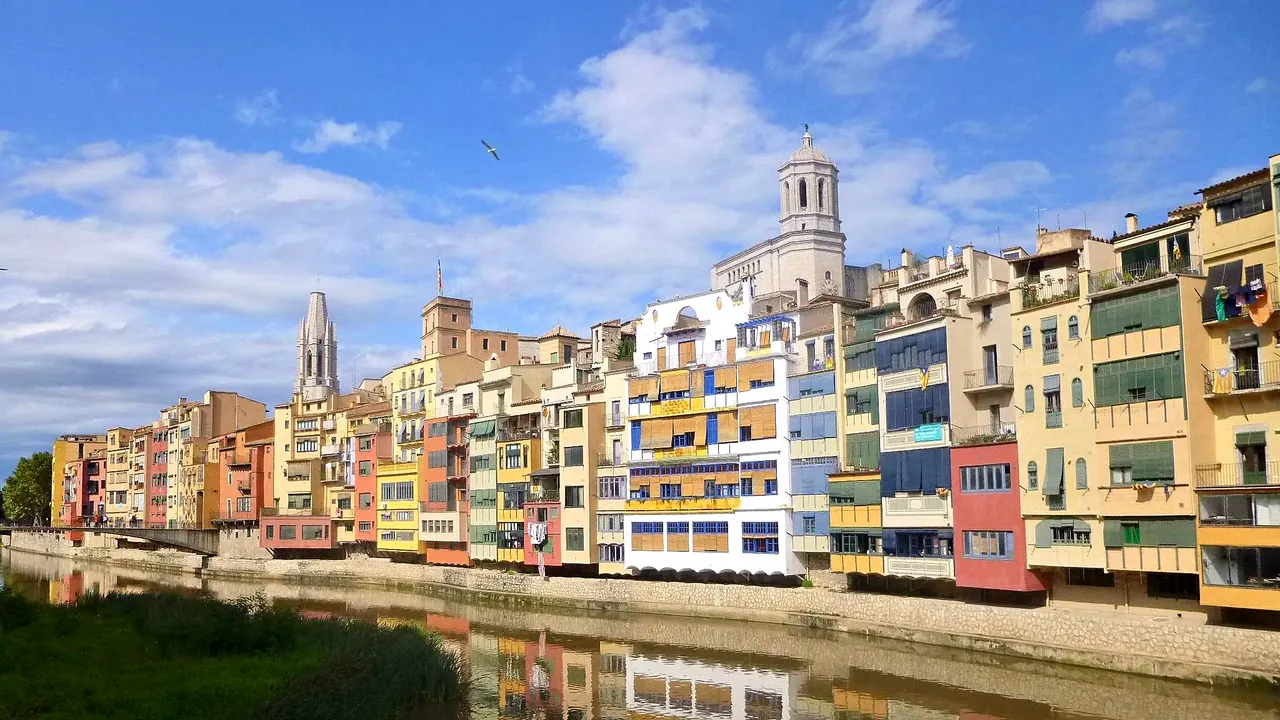
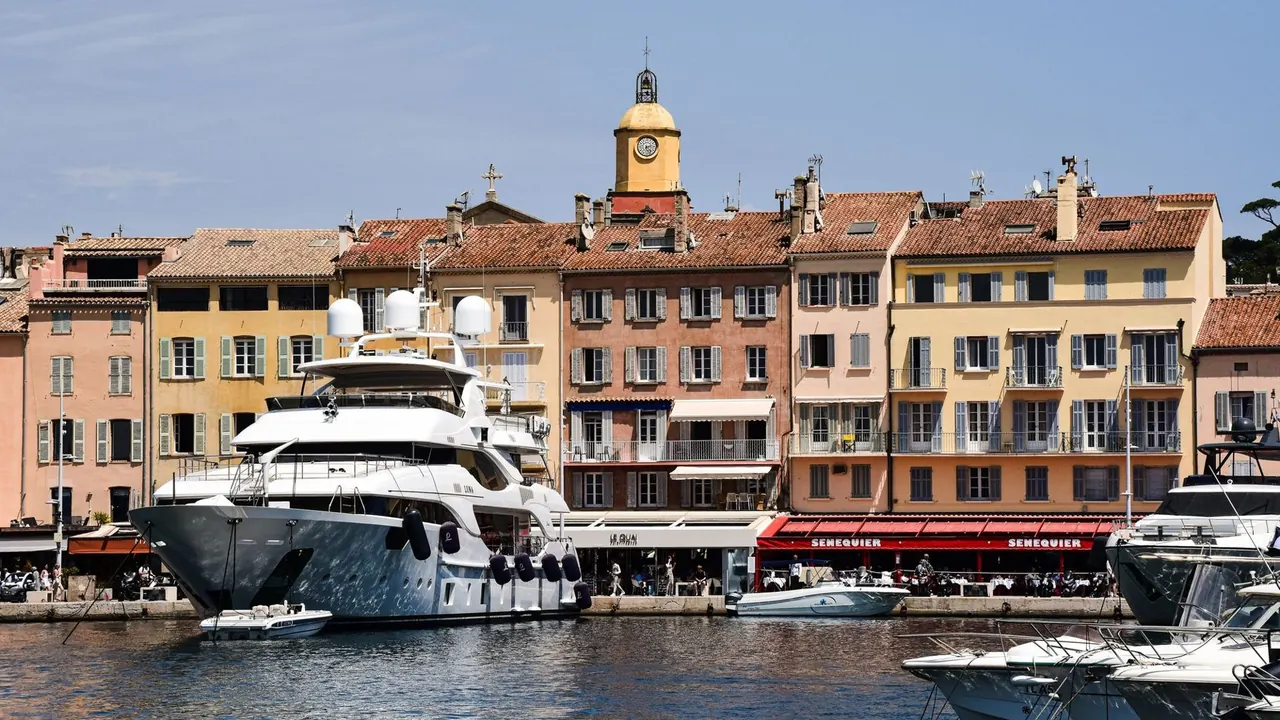
Photos: Girona by Zarateman, CC0; Saint-Tropez by AXP Photography, Pexels License.
Girona or Saint-Tropez?
Our verdict in twelve categories, each scored against the same fixed benchmark cities, and the climate month by month, so you can choose for your trip.
Choose Girona for
- prices
- day trips
- getting around
Girona suits travellers who want a walled medieval town to explore on foot, good Catalan cooking at fair prices and a whole region within easy reach. Barcelona, Dalí's Figueres, Besalú and the Costa Brava coves all make simple outings, and cyclists and walkers have quiet lanes and greenways leading straight out of town. It holds up in spring, autumn and even winter, because the trip never depends on lying on a beach.
Choose Saint-Tropez for
- nightlife
- beaches
- shopping
Pick Saint-Tropez when the trip is about the sea and summer glamour: whole days on the sand at Pampelonne, the coast path round the capes, an evening of champagne on the harbour and a late night in the clubs. It is very expensive, has no railway and empties out in winter, so it rewards a summer stay with a generous budget far more than a sightseeing break.
Scoreboard
Twelve categories on one fixed scale from 0 to 100. The shaded stretch is the gap between the two.
Your match
Pick a travel style or drag the sliders, and both match scores follow your weighting.
Wins on prices and day trips with your weighting.
Wins on nightlife and beaches with your weighting.
What matters to you?
Category by category
What the scores mean for a trip.
Beaches & swimming
Neither town has its main beach on the doorstep, but Saint-Tropez is much closer to its own. Pampelonne's 5km of pale sand and the coves at Escalet, Cap Taillat and Gigaro are all on the peninsula, and the little beaches at Les Graniers and La Ponche are good for a quick swim from town.
From Girona the Costa Brava is about 40 minutes away, and its coves around Begur and L'Escala have very clear water. Without a car, though, you depend on infrequent buses, so the coast works as a day out rather than the point of the trip. The sea is equally warm on both coasts in late summer.
Food & drink
Girona eats better, and its cooking starts from a different place. Its base is Catalan home cooking, such as botifarra with beans or mar i muntanya plates in the taverns across the river, with tasting-menu kitchens of international standing above that. Saint-Tropez's strength is Provençal fish, bouillabaisse and local rosé given an expensive finish, and it is better at the luxury end than at everyday meals.\n\nIn Girona the best meals are usually in neighbourhood places rather than the visitor menus of the Barri Vell, and they serve the same food all year.
Its weak point is range, with little street food or cooking from other countries. Saint-Tropez sells the setting, whether a long lunch on the sand or a harbourside table where the view does much of the work, and much of the town stops cooking for the winter.
Culture & sights
Girona's walled Barri Vell is a real historic quarter. The Gothic cathedral has one of the widest naves anywhere, and the Call is among Europe's best-preserved Jewish quarters. Add the Arab Baths, the cloister of Sant Pere de Galligants and a walk along the ramparts, and there is enough for two unhurried days.
Saint-Tropez has one notable collection, the pointillist and Fauvist paintings in the Annonciade, which recall Signac's years on the harbour. Beyond that there is the citadel's maritime museum and a stroll through La Ponche. It is seen in a day, and people come for the setting rather than the history.
Nightlife
Saint-Tropez wins in summer, and clearly. Afternoon parties in the Pampelonne beach clubs lead to drinks on the yachts and harbour terraces and then to famous clubs open until dawn, with table service and a dress code. Out of season the harbour falls quiet, and it was never a place for casual bar-hopping.
Girona's evenings are about terraces and long dinners, with students filling the bars around Plaça de la Independència in term time and a few small clubs at weekends. For a big night out, people take the train to Barcelona.
Nature & outdoors
Girona has the edge thanks to its range. Road cyclists come from around the world to ride the climbs of Rocacorba and Els Àngels, and the old railway greenways run to Olot and the sea. Within reach are the volcanic beech forests of the Garrotxa, the wild headland of Cap de Creus and, an hour and a half away, the Pyrenees for summer hiking and winter skiing.
Saint-Tropez is better on the water. The coast path rounds the capes of Camarat and Taillat, the gulf is classic sailing water, diving is good off the rocky points and the national-park islands of Port-Cros and Porquerolles are within reach. The cork-oak hills of the Maures add quieter trails inland.
Day trips
Girona is one of the best bases in the region. Barcelona is under 40 minutes by high-speed train, Figueres and the Dalí Theatre-Museum are half an hour north, and Besalú, Peratallada and the ruins of Empúries are close by. Perpignan, just over the French border, is under an hour by fast train.
From Saint-Tropez the outings are mostly short and local: the hilltop villages of Ramatuelle and Gassin, Grimaud's castle, or a boat across to Port Grimaud. Porquerolles and Fréjus make longer days out. All of them depend on a road along the gulf that jams badly in high summer.
Good for families
Neither town is built for children, and the difference is in what you trade off. Girona is calm, cheaper and lets children stay up late in its squares, and walking the walls is a real adventure for them, but the old town's stairs are hard work with a pushchair and the beaches are a drive away.
Saint-Tropez puts gently shelving sand at Pampelonne and Gigaro close at hand, which is ideal for small children. Against that, the town is aimed at adults, the prices make long stays hard and summer traffic wears families out. Many families stay across the gulf in Sainte-Maxime and come over by boat.
Getting around
Both towns are small enough to walk, but Girona is far better connected. Its station sits at the edge of the centre, with fast trains to Barcelona and Figueres, and only the hill villages and coves really call for a car.
Saint-Tropez has no railway, slow buses and a single road along the gulf that jams for hours in July and August. Its main beaches lie several kilometres out of town, so visitors rely on taxis, scooters or bicycles. The passenger boats across the bay are usually the easiest way in.
Shopping & style
Saint-Tropez is the shopping destination of the two. The big fashion houses open summer boutiques in the lanes behind the port, and leather Tropézienne sandals are still made by hand in old-town workshops. The Place des Lices market adds linen, baskets and pottery, though much of it shuts in winter.
Girona's shopping is smaller and practical: independent fashion, bookshops and delis around the Rambla, Empordà cheese and oil from the Mercat del Lleó, and a lot of cycling gear. For bigger stores, people go to Barcelona.
Affordability
Girona is far cheaper. Its everyday cafés and weekday set lunches are fairly priced and you rarely need transport within town. The real costs are old-town rooms in busy seasons and any car you rent for the region.
Saint-Tropez in summer is priced for the yachting crowd, from rooms and loungers to a sandwich on the port, and taxis or parking add to the bill. Even sleeping across the gulf and picnicking from the market only softens the cost.
Live music & performing arts
Girona has the fuller programme. The Auditori hosts touring orchestras and jazz, the Teatre Municipal stages drama and dance, and the Temporada Alta festival brings international theatre every autumn, although many plays are in Catalan.
Saint-Tropez offers summer concerts in gardens and on the citadel, plus the Bravade, the musket-firing procession each May that is more folk tradition than performance. For opera or theatre you have to drive to Toulon or Nice.
Wellness & relaxation
Girona offers a bit more for a restful stay, mainly because Caldes de Malavella is only about 20 minutes away. It is a spa town with a Roman past, and its hotels have thermal pools fed by local springs. Girona itself stays calm all year.
In Saint-Tropez, rest depends on the timing. High summer is crowded and loud, while May, June and September bring pétanque under the plane trees and quiet mornings at the citadel. Its spas are in luxury hotels and are mostly for guests.
When should you go?
Pick your month. The climate figures are measured averages, not a forecast.
Girona in July
Saint-Tropez in July
Daytime high, °C
Rainfall in the month, mm
Where the figures come from
Saint-Tropez has no rain gauge within 25 km of the centre, so its rainfall comes from a gridded climate dataset read at the city rather than from a gauge further away.
Saint-Tropez's sunshine is measured 62 km from the centre, at Nice.
Temperature and rainfall are climate normals, averaged over the years shown. Girona: 1991-2020 normals, Gerona / Costa Brava (10.1 km from centre). Saint-Tropez: 1999-2020 (sunshine 1991-2020, rainfall 1991-2020) normals, Le Luc (24.2 km from centre).
Girona is best for walking from April to early June and again from late September into October, when its stepped lanes are pleasant all day. July and August reach about 31°C inland, which is hot for sightseeing at midday. Rain is spread fairly evenly through the year, with the wettest weeks in September and October. Winter stays mild enough for a city stay, with highs around 14°C. On the Costa Brava the sea is warm enough to swim from June to September and reaches about 24°C in August.
Saint-Tropez is at its best for the beach from June to September. It is a little hotter than Girona then and clearly sunnier, and July is almost dry at 10mm. Its sea warms at much the same rate as the Costa Brava's. Autumn is where the two part ways. Rain sets in from October, and November is by far the wettest month, at about 155mm, much more than Girona gets in any month. Winters are mild on both coasts but cool and damp in Saint-Tropez, so it is a summer place, while Girona works in any season.
Which traveller are you?
On a beach and sun trip, Saint-Tropez is the clear choice. Pampelonne's long sandy beach and the quiet coves to the south are right on the peninsula, while from Girona the Costa Brava is a drive or an infrequent bus away.
For a culture and arts trip, Girona offers far more. The cathedral, the Jewish Call, the walls and the Romanesque cloisters fill a couple of days, Temporada Alta brings international theatre in autumn, and Barcelona and the Dalí museum are easy outings.
On a trip with a tight budget, Girona is much easier to afford. Set lunches are good value, almost everything is walkable and trains run to Barcelona. Saint-Tropez is one of the Mediterranean's most expensive places, and even a coffee on the port costs a lot.
Before you go
| Measure | Girona | Saint-Tropez |
|---|---|---|
| Official language | Spanish | French |
| Currency | Euro (EUR) | Euro (EUR) |
| Sockets | CF230 V, 50 Hz | CE230 V, 50 Hz |
| Driving side | Right | Right |
| Time zone | UTC+1, UTC+2 in summer | UTC+1, UTC+2 in summer |
| Emergency number | 112 | 112 |
| Elevation | 70 m | 0 m |
| Main airport | Girona-Costa Brava Airport (GRO)10 km from centre18 non-stop destinations | Nice-Côte d'Azur Airport (NCE)64 km from centre130 non-stop destinations |
| Public holidays this year | 14 days | 11 days |
By the numbers
| Measure | Girona | Saint-Tropez |
|---|---|---|
| City population | 108,666 | 3,582 |
| People per km² | 2,779 | 320 |
| Museums within 10 km | 9 | 4 |
| UNESCO World Heritage sites within 50 km | 0 | 0 |
| Swim season, months above 21 °C | 3 months | 3 months |
Where else could you go?
Every comparison below shares a destination with this one, so you can follow Girona or Saint-Tropez somewhere new.
- Cannesvs Saint-Tropez
- Antibesvs Saint-Tropez
- Nicevs Saint-Tropez
- Monacovs Saint-Tropez
- Barcelonavs Girona
- Aix-en-Provencevs Saint-Tropez