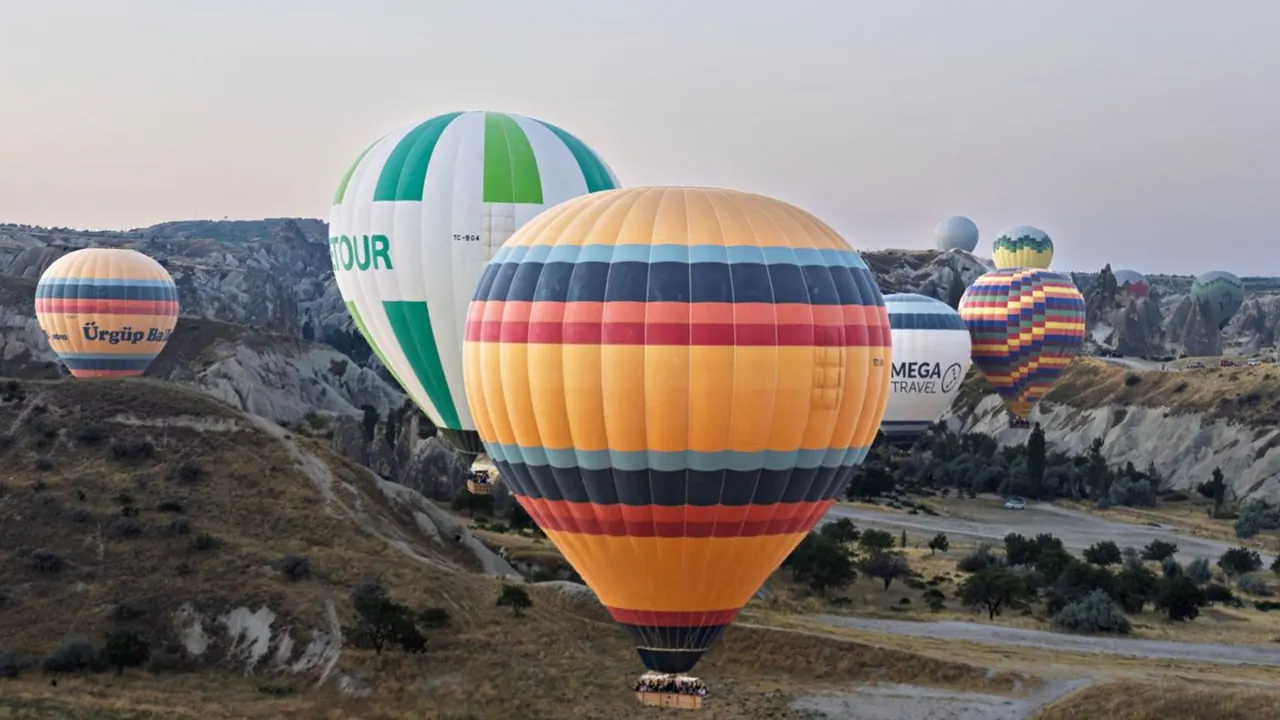
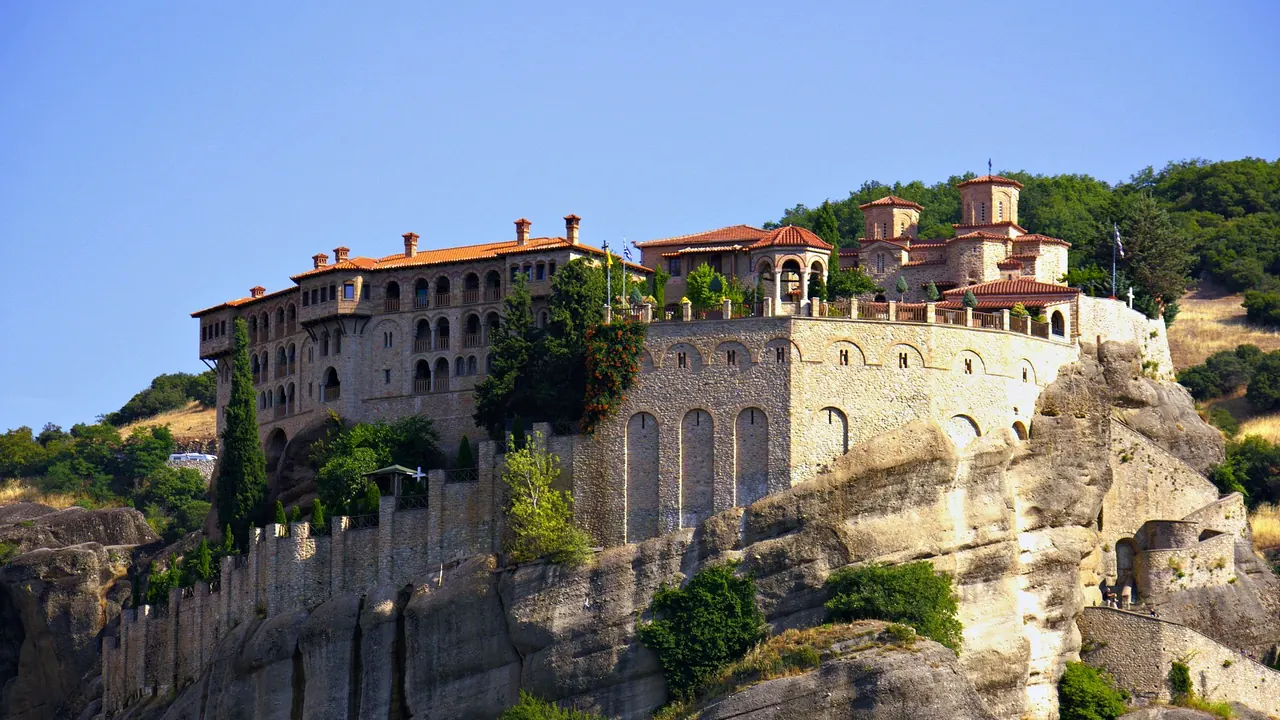
Photos: Goreme by Guerrero De la Luz, Pexels License; Kalambaka by José Barbosa, Pexels License.
Goreme or Kalambaka?
Our verdict in twelve categories, each scored against the same fixed benchmark cities, and the climate month by month, so you can choose for your trip.
Choose Goreme for
- day trips
- wellness
- shopping
Goreme suits travellers who want a full few days of exploring from one base. The rock-cut churches of the Open Air Museum are a walk from the village, and the underground cities, cave villages and citadels around it fill several more outings. The dawn balloons, cave hotels, hammams and carpet showrooms give the stay more variety, and older children usually love it all.
Choose Kalambaka for
- culture and sights
- food and drink
- prices
Choose Kalambaka if the main draw is a single great sight in a landscape you can walk into from your hotel. The Meteora monasteries on their sandstone pillars are a stronger cultural pull than anything in Goreme. The trails, climbing routes and Pindos forests are a little richer too, and tavernas serving grilled lamb and tsipouro keep a two or three night stop cheaper and better fed.
Scoreboard
Twelve categories on one fixed scale from 0 to 100. The shaded stretch is the gap between the two.
Your match
Pick a travel style or drag the sliders, and both match scores follow your weighting.
Too close to call, 1 point apart
Wins on day trips and wellness with your weighting.
Wins on culture and sights and food and drink with your weighting.
What matters to you?
Category by category
What the scores mean for a trip.
Beaches & swimming
Neither place is for swimming. Goreme sits on the Anatolian plateau, a long day's drive from any coast, and its river near Avanos is for looking at, so a dip means a cave-hotel pool.
Kalambaka is deep inland too, with the nearest sea beaches well over two hours away by car, though that still puts the coast nearer than it is from Goreme. On a hot day it has something Goreme lacks: a cold plunge in a Pindos mountain river. In both cases the beach belongs to another leg of the trip.
Food & drink
Kalambaka eats better. Its tavernas and grill houses serve the generous cooking of central Greece, with lamb, slow-baked dishes, bean soups, mountain greens and pies, plus tsipouro with meze. Trikala, half an hour away, adds variety.
Goreme has its own signature, testi kebab cracked from a clay pot at the table, along with manti, roadside gozleme and decent Cappadocian wine. But its menus are written for visitors and start to repeat after a couple of nights.
Culture & sights
Goreme's churches are cut into the rock and Kalambaka's monasteries stand on top of it, a difference that shapes the whole visit. In Goreme the Open Air Museum gathers a cluster of small, dim chapels in one valley a short walk from the village, so you step from doorway to doorway in a single morning. The painting is the reward. The Dark Church keeps the richest colour because so little light reaches it, and Tokali Church, just outside the museum gate, rivals it. With the cave houses and dovecotes of the village, the sight is done in a day or two.
Meteora works on a larger scale and leaves the stronger impression. Each of the six working monasteries crowns its own pillar, so a visit means a series of separate climbs, with the plain opening out below between them. These are living communities of monks and nuns rather than an empty monastic valley, keeping icon and manuscript collections alongside their painted churches. That sense of a tradition still running, set against the drama of the rocks, is what puts Meteora ahead of Goreme's single valley.
Nightlife
Both are early-to-bed places with no clubs. Goreme is the quieter of the two because the balloons launch before dawn. A raki or local wine on a terrace, looking at the lit-up rocks, is the evening.
Kalambaka keeps a little more street life, with locals sitting out at the café-bars on the central square on summer nights. For a real night out, Trikala's student bar street is within half an hour.
Nature & outdoors
Both towns open straight onto extraordinary rock, and Kalambaka has a slight edge in range. Its grey pillars rise around 400m, and monks' paths climb through oak woods between them. Long bolted routes make it a serious climbing destination, and the Pindos to the west adds fir forest, rafting on the Aspropotamos and small ski slopes near Metsovo.
Goreme's valleys, Rose, Red, Love and Pigeon among them, are softer and stranger, with pink tuff cones, orchards and hidden chapels. The balloons at sunrise are the defining experience. Beyond them, though, there is little forest and no water.
Day trips
Goreme is the stronger base. Within an hour you reach the multi-storey underground cities of Kaymakli and Derinkuyu, the Uchisar citadel, the abandoned cave villages of Zelve and Cavusin, the potters of Avanos and the Greek mansions of Mustafapasa. Even if much of it is rock-cut, few places offer so many outings in such a small radius.
Kalambaka's excursions are fewer and further apart, but more varied. There is Trikala's Ottoman and Byzantine old town, the stone village of Metsovo with its smoked cheeses, and Ioannina's lakeside castle quarter about an hour and a half away. A car is needed for most of it.
Good for families
Goreme gives children more adventure. They can sleep in a cave, crawl through underground tunnels, ride horses or ATVs and get up for the balloons. Toddlers fare less well there, given the steep paths with unfenced drops.
Kalambaka is just as safe and small, and a beginners' climbing session can thrill older children. But its headline sights are monasteries with long stairways, silence and dress rules, which wear thin quickly with young ones.
Getting around
The two are much alike: a tiny walkable centre and then a problem. In Goreme, the Open Air Museum and valley trailheads are on foot, while the underground cities and Ihlara need a tour, taxi or hired car, with slow local buses linking the nearer villages.
Kalambaka has the better long-distance links, with a rail branch to the Athens to Thessaloniki line. The monasteries, though, sit along a winding road several kilometres up. Fit walkers can climb the old footpaths in about an hour, but most people drive.
Shopping & style
Goreme has more worth buying. Hand-knotted carpets and kilims are the region's real craft, and in Avanos you can watch the red-clay pottery being thrown before you buy it.
Kalambaka offers one souvenir street of painted icons and carvings, plus monastery shops and edible gifts such as local honey, herbs and tsipouro. Neither is a shopping destination.
Affordability
Goreme can be cheap if you stay in a cave hostel, take the local buses and eat gozleme from the roadside stalls. But the things most people come for push a typical stay well above that: boutique cave hotels, menus set for visitors, guided tours and, above all, the dawn balloon flight.
Kalambaka makes it easier to keep costs down. Family guesthouses and generous taverna meals are fairly priced, and the monasteries charge only small entry fees. Prices go up mainly at hotels facing the rocks, and over Orthodox Easter and the long weekends around national feast days, when Greek visitors fill the town.
Live music & performing arts
There is little live performance in either. What exists differs in character. Goreme stages shows for visitors, a folk-dance and belly-dancing dinner in a cave venue and, more worthwhile, the whirling dervish Sema ceremony in a caravanserai near Avanos.
Kalambaka has nothing comparable beyond the odd summer festival or taverna musician. Byzantine chant at a monastery service is moving, but it is worship to attend respectfully, not a show.
Wellness & relaxation
Goreme gives more chances to unwind. Village hammams offer the steam, scrub and foam massage, and the better cave hotels have small spas and pools, although pre-dawn balloon starts and full tour days can work against rest.
Kalambaka has no bathing tradition and only a few hotel saunas and massage rooms. What it does offer is quiet and slow mornings in the light on the rocks, which is pleasant for a night or two but is not a reason to go.
When should you go?
Pick your month. The climate figures are measured averages, not a forecast.
Goreme in July
Kalambaka in July
Daytime high, °C
Rainfall in the month, mm
Where the figures come from
Goreme's station stands 160 m above the city centre, so the centre is likely a little warmer than the figures say.
Kalambaka's temperatures are measured 68 km from the centre, at Larissa Airport.
Kalambaka's station stands 164 m below the city centre, so the centre is likely a little cooler than the figures say.
Kalambaka has no rain gauge within 25 km of the centre, so its rainfall comes from a gridded climate dataset read at the city rather than from a gauge further away.
Temperature and rainfall are climate normals, averaged over the years shown. Goreme: 1991-2020 normals, Nevsehir (10.2 km from centre). Kalambaka: 1991-2020 normals, Larissa Airport (68.1 km from centre).
Both places are best in spring and autumn, but they get there differently. Goreme sits on a high plateau, so its winters are properly cold, with highs around 5°C in January and snow possible on the rocks. Summer turns almost rainless, with only 7mm in August, and bright, though the valleys are shadeless by late morning. April to early June and September to October are the walking months.
Kalambaka is milder in winter, around 10°C in January, but much wetter, with rain building through autumn to 104mm in December. Its summer is hotter than Goreme's, with highs near 34°C in July, too hot for the exposed paths between the pillars by midday. That leaves April, May and October as its best months, a narrower spring window than Goreme's because the heat comes sooner.
Which traveller are you?
On a family trip with children, Goreme is the better pick. Cave rooms, tunnels in the underground cities, horse rides through the valleys and balloons at dawn give older children more to do than Kalambaka's long monastery staircases and hushed interiors.
For a culture and arts trip, Kalambaka wins. The six active Meteora monasteries, with frescoed churches, icon museums and their dramatic clifftop settings, add up to a richer single sight than Goreme's Open Air Museum, even with Goreme's wider heritage circuit.
On a relaxing and wellness trip, Goreme offers more. It has village hammams with the classic scrub and foam massage, spas in the better cave hotels and long terrace breakfasts. Kalambaka has quiet and lovely light but little beyond a few hotel saunas.
Before you go
| Measure | Goreme | Kalambaka |
|---|---|---|
| Official language | Turkish | Greek |
| Currency | Turkish Lira (TRY) | Euro (EUR) |
| Sockets | CF230 V, 50 Hz | CF230 V, 50 Hz |
| Driving side | Right | Right |
| Time zone | UTC+3 | UTC+2, UTC+3 in summer |
| Emergency number | 112 | 112 |
| Elevation | 1,100 m | 237 m |
| Main airport | Kayseri Erkilet International Airport (ASR)60 km from centre22 non-stop destinations | Thessaloniki Macedonia International Airport (SKG)146 km from centre90 non-stop destinations |
| Public holidays this year | 14 days | 15 days |
By the numbers
| Measure | Goreme | Kalambaka |
|---|---|---|
| City population | 2,000 | 8,372 |
| People per km² | 20 | 4,925 |
| Museums within 10 km | 5 | 0 |
| UNESCO World Heritage sites within 50 km | 1 | 1 |
Where else could you go?
Every comparison below shares a destination with this one, so you can follow Goreme or Kalambaka somewhere new.
- Thessalonikivs Kalambaka
- Ohridvs Kalambaka
- Ankaravs Goreme
- Tiranavs Kalambaka
- Skopjevs Kalambaka
- Nafpliovs Kalambaka