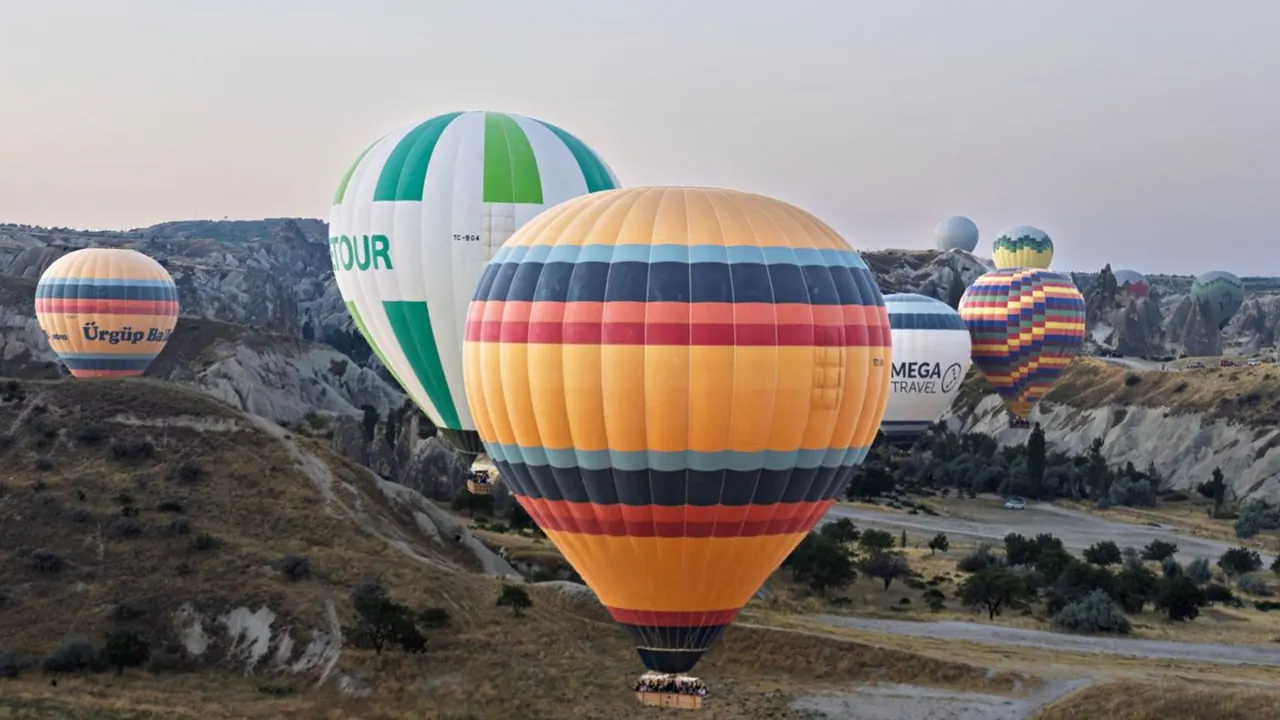
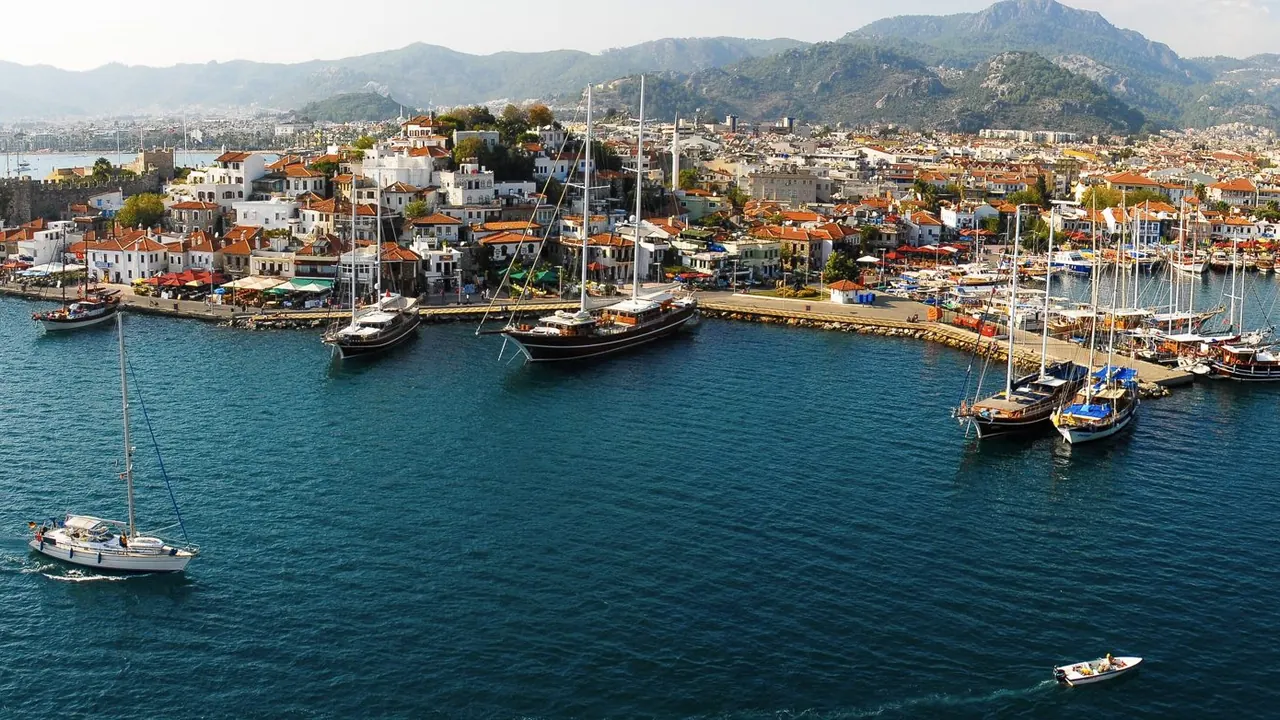
Photos: Goreme by Guerrero De la Luz, Pexels License; Marmaris by Mstyslav Chernov, CC BY-SA 3.0, cropped.
Goreme or Marmaris?
Our verdict in twelve categories, each scored against the same fixed benchmark cities, and the climate month by month, so you can choose for your trip.
Choose Goreme for
- culture and sights
- day trips
- nature and the outdoors
Goreme is for travellers who want to see something they could not see anywhere else: painted cave churches, underground cities and balloons rising at dawn over valleys of fairy chimneys. It suits a few active days of walking and touring, as long as you can accept early nights, simple menus and no water to swim in.
Choose Marmaris for
- beaches
- nightlife
- families
Pick Marmaris if the trip is about the sea. A calm, enclosed bay, boat trips to clear coves and the wild peninsulas beyond make for an easy beach vacation. Families can stay in quiet Icmeler, and Bar Street keeps going until dawn for those who want it. History here means an excursion, such as the ferry to Rhodes, rather than anything in town.
Scoreboard
Twelve categories on one fixed scale from 0 to 100. The shaded stretch is the gap between the two.
Your match
Pick a travel style or drag the sliders, and both match scores follow your weighting.
Wins on culture and sights and day trips with your weighting.
Wins on beaches and nightlife with your weighting.
What matters to you?
Category by category
What the scores mean for a trip.
Beaches & swimming
Goreme has no beach at all. It lies deep inland on a dry plateau, and the only swimming is in a cave hotel's pool.
Marmaris is built around the water. A long promenade beach runs towards Icmeler, and the enclosed bay stays calm and clear. Pine-backed beaches at Turunc, boat trips to coves and the fine sand of Sedir Island offer better swimming than the busy main strip.
Food & drink
Neither town is a place to come for the food, but Marmaris has more range. Goreme's terraces serve much the same testi kebab, manti and gozleme, and after a couple of nights the menus start to blur together. Its best extra is the wine made from Cappadocia's volcanic soils.
In Marmaris you have to walk past the seafront's steaks and pizza. Behind them are lokanta with stews and olive-oil vegetables, fish and meze around the harbour, and a weekly market full of cheeses, olives and pine honey.
Culture & sights
This is where Goreme pulls clearly ahead. The Open Air Museum is a valley of rock-cut Byzantine churches, and the Dark Church and Tokali Church keep some of the finest frescoes in Anatolia. The village itself, with its dovecotes and houses carved into tuff, is part of the sight.
Marmaris offers a small Ottoman castle with a modest museum, a whitewashed old quarter and a caravanserai that now houses the bazaar. It all fits into a morning, and visitors interested in history spend their time on excursions instead.
Nightlife
The nights could hardly be more different. In Goreme, most visitors are in bed soon after dinner, ready for a pre-dawn balloon launch, and an evening means a glass of raki on a terrace.
In summer, Marmaris has Bar Street: clubs, laser shows and foam parties packed with a young crowd until near dawn, plus calmer cocktail bars along the marina. It is one style of night out, though, and from November to April most of it shuts.
Nature & outdoors
Both are outstanding outdoors, but the settings have little in common. Goreme is all dry land, with Rose, Red, Love and Pigeon valleys starting at the edge of the village. You walk, ride or bike among pink tuff pinnacles, with balloons overhead at sunrise.
Marmaris is green and coastal. Pine-covered hills surround the bay, and the Bozburun and Datca peninsulas are prime sailing country for gulet cruises. Add diving, sea kayaking and the Carian Trail, and there is the water that Goreme lacks entirely.
Day trips
Both make good bases, but for different kinds of outing. From Goreme, most of the Cappadocian circuit is less than an hour away: the underground cities of Kaymakli and Derinkuyu, Uchisar's citadel, the cave villages of Zelve and the potters of Avanos. The catch is that much of it is variations on rock-cut heritage.
Marmaris offers more variety at longer distances. There is the medieval old town of Rhodes by ferry, Lycian rock tombs on the river at Dalyan, and boatbuilding harbours at Selimiye and Bozburun. Ancient Knidos, at the tip of the Datca peninsula, makes a long but rewarding day.
Good for families
Marmaris is easier with children of any age. The water at the edge of the bay is shallow and calm, the large hotels have pools and kids' clubs, and there is a water park. Families usually stay in Icmeler, away from the noise of Bar Street.
Goreme is more of an adventure, and suits older children best. Sleeping in a cave room, crawling through an underground city and riding horses through the valleys are hard to beat. Toddlers fare less well, with steep paths, unfenced drops and minimum ages on balloon flights.
Getting around
Marmaris is the simpler place to get around. A flat promenade runs for several kilometres to Icmeler, dolmus minibuses come and go constantly and water taxis cross the bay. Goreme's village is tiny and easy to walk, but its local buses are slow and infrequent.
In both places, the best places outside town need a tour or a hired car: Goreme's underground cities and Ihlara, and the peninsula villages and Dalyan from Marmaris. Goreme's airports are about an hour away, and Dalaman is about an hour and a half from Marmaris.
Shopping & style
Neither is a shopping destination, and they suit different buyers. Goreme is worth it if you have one serious purchase in mind: a hand-knotted carpet or kilim, or a piece of Avanos pottery bought where it was made. Apart from that, the village has little more than trinkets, and it won't fill an afternoon of browsing.
Marmaris has more for the casual shopper. Haggling in the covered bazaar is part of the fun, though much of what it sells is leather and copied labels. The better buys are small and local, such as pine honey from the surrounding hills, natural sponges and cotton bath towels, and the weekly market is the best place to find them. For fashion or design, look elsewhere in either case.
Affordability
The two cost about the same overall, but the money goes in different places. In Goreme, hostels in cave houses, gozleme stalls and walking the valleys cost little. The boutique cave hotels, site entry fees and especially the dawn balloon flight make a typical trip much dearer.
Marmaris is good value through its competitive package and all-inclusive hotels, cheap dolmus rides and lokanta. Costs rise at seafront restaurants, on Bar Street and on organised trips. Rooms are cheaper in spring and autumn than at the height of summer.
Live music & performing arts
Neither place is for theatre or concerts. In both, performances are mostly Turkish nights with folk and belly dancing put on for visitors. Goreme has one thing worth going for: the Sema ceremony of the whirling dervishes, held in an old caravanserai near Avanos. Marmaris has only the occasional summer concert in its open-air amphitheatre and cover bands in a few bars.
Wellness & relaxation
Marmaris is better set up for rest. It has hammams all over town, full spas in the bigger resorts, and the mud baths and hot springs near Dalyan for half a day of soaking. Turunc, Selimiye and Bozburun are very quiet places to stay.
Goreme's calm comes from its quiet evenings and long breakfasts looking out over the rocks. It has a few hammams and some small cave-hotel spas, but pre-dawn balloon starts and full tour days cut into the rest. For thermal water you have to drive to spa towns elsewhere in the province.
When should you go?
Pick your month. The climate figures are measured averages, not a forecast.
Goreme in July
Marmaris in July
Daytime high, °C
Rainfall in the month, mm
Where the figures come from
Goreme's station stands 160 m above the city centre, so the centre is likely a little warmer than the figures say.
Marmaris's temperatures are measured 49 km from the centre, at Dalaman.
Marmaris has no rain gauge within 25 km of the centre, so its rainfall comes from a gridded climate dataset read at the city rather than from a gauge further away.
Temperature and rainfall are climate normals, averaged over the years shown. Goreme: 1991-2020 normals, Nevsehir (10.2 km from centre). Marmaris: 2000-2020 (rainfall 1991-2020) normals, Dalaman (48.8 km from centre).
The two places follow almost opposite calendars. Goreme sits high on the Anatolian plateau, and its winters are cold, with daytime highs around 5°C in January and snow possible on the rocks. The months for walking the valleys are April to June and September to October, when the days are mild and bright. July and August reach about 30°C, with long hours of sunshine and almost no rain, but by late morning the valleys are too hot and shadeless for comfortable hiking.
Marmaris is mild in winter, but that is also its wet season, with about 230mm of rain in both December and January, so it is no time for a beach trip. From late May to October the weather is warm enough for the beach. The sea peaks at about 27°C in August, while July and August highs of 32°C make the middle of the day hard going. Spring and autumn suit walking and touring in both places, but only Marmaris has a swimming season.
Which traveller are you?
On a beach and sun trip, Marmaris is the only real choice. It has a long bay of sand and shingle, quieter beaches at Icmeler and Turunc, and boat trips to clear coves. Goreme is a long day's drive from any sea.
For a culture and arts trip, Goreme is the stronger pick. The Open Air Museum's frescoed churches, the underground cities and the stone mansions of Mustafapasa are all close by. In Marmaris, the small castle and the old quarter fill about an hour.
On a food and nightlife trip, Marmaris gives you more: meze and grilled fish by the harbour, a lively weekly market and Bar Street open until dawn in summer. Goreme serves testi kebab and local wine, then goes to bed early.
Before you go
| Measure | Goreme | Marmaris |
|---|---|---|
| Official language | Turkish | Turkish |
| Currency | Turkish Lira (TRY) | Turkish Lira (TRY) |
| Sockets | CF230 V, 50 Hz | CF230 V, 50 Hz |
| Driving side | Right | Right |
| Time zone | UTC+3 | UTC+3 |
| Emergency number | 112 | 112 |
| Elevation | 1,100 m | 7 m |
| Main airport | Kayseri Erkilet International Airport (ASR)60 km from centre22 non-stop destinations | Dalaman International Airport (DLM)49 km from centre61 non-stop destinations |
| Public holidays this year | 14 days | 14 days |
By the numbers
| Measure | Goreme | Marmaris |
|---|---|---|
| City population | 2,000 | 97,818 |
| People per km² | 20 | 111 |
| Museums within 10 km | 5 | 1 |
| UNESCO World Heritage sites within 50 km | 1 | 1 |
| Swim season, months above 21 °C | - | 6 months |
Where else could you go?
Every comparison below shares a destination with this one, so you can follow Goreme or Marmaris somewhere new.