Photos: Granada, Nicaragua by Guillaume Baviere from Uppsala, Sweden, CC BY-SA 2.0, cropped; Panama City by Ayaita, CC BY-SA 3.0, cropped.
Granada, Nicaragua or Panama City?
Our verdict in twelve categories, each scored against the same fixed benchmark cities, and the climate month by month, so you can choose for your trip.
Choose Granada, Nicaragua for
- prices
- wellness
- getting around
Granada suits a slower, cheaper trip built around a painted colonial town and the volcanic country around it. You walk the whole centre in minutes, swim in a crater lake, climb into cloud forest on Mombacho and spend the hot afternoons in a shaded courtyard. Your money goes a long way. Accept simple food and quiet evenings in return.
Choose Panama City for
- nightlife
- shopping
- food and drink
Panama City is the better pick if you want a capital with more going on. Its seafood is better, its bars and clubs run later, it has two UNESCO-listed old towns and you can watch ships in the Canal locks. Rainforest starts at the edge of the city. You will pay more and spend more time in taxis, but there is more to fill a long weekend.
Scoreboard
Twelve categories on one fixed scale from 0 to 100. The shaded stretch is the gap between the two.
Your match
Pick a travel style or drag the sliders, and both match scores follow your weighting.
Wins on prices and wellness with your weighting.
Wins on nightlife and shopping with your weighting.
What matters to you?
Category by category
What the scores mean for a trip.
Beaches & swimming
You can't swim in the water by either city. Granada's lake promenade and Panama City's Cinta Costera are for walking. Granada's answer is Laguna de Apoyo, about half an hour away: a clear, warm crater lake with docks and lodges, good for a lazy day in and out of the water, though it isn't a sandy beach.
Panama City comes out slightly ahead because it has more real sea within reach. The Taboga ferry gets you to a small beach quickly, the Pacific sand around Coronado is about an hour away, and the clearer Caribbean water near Portobelo is about two hours away. Granada's nearest ocean is San Juan del Sur, a separate trip of its own.
Food & drink
In Granada you mostly eat on the street. Vigorón on a banana leaf from the kiosks in the central park, nacatamales and the evening fritanga grills are the best of it, while the restaurants on La Calzada are hit and miss.
Panama City has more range and more good meals. You can have ceviche and fried whole fish at the Mercado de Mariscos, home cooking in the fondas, chef-led dinners in Casco Viejo and an international spread in El Cangrejo. Its speciality cafés also serve the highland Geisha coffee properly, while Granada's coffee is better bought to take home.
Culture & sights
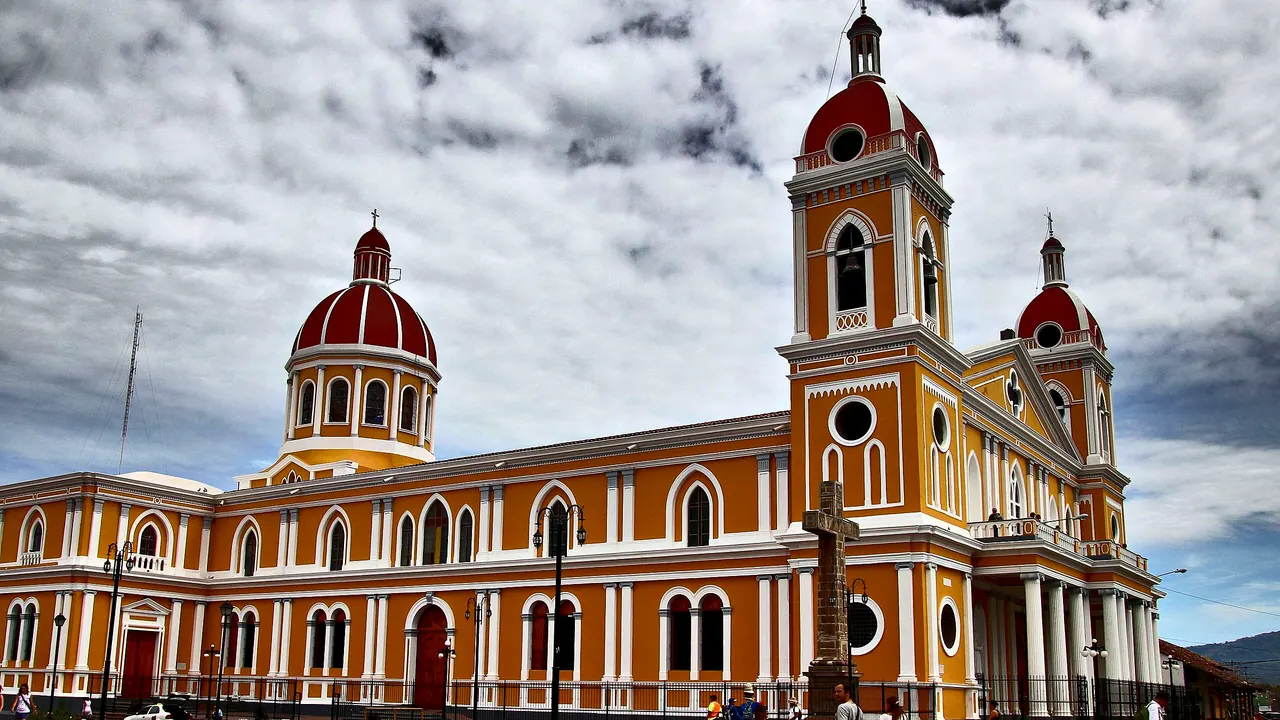
Granada's appeal is the whole townscape. Its low ochre and blue houses with courtyards line a grid running to the yellow cathedral, and the bell tower of La Merced looks out to Mombacho. The San Francisco convent, with its basalt statues from Zapatera, is the nearest thing to a major collection.
Panama City has more to see. It has two layers of history, the rebuilt colonial streets of Casco Viejo and the ruins of Panamá Viejo, both UNESCO-listed. On top of that comes the Canal, with ships passing a few metres away at Miraflores, and Gehry's Biomuseo. Its museums are small, though, and neither city needs more than a few days.
Nightlife
A night out in Granada means one street. You drink cheap rum at tables out on La Calzada, then move on to a hostel bar, with salsa or reggaeton in a few small clubs at weekends. It's friendly, but you will have seen it all after a night or two.
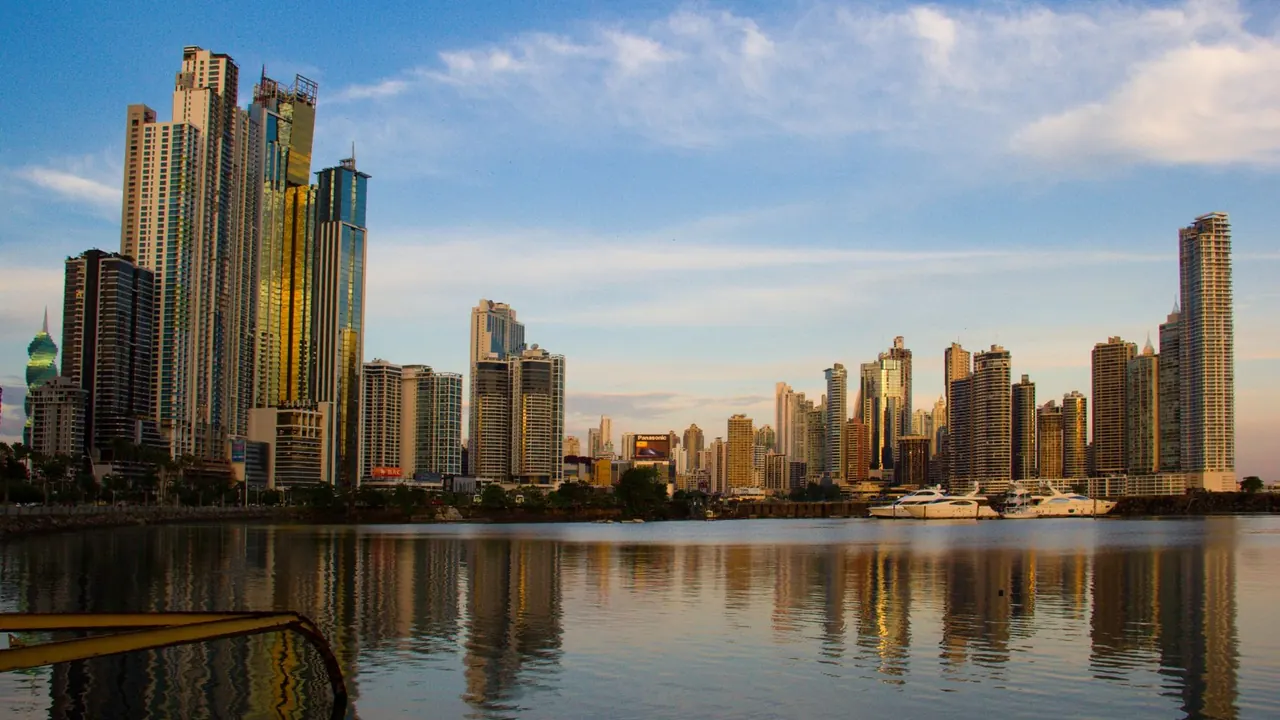
Panama City goes much further. You can start with cocktails on a Casco Viejo rooftop looking across at the lit towers, then take a taxi to the clubs of Calle Uruguay and Marbella until the early hours. People dress up a little more for it, and the crowd mixes locals, expats and business travellers.
Nature & outdoors
Both cities have outstanding wild country within easy reach, but of different kinds. Granada's is volcanic. There is cloud forest and misty craters on Mombacho, kayaking through Las Isletas, and at Masaya you can drive right up to the rim of an active crater.
Panama City's is lowland rainforest, and it starts inside the city at Parque Natural Metropolitano. Soberanía and the Pipeline Road attract serious birdwatchers, and on Gatún Lake you can see monkeys on the banks as cargo ships pass. Choose Granada if you want craters and lake islands, and Panama City for toucans and sloths.
Day trips
The two are about level for day trips, but the outings are different in character. From Granada you visit small towns: the Masaya craft market and the Monimbó quarter, the pottery workshops of the Pueblos Blancos and the lookout at Catarina, with Managua's cathedral ruins about an hour away.
From Panama City the trips are more varied. You can see the Spanish forts at Portobelo and San Lorenzo, ride a dugout canoe to visit Emberá communities, or spend a day on a partial Canal transit. Its most rewarding islands, San Blas and the Pearl Islands, really need an overnight stay.
Good for families
Panama City is easier with children. Watching the locks at Miraflores, the hands-on Biomuseo, bikes and quadricycles on the Amador Causeway and the rescued animals at Summit Nature Park give you a full few days. The malls offer air-conditioning when the heat gets too much.
Granada has good single outings, such as a carriage ride, the monkey island in Las Isletas and the steaming crater at Masaya. Beyond those there is little made for children, and medical care is basic outside Managua. It suits older children better than toddlers.
Getting around
Getting around is about equally easy in both, but in different ways. All of Granada's centre is a walkable grid, so you go everywhere on foot, using a taxi or carriage in the midday heat. Getting out of town means crowded chicken buses or a hired driver.
In Panama City only Casco Viejo is easy on foot. The rest is a long strip of towers and highways, served by a metro that misses most sights, so in practice you rely on taxis and ride-hailing apps.
Shopping & style
Panama City offers far more for shoppers. Its huge air-conditioned malls in Punta Pacífica and around Albrook draw buyers from across the region. For crafts it has Guna molas, Emberá baskets and tagua carvings.
Granada sells only crafts: hammocks, Pueblos Blancos pottery, rocking chairs, cigars and rum, and the better choice of these is at the Masaya market. Neither city has a shopping street worth strolling.
Affordability
Your money goes much further in Granada. Courtyard guesthouses, street food, local buses and tours to the volcanoes all cost very little, and even the boutique hotels in old mansions look cheap to most visitors.
In Panama City everyday costs are low, but the places visitors tend to use are not. Rooms in Casco Viejo or the banking district, rooftop drinks and guided rainforest trips are priced like a mid-range Western city. Eating at fondas and staying outside the old town brings the cost down a good deal.
Live music & performing arts
Neither city is a place to plan a trip around performances, but Panama City has more to offer. The ornate Teatro Nacional in Casco Viejo hosts the national symphony, and the Panama Jazz Festival brings well-known players every January.
Granada's music is informal: marimba players and folkloric dancers performing for diners on La Calzada, plus music and dancing at the saints' festivities. There is no stage season of any kind.
Wellness & relaxation
Neither city has a spa culture, but Granada is the easier place to rest. The town moves slowly, with siestas in shaded courtyards, a hotel pool and quiet streets once the evening cools. The lodges at Laguna de Apoyo add yoga and massage by the water.
Panama City is loud, humid and full of traffic. Its calm is limited to hotel pool decks in Punta Pacífica and early mornings in Casco Viejo, and most people who want a real rest leave for the highlands or the islands.
When should you go?
Pick your month. The climate figures are measured averages, not a forecast.
Granada, Nicaragua in July
Panama City in July
Daytime high, °C
Rainfall in the month, mm
Where the figures come from
Granada, Nicaragua's temperatures are measured 34 km from the centre, at Managua A. C. Sandino.
Granada, Nicaragua has no rain gauge within 25 km of the centre, so its rainfall comes from a gridded climate dataset read at the city rather than from a gauge further away.
Panama City has no rain gauge within 25 km of the centre, so its rainfall comes from a gridded climate dataset read at the city rather than from a gauge further away.
Temperature and rainfall are climate normals, averaged over the years shown. Granada, Nicaragua: 1961-1990 (sunshine 1991-2020, rainfall 1991-2020) normals, Managua A. C. Sandino (33.7 km from centre). Panama City: 1991-2020 normals, Tocumen (20.4 km from centre).
Both cities are hot all year, with daytime highs a little over 30°C in every month, so the choice is really about rain. Granada has a sharp dry season from December to April, when hardly any rain falls and the sun shines for long hours. Its hottest weeks come in April, around 35°C, which makes walking the streets hard work in the middle of the day. The rains arrive in May, and September and October are the wettest months, with October bringing about 329mm. By December it is dry again.
Panama City's driest stretch is shorter and falls earlier in the year. It runs roughly from February to April, and March is the driest month with about 19mm. Its wet season also lasts longer, getting heavier through the autumn and peaking in November at about 438mm, with December still very wet. The water in both places stays warm enough for swimming all year. Early in the year is the best time to see both cities: Granada is at its best from December to March, and Panama City from February to April.
Which traveller are you?
On a tight budget, Granada is the clear choice. Guesthouses, street food, taxis and volcano tours all cost very little. In Panama City, rooms and anything aimed at visitors cost about what they would in a mid-range Western city.
For a food and nightlife trip, choose Panama City. You can eat ceviche at the fish market, have chef-led dinners in Casco Viejo, and go from rooftop bars to clubs on Calle Uruguay until the early hours. Granada has good street food and a lively strip, but it soon runs out.
On a relaxing and wellness trip, Granada makes it easier to slow down. You get rocking chairs in shaded courtyards, quiet evening streets and yoga lodges by Laguna de Apoyo. Panama City is loud and full of traffic, and its calm is mostly found in hotel spas.
Before you go
| Measure | Granada, Nicaragua | Panama City |
|---|---|---|
| Official language | Spanish | Spanish |
| Currency | Cordoba Oro (NIO) | Balboa (PAB) |
| Sockets | AB120 V, 60 Hz | AB110 V, 60 Hz |
| Driving side | Right | Right |
| Time zone | UTC-6 | UTC-5 |
| Emergency number | Police 118, ambulance 128, fire 115/120 | 911 |
| Elevation | 73 m | 20 m |
| Main airport | Augusto C. Sandino (Managua) International Airport (MGA)33 km from centre11 non-stop destinations | Tocumen International Airport (PTY)20 km from centre92 non-stop destinations |
| Public holidays this year | 12 days | 14 days |
By the numbers
| Measure | Granada, Nicaragua | Panama City |
|---|---|---|
| City population | 105,171 | 1,540,000 |
| People per km² | 178 | 5,600 |
| Museums within 10 km | 1 | 10 |
| UNESCO World Heritage sites within 50 km | 0 | 2 |
| Swim season, months above 21 °C | 12 months | 12 months |
Where else could you go?
Every comparison below shares a destination with this one, so you can follow Granada, Nicaragua or Panama City somewhere new.
- Leon, Nicaraguavs Granada, Nicaragua
- Tamarindovs Granada, Nicaragua
- Santa Teresa, Costa Ricavs Granada, Nicaragua
- San Jose, Costa Ricavs Granada, Nicaragua
- Cartagenavs Panama City
- San Jose, Costa Ricavs Panama City