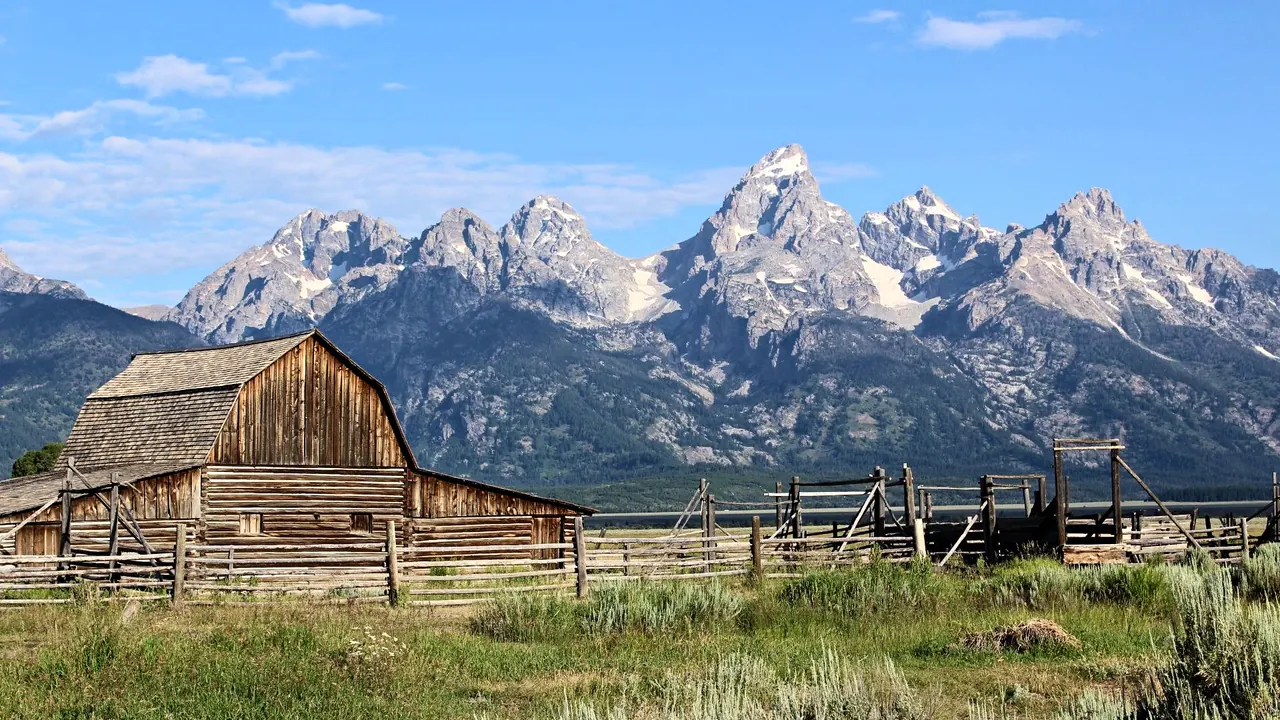
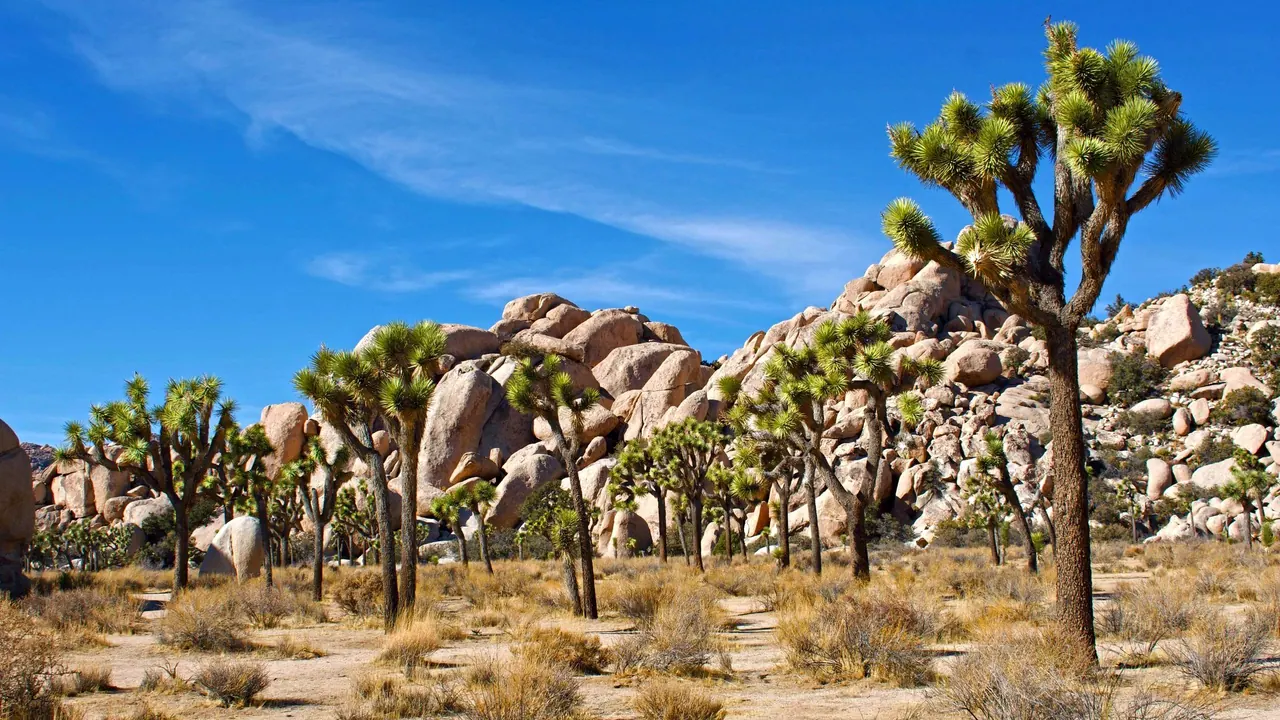
Photos: Grand Teton by Z3lvs, CC0; Joshua Tree by Mr. Location Scout, Pexels License.
Grand Teton or Joshua Tree?
Our verdict in twelve categories, each scored against the same fixed benchmark cities, and the climate month by month, so you can choose for your trip.
Choose Grand Teton for
- food and drink
- families
- nature and the outdoors
Grand Teton is the pick for travellers who want a true mountain landscape and the animals that live in it. Granite peaks rise straight out of the valley above a chain of lakes, moose and bison graze by the roadside, and Yellowstone starts just to the north. In winter the same place becomes a serious ski destination. Jackson gives you better meals and livelier evenings than the desert towns can, and it suits families with children who love animals. The cost is the price: this is one of the most expensive corners of the American West.
Choose Joshua Tree for
- prices
- wellness
- day trips
Joshua Tree works better as a slower and cheaper escape in the cooler half of the year. Its strengths are boulder piles to climb, Joshua tree forests, a sky dark enough to show the Milky Way, and a rental house with a pool or hot tub to come back to. There are mineral springs and sound baths nearby for unwinding, and Palm Springs is close enough for a day of mid-century houses and better restaurants. Choose it for rest, rock and stars rather than wildlife or alpine hiking.
Scoreboard
Twelve categories on one fixed scale from 0 to 100. The shaded stretch is the gap between the two.
Your match
Pick a travel style or drag the sliders, and both match scores follow your weighting.
Too close to call, level with your weighting
Wins on food and drink and families with your weighting.
Wins on prices and wellness with your weighting.
What matters to you?
Category by category
What the scores mean for a trip.
Beaches & swimming
Neither place is a swimming destination, but Grand Teton at least has natural water to get into. On hot late-summer afternoons String Lake is shallow and sandy enough for a quick, chilly dip, and families paddle off the gravel shores of Jackson Lake at Colter Bay. Joshua Tree has no lake, river or coast within easy reach, so the only swim is in your rental's pool.
Food & drink
Jackson is the clear winner. A ski-town clientele has drawn cooks who make the most of elk, bison and trout, and around the town square there is a good range, from upscale dining rooms to barbecue, bakeries and coffee roasters. Breweries and distilleries are close by. Inside the park the options shrink to lodge dining rooms and cafeterias.
Along Highway 62 near Joshua Tree, eating out means diners, Mexican food, health-food cafés and barbecue up in Pioneertown, and the kitchens close early. Most visitors shop at the Yucca Valley supermarkets and cook at their rental. Anyone who wants a proper restaurant dinner has to drive to Palm Springs.
Culture & sights
Both places offer only light sightseeing, but of different kinds. At Grand Teton the sights are frontier remains set against the peaks: the barns of Mormon Row, the log chapel with the mountains framed in its window, and Menor's Ferry. The wildlife art museum above the elk refuge in Jackson is worth a few hours.
Joshua Tree's sights are odder and more homemade. There is Noah Purifoy's scrap sculpture field, the Integratron dome said to follow an alien design, and the false-front street built as a film set at Pioneertown. In the park itself you find homesteaders' relics at Keys Ranch and petroglyphs. Neither place has enough to fill several days.
Nightlife
Jackson gives you more of an evening out. Its western saloons on the town square, with saddle bar stools and country dancing, have real character, and in winter there is loud après-ski at Teton Village. Around Joshua Tree, nights out come down to a couple of casual bars and the Pioneertown roadhouse at weekends. Most evenings end by the fire pit under the stars. Both places go to bed early.
Nature & outdoors
Both are outstanding landscapes, and Grand Teton is the bigger one. The range rises with no foothills above glacial lakes, and the trails run from easy lake loops to Cascade Canyon and the multi-day Teton Crest. Moose, bison, elk and bears add a wildlife element the desert cannot match. Yellowstone begins next door, and in winter the deep powder of Jackson Hole takes over.
Joshua Tree's appeal is closer to the ground. Thousands of climbing and bouldering routes cover the granite piles, and paths lead among Joshua trees, cholla gardens and palm oases at Lost Palms. The certified dark sky is a highlight of its own. Its season, roughly October to May, suits travellers who want the outdoors in the cooler months.
Day trips
Joshua Tree has more variety within an easy drive. Palm Springs, about an hour away, has mid-century modern architecture and a walkable downtown. Idyllwild sits among pines in the mountains, Route 66 crosses the Mojave past Amboy, and the Salton Sea makes a long, strange outing.
From Grand Teton the one big excursion is Yellowstone. It is magnificent, but it means more landscape rather than a change of scene. Beyond that, the farming towns of Idaho's Teton Valley over the pass are pleasant for half a day.
Good for families
Grand Teton gives children more to do. Watching wildlife from the car, the boat across Jenny Lake to Hidden Falls, flat walks around String Lake and gentle rafting on the Snake all suit school-age children, and in winter there are ski schools. Children do need to learn the rules about bear spray and keeping their distance.
At Joshua Tree, the boulders at Hidden Valley and Skull Rock make a natural climbing frame, and a campsite under the Milky Way stays in the memory. On the other hand, there is little shade, the drives are long, and the heat is risky for small children from late spring onwards. The nearest attraction designed for families, the Living Desert zoo, is a long way off.
Getting around
Both need a car, and in both the driving is easy. At Grand Teton the airport is inside the park and the highways run up an open valley. The road network changes with the seasons: from late autumn the middle of the Teton Park Road closes, and summer parking at Jenny Lake fills early. Jackson's centre can be walked, and a bus runs to Teton Village.
Joshua Tree's towns are strung out along Highway 62 and are not made for walking. Expect queues at the west entrance on spring weekends, and much of the park has no mobile signal, so download your maps before you go.
Shopping & style
Shopping is limited in both, and each has its own style. Around Jackson's square it is polished western: wildlife paintings and bronzes, boots, hats, Native American jewellery and outdoor shops stocked for climbers, skiers and anglers. Around Joshua Tree it is more dusty and eclectic, with vintage Western wear and mid-century furniture in Yucca Valley's old town, crystal shops, and weekend markets selling work by local artists.
Affordability
Joshua Tree is noticeably easier on the wallet. Campsites and older motels in Twentynine Palms are cheap, food is modestly priced, and the park costs little to enter. The stylish rental houses get expensive in spring and at weekends, though, and petrol adds up.
Jackson is one of the country's wealthiest resort towns. Summer rooms there and in the lodges book up early at high prices, and guided trips add more on top. Camping in the park or staying over the pass in Idaho helps, but this is still the dearer trip.
Live music & performing arts
There is not much difference in quantity, but the music is very different. Grand Teton's highlight is classical: the music festival at Teton Village, held since the 1960s, brings professional players to give orchestral and chamber concerts at the foot of the peaks through July and August. Otherwise there is little beyond country bands in the saloons.
Joshua Tree's draw is the Pioneertown roadhouse, which books well-known indie, rock and country acts. There is also a music festival with camping in spring and autumn. Neither has theatre or opera worth travelling for.
Wellness & relaxation
Joshua Tree was more or less made for slowing down. Yoga retreats and sound baths gather around the village, the Integratron dome hosts sessions of its own, and Desert Hot Springs, about half an hour away, has spa motels with pools fed by mineral springs. Many rentals add a hot tub under the stars.
At Grand Teton the restful side is mainly the quiet of still lakes at dawn, plus full spas in the upscale hotels of Jackson and Teton Village. Granite Hot Springs, a forest pool about an hour south, makes a lovely soak, but it is an outing rather than a base for a wellness trip.
When should you go?
Pick your month. The climate figures are measured averages, not a forecast.
Grand Teton in July
Joshua Tree in July
Daytime high, °C
Rainfall in the month, mm
Where the figures come from
Grand Teton's temperatures are measured 33 km from the centre, at Jackson Hole / Moose.
Grand Teton has no rain gauge within 25 km of the centre, so its rainfall comes from a gridded climate dataset read at the destination rather than from a gauge further away.
Joshua Tree has no rain gauge within 25 km of the centre, so its rainfall comes from a gridded climate dataset read at the destination rather than from a gauge further away.
Temperature and rainfall are climate normals, averaged over the years shown. Grand Teton: 1991-2020 normals, Jackson Hole / Moose (32.7 km from centre). Joshua Tree: 1992-2020 (rainfall 1991-2020) normals, Twentynine Palms / Sunfair Heights (20.4 km from centre).
The two places are at their best in opposite halves of the year. Below the Tetons, June to September is the season for long hikes, with July days around 32°C, and String Lake is only warm enough for a quick swim from late July into August. October and November cool off fast. From December to February the days sit near freezing and the most rain and snow falls, about 75mm in December, so this is ski season. March to May stays cool and changeable while the snow slowly retreats.
Around Joshua Tree it works the other way round. June to August is too hot for anything except outings at dawn and dusk, with highs near 39°C, and September is still hot at about 35°C. From October to April the days are mild and the rocks are pleasant to climb at midday, with January around 17°C. By May it is already getting warm. Rain is scarce all year. The desert's best weather comes in late winter and early spring, when the Tetons are still under snow.
Which traveller are you?
On a family trip with school-age children, Grand Teton works better. Animals give every day a focus children understand straight away, and the outings are short and varied. Joshua Tree, with little shade and long drives, is harder going with younger children.
For a relaxing and wellness trip, Joshua Tree is the natural choice. The whole area is set up for slowing down, and a soak or a session is never far from your base. At Grand Teton, rest comes from the scenery, and pampering means a resort hotel.
On a trip on a tight budget, Joshua Tree stretches your money further. Simple places to stay and plain food keep a desert trip cheap, and the park costs little. Jackson is priced for wealthy visitors, so a cheap Teton trip means a tent and a camp stove.
Before you go
| Measure | Grand Teton | Joshua Tree |
|---|---|---|
| Currency | US Dollar (USD) | US Dollar (USD) |
| Sockets | AB120 V, 60 Hz | AB120 V, 60 Hz |
| Driving side | Right | Right |
| Time zone | UTC-7, UTC-6 in summer | UTC-8, UTC-7 in summer |
| Emergency number | 911 | 911 |
| Main airport | Jackson Hole Airport (JAC)16 non-stop destinations | Palm Springs International Airport (PSP)29 non-stop destinations |
| Public holidays this year | 11 days | 13 days |
Where else could you go?
Every comparison below shares a destination with this one, so you can follow Grand Teton or Joshua Tree somewhere new.
- Yellowstonevs Grand Teton
- Death Valleyvs Joshua Tree
- Sequoiavs Joshua Tree
- Kings Canyonvs Joshua Tree
- Grand Canyonvs Joshua Tree
- Zionvs Joshua Tree