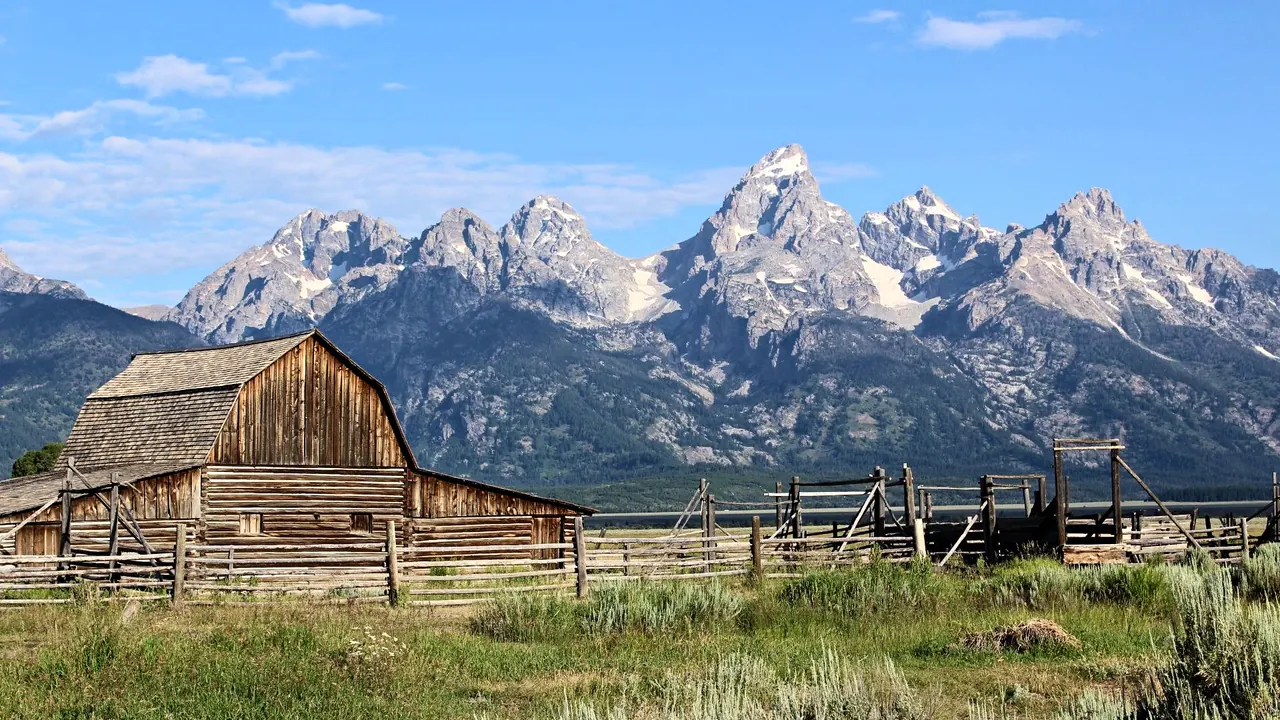
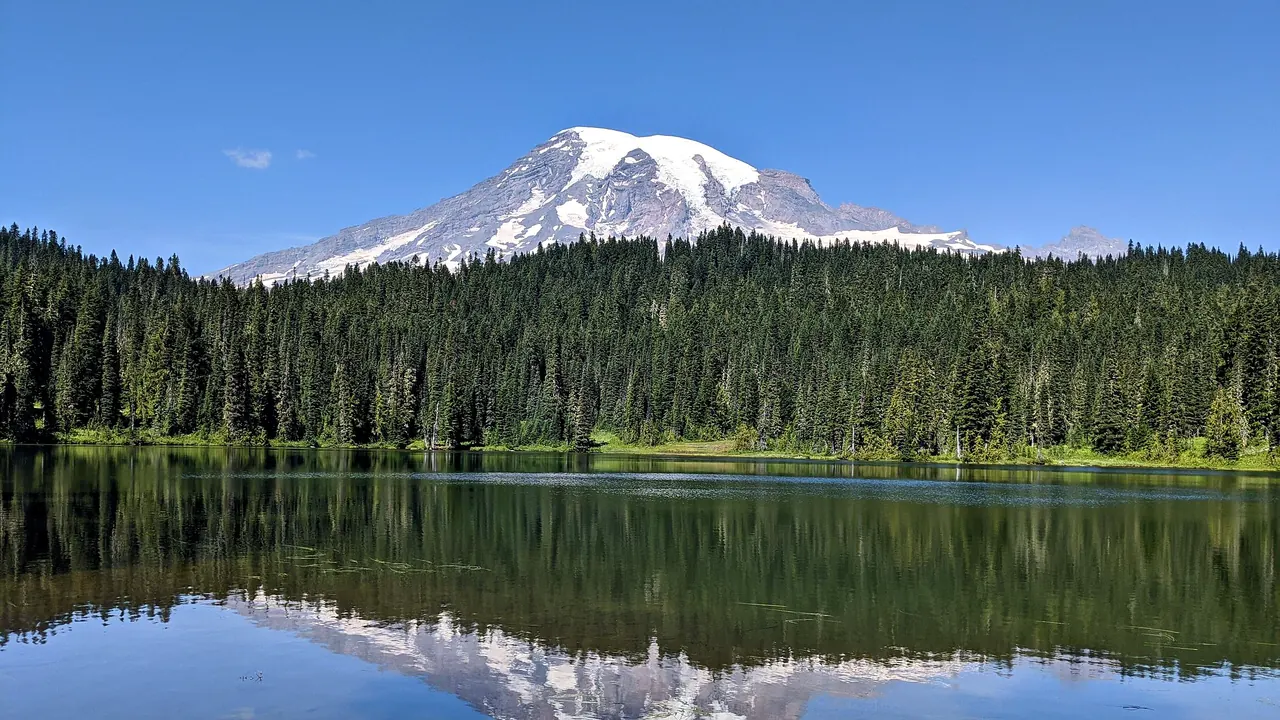
Photos: Grand Teton by Z3lvs, CC0; Mount Rainier by Angelina Suzuki, CC BY-SA 4.0, cropped.
Grand Teton or Mount Rainier?
Our verdict in twelve categories, each scored against the same fixed benchmark cities, and the climate month by month, so you can choose for your trip.
Choose Grand Teton for
- live music and the arts
- shopping
- food and drink
Grand Teton suits travellers who want the mountains and a proper town at the end of the day. Jackson gives you western saloons, serious restaurants, galleries and a summer music festival, and the drives are short across an open valley with moose and bison along the way. Yellowstone sits just to the north for a second park in the same trip. The cost is real, though: this is one of the priciest corners of the American West.
Choose Mount Rainier for
- prices
- day trips
Mount Rainier is the quieter, wetter and cheaper choice, a single great volcano ringed by old-growth forest, wildflower meadows and glaciers. Evenings mean a cabin porch rather than a bar, and food is simple, but campers can stay very cheaply. Tacoma, Olympia and Seattle are within reach for a day of museums, so the mountain pairs easily with a city stay in the Pacific Northwest.
Scoreboard
Twelve categories on one fixed scale from 0 to 100. The shaded stretch is the gap between the two.
Your match
Pick a travel style or drag the sliders, and both match scores follow your weighting.
Wins on live music and the arts and shopping with your weighting.
Wins on prices and day trips with your weighting.
What matters to you?
Category by category
What the scores mean for a trip.
Beaches & swimming
Neither is a place for a beach vacation, but Grand Teton has a slightly better swim. String Lake, shallow with sandy edges, warms enough for a brisk dip on hot afternoons from late July, and families paddle off the gravel shores at Colter Bay on Jackson Lake.
At Rainier the park lakes, Reflection Lakes and the high tarns, stay too cold for more than wading even in August. The nearest real swimming is at lowland reservoirs such as Alder Lake near Elbe, outside the park.
Food & drink
Jackson gives Grand Teton a real dining scene for a town of its size: Mountain West cooking with bison, elk and trout, upscale rooms around the square, good bakeries and coffee roasters, and craft breweries and distilleries. Inside the park it falls back on lodge dining rooms and cafeterias.
Around Rainier, eating is mostly refuelling. Ashford, Packwood and Enumclaw offer diners, pizza and the odd brewpub, the lodges at Paradise and Longmire serve hearty meals, and salmon and late-summer berries are the nearest thing to a local theme. A proper restaurant meal means driving back towards Tacoma.
Culture & sights
Both have a modest human story played against a mountain backdrop, but the kind differs. Grand Teton's sights are frontier remains: the barns of Mormon Row, the log chapel with the peaks in its altar window, Menor's Ferry, plus the National Museum of Wildlife Art above Jackson's elk refuge.
Rainier's heritage is the national park itself. The old headquarters at Longmire and the beamed lobby of Paradise Inn show the rustic style that shaped American park architecture, and fire lookouts on the ridges add to it. Either is a half day's interest rather than a reason to come.
Nightlife
Grand Teton at least has a night out. Jackson's long-standing western saloons, with country dancing on the town square, plus brewpubs, cocktail bars and loud late-afternoon après-ski at Teton Village in winter, give evenings some character, even if they end early.
Rainier has essentially nothing after dark beyond a beer in an Ashford or Packwood tavern. Evenings there are campfires, cabin porches and stars.
Nature & outdoors
Both are world-class mountain landscapes, and the choice is about what kind. Grand Teton is granite peaks rising straight from a flat sage valley with no foothills, glacial lakes at their foot, and wildlife you can watch from the road: moose at Oxbow Bend, bison and pronghorn on the flats, bears at dawn. Add Snake River floats and steep powder skiing at Jackson Hole.
Rainier is one huge glaciated volcano, with far more varied forest around it. You get wildflower meadows on the Skyline Trail at Paradise, the Emmons Glacier from Sunrise, giant cedars along the Ohanapecosh and moss-hung rainforest in the Carbon River valley. The two-week Wonderland Trail around the mountain is a classic, though the high country is only open for a short summer.
Day trips
Mount Rainier has the better range of days out because cities lie within reach. Tacoma's waterfront museums, including the glass museum with its working hot shop, and Olympia's domed capitol are each about an hour and a half away, and Seattle is possible at a stretch.
From Grand Teton, the great outing is Yellowstone, about an hour north of Jackson Lake, which is more wild landscape rather than a change of scene. Otherwise there are only the farm towns of Idaho's Teton Valley over the pass and small ranching towns to the south.
Good for families
Both work for outdoor families and less well for toddlers. Grand Teton's strength is big animals: moose, bison and elk seen from the car, the boat across Jenny Lake to Hidden Falls, gentle Snake River floats and a summer rodeo in Jackson. Bear rules and long distances make it best for school-age children.
Rainier has more short, varied walks for small legs: Trail of the Shadows at Longmire, the roaring slot at Box Canyon and snow at Paradise into early summer. Outside the park there's the tram through Northwest Trek's wildlife park and a steam railway from Elbe. Winding roads and basic food argue for a few days rather than a week.
Getting around
Both need a car, but Grand Teton is much easier to drive. The airport is inside the park, two quiet highways run up an open valley, and a full loop past Jenny Lake and Oxbow Bend fits into a day. Jackson's compact centre is walkable, with a bus to Teton Village.
At Rainier the sights are spread around the mountain on slow, winding roads, with Paradise and Sunrise about two hours apart. The east-side roads open only in summer, and in winter just the Longmire to Paradise road stays open, with chains required. Choosing a base on the right side, Ashford or Packwood, matters a great deal.
Shopping & style
Grand Teton has a small but distinctive shopping street around Jackson's square: western galleries with wildlife bronzes, hats and boots, Native American jewellery, serious outdoor shops and a few upscale boutiques for the resort crowd.
Rainier has virtually none, only park gift shops, general stores and a handful of craft shops in the gateway towns. Visitors there should arrive already equipped from Seattle or Tacoma.
Affordability
Mount Rainier is the more affordable of the two, though not cheap in high summer. Rooms in the gateway towns fill and charge full rates in July and August, but meals cost the national norm, and camping in the park or national forest keeps a stay very economical.
Grand Teton is markedly more expensive. Jackson, Teton Village and the park lodges charge resort prices and book up far ahead, and guided rafting or climbing adds up fast. Camping, cooking your own meals or staying over the pass in Idaho are the ways to soften it.
Live music & performing arts
Grand Teton has a genuine summer programme. The Grand Teton Music Festival, running since the 1960s, brings a professional orchestra to a hall at Teton Village through July and August. Jackson adds a performing arts centre, light western musicals and country bands in the saloons.
Rainier has nothing comparable. A ranger talk in a campground amphitheatre is the evening entertainment, and concerts mean the drive back to Tacoma or Seattle.
Wellness & relaxation
Grand Teton offers a little more pampering. Upscale hotels in Jackson and Teton Village run full spas, and Granite Hot Springs, a natural forest pool about an hour south, is a proper soak in summer and a ski or snowmobile outing in winter.
Rainier's rest is almost entirely the quiet itself: a cabin under the firs near Ashford with river noise and no phone signal. Its Ohanapecosh hot springs are for looking at rather than bathing, and treatments stop at a deck hot tub or a lodge massage.
When should you go?
Pick your month. The climate figures are measured averages, not a forecast.
Grand Teton in July
Mount Rainier in July
Daytime high, °C
Rainfall in the month, mm
Where the figures come from
Grand Teton's temperatures are measured 33 km from the centre, at Jackson Hole / Moose.
Grand Teton has no rain gauge within 25 km of the centre, so its rainfall comes from a gridded climate dataset read at the destination rather than from a gauge further away.
Mount Rainier has no weather station within reach, so its figures come from a gridded climate model rather than a measured record, and read a broad area rather than one spot.
Temperature and rainfall are climate normals, averaged over the years shown. Grand Teton: 1991-2020 normals, Jackson Hole / Moose (32.7 km from centre). Mount Rainier: 1991-2020 normals, TerraClimate 4 km grid at the town, no weather station within 90 km.
Grand Teton has a short, hot and dry summer. In the Jackson Hole valley, July and August reach about 32°C by day with very little rain, ideal for long hikes and the few weeks when String Lake is pleasant for a swim. June and September are milder and still dry enough for the trails. April, October and November are cold shoulder months, and from December to February the valley sits near freezing and turns into ski country.
Mount Rainier, measured around the gateway towns where most visitors stay, is cooler and far wetter. Summer peaks at about 23°C in August, comfortable for walking but never warm enough for the lakes, and July and August are the only reliably dry months. From October the rain returns heavily, reaching 327mm in November, and the high country stays under snow for much of the year. So Rainier's walking season is shorter, while its winters are wet rather than bitterly cold.
Which traveller are you?
For an outdoors trip, both are world class, so decide on season and style. Grand Teton has a drier summer, wildlife at dawn, river floats and Yellowstone next door. Rainier rewards walkers after glaciers and old forest who accept rain outside high summer.
On a family trip with children, Grand Teton suits a longer stay: one easy valley to drive, a town with choice at mealtimes, and animals that make every drive an outing. Rainier fits better as a few days added to a Seattle visit.
On a trip on a tight budget, choose Mount Rainier. The trails are free in both parks, so the difference lies in beds, meals and paid outings, and Jackson's resort prices push up all three. At Rainier a tent and a camping stove stretch much further.
Before you go
| Measure | Grand Teton | Mount Rainier |
|---|---|---|
| Currency | US Dollar (USD) | US Dollar (USD) |
| Sockets | AB120 V, 60 Hz | AB120 V, 60 Hz |
| Driving side | Right | Right |
| Time zone | UTC-7, UTC-6 in summer | UTC-8, UTC-7 in summer |
| Emergency number | 911 | 911 |
| Main airport | Jackson Hole Airport (JAC)16 non-stop destinations | Seattle–Tacoma International Airport (SEA)136 non-stop destinations |
| Public holidays this year | 11 days | 11 days |
By the numbers
| Measure | Grand Teton | Mount Rainier |
|---|---|---|
| Population | - | 875 |
Where else could you go?
Every comparison below shares a destination with this one, so you can follow Grand Teton or Mount Rainier somewhere new.
- Yellowstonevs Grand Teton
- Olympic National Parkvs Mount Rainier
- Rocky Mountain National Parkvs Grand Teton
- Glacier National Parkvs Grand Teton
- Archesvs Grand Teton
- Canyonlandsvs Grand Teton