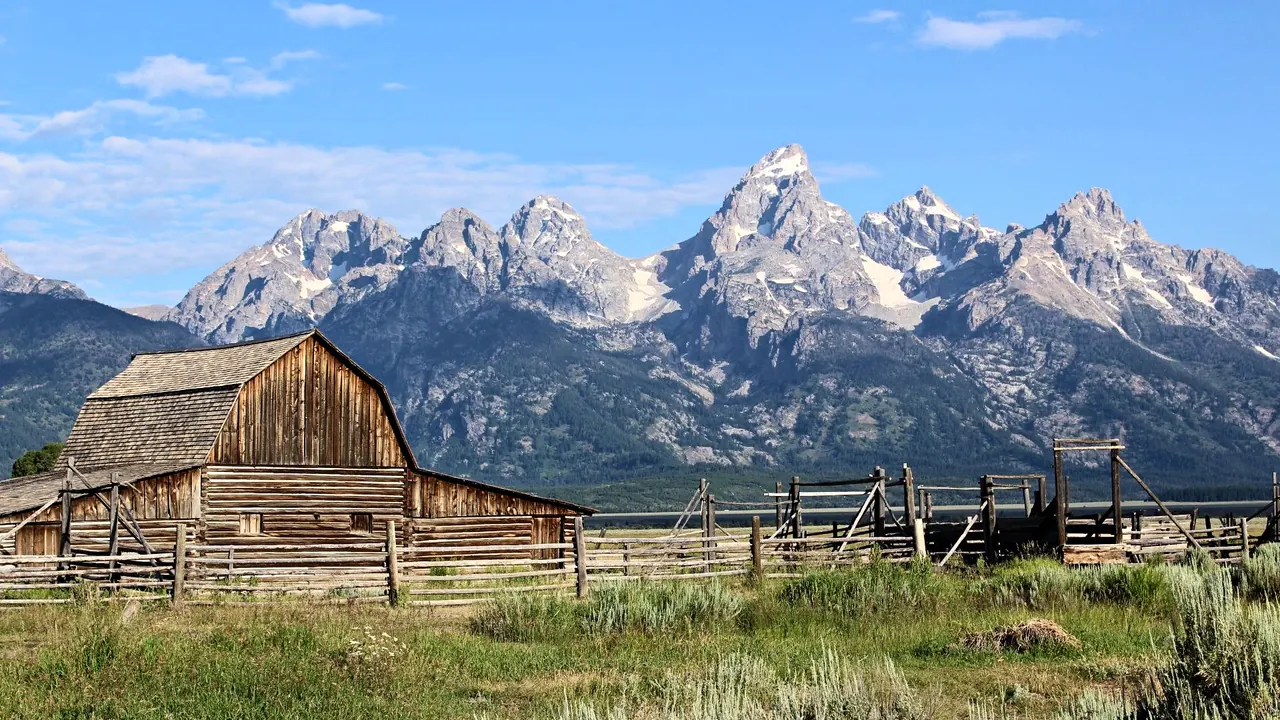
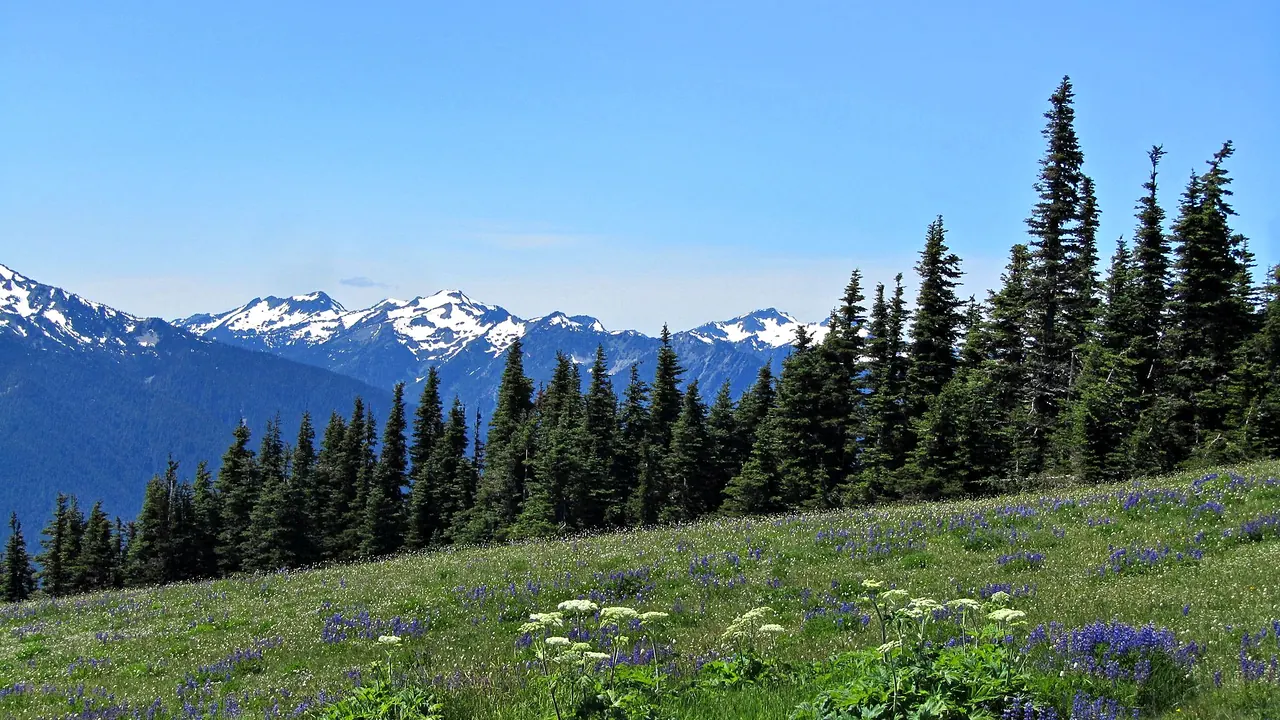
Photos: Grand Teton by Z3lvs, CC0; Olympic National Park by Jeffhollett, CC BY-SA 4.0, cropped.
Grand Teton or Olympic National Park?
Our verdict in twelve categories, each scored against the same fixed benchmark cities, and the climate month by month, so you can choose for your trip.
Choose Grand Teton for
- shopping
- nightlife
- getting around
Grand Teton suits travellers who want mountains with a working town attached. The peaks rise straight out of a flat valley, the wildlife is easy to see from the road, and Jackson is a short drive away with the better restaurants, saloons and western galleries. The roads are simple, so a compact stay of hikes, dawn wildlife drives and evenings in town is easy to plan. In winter the same place turns into a serious ski destination. The price of all this is high, and it suits people who are happy to pay for it.
Choose Olympic National Park for
- day trips
- prices
- wellness
Olympic National Park is the choice for a slower and more varied road trip, and an easier one on the wallet. In a single stay you get glaciated high country, mossy rainforest and a wild Pacific shore, linked by long drives around the edge of the park. Port Townsend's Victorian streets, the soak at Sol Duc and the ferry to Victoria fill the days off the trail. It suits travellers who don't mind rain gear and quiet evenings, and who would rather camp or stay in a motel than in a resort.
Scoreboard
Twelve categories on one fixed scale from 0 to 100. The shaded stretch is the gap between the two.
Your match
Pick a travel style or drag the sliders, and both match scores follow your weighting.
Too close to call, 2 points apart
Wins on shopping and nightlife with your weighting.
Wins on day trips and prices with your weighting.
What matters to you?
Category by category
What the scores mean for a trip.
Beaches & swimming
Neither is a swimming destination, but the water you find is quite different. Around the Tetons it means cold snowmelt lakes. String Lake's sandy edges warm up enough for a quick swim in late summer, and families paddle at Colter Bay on Jackson Lake.
Olympic has a real ocean shore, and a dramatic one, with sea stacks, driftwood and tide pools at Rialto, Ruby and Second Beach. Those beaches are for walking, though, because the cold surf and rolling logs make the sea unsafe. A swim there means a brief dip in Lake Crescent.
Food & drink
Both give you fairly simple food inside the parks and better eating in the towns. Jackson has the edge, with serious cooks, Mountain West dishes like elk and bison, and good bakeries and breweries around its square.
Olympic's strengths are its seafood and its ingredients: Dungeness crab, Hood Canal oysters, smoked salmon and summer berries, best eaten in Port Townsend. On the west side you are left with diners and picnics.
Culture & sights
Olympic has more to offer in culture, though in neither place is it the reason to go. Port Townsend is a Victorian seaport that has survived almost intact, with Fort Worden at its edge. The Makah Museum at Neah Bay, with its finds from the buried village of Ozette, gives a rare look at the coast's whaling culture.
Grand Teton's sights are smaller scenes set against the mountains: the Mormon Row barns, the Chapel of the Transfiguration and Menor's Ferry. The National Museum of Wildlife Art in Jackson is the one indoor visit worth a few hours.
Nightlife
Jackson gives Grand Teton the clear lead after dark. Its western saloons have saddle bar stools and country dancing, and in winter Teton Village has loud après-ski in the late afternoon. Even so, the nights end fairly early.
On the Olympic Peninsula, a night out means a pub or taproom in Port Townsend or Port Angeles, and nothing stays open late. Most evenings end at a campfire.
Nature & outdoors
Both are world-class, but the landscapes are very different. The Tetons are one dramatic range rising out of a sage valley, with granite summits above 4,000m, glacial lakes, and moose, bison and bears that are easy to spot. Yellowstone starts just to the north, and in winter there is powder skiing.
Olympic gives you three landscapes in one park: the glaciers around Mount Olympus, the dripping rainforest of the Hoh and Quinault valleys, and a wild coast you can hike along at low tide. In exchange you get fewer big animals and much wetter weather outside summer.
Day trips
Olympic has far more to offer for days away from the park. The ferry from Port Angeles takes you to Victoria, with its harbour and parliament buildings, so bring a passport. Port Townsend and Coupeville on Whidbey Island add old seaport towns, and Sequim's lavender farms are best in July.
From Grand Teton the one big outing is Yellowstone, which means more landscape rather than a change of scene. Beyond that there are the farming towns of Idaho's Teton Valley over the pass.
Good for families
Olympic is a little easier with children. Tide pools, elk in the Hoh valley, the short Hall of Mosses loop and a drive-through animal park near Sequim all appeal to children, though long drives and rain are part of the deal.
Grand Teton offers bigger animal sightings and the Jenny Lake shuttle boat up to Hidden Falls. However, bear rules, hot summers and the lack of easy attractions make it better for active families with older children.
Getting around
Both need a car, but Grand Teton is much more compact. The airport sits inside the park, and two valley roads keep the peaks in view, so a full loop past Jenny Lake and Oxbow Bend fits into one day. The catches are trailhead parking that fills early in summer and the winter closure of the Teton Park Road.
At Olympic no road crosses the mountains, so everything is reached from Highway 101 around the edge. It takes about two hours from Port Angeles to the Hoh, and most visitors split their stay between two bases.
Shopping & style
Jackson gives Grand Teton the advantage. Western art galleries, bronzes, cowboy boots, Native American jewellery and well-stocked outdoor shops line the blocks around the square.
Olympic's shopping is mostly antiques and books along Port Townsend's Victorian main street and lavender in Sequim. Beyond that it is gear and gift shops.
Affordability
Olympic is the cheaper trip by a clear margin. Its park lodges are expensive, but ordinary motels in Port Angeles, Sequim and Forks and a lot of simple camping keep costs down.
Grand Teton sits next to one of the country's wealthiest resort towns, so rooms, meals and guided tours are all expensive. The budget options are camping in the park or staying over the pass in Idaho.
Live music & performing arts
Both have a modest summer season, but in different styles. At the Grand Teton Music Festival in Teton Village, professional orchestra musicians play symphonic and chamber programmes through July and August.
Port Townsend leans towards folk and roots music instead, with jazz, blues and old-time fiddle workshops at Fort Worden and a small professional theatre. Away from the two towns, Olympic's evenings mean ranger talks.
Wellness & relaxation
Olympic is the better place to switch off. The mineral pools at Sol Duc sit at the end of a forest valley road, the lodges at Lake Crescent and Lake Quinault are quiet, and many valleys have no phone signal.
Grand Teton has full spas in the upscale Jackson and Teton Village hotels, plus Granite Hot Springs about an hour south in the Hoback canyon. Its quieter side is still lakes at dawn and dark skies at night.
When should you go?
Pick your month. The climate figures are measured averages, not a forecast.
Grand Teton in July
Olympic National Park in July
Daytime high, °C
Rainfall in the month, mm
Where the figures come from
Grand Teton's temperatures are measured 33 km from the centre, at Jackson Hole / Moose.
Grand Teton has no rain gauge within 25 km of the centre, so its rainfall comes from a gridded climate dataset read at the destination rather than from a gauge further away.
Olympic National Park has no rain gauge within 25 km of the centre, so its rainfall comes from a gridded climate dataset read at the destination rather than from a gauge further away.
Olympic National Park's sunshine is measured 87 km from the centre, at Quillayute State Airport.
Temperature and rainfall are climate normals, averaged over the years shown. Grand Teton: 1991-2020 normals, Jackson Hole / Moose (32.7 km from centre). Olympic National Park: 2006-2020 (sunshine 1981-2010, rainfall 1991-2020) normals, Port Angeles / Firwest Mobile Home Park (5.1 km from centre).
Grand Teton has a short, hot, dry summer and a long, cold winter. In the valley, July and August are the high point, with afternoons around 32°C and the least rain of the year. That suits the trails and a quick swim in String Lake, though open trails can feel hot by midday. June and September are milder and often better for long hikes. From December to February daytime highs stay close to freezing, so walking gives way to skiing, and spring warms only slowly through April and May.
Olympic's figures describe the lowland and coast, where summer highs stay around 20°C and July and August are the driest and sunniest months. Down there the winter is mild rather than frozen. From October, though, the rain returns hard, at about 150mm a month in late autumn and winter, and the days are short and grey. The rainforest valleys on the west side are wetter still. The mountains have a different season altogether: they are snowbound in winter, and the high trails stay closed until early summer. Even at its warmest the sea is only about 12°C, so it is for looking at, not swimming in. If you want heat, go to the Tetons in high summer. For mild hiking weather, Olympic's July and August are gentler.
Which traveller are you?
On a food and nightlife trip, Grand Teton is clearly better. Jackson cooks elk, bison and trout far better than its size suggests, and its saloons, brewpubs and après-ski give you real evenings out. Olympic's towns close early and offer little after dinner.
On a trip on a tight budget, Olympic National Park is easier. It has plenty of simple campgrounds and ordinary motels in Port Angeles, Sequim and Forks. Jackson ranks among the country's wealthiest resort towns, and its rooms and tours cost accordingly.
For skiers, Grand Teton is the obvious pick. Jackson Hole has steep, deep-powder runs, Teton Pass gives access to backcountry terrain, and Teton Village has ski schools. Olympic's winter brings rain on the coast and snow that closes the high trails, with no comparable resort.
Before you go
| Measure | Grand Teton | Olympic National Park |
|---|---|---|
| Currency | US Dollar (USD) | US Dollar (USD) |
| Sockets | AB120 V, 60 Hz | AB120 V, 60 Hz |
| Driving side | Right | Right |
| Time zone | UTC-7, UTC-6 in summer | UTC-8, UTC-7 in summer |
| Emergency number | 911 | 911 |
| Main airport | Jackson Hole Airport (JAC)16 non-stop destinations | Seattle–Tacoma International Airport (SEA)136 non-stop destinations |
| Public holidays this year | 11 days | 11 days |
By the numbers
| Measure | Grand Teton | Olympic National Park |
|---|---|---|
| Swim season, months above 21 °C | - | None |
Where else could you go?
Every comparison below shares a destination with this one, so you can follow Grand Teton or Olympic National Park somewhere new.
- Yellowstonevs Grand Teton
- Mount Rainiervs Olympic National Park
- Rocky Mountain National Parkvs Grand Teton
- Glacier National Parkvs Grand Teton
- Archesvs Grand Teton
- Canyonlandsvs Grand Teton