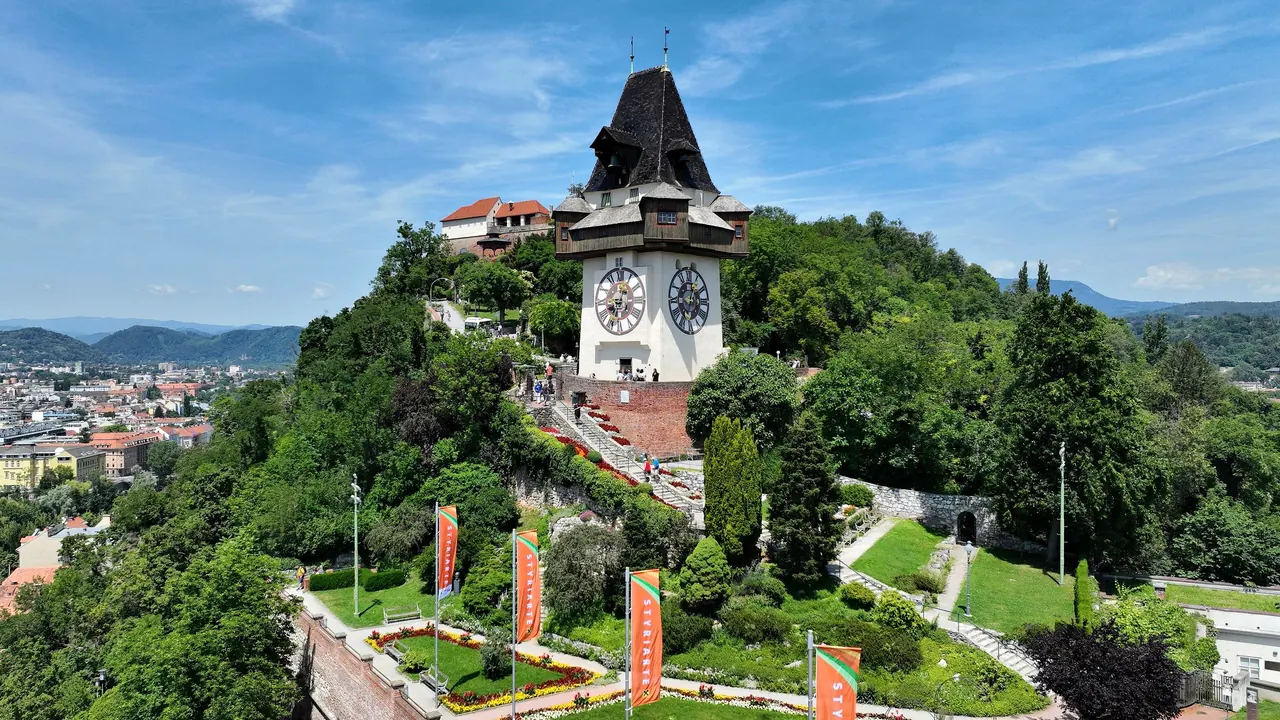
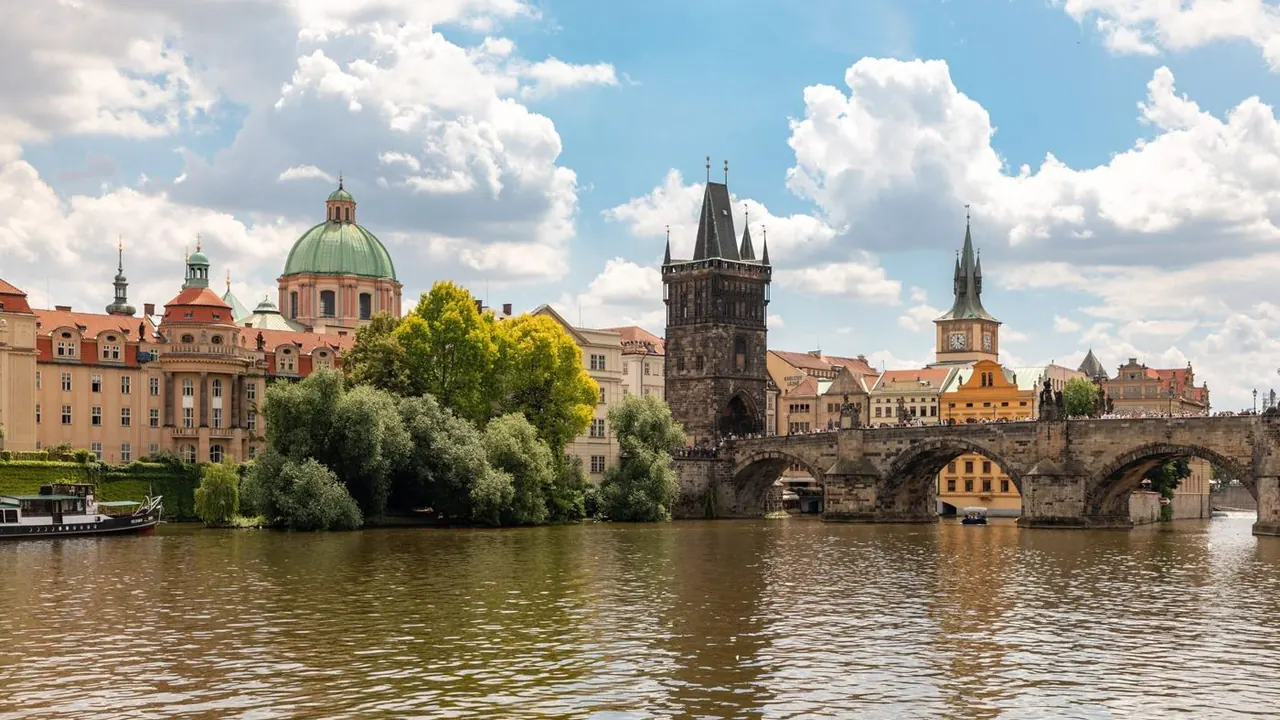
Photos: Graz by C.Stadler/Bwag, CC BY-SA 4.0, cropped; Prague by Dietmar Rabich, CC BY-SA 4.0, cropped.
Graz or Prague?
Our verdict in twelve categories, each scored against the same fixed benchmark cities, and the climate month by month, so you can choose for your trip.
Choose Graz for
- nature and the outdoors
- food and drink
- families
Graz is for travellers who want a fine old town without the crush, with green hills, wine country and the spa villages all within an easy drive. It suits a slower trip built around Styrian food, markets and afternoons in coffee houses. Families and walkers will find it easier on the legs, and calmer, than the Czech capital.
Choose Prague for
- nightlife
- culture and sights
- prices
Prague is the richer city for anyone coming for history, architecture and music. Its castle, bridges and quarters have a scale and density that Graz cannot match, and the evenings go on later, in pubs, beer gardens and opera houses. It also costs less day to day once you eat and drink outside the tourist core, and the castle towns of Bohemia make for more day trips.
Scoreboard
Twelve categories on one fixed scale from 0 to 100. The shaded stretch is the gap between the two.
Your match
Pick a travel style or drag the sliders, and both match scores follow your weighting.
Wins on nature and the outdoors and food and drink with your weighting.
Wins on nightlife and culture and sights with your weighting.
What matters to you?
Category by category
What the scores mean for a trip.
Beaches & swimming
Neither city is a beach destination, and swimming in both comes down to inland water on hot summer days. What differs is the setting. Graz has former gravel pits on the flat land to the south, with the Schwarzlsee and its jetties and grassy banks the favourite. Prague offers the Dzban reservoir in the wooded Sarka valley on its edge, or the Slapy reservoir on the Vltava, about an hour away and lined with cabin settlements.
Food & drink
Graz is the better city for eating, because its cooking draws on a distinctive regional larder: pumpkin seed oil on almost everything, cold fried chicken salad, Wurzelfleisch, and crisp Sauvignon Blanc from the southern hills. The morning markets at Kaiser-Josef-Platz and Lendplatz show off the produce, and wine taverns are under an hour away.
Prague's table is built around its beer, and that beer is superb, poured with care in classic pubs. The food alongside it is hearty but narrow, with roast pork, dumplings and svickova. You also have to leave the Old Town and head to Vinohrady, Karlin or Letna to eat well.
Culture & sights
Prague is in a different league. Its whole centre is a preserved sequence of Gothic, Baroque, Art Nouveau and even Cubist architecture, running from the castle and St Vitus Cathedral across the Charles Bridge to the Old Town and the synagogues of Josefov. It needs three or four days, and early starts to avoid the crowds.
Graz has a lovely, well-kept old town of tiled roofs and arcaded courtyards, and a few real highlights: the Landeszeughaus armoury, Schloss Eggenberg and the Kunsthaus across the Mur. It is quieter and easier to take in, but two or three days covers it.
Nightlife
Prague offers far more after dark. Zizkov's plain neighbourhood pubs, the wine and cocktail bars of Vinohrady and the summer beer gardens on Letna make for long evenings. There are big clubs open until dawn near Wenceslas Square and a techno circuit in Holesovice for those who want it.
Graz goes out on a much smaller scale, in the bar lanes of the Bermuda Triangle around Mehlplatz and the artier bars of Lend. It suits a relaxed evening with a glass of wine. It quietens in summer once the students leave.
Nature & outdoors
Graz sits on the edge of the Alps, and that shows. The Schöckl rises above the city with a cable car and trails. The Bärenschützklamm climbs past waterfalls on wooden ladders, and the limestone peaks of the Hochschwab and Gesäuse are within about two hours.
Prague has fine green space of its own in Petrin Hill, Stromovka and the rocky Divoka Sarka gorge. Further out, the landscape is gentle, apart from the sandstone towers of Bohemian Switzerland, and there are no mountains to climb.
Day trips
Prague has the stronger list of outings, and most are an easy train ride away. It includes Kutna Hora's cathedral and ossuary, Karlstejn castle, the sobering visit to Terezin, and even Dresden along the Elbe valley.
Day trips from Graz lead into the countryside: the South Styrian Wine Road, Riegersburg on its volcanic crag, the Lipizzaner farm at Piber and the library of Admont Abbey. The trips are charming, but many work far better with a car, with Maribor by train the main exception.
Good for families
Graz is the easier city with children. Its centre is flat and calm, with trams that take buggies. Parents can ride up the Schlossberg and slide back down inside it, and the Märchenbahn tunnel train and the FRida & freD children's museum fill the gaps.
Prague has one big draw that Graz lacks, its excellent zoo at Troja, along with the astronomical clock and plenty of castle romance. Against that, cobbles, steep steps and summer crowds make it harder work with a pushchair.
Getting around
Both cities are simple to get around without a car, and the difference is mainly one of scale. Graz is a small, flat, largely pedestrianised centre where trams and bicycles do the rest. Prague adds three metro lines and trams that run through the night, though its cobbles tire the feet and pickpockets work the busiest tram lines.
Shopping & style
Neither city is a shopping destination, but they reward different purchases. In Graz the best buys are things to eat and drink, such as pumpkin seed oil, Schilcher rosé and apple brandy, along with loden and traditional costume. Prague has the luxury labels on Parizska Street and its own crafts in Bohemian crystal, garnets and marionettes, though you have to look past a lot of souvenir stalls to find them.
Affordability
Prague is the cheaper of the two, provided you stay a few tram stops out and eat where locals do. Beer, pub lunches and transport stay inexpensive there, though the historic core and its exchange booths are priced for visitors.
Graz is fair rather than cheap. Its student lunch menus and bakeries help, but dinners, wine and hotel rooms cost what you would expect in Austria.
Live music & performing arts
Prague is one of Europe's great music cities. It has three opera stages, including the Estates Theatre where Don Giovanni had its premiere, the Czech Philharmonic at the Rudolfinum and the Prague Spring festival. Black-light theatre and marionette shows also work for visitors who speak no Czech.
Graz does very well for its size, with Austria's second-largest opera house, the Styriarte and steirischer herbst festivals, and a jazz scene fed by its music university. It simply offers fewer evenings to choose from.
Wellness & relaxation
Graz has the edge thanks to its location. The Styrian thermal villages are about an hour east, with Hundertwasser's Bad Blumau and the large warm pools of Loipersdorf, which makes a spa day an easy addition to a city stay.
Prague's famous spa towns are far off in western Bohemia, so in the city wellness means hotel spas, massage studios and novelty beer baths. Rest comes more from Kampa island and the castle gardens than from any spa.
When should you go?
Pick your month. The climate figures are measured averages, not a forecast.
Graz in July
Prague in July
Daytime high, °C
Rainfall in the month, mm
Temperature and rainfall are climate normals, averaged over the years shown. Graz: 1991-2020 normals, Graz Airport (7.9 km from centre). Prague: 1991-2020 normals, Praha-Libus (8.1 km from centre).
Graz and Prague have the same Central European year. Winters are cold with short days from December to February, it is warm from May to September, and no month is too hot for walking the streets. Graz runs a degree or two warmer and peaks around 27°C in July, but its summers are much wetter. Heavy showers bring about 125mm a month from June to August. Its driest mild months are April and October, both good for long walks in town and outings to the wine hills. May is warm but already showery. September stays pleasant but is often wet, at around 98mm, so plan some indoor time if you go then.
Prague's summer is a little cooler and clearly drier. Its September, at about 44mm, is one of the best months of the year for sightseeing, and May is close behind. Winter is where Graz pulls ahead: in December and January it gets roughly twice Prague's sunshine, so cold days there are more often bright than grey. In both cities the lakes and reservoirs are really only pleasant for swimming in July and August.
Which traveller are you?
On a culture and arts trip, Prague is the stronger choice. The castle district, Mala Strana, the Old Town and Josefov fill several days, and evenings at the National Theatre, the Estates Theatre or the Rudolfinum add a musical depth that Graz offers on a smaller scale.
For an outdoors trip, Graz is better placed. You can cycle out of town along the Mur, watch or join the paragliders above the city, and walk the South Styrian vineyards in autumn. With a car, a day of proper alpine hiking is possible. Prague's walking is gentler.
On a trip on a tight budget, Prague goes further. Lunch can be chlebicky or a canteen buffet, the evening a beer in a plain Zizkov pub, and the Charles Bridge and castle courtyards cost nothing to wander. In Graz, saving means market picnics and combined museum tickets.
Before you go
| Measure | Graz | Prague |
|---|---|---|
| Official language | German, Austrian Sign Language | Czech |
| Currency | Euro (EUR) | Czech Koruna (CZK) |
| Sockets | CF230 V, 50 Hz | CE230 V, 50 Hz |
| Driving side | Right | Right |
| Time zone | UTC+1, UTC+2 in summer | UTC+1, UTC+2 in summer |
| Emergency number | 112 | 112 |
| Elevation | 353 m | 235 m |
| Main airport | Graz Airport (GRZ)9 km from centre26 non-stop destinations | Václav Havel Airport Prague (PRG)12 km from centre178 non-stop destinations |
| Public holidays this year | 16 days | 13 days |
By the numbers
| Measure | Graz | Prague |
|---|---|---|
| City population | 306,971 | 1,397,880 |
| People per km² | 2,406 | 2,817 |
| Museums within 10 km | 29 | 88 |
| UNESCO World Heritage sites within 50 km | 1 | 1 |
Where else could you go?
Every comparison below shares a destination with this one, so you can follow Graz or Prague somewhere new.