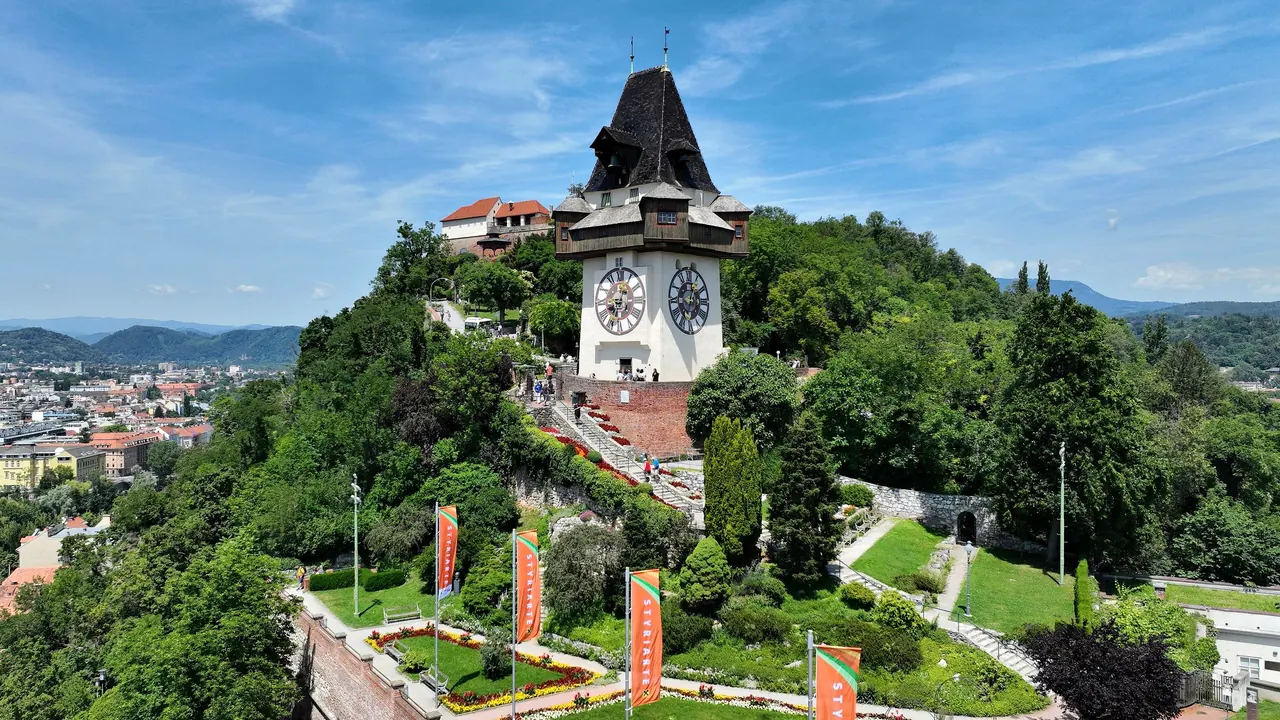
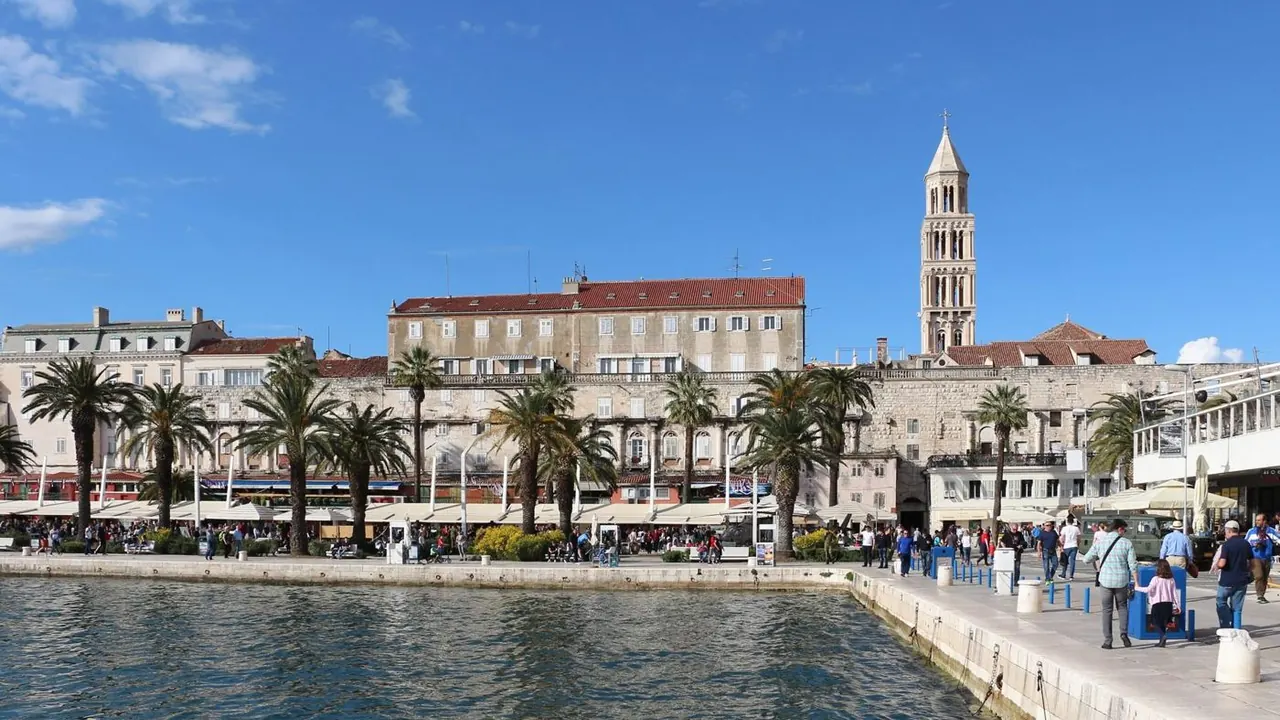
Photos: Graz by C.Stadler/Bwag, CC BY-SA 4.0, cropped; Split by Bernard Gagnon, CC BY-SA 4.0, cropped.
Graz or Split?
Our verdict in twelve categories, each scored against the same fixed benchmark cities, and the climate month by month, so you can choose for your trip.
Choose Graz for
- live music and the arts
- shopping
- getting around
Graz is the pick for a calm, cultured city break. Its old town is compact and easy to walk, and it has a serious opera house, two notable festivals and Styrian cooking built around pumpkin seed oil and white wine from the hills. The thermal villages and vineyard taverns are about an hour away. It works best in spring and autumn, and for travellers who would rather spend the evening at a concert than on a beach.
Choose Split for
- beaches
- day trips
- nightlife
Split is for a vacation that revolves around the Adriatic. You can swim within walking distance of a Roman emperor's palace, take ferries out to Brač and Hvar, hike or kayak on Marjan, and go rafting in the Cetina canyon. In summer the evenings are lively too. Choose it for warmth, water and a different outing each day, and accept that high summer is hot and crowded.
Scoreboard
Twelve categories on one fixed scale from 0 to 100. The shaded stretch is the gap between the two.
Your match
Pick a travel style or drag the sliders, and both match scores follow your weighting.
Wins on live music and the arts and shopping with your weighting.
Wins on beaches and day trips with your weighting.
What matters to you?
Category by category
What the scores mean for a trip.
Beaches & swimming
This is the biggest gap between the two cities. Split is a swimming destination. Bačvice's shallow sandy bay is a short walk from the palace, and the pine-shaded coves around Marjan have deeper water. Ferries reach the longer beaches on Brač and Hvar. Most of the shore is pebble or concrete platforms, though, and the city beaches fill up in high summer.
Graz is landlocked, and the Mur is not for swimming. On a hot afternoon, people go to the Schwarzlsee and similar former gravel pits south of the city, which have grassy banks and jetties. They are a pleasant way to cool off, but not a reason to choose Graz.
Food & drink
The two are broadly level, but one cooks from the farm and the other from the sea. Graz is all about the Styrian larder: pumpkin seed oil on almost everything, cold fried chicken salad and pork boiled with horseradish. The morning markets at Kaiser-Josef-Platz and Lendplatz are well stocked, and crisp whites are poured in Buschenschank taverns among the vines.
In Split you eat grilled fish, black risotto, pašticada and dishes slow-cooked under the peka bell, with red Plavac Mali or white Pošip to drink. The konobas in Varoš are more reliable than the menus inside the palace, which are aimed at tourists, and the scene quietens a lot in winter.
Culture & sights
The two are about level, but the sightseeing is shaped differently. Split's culture centres on one extraordinary monument. Diocletian's Palace is still a lived-in quarter, the cathedral was once the emperor's mausoleum, and the vaulted substructures lie underneath. The Meštrović Gallery is the main addition.
Graz spreads its interest more widely. It has an intact Renaissance and Baroque old town, the Landeszeughaus armoury with its thousands of suits of armour, Schloss Eggenberg on the western edge, and the modern Kunsthaus across the Mur. Each city takes about two days to see properly.
Nightlife
Split has more going on after dark, at least in summer. Bars fill the stone alleys of the palace, and the beach bars and clubs around Bačvice stay open into the early hours. From October to May, though, nights out shrink to a few bars.
Graz follows the student calendar. The lanes of the Bermuda Triangle and the artier bars in Lend are at their best in term time, with wine bars and pub crawls rather than clubbing. The city goes quiet in the long summer break, which is exactly when Split is at its busiest.
Nature & outdoors
Split has the richer outdoors, because it has both mountains and sea. Marjan's pine forest starts on the edge of the old town, Mosor and Biokovo offer ridge hikes, and the Cetina canyon at Omiš is used for rafting and canyoning. There is also sea kayaking, and sailing among the islands. Summer heat pushes hiking into spring and autumn.
Graz is greener and gentler. You can ride the cable car up the Schöckl, cycle the Mur path or climb the wooden ladders of the Bärenschützklamm gorge. Proper alpine hiking in the Gesäuse is about two hours away.
Day trips
Split is the better base for excursions, largely because its harbour brings ferries, intercity buses and trains together. Medieval Trogir is about half an hour away and Šibenik's cathedral about an hour. Roman Salona and Klis Fortress are on the edge of town, and the islands of Hvar and Brač each make a full, easy day in summer.
From Graz, the outings head into the countryside. You can follow the South Styrian Wine Road, visit Riegersburg on its volcanic crag, or go to the Lipizzaner stud at Piber or the great library at Admont Abbey, and Maribor is an hour away by train. Most of these are much easier with a car.
Good for families
Graz has a little more for children, and most of it is on the Schlossberg. Families ride the funicular up, then come down by the long underground slide, and the Märchenbahn train runs through fairytale tunnels in the rock. The FRida & freD children's museum is in the Augarten, and the trams take buggies.
Split's appeal is simpler: paddling in the shallow water at Bačvice, running around under Marjan's pines, and the ferry ride itself. It has little built for children, and the July heat and the palace's stepped stone streets are hard going with small ones.
Getting around
Graz is the easier city to get around. Its centre is flat and largely pedestrianised, and trams run along the Herrengasse to Eggenberg and the station on a single ticket. The flat ground along the Mur suits bikes.
The car-free core of Split is just as walkable, and its harbour hub makes leaving for the islands simple. The local buses are basic, though, the coast road is congested in summer, and the polished palace steps make wheeled luggage hard work.
Shopping & style
Graz is the better place to shop, though neither is a destination for it. The Herrengasse and the sloping Sporgasse have shops in historic buildings, the grand nineteenth-century department store has a rooftop view, and Lend adds small design and vintage shops. Loden, traditional costume and Styrian food make the best things to take home.
In Split, the palace lanes are mostly souvenirs, lavender and Croatian ties, and the fashion chains are on Marmontova. The Pazar green market is the most enjoyable place to browse there, with dried figs, honey and brandies.
Affordability
Overall costs are similar, but they behave differently through the year. Graz is steady and fair all year round, with student lunch menus and bakeries keeping daytime eating cheap, and hotel rates rise mainly during festivals and trade fairs.
Split swings with the season. In July and August, old-town rooms and fish sold by weight on the waterfront are expensive, and ferry fares add up for a family. In May, June, late September and winter it costs far less.
Live music & performing arts
Graz has much more on stage. Its opera house is the second largest in Austria and has a full season, the Musikverein has hosted orchestral concerts for generations, and the music university feeds a strong jazz scene. Styriarte in early summer and the avant-garde steirischer herbst in autumn round out the year.
Split's high point is the Summer Festival, with opera performed in the Peristyle courtyard. You can also hear klapa singing in the palace vestibule. Outside summer the calendar is thin, apart from the Croatian National Theatre.
Wellness & relaxation
Graz has the edge thanks to its neighbours. About an hour east lies Styria's thermal region, with Hundertwasser's resort at Bad Blumau and the big warm pools of Loipersdorf and Bad Waltersdorf. The city itself is quiet enough for long hours in coffee houses and the Stadtpark.
Split has no bathing tradition, only hotel spas. It does have fjaka, the Dalmatian habit of unhurried idleness. That is easiest to enjoy in May or September, or by escaping the noisy summer old town for Marjan or an island.
When should you go?
Pick your month. The climate figures are measured averages, not a forecast.
Graz in July
Split in July
Daytime high, °C
Rainfall in the month, mm
Temperature and rainfall are climate normals, averaged over the years shown. Graz: 1991-2020 normals, Graz Airport (7.9 km from centre). Split: 1991-2020 (sunshine 1971-2000, rainfall 1981-2010) normals, Split / Marjan (0.9 km from centre).
Graz has a continental climate with cold winters, when January highs hover around 3°C, and warm summers. Rain builds through spring and stays heavy from May to September, with the wettest stretch in high summer, often as thunderstorms. May and September are the best months for walking the old town and the wine hills, with highs around 21°C and long sunny spells, but expect showers and pack a light jacket. April and October are drier, though cooler.
Split is warmer all year and its pattern runs the other way. July and August are the driest and sunniest months, with highs around 31°C and the sea at about 25°C. That is ideal for swimming but tiring for sightseeing in the middle of the day. The sea is pleasant from June into early October. Rain comes with autumn and peaks in November at about 100mm, but winter stays far milder than in Graz. May, June and late September give the best mix of warmth, swimming and comfortable streets.
Which traveller are you?
On a beach and sun trip, Split is the clear choice. You can swim at Bačvice or the Marjan coves without leaving the city, the sea is warm right through summer, and the island beaches are a short ferry ride away. Graz has only gravel-pit lakes.
For a shopping trip, Graz offers more. The Herrengasse and Sporgasse have proper shopping streets, Lend has design and vintage shops, and the delicatessens sell pumpkin seed oil, wine and craft chocolate. Split's shops are mostly souvenir stalls and chain stores.
On a relaxing and wellness trip, Graz suits better. The thermal resorts at Bad Blumau and Loipersdorf are about an hour away and open to day visitors, and the city itself is quiet. In Split, rest mostly means hotel spas and leaving the crowded old town.
Before you go
| Measure | Graz | Split |
|---|---|---|
| Official language | German, Austrian Sign Language | Croatian |
| Currency | Euro (EUR) | Euro (EUR) |
| Sockets | CF230 V, 50 Hz | CF230 V, 50 Hz |
| Driving side | Right | Right |
| Time zone | UTC+1, UTC+2 in summer | UTC+1, UTC+2 in summer |
| Emergency number | 112 | 112 |
| Elevation | 353 m | 0 m |
| Main airport | Graz Airport (GRZ)9 km from centre26 non-stop destinations | Split Saint Jerome Airport (SPU)12 km from centre69 non-stop destinations |
| Public holidays this year | 16 days | 14 days |
By the numbers
| Measure | Graz | Split |
|---|---|---|
| City population | 306,971 | 160,577 |
| People per km² | 2,406 | - |
| Museums within 10 km | 29 | 11 |
| UNESCO World Heritage sites within 50 km | 1 | 4 |
| Swim season, months above 21 °C | - | 4 months |
Where else could you go?
Every comparison below shares a destination with this one, so you can follow Graz or Split somewhere new.