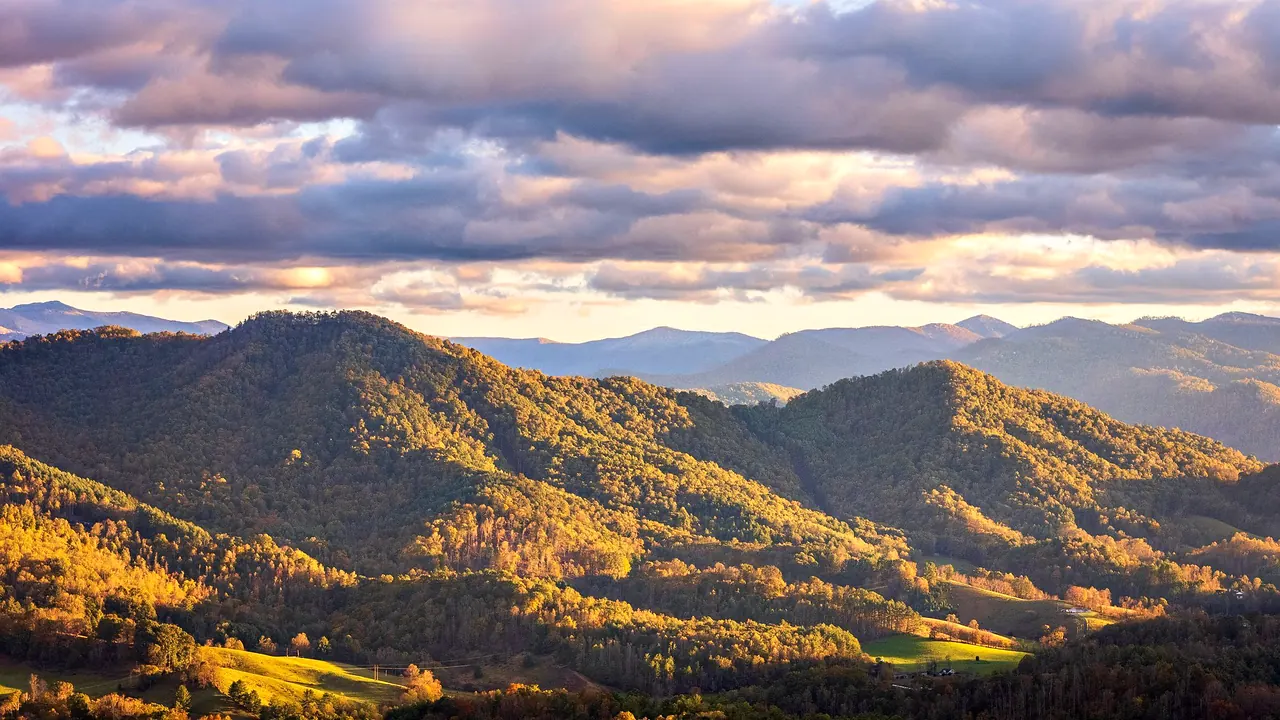
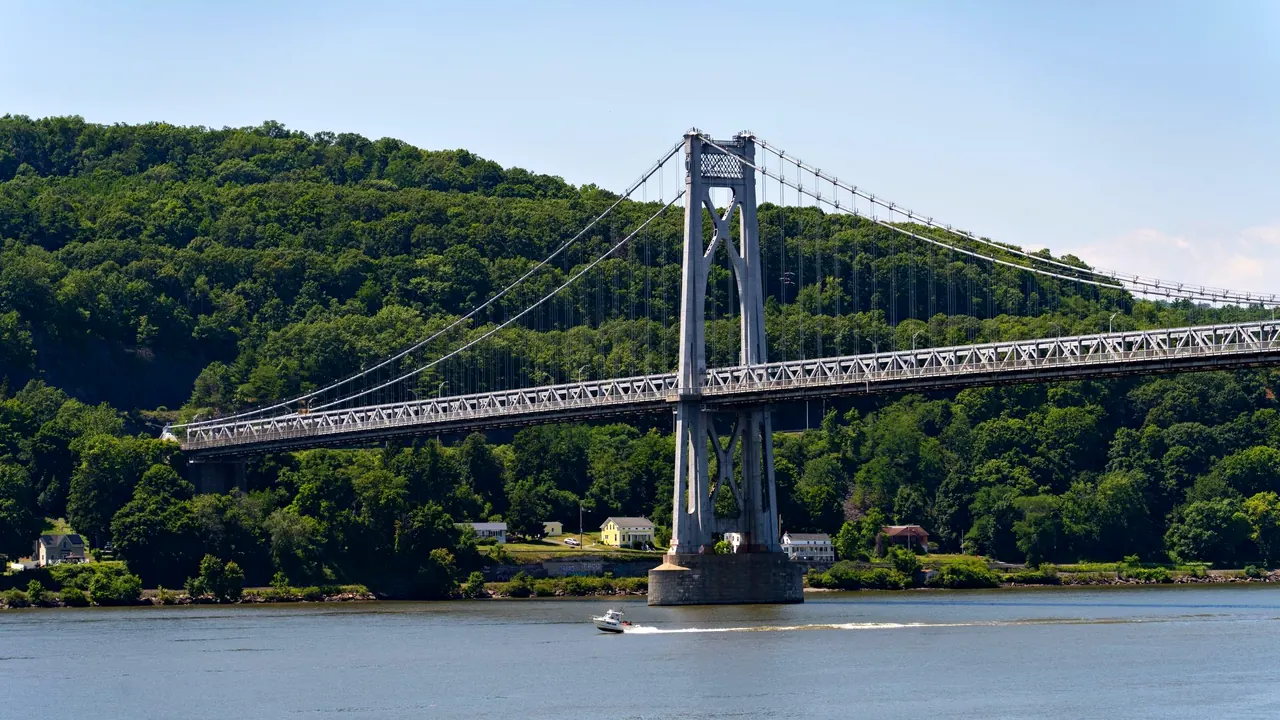
Photos: Great Smoky Mountains by Mark Stebnicki, Pexels License; Hudson Valley by Brett A, Pexels License.
Great Smoky Mountains or Hudson Valley?
Our verdict in twelve categories, each scored against the same fixed benchmark cities, and the climate month by month, so you can choose for your trip.
Choose Great Smoky Mountains for
- families
- prices
- nature and the outdoors
The Great Smoky Mountains suit families and keen walkers who want a vast forest wilderness and don't mind driving everywhere. You get old-growth woods, waterfall trails and black bears in Cades Cove, with Dollywood and the Pigeon Forge attractions down the road and a shared cabin with a hot tub to come back to. It costs less than the Hudson Valley. In return you accept tourist-strip food, entertainment made for visitors and very little history beyond pioneer cabins and the Cherokee sites.
Choose Hudson Valley for
- culture and sights
- getting around
- day trips
The Hudson Valley is the better choice for adults who want their landscape mixed with mansions, museums and good food. Roosevelt's Hyde Park, Olana, Dia Beacon and Storm King give it real cultural depth. Farm-to-table cooking, country inns and a train line from Manhattan make it an easy, polished escape. The hills are gentler and the bills are higher, and younger children have fewer big attractions to fill the days.
Scoreboard
Twelve categories on one fixed scale from 0 to 100. The shaded stretch is the gap between the two.
Your match
Pick a travel style or drag the sliders, and both match scores follow your weighting.
Wins on families and prices with your weighting.
Wins on culture and sights and getting around with your weighting.
What matters to you?
Category by category
What the scores mean for a trip.
Beaches & swimming
Neither region has a coast, but the Hudson Valley is a little better for a swim. Its state parks have supervised lake beaches at Lake Welch and Lake Taghkanic, the water warms to around 24°C in midsummer, and there are rock ledges and pools in Catskill streams. In the Smokies, swimming means tubing the Little River or Deep Creek and wading in cold mountain pools, and most families end up in the cabin pool.
Food & drink
Eating is a real reason to visit the Hudson Valley. In Hudson, Rhinebeck, Kingston and Beacon, menus are built on produce from nearby farms. The Culinary Institute at Hyde Park opens its student restaurants to visitors, and cideries and the Shawangunk Wine Trail add to the drinking.
The Smokies serve hearty mountain food after a day on the trail: pancakes on the Parkway, barbecue, stream trout, cobbler and moonshine tastings in Gatlinburg. Chains fill the main strips, though, and a serious dinner usually means driving to Knoxville.
Culture & sights
The Hudson Valley is far richer in history and art. Riverside estates run from Sunnyside and Kykuit down south to Roosevelt's Hyde Park and Olana up north, with Dutch stone houses in New Paltz and Kingston, plus Dia Beacon and Storm King's sculpture fields for modern art.
The Smokies' heritage is rural and small-scale: the log cabins and churches of Cades Cove, the Mountain Farm Museum and Mingus Mill. The Cherokee museum and the Oconaluftee Indian Village in Cherokee are the highlight, and they have no match in the Hudson Valley.
Nightlife
Both regions go to bed early, so the difference lies in the kind of evening. In the Smokies, people stroll Gatlinburg's main street among the moonshine rooms and attractions, and only the Cherokee casino stays open late. The Hudson Valley offers cocktails, wine bars and taprooms in Kingston, Beacon and Hudson, student bars in New Paltz, and a train to the city for anyone who wants more.
Nature & outdoors
The Smokies are on a larger and wilder scale. Old-growth forest covers ridges that climb past 2,000m at Kuwohi, and walks range from Laurel Falls to Mount LeConte. Bears and elk are easy to see, and spring wildflowers and the Elkmont fireflies give each season its own character.
The Hudson Valley's outdoors is more compact but varied: the steep scramble up Breakneck Ridge, world-famous rock climbing on the Shawangunk cliffs, carriage roads at Minnewaska, and kayaking on the tidal river. It suits climbers and cyclists more than wildlife watchers.
Day trips
The Hudson Valley has more within reach. Manhattan is a train ride down the east bank, the river towns from Cold Spring to Hudson make easy half-days out, and Saratoga Springs and the Berkshires are within reach of the northern end.
From the Smokies, the standout outing is Asheville and the Biltmore Estate, an hour or more away, with Knoxville and the gorge railway at Bryson City as the other main options.
Good for families
The Smokies are made for children. Dollywood and its water park, go-karts, mountain coasters, a large aquarium and the treetop walk sit alongside junior ranger programmes and easy waterfall trails, and big cabins sleep extended families.
The Hudson Valley is gentler: pick-your-own orchards, maple sugaring, Legoland near Goshen and the small Bear Mountain zoo. Drives are long, many of the best hikes are too steep for small legs, and there are few indoor options for a wet day.
Getting around
The Hudson Valley gives you a choice the Smokies don't. Trains along the east bank make a car-free weekend in Beacon, Cold Spring or Hudson easy, though everything else needs a car. In the Smokies, a car is unavoidable. The park has no public transport, the drive over Newfound Gap is slow and can close in winter, and the Parkway through Pigeon Forge clogs up in busy seasons.
Shopping & style
The Hudson Valley offers more choice. Warren Street in Hudson has antiques and interiors, Saugerties and Rhinebeck have vintage shops, Woodstock sells pottery, and a large designer outlet village sits near Central Valley.
The Smokies' best buys are crafts made by the people selling them: pottery and quilts from the arts and crafts loop outside Gatlinburg, and baskets and carvings from the Cherokee cooperative. Beyond those, it is mostly outlet malls and fudge shops.
Affordability
The Smokies are cheaper. The park itself charges no entrance fee, only for parking. Motels and shared cabins in Pigeon Forge and Sevierville keep costs per person down, though Dollywood tickets add up.
The Hudson Valley is priced for city weekenders, with expensive boutique inns, restaurant prices like the city's and usually a hire car on top. Chain motels around Poughkeepsie, midweek stays and meals at diners bring the cost down.
Live music & performing arts
Neither region has much more on stage than the other, but the music is very different. The Smokies offer country, bluegrass and gospel: Pigeon Forge dinner shows and revues every night of the season, Dollywood's stages, and the outdoor drama Unto These Hills in Cherokee.
The Hudson Valley's season is mostly highbrow and mostly in summer, with opera and dance at Bard's Fisher Center, garden concerts at Caramoor, the Maverick chamber series and Shakespeare above the river. Woodstock and Kingston keep roots and rock alive in small venues.
Wellness & relaxation
The Hudson Valley is the more restful choice. It has grand Victorian lake resorts with full spas on the Shawangunk Ridge, yoga weekends around Rhinebeck and monasteries open for meditation, all set in a countryside of slow lunches and porches. In the Smokies, the restful stay is a cabin with a hot tub on a quiet ridge near Townsend or Wears Valley, with only a few hotel spas besides.
When should you go?
Pick your month. The climate figures are measured averages, not a forecast.
Great Smoky Mountains in July
Hudson Valley in July
Daytime high, °C
Rainfall in the month, mm
Where the figures come from
Great Smoky Mountains's temperatures are measured 43 km from the centre, at McGhee Tyson Airport.
Great Smoky Mountains's station stands 151 m below the place it is measured for, so that place is likely a little cooler than the figures say.
Great Smoky Mountains has no rain gauge within 25 km of the centre, so its rainfall comes from a gridded climate dataset read at the destination rather than from a gauge further away.
Hudson Valley's temperatures are measured 35 km from the centre, at Poughkeepsie / New Hackensack.
Hudson Valley has no rain gauge within 25 km of the centre, so its rainfall comes from a gridded climate dataset read at the destination rather than from a gauge further away.
Temperature and rainfall are climate normals, averaged over the years shown. Great Smoky Mountains: 1991-2020 (sunshine 1981-2010) normals, McGhee Tyson Airport (42.9 km from centre). Hudson Valley: 1991-2020 normals, Poughkeepsie / New Hackensack (34.5 km from centre).
The Smokies stay warmer for more of the year. Around the main gateway towns, highs reach 31°C in July and August, sticky weather for long climbs but fine for tubing on mountain rivers. January sits around 9°C. July is also the wettest month, at 148mm, while October is the driest and mildest. April, May, September and October are the best walking months. May to July bring the most sunshine.
The Hudson Valley has cold winters, with January highs near 2°C, so winter there is for snowy quiet rather than easy sightseeing. Summer peaks near 30°C in July, warm enough for the lake beaches from late June to early September. Rain is spread more evenly through the year, with October the wettest month at 106mm, but late May, June and September are the most comfortable times for walking the river towns and trails. Both regions are at their least comfortable in midwinter. The Smokies' mild season starts sooner in spring and lasts longer into autumn.
Which traveller are you?
On a family trip with children, the Great Smoky Mountains keep the days full with little planning: a short trail in the morning, rides in the afternoon, one big cabin at night. The Hudson Valley's outings are gentler and further apart.
For a culture and arts trip, choose the Hudson Valley. Each day can pair a historic house on the river with a major art collection, and summer evenings bring opera or chamber music. The Smokies' history fits into a day or two.
On a relaxing and wellness trip, the Hudson Valley gives more ways to unwind: a full day of treatments, a meditation weekend or simply slow lunches in the country. In the Smokies, rest mostly means a secluded cabin and the view.
Before you go
| Measure | Great Smoky Mountains | Hudson Valley |
|---|---|---|
| Currency | US Dollar (USD) | US Dollar (USD) |
| Sockets | AB120 V, 60 Hz | AB120 V, 60 Hz |
| Driving side | Right | Right |
| Time zone | UTC-5, UTC-4 in summer | UTC-5, UTC-4 in summer |
| Emergency number | 911 | 911 |
| Main airport | McGhee Tyson Airport (TYS)34 non-stop destinations | New York Stewart International Airport (SWF)9 non-stop destinations |
| Public holidays this year | 13 days | 13 days |
Where else could you go?
Every comparison below shares a destination with this one, so you can follow Great Smoky Mountains or Hudson Valley somewhere new.
- Catskillsvs Hudson Valley
- Poconosvs Hudson Valley
- The Hamptonsvs Hudson Valley
- Adirondacksvs Hudson Valley
- Finger Lakesvs Hudson Valley
- Martha's Vineyardvs Hudson Valley