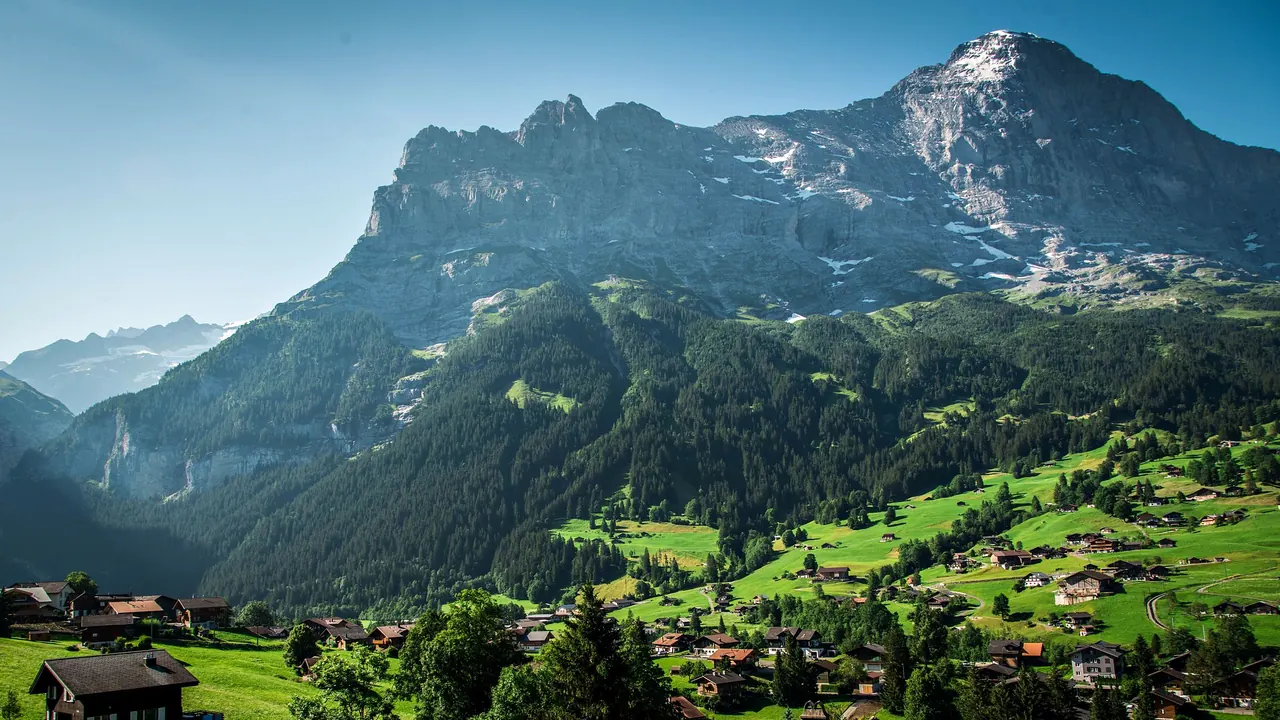
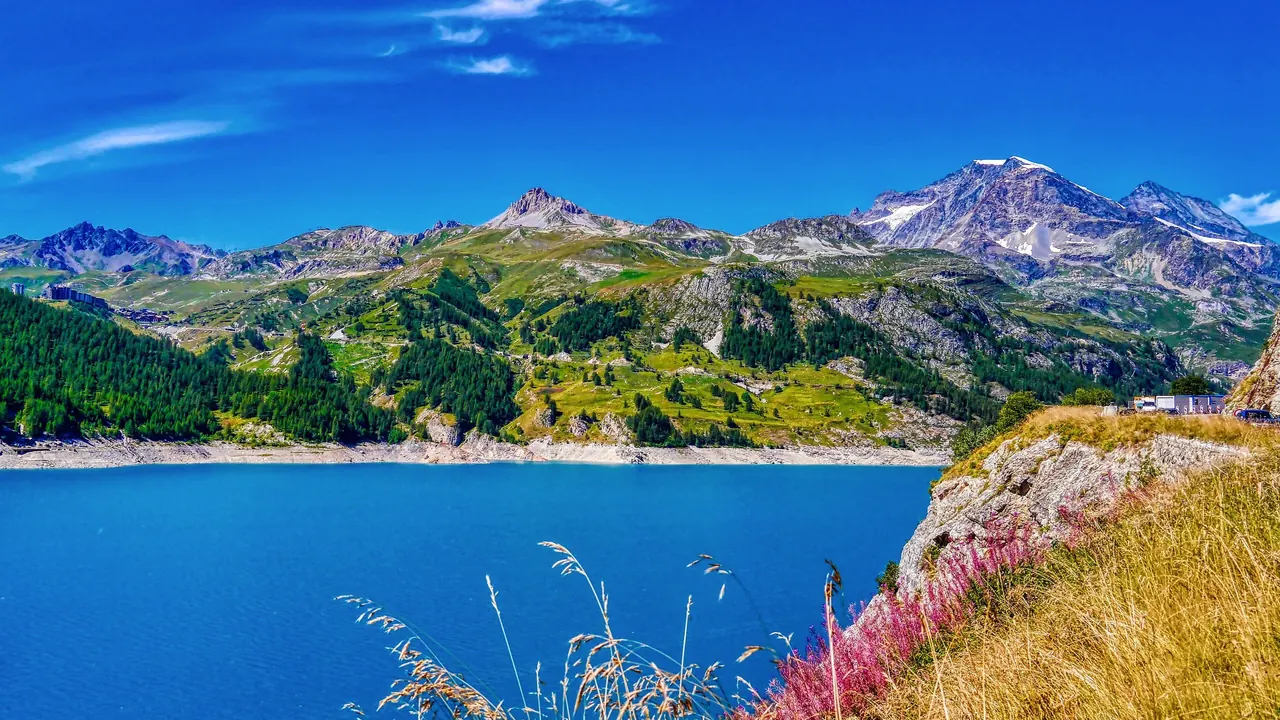
Photos: Grindelwald by Christopher Becke, Pexels License; Tignes by Zairon, CC BY-SA 4.0, cropped.
Grindelwald or Tignes?
Our verdict in twelve categories, each scored against the same fixed benchmark cities, and the climate month by month, so you can choose for your trip.
Choose Grindelwald for
- day trips
- getting around
- families
Grindelwald suits travellers who want to wake up under the great north faces and spend their days moving between gondolas, rack railways and trails without ever needing a car. It is the better base for families with children who like being outside, and for anyone who wants easy outings to Bern, the lakes and the cliff villages of the Lauterbrunnen valley. Evenings are early and quiet, so it rewards hikers and walkers more than revellers.
Choose Tignes for
- nightlife
- prices
- food and drink
Tignes is for skiers first, and for groups who want the evenings to be as lively as the slopes. Its lifts join Val d'Isère's in a vast, high, snow-sure ski area, and après-ski in Val Claret and Le Lac carries on well past midnight. It is a little kinder to the wallet than its Swiss rival, especially in summer or in self-catering apartments. Expect a modern resort sitting at the head of a long valley, though, not a traditional village.
Scoreboard
Twelve categories on one fixed scale from 0 to 100. The shaded stretch is the gap between the two.
Your match
Pick a travel style or drag the sliders, and both match scores follow your weighting.
Wins on day trips and getting around with your weighting.
Wins on nightlife and prices with your weighting.
What matters to you?
Category by category
What the scores mean for a trip.
Beaches & swimming
Neither place is for beach days, and the swimming is as limited in one as the other. The difference is where the water is. From Grindelwald you go down to Lake Thun, which can reach about 20°C in a good summer, or to turquoise Lake Brienz, each an outing by train and bus. In Tignes a supervised bathing area with a small sandy shore opens right in front of Tignes Le Lac in July and August, but the snowmelt rarely gets past about 16°C, so most people swim in the indoor lagoon pool next to it.
Food & drink
Tignes eats somewhat better, mainly because of its cheese country. Beaufort, Reblochon and Tomme turn up in tartiflette and croziflette, and the delicatessens sell Savoie wines and charcuterie. Le Lac and Val Claret also have a few kitchens doing a more modern take on Alpine cooking.
Grindelwald's cooking is rösti, raclette and Älplermagronen in hotel dining rooms, and its best meals depend on the setting, such as a terrace facing the Eiger or cheese bought at a summer dairy. Both menus are narrow, and in Tignes many places close between seasons.
Culture & sights
Neither has much to see. What little there is tells a different kind of story. Grindelwald has an old farming village feel, with carved and painted chalets, a whitewashed church and a small museum about the climbers who came for the Eiger.
Tignes was built from scratch as a functional modern resort, and its one real piece of heritage is the old village drowned beneath the Chevril dam, which is remembered by the giant mural on the dam wall. For proper sightseeing, Grindelwald's railway down the valley gives you the easier way out.
Nightlife
This is one of the clearest differences between the two. In the ski season Tignes is a party resort. Music on the mountain terraces in the late afternoon gives way to loud bars in Val Claret and Le Lac and small clubs that close well after midnight, with a young crowd of skiers and seasonal workers.
Grindelwald offers a few après-ski bars as the lifts close and a hotel bar or two after that. In summer its hikers are in bed early for sunrise starts. If you want quiet nights in Tignes, stay down in Les Brévières or Les Boisses.
Nature & outdoors
Both rank among the finest mountain settings in the Alps, but they show the mountains in different ways. Grindelwald puts the scenery right in front of you. The Eiger rises straight above the village, the Panoramaweg runs beneath the Eiger, Mönch and Jungfrau, and the rack railway climbs to the Jungfraujoch above the Aletsch Glacier. It is the place for the views and for summer hiking.
Tignes is about height and snow. The Grande Motte glacier gives a long season, the lifts link with Val d'Isère's, and there is wide off-piste terrain. In summer the trails of the Vanoise National Park, with its ibex and marmots, lie on the doorstep.
Day trips
Grindelwald is far better placed for days out, because its railway connects to the whole region through Interlaken. The car-free villages of Wengen and Mürren, the castles at Thun and Spiez, the lake steamers and the Ballenberg open-air museum are all within easy reach. Bern's arcaded old town is about an hour and a half away.
Tignes sits at the end of a long, winding valley. Beyond a short bus ride to Val d'Isère, outings such as Conflans or the cheese village of Beaufort really need a car. Aosta, across the Little St Bernard Pass, only works in summer.
Good for families
Grindelwald gives families more, particularly in summer. There are mountain carts and scooter-bikes down from First, adventure playgrounds at the mid-stations, a toboggan run below Pfingstegg and gentle walks for small legs, with farm animals everywhere.
Tignes is at its best for a family ski week, with ski-in, ski-out apartments and beginner slopes beside the villages. Off the snow, though, it comes down to the aquatic centre and the pedalos on the lake. Both places have little for a wet day, and in both the altitude can wear out very young children, which matters even more at Tignes's height.
Getting around
Grindelwald is the easier trip from start to finish. Trains run right into the village centre, the Wengernalp railway and the gondolas start close by, and the timetables are linked, so you can cross the region by rail and lift without a car. The main drawback is the steep walk up to chalets above the main street.
Getting around inside Tignes is simple, with free shuttles between the villages and plenty of ski-in, ski-out doors. Getting there is harder: the nearest railway is at Bourg-Saint-Maurice, about forty minutes below, and anything further afield means a car or a transfer.
Shopping & style
Both are equally thin for shopping, with main streets full of rental counters and outdoor gear. What you take home is different. In Grindelwald the souvenirs are Swiss classics like watches, army knives, chocolate and cowbells. In Tignes they are edible: Beaufort cheese, cured sausages and mountain honey from the delicatessens.
Affordability
Both are expensive, but Grindelwald is the harder one to do cheaply. Its gondolas, lift passes and above all the Jungfraujoch railway are part of almost any stay, and travel passes and supermarket picnics only take some of the sting out.
Tignes has more ways to save. The resort is built around self-catering apartments, early and late season weeks cost less, and summer brings lower lodging prices and free activities around the lake. Eating out stays expensive all year in both places.
Live music & performing arts
There is next to nothing in either place, and what music exists reflects each resort's character. In Grindelwald it is traditional: yodelling choirs, alphorns and brass bands on summer evenings. In Tignes it is bands in après-ski bars and DJs on the mountain terraces. For a real concert from Grindelwald, you can at least take the train down to the larger lakeside towns.
Wellness & relaxation
The real difference is the pace. Grindelwald is the calmer of the two all year, and especially out of season, with cowbells, quiet evenings on a balcony and hotel spa windows that look straight at the Eiger. It has no thermal baths of its own, so the spa side depends on the larger hotels and on the pool and sauna at the public sports centre.
Tignes runs on early lifts and late bars in winter and slows down only in summer. Its aquatic centre by the lake has a hammam and massage, and the hotels and apartment residences have their own pools. For real thermal waters, Brides-les-Bains is about an hour down the valley, an option Grindelwald does not have.
When should you go?
Pick your month. The climate figures are measured averages, not a forecast.
Grindelwald in July
Tignes in July
Daytime high, °C
Rainfall in the month, mm
Where the figures come from
Grindelwald has no weather station within reach, so its figures come from a gridded climate model rather than a measured record, and read a broad area rather than one spot.
Tignes has no weather station within reach, so its figures come from a gridded climate model rather than a measured record, and read a broad area rather than one spot.
Temperature and rainfall are climate normals, averaged over the years shown. Grindelwald: 1991-2020 normals, TerraClimate 4 km grid at the town, no weather station within 90 km. Tignes: 2001-2020 normals, NASA POWER reanalysis grid, no weather station within 90 km.
Both places are cold for half the year, but Tignes is colder. It sits far higher, and from December to February its daytime highs stay below freezing, down to -4°C in January. Grindelwald hovers around zero in the same months. That makes both good winter snow destinations, with Tignes the more reliable for snow early and late in the season. Spring arrives at roughly the same pace in both, and by May the days reach the low teens.
Summer is the time for walking, from July to early September. Highs are close to 17°C in Grindelwald and 18°C in Tignes, pleasant for long hikes but never warm enough for real beach days. The big difference is rain. Grindelwald's summer is its wettest stretch, with about 119mm in both June and July, so cloud can sit on the peaks for days. Tignes stays noticeably drier through July and August, and its wettest month is May. September is mild and calmer in both.
Which traveller are you?
On a family trip with children, Grindelwald is the better pick. The First gondola has scooter-bikes, mountain carts and a cliff walk, and there is a summer toboggan run, short themed trails and trains that take pushchairs. Tignes offers less for children beyond the snow, the pool and the lake.
For a food and nightlife trip, Tignes wins clearly. In winter, après-ski moves from the mountain terraces to bars and small clubs that stay open late, and the Savoie cheeses and delicatessens give the eating more character. In Grindelwald the village is dark and still by late evening.
On a tight budget, neither place is cheap, but Tignes hurts less. Self-catering apartments, cheaper weeks early and late in the season, and summer prices around the lake make a difference. Grindelwald's gondolas and the Jungfraujoch railway weigh heavily on any stay.
Before you go
| Measure | Grindelwald | Tignes |
|---|---|---|
| Official language | French, German, Italian, Romansh | French |
| Currency | Swiss Franc (CHF) | Euro (EUR) |
| Sockets | CJ230 V, 50 Hz | CE230 V, 50 Hz |
| Driving side | Right | Right |
| Time zone | UTC+1, UTC+2 in summer | UTC+1, UTC+2 in summer |
| Emergency number | 112 | 112 |
| Elevation | 1,034 m | 1,440 m |
| Main airport | Zürich Airport (ZRH)100 km from centre226 non-stop destinations | Geneva International Airport (GVA)105 km from centre150 non-stop destinations |
| Public holidays this year | 10 days | 11 days |
By the numbers
| Measure | Grindelwald | Tignes |
|---|---|---|
| Population | 3,942 | 1,919 |
| People per km² | 23 | 24 |
| Museums within 10 km | 0 | 0 |
| UNESCO World Heritage sites within 50 km | 2 | 0 |
Where else could you go?
Every comparison below shares a destination with this one, so you can follow Grindelwald or Tignes somewhere new.
- Val d'Isèrevs Tignes
- Wengenvs Grindelwald
- Mürrenvs Grindelwald
- Les Arcsvs Tignes
- Interlakenvs Grindelwald
- La Rosièrevs Tignes