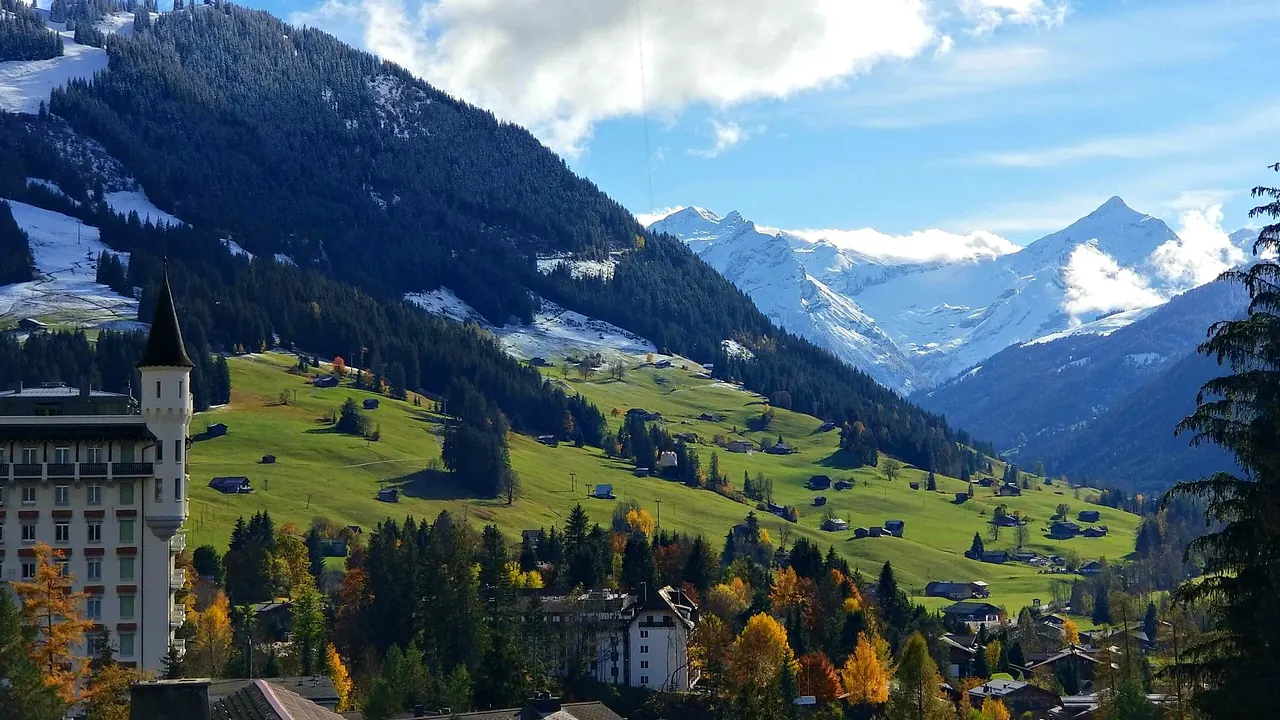
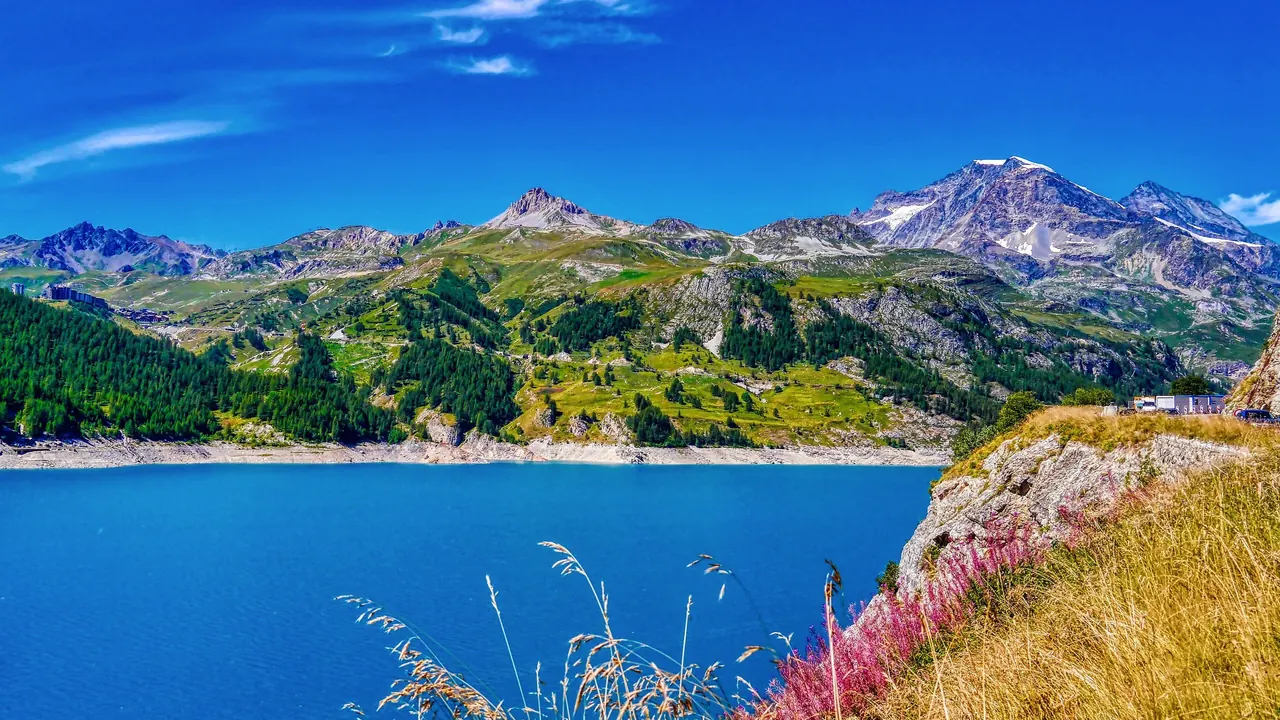
Photos: Gstaad by Samuel Barlow, CC BY-SA 4.0, cropped; Tignes by Zairon, CC BY-SA 4.0, cropped.
Gstaad or Tignes?
Our verdict in twelve categories, each scored against the same fixed benchmark cities, and the climate month by month, so you can choose for your trip.
Choose Gstaad for
- day trips
- live music and the arts
- shopping
Gstaad suits travellers who want a polished, quiet Alpine stay and can pay for it. The draws are the grand-hotel spas and gourmet dining rooms, the Menuhin Festival in summer and a Promenade of luxury boutiques. The GoldenPass railway also makes it easy to spend a day in Montreux, Gruyères or Bern. Its green, pastoral valleys are at their best for summer walking, and its winter slopes are gentle rather than demanding.
Choose Tignes for
- nightlife
- prices
- nature and the outdoors
Skiers who care most about snow and terrain should look at Tignes. It sits high beneath a glacier and is linked with Val d'Isère into one huge ski area, and the Vanoise National Park is next door. Winter evenings are loud and young, ski-in, ski-out apartments make family ski weeks easy, and self-catering keeps costs lower than in Gstaad. Beyond the mountains, though, there is little to see, buy or listen to.
Scoreboard
Twelve categories on one fixed scale from 0 to 100. The shaded stretch is the gap between the two.
Your match
Pick a travel style or drag the sliders, and both match scores follow your weighting.
Wins on day trips and live music and the arts with your weighting.
Wins on nightlife and prices with your weighting.
What matters to you?
Category by category
What the scores mean for a trip.
Beaches & swimming
Neither place is for swimming, and the difference is only in what kind of cold water you get. Gstaad has quick dips from the grassy shores of Lauenensee and Arnensee, and a heated outdoor pool in the valley. Tignes has a supervised summer bathing area with a strip of sand on its lake at 2,100m, where the snowmelt stays around 16°C, and an indoor aquatic centre with slides that works in any season.
Food & drink
Both are cheese country: Saanen's Hobelkäse and L'Etivaz on one side, Beaufort and Reblochon on the other. Gstaad eats better at the top end, though, because its grand hotels hold several serious gourmet kitchens alongside the rösti and raclette of the mountain huts.
Tignes is more casual and more repetitive. You get pizzerias, burgers, crêperies and much the same tartiflette from one menu to the next, with only a handful of more ambitious modern Alpine kitchens. In both resorts, many kitchens close between seasons.
Culture & sights
Neither is a sightseeing destination, but Gstaad at least has an old village to look at. It has dark-timbered Saanenland chalets with carved fronts, and Saanen's late-Gothic church of St Mauritius has medieval wall paintings. Tignes was built in the 1960s and 1970s as functional apartment blocks. Its one real story is the old village drowned by the Chevril dam, which is remembered in the giant mural on the dam wall.
Nightlife
Tignes is the place for a big night out in winter. Après-ski moves from the slope terraces to the bars of Val Claret and Le Lac and stays loud well past midnight, with a young crowd drinking beer and shots and dancing in ski boots.
Gstaad's nights out are fewer and dressier: hotel bars, a couple of exclusive cellar clubs and private chalet parties, mostly between Christmas and February. Outside the winter season both go quiet, and in Gstaad the evening usually ends by the fire after dinner.
Nature & outdoors
Both are mountain destinations first, but Tignes is the bigger and higher one. It sits at 2,100m beneath the Grande Motte glacier, is linked with Val d'Isère and borders the Vanoise National Park. That means snow-sure pistes, serious off-piste skiing and a season that opens in autumn.
Gstaad's landscape is softer. Its several ski areas are lower, so early snow can be thin, and Glacier 3000 is half an hour away when you need altitude. In summer its pastures, lakes and the waterfalls of the Geltental make for gentler walking than the ibex country around Tignes.
Day trips
Gstaad is far better placed for days away. The GoldenPass railway runs down to Montreux, Chillon and the Lavaux terraces, Gruyères is under an hour by car, and Bern's arcaded old town is about two hours away by train.
Tignes sits at the head of a long valley road. Val d'Isère is a short bus ride away, but Conflans and Beaufort each need a car and most of a day. In summer the quick route over the Little St Bernard Pass puts the Roman town of Aosta about two hours away. Most visitors simply stay in the mountains.
Good for families
Tignes is the easier base for a family ski week. Beginner areas sit right beside the villages, apartments are often ski-in, ski-out, and the indoor pool with slides covers white-out days. The altitude can tire very young children, though.
Gstaad is lower and calmer, with gentle slopes, sledging, sleigh rides and summer walks past the cows and goats. However, it has nothing indoors for a wet afternoon.
Getting around
Gstaad is easier to reach and to leave. It has its own stations on the GoldenPass line, a short car-free Promenade and PostBuses up the side valleys, though services thin out in the quiet months and many visitors end up using hotel shuttles or a car.
Inside the resort, Tignes is simple, with free shuttles and lifts linking its villages. Getting there is harder: the nearest station is at Bourg-Saint-Maurice, about forty minutes below up a winding road.
Shopping & style
Gstaad has real shopping, though only of one kind. The Promenade has watchmakers, jewellers, fashion labels, cashmere and furs, alongside carved wood and the papercut art of the Pays-d'Enhaut. Tignes has ski hire, outdoor gear and supermarkets for self-caterers, and its best souvenirs are Beaufort cheese and cured sausage from a delicatessen.
Affordability
Neither is cheap, but Tignes is easier on the wallet. Most of its accommodation is self-catering apartments, which let you cook and cut costs, and early-season, late-season and summer weeks bring prices down, even if lift passes and slope-side lunches still add up.
Gstaad sits at the very top of Swiss prices. Grand hotels and chalets dominate, and mid-range rooms are scarce. The usual way round this is to sleep down the valley in Saanen or Zweisimmen.
Live music & performing arts
Here Gstaad has a real draw. Every summer the Menuhin Festival brings leading soloists and orchestras to a large tent and to the old churches of Saanen, Rougemont and Lauenen, and winter adds chamber music. Live music in Tignes means après-ski bands, terrace DJs and the occasional free outdoor concert, with no theatre or concert hall at all.
Wellness & relaxation
Gstaad is the better place to slow down. For a village its size it has an unusual number of large hotel spas with mountain views, some selling day passes, and its quiet pace suits long lunches and afternoons in the sauna.
Tignes has saunas, hot tubs and a hammam at the aquatic centre, but its winter rhythm of early lifts and late bars works against rest. For real thermal water, Brides-les-Bains is about an hour down the valley.
When should you go?
Pick your month. The climate figures are measured averages, not a forecast.
Gstaad in July
Tignes in July
Daytime high, °C
Rainfall in the month, mm
Where the figures come from
Gstaad's temperatures are measured 78 km from the centre, at Les Eplatures.
Gstaad has no rain gauge within 25 km of the centre, so its rainfall comes from a gridded climate dataset read at the destination rather than from a gauge further away.
Tignes has no weather station within reach, so its figures come from a gridded climate model rather than a measured record, and read a broad area rather than one spot.
Temperature and rainfall are climate normals, averaged over the years shown. Gstaad: 2010-2020 (rainfall 1991-2020) normals, Les Eplatures (77.5 km from centre). Tignes: 2001-2020 normals, NASA POWER reanalysis grid, no weather station within 90 km.
Gstaad is the milder of the two through the year. July and August reach about 21°C, which is pleasant for walking the valleys and for the summer festival. In winter the village sits only a few degrees above freezing, so early snow on its lower slopes is not guaranteed. Rain and snow arrive steadily all year, and December is the wettest month at about 125mm.
Tignes is far colder. Daytime highs stay below freezing from December to March, around -4°C in January, which is what keeps its snow reliable. Even midsummer only reaches about 18°C, so the air is fresh rather than warm. The year is a little drier than in Gstaad, with May the wettest month. Neither place is ever warm enough for a beach trip, and lake dips work only in July and August. In both, the spring and late-autumn months between seasons are the least rewarding time to go.
Which traveller are you?
For a culture and arts trip, Gstaad is the clear choice, though it is more about music than sights. Time your stay for the summer Menuhin Festival, with concerts in old village churches, and add Saanen's painted church and a train down to Chillon. Tignes offers almost nothing here.
On a relaxing and wellness trip, Gstaad wins with its large hotel spas, still village evenings and soft green valleys for easy walks. Tignes, with its loud winter bars and early lifts, suits an active stay better than a restful one, and its spas are plainer.
On a tight budget, Tignes is the more manageable of two expensive resorts. Self-catering apartments, cheaper early, late and summer weeks and free activities by the lake all help. In Gstaad, even staying down the valley leaves meals and lift passes at top Swiss prices.
Before you go
| Measure | Gstaad | Tignes |
|---|---|---|
| Official language | French, German, Italian, Romansh | French |
| Currency | Swiss Franc (CHF) | Euro (EUR) |
| Sockets | CJ230 V, 50 Hz | CE230 V, 50 Hz |
| Driving side | Right | Right |
| Time zone | UTC+1, UTC+2 in summer | UTC+1, UTC+2 in summer |
| Emergency number | 112 | 112 |
| Elevation | 1,050 m | 1,440 m |
| Main airport | Geneva International Airport (GVA)94 km from centre150 non-stop destinations | Geneva International Airport (GVA)105 km from centre150 non-stop destinations |
| Public holidays this year | 10 days | 11 days |
By the numbers
| Measure | Gstaad | Tignes |
|---|---|---|
| Population | 2,960 | 1,919 |
| People per km² | - | 24 |
| Museums within 10 km | 0 | 0 |
| UNESCO World Heritage sites within 50 km | 4 | 0 |
Where else could you go?
Every comparison below shares a destination with this one, so you can follow Gstaad or Tignes somewhere new.
- Val d'Isèrevs Tignes
- Les Arcsvs Tignes
- La Rosièrevs Tignes
- La Plagnevs Tignes
- Adelbodenvs Gstaad
- Val Cenisvs Tignes