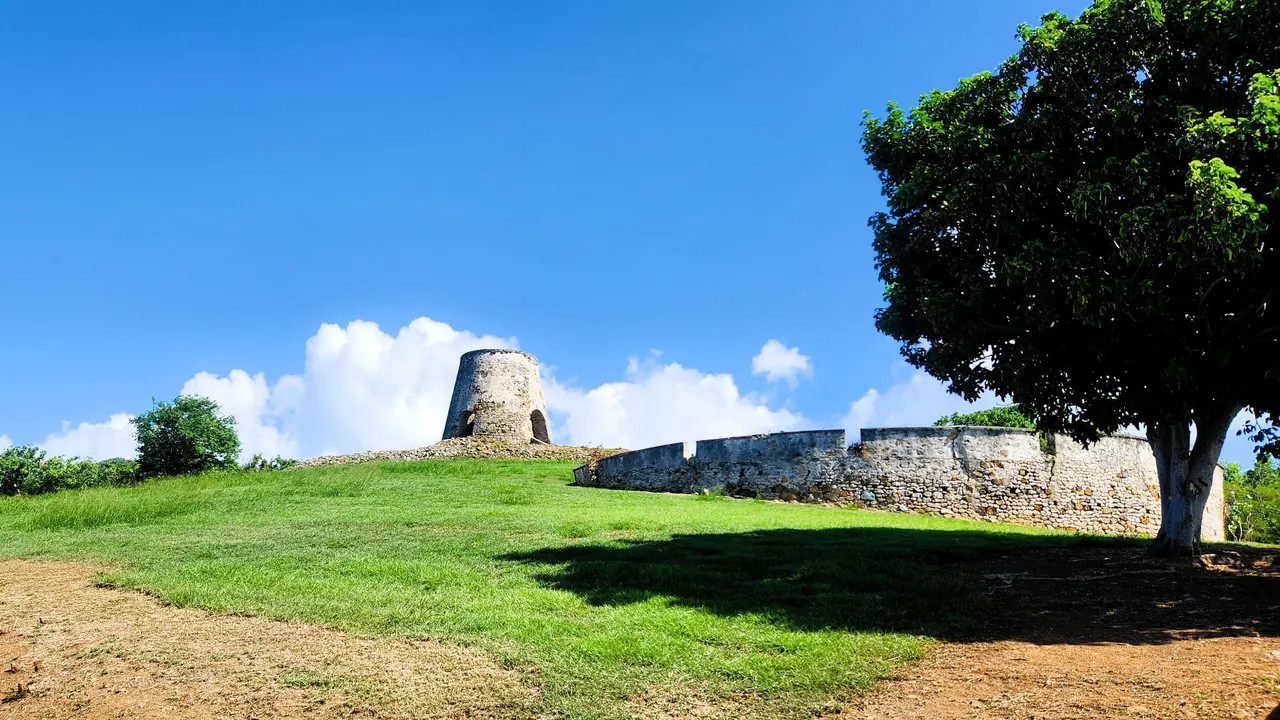
Photos: St Croix by CaptJayRuffins, CC BY-SA 4.0, cropped.
Guadeloupe or St Croix?
Our verdict in twelve categories, each scored against the same fixed benchmark cities, and the climate month by month, so you can choose for your trip.
Choose Guadeloupe for
- day trips
- food and drink
- live music and the arts
Guadeloupe is the island with more in it. It suits travellers who want a beach vacation with plenty to do around it: a rainforest volcano to climb, hot springs in the forest, ferries to Les Saintes and Marie-Galante, Creole cooking and rum distilleries, and drumming and zouk in the evenings. Families do especially well on its shallow southern lagoons. Being French, it also works smoothly for European visitors.
Choose St Croix for
St Croix does not lead in any category we score.
St Croix is the smaller, simpler choice. It suits people who want good beaches, some of the Caribbean's best snorkelling at Buck Island and Cane Bay, and a quiet week based in Danish-built Christiansted, all within an easy drive. It is drier in winter and early spring. For American travellers there are no passports or currency to sort out. The trade-off is that there is less to do on land and few ways off the island.
Scoreboard
Twelve categories on one fixed scale from 0 to 100. The shaded stretch is the gap between the two.
Your match
Pick a travel style or drag the sliders, and both match scores follow your weighting.
Wins on day trips and food and drink with your weighting.
Has no clear advantage with the weighting you have chosen.
What matters to you?
Category by category
What the scores mean for a trip.
Beaches & swimming
The two islands are evenly matched for beaches, but the experience differs. Guadeloupe gives you more choice. You get white sand and calm lagoons along Grande-Terre's south coast, wilder forest-backed bays on Basse-Terre, and then the beaches of Les Saintes and Marie-Galante on top. Having several coasts also lets you move when sargassum seaweed arrives on one of them.
St Croix has fewer, smaller beaches, but each is distinctive. Sandy Point and Rainbow Beach at the west end are best for long walks and sunsets, Cane Bay for snorkelling from the shore, and Buck Island for a perfect white beach a boat ride away.
Food & drink
Guadeloupe is the better place to eat. Its Creole cooking combines salt-cod accras, colombo curries and court-bouillon of fish. You eat it at beach shacks and at market stalls in Pointe-à-Pitre, and French bakeries and cheese counters fill the gaps. Agricultural rum made from fresh cane juice gives a reason to visit Marie-Galante in its own right.
St Croix's Crucian food is just as rooted in the island: johnny cakes, pates, kallaloo and roti from roadside stands. However, the restaurant scene in Christiansted leans towards mainland American dishes, and the overall range is narrower and more dependent on imports.
Culture & sights
Neither island is a culture destination, and both tell the story of sugar and slavery. Guadeloupe's single strongest sight is the Mémorial ACTe on the old sugar wharf in Pointe-à-Pitre. The rest is scattered across the islands: forts, Amerindian rock carvings, Hindu temples and windmills on Marie-Galante.
St Croix's history is more concentrated and easier on the eye. Christiansted's arcaded waterfront and yellow fort are kept as a national historic site, and Frederiksted's fort is where emancipation was proclaimed in 1848.
Nightlife
Neither island has much nightlife, but Guadeloupe has more of it. Le Gosier has bars, a casino and clubs where zouk and dancehall play late at weekends. Carnival, from January to Ash Wednesday, keeps the whole island up for weeks.
St Croix has no club scene at all. Evenings mean rum drinks in Christiansted's open-air courtyard bars, finishing early. Things only stay lively late during the Crucian Christmas Festival.
Nature & outdoors
Guadeloupe has far more to offer outdoors. Basse-Terre is volcanic rainforest, mostly national park, with the steaming 1,467m summit of La Soufrière, waterfalls and the forest road across the island. Below the water, the Cousteau Reserve has turtles and coral, and there are mangroves to kayak in the Grand Cul-de-Sac Marin.
St Croix's landscape is drier and gentler, with cactus hills and sea views around Point Udall. Its strengths are in the sea: the underwater trail at Buck Island, the reef wall at Cane Bay, glowing bioluminescent water in Salt River Bay at night, and nesting leatherback turtles.
Day trips
This is where the islands differ most. From Guadeloupe, ferries go to Terre-de-Haut's painted village and bay, to Marie-Galante with its windmills and ox carts, and to quiet La Désirade. A longer crossing even reaches Dominica.
St Croix sits about 60km from the other Virgin Islands, so getting off the island means a seaplane or a long boat ride to St Thomas or St John, which makes for an expensive full day. Most visitors simply travel between Christiansted and Frederiksted instead.
Good for families
Guadeloupe is the easier island with children. The lagoons around Sainte-Anne stay warm and knee-deep a long way out. For outings there are an aquarium, a forest zoo and a botanical garden, and French healthcare is reassuring.
St Croix offers calm water at Rainbow Beach and easy first snorkels, but nothing built for children. For American families, the lack of passports and currency exchange is the main convenience.
Getting around
On both islands a hire car is close to essential, and buses are of little use. The difference is scale. Guadeloupe takes up to a couple of hours to cross, and traffic at the bridges near Pointe-à-Pitre pushes many visitors to stay on one wing. Ferries and scooters take care of the outer islands.
St Croix is about forty minutes from one end to the other, though you drive on the left on mixed roads. Christiansted's centre is pleasant to explore on foot.
Shopping & style
Shopping on Guadeloupe means local produce rather than goods to buy in shops. The covered spice market in Pointe-à-Pitre has vanilla, home-made punches and madras cloth. Rum comes straight from the distilleries, and the French supermarkets on the island give you a bit more to browse.
St Croix's shopping is smaller and focused on jewellery and craft. In the arcaded streets of Christiansted, island jewellers make the Crucian hook bracelet, and galleries sell Caribbean art. Serious duty-free shopping means a trip to St Thomas.
Affordability
Both islands are expensive because so much is imported, but Guadeloupe is somewhat gentler on the budget. Villas and apartments with kitchens suit families and groups, and bokit vans and lolos are good value.
St Croix costs more than the American mainland for both meals and groceries. Taxis are no cheaper than a hire car, and local food stands and guesthouses in Christiansted only partly offset this.
Live music & performing arts
Guadeloupe's music is woven into everyday life. Gwoka drumming, recognised by UNESCO, comes alive at léwòz evenings, and zouk plays everywhere. L'Artchipel in Basse-Terre town stages theatre and concerts, and Marie-Galante hosts the Terre de Blues festival.
St Croix's quelbe scratch bands and stilt-walking mocko jumbies are mostly seen at festivals. The rest of the year there is only a small arts centre, bar bands and Frederiksted's open-air jazz.
Wellness & relaxation
Guadeloupe has something St Croix lacks: volcanic hot springs. You can bathe at the Bains Jaunes in the forest, in the warm shoreline pools near Bouillante and at the small thermal spa at Ravine Chaude.
St Croix offers only resort spas and the odd yoga class. Its appeal is pure quiet, in the villas of the West End and the east-end hills.
When should you go?
Pick your month. The climate figures are measured averages, not a forecast.
Guadeloupe in July
St Croix in July
Daytime high, °C
Rainfall in the month, mm
Where the figures come from
St Croix has no rain gauge within 25 km of the centre, so its rainfall comes from a gridded climate dataset read at the destination rather than from a gauge further away.
Temperature and rainfall are climate normals, averaged over the years shown. Guadeloupe: 1991-2020 normals, Le Raizet, Guadeloupe (7.3 km from centre). St Croix: 2000-2020 (rainfall 1991-2020) normals, Christiansted, Henry E. Rohlsen Airport (11.5 km from centre).
Both islands are hot all year and the sea stays between about 26°C and 29°C, so any month works for swimming. The real difference is rain. Guadeloupe is driest from January to March, with February and March the driest months and plenty of sunshine. Showers increase from April and May, and the wettest stretch runs from September to November. The heat peaks at around 32°C from July to September.
Those are the most tiring months for walking around Pointe-à-Pitre or climbing La Soufrière, so the cooler, drier early months suit hiking best.\n\nSt Croix gets less rain than Guadeloupe in every month of the year. February and March are very dry, and its days run about a degree cooler. The gap between the two islands is widest in autumn. In October Guadeloupe gets about 211mm, while St Croix gets about 120mm. Both islands are at their best in winter and early spring. In the wetter second half of the year, St Croix is the safer bet for the weather.
Which traveller are you?
On an outdoors trip, choose Guadeloupe. Basse-Terre has rainforest trails, the Carbet falls and the climb up La Soufrière, and it also has the Cousteau Reserve for diving. St Croix's best outdoors is mostly underwater, and its gentle, dry hills can't match a volcano.
For a food and nightlife trip, Guadeloupe is again the better pick. Its Creole cooking draws on Indian colombo curries and covers everything from lolos to market stalls, and its rum comes from Marie-Galante's distilleries. Le Gosier has clubs playing zouk late at weekends. St Croix's evenings end early at Christiansted's boardwalk bars.
On a beach and sun trip, St Croix is a fine choice despite Guadeloupe's broader coastline. Its winters are drier, and on such a small island Sandy Point, Cane Bay and the boat to Buck Island are all within a short drive of your base.
Before you go
| Measure | Guadeloupe | St Croix |
|---|---|---|
| Official language | - | English |
| Currency | Euro (EUR) | US Dollar (USD) |
| Sockets | CE230 V, 50 Hz | - |
| Driving side | Right | Left |
| Time zone | UTC-4 | UTC-4 |
| Emergency number | 112 | 911 |
| Main airport | Maryse Condé International Airport (PTP)21 non-stop destinations | Henry E. Rohlsen Airport (STX)9 non-stop destinations |
| Public holidays this year | 12 days | 18 days |
By the numbers
| Measure | Guadeloupe | St Croix |
|---|---|---|
| Population | 384,160 | 41,004 |
| People per km² | 236 | 191 |
| Swim season, months above 21 °C | 12 months | 12 months |
Where else could you go?
Every comparison below shares a destination with this one, so you can follow Guadeloupe or St Croix somewhere new.
- St Johnvs St Croix
- St Thomasvs St Croix
- British Virgin Islandsvs St Croix
- Culebravs St Croix
- Viequesvs St Croix
- Puerto Ricovs St Croix