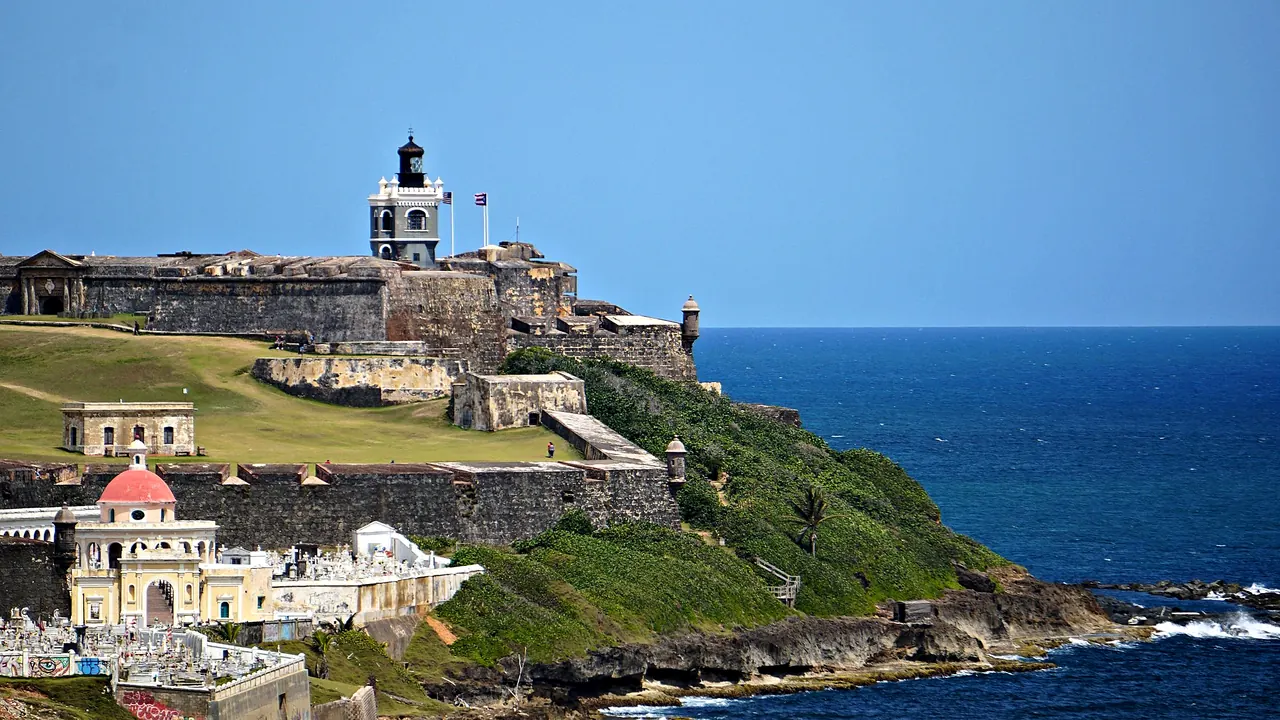
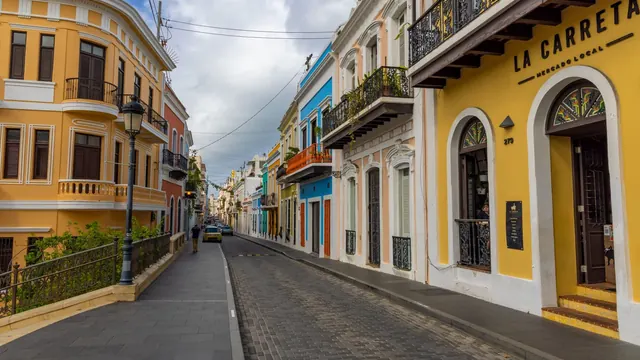
Photos: Puerto Rico by Mariordo (Mario Roberto Durán Ortiz), CC BY-SA 4.0, cropped.
Puerto Rico or St Croix?
Our verdict in twelve categories, each scored against the same fixed benchmark cities, and the climate month by month, so you can choose for your trip.
Choose Puerto Rico for
- nightlife
- day trips
- live music and the arts
Puerto Rico is the better choice for a trip with range. You can spend a day in Old San Juan's forts and cobbled streets, eat roast pork in the Guavate hills, walk the rainforest trails of El Yunque, dance to salsa in Santurce and still finish the week on the sand at Flamenco Beach on Culebra. It suits travellers who like to move around with a hire car and want food, nightlife and culture as well as a beach. You give up quiet, at least in the capital.
Choose St Croix for
St Croix does not lead in any category we score.
St Croix is for travellers who want a small island where the sea is the whole plan. The draw is the reef: snorkelling the marked trail at Buck Island, diving the Cane Bay wall straight from the beach, watching the sun go down at Rainbow Beach. Evenings end early and the island moves slowly. In return you get less to eat, see and do, and leaving the island for a day takes real effort.
Scoreboard
Twelve categories on one fixed scale from 0 to 100. The shaded stretch is the gap between the two.
Your match
Pick a travel style or drag the sliders, and both match scores follow your weighting.
Wins on nightlife and day trips with your weighting.
Has no clear advantage with the weighting you have chosen.
What matters to you?
Category by category
What the scores mean for a trip.
Beaches & swimming
The beaches on both islands are excellent, but they are different kinds of beach. Puerto Rico has far more coast. There are long city beaches at Condado and Isla Verde within walking distance of hotels, the calm palm-lined bay at Luquillo, and Flamenco Beach on Culebra, as fine a beach as any in the region. In winter, though, much of the north coast is too rough for casual swimming.
St Croix's beaches are smaller and fewer, but more of them have reef right off the shore. You can snorkel straight from the sand at Cane Bay, and there are sheltered coves near Christiansted and the quiet west-end beaches at Sandy Point and Rainbow Beach. Buck Island, a short boat ride away, adds a perfect white beach of its own.
Food & drink
Puerto Rico is clearly the better island for eating. Its creole cooking of mofongo, pasteles and roast pork has whole outings built around it, at the lechoneras of Guavate, the fritter stands at Piñones and the kiosks on the Luquillo shore. San Juan adds real variety, from the old dining rooms of the walled town to the newer cooking of Santurce, and there is mountain coffee to taste at the haciendas.
Crucian food is well worth trying: johnny cakes, kallaloo, goat stew and roti, best eaten at roadside stands. Beyond those, though, the restaurants are mostly in Christiansted, the choice is limited, and a lot of what is served is imported.
Culture & sights
Both islands have colonial forts on the water, but Puerto Rico has far more. Old San Juan is a walled town that grew over five centuries, with El Morro and San Cristóbal on its walls, and Ponce and its art museum add a second strong day. Taíno ball courts at Caguana show the island's history before the Spanish.
St Croix's Danish past is smaller and sharply focused. Christiansted's ochre arcades and yellow fort, the Frederiksted fort where emancipation was declared in 1848, and the Whim plantation museum tell the story of sugar and slavery clearly. You can see it all in a couple of days.
Nightlife
If going out matters, choose Puerto Rico. In San Juan the night starts late and runs into the small hours, with street crowds around La Placita in Santurce, packed bars on Calle San Sebastián and dancing to salsa and reggaeton. Casino and club nights in the Condado are there for a dressier evening.
St Croix offers rum drinks in the open-air courtyard bars of Christiansted and sunset at a beach bar, and most places are quiet well before midnight. The exception is the Crucian Christmas Festival, when the island stays out late.
Nature & outdoors
Puerto Rico has more kinds of landscape. There is rainforest with waterfalls at El Yunque, haystack hills and the Río Camuy caves in the karst country, coffee farms along the mountains, winter surf and passing whales at Rincón, and three glowing bays to paddle at night.
St Croix's best nature is underwater. The snorkelling trail at Buck Island Reef and the wall at Cane Bay, close enough to shore that divers swim out from the beach, are first rate. On land the island is drier and gentler, with grassy hills around Point Udall, a bioluminescent bay at Salt River and leatherback turtles nesting at Sandy Point.
Day trips
A base in San Juan puts several good outings within a drive. Ponce, about an hour and a half away on the south coast, has its plaza and old mansions, the rum distilleries in Cataño make a half day, and Culebra and Vieques are worth a night or two on their own. The list still runs out after a while, because the island's appeal is mostly its landscape.
St Croix lies about 60km south of the other Virgin Islands, so day trips mostly mean going from one of its two towns to the other. The one real outing is St Thomas or St John, by seaplane or a longer boat crossing, and it takes a full, costly day.
Good for families
Puerto Rico gives families more to fill the days. There is calm water at Luquillo and Seven Seas, short El Yunque trails to natural pools, a guided route underground at Camuy, and resorts at Río Grande and Fajardo with kids' clubs. The open lawns by the San Juan forts make an easy afternoon.
St Croix is mostly beach time: paddling at Rainbow Beach, a first snorkel in a sheltered cove or at Buck Island, and a fort to explore. Some of the best coves are reached on rough paths, so families tend to stay close to a villa pool.
Getting around
On both islands you need a hire car, and the towns are the only places that are pleasant on foot. The difference is scale. Puerto Rico means heavy traffic around San Juan, slow mountain roads and a ferry to the outer islands that often sells out or runs late.
St Croix is about forty minutes from end to end, so the distances are easy. Visitors do have to get used to driving on the left, usually in American cars, and to the steep, winding climb to the north shore.
Shopping & style
For things to take home, Puerto Rico offers the wider choice, though neither island is a real shopping destination. In Old San Juan the streets around Calle Fortaleza sell carved santos, vejigante masks, cigars and aged rum, and the large malls of Hato Rey cover everyday needs.
On St Croix, shopping means a few arcaded streets in Christiansted. The thing to bring home is a Crucian hook bracelet made by a local jeweller. Anyone after serious duty-free shopping has to make the trip to St Thomas.
Affordability
Neither island is cheap, but money lasts longer in Puerto Rico. Lechoneras and beach kiosks are good value, rum costs little, and the guesthouses around Rincón cost much less than the hotels in the capital.
On St Croix almost everything is shipped in, so even a supermarket shop costs more than on the mainland. A hire car and winter rates for villas add up quickly. Roadside food stands and the guesthouses of Christiansted help a little.
Live music & performing arts
Puerto Rico's live music is part of daily life. Salsa dance nights, bomba drumming in Loíza and Piñones, and plena around La Placita can be found in most weeks. For formal concerts there is the symphony orchestra at the Centro de Bellas Artes, plays at the Teatro Tapia and the Casals Festival.
St Croix's quelbe scratch bands and mocko jumbie stilt dancers are well worth seeing, but they mostly appear at festival time. For the rest of the year there are bar bands and the occasional touring show.
Wellness & relaxation
Neither island has much of a spa culture, and the calm they offer comes in different ways. On Puerto Rico you go looking for it: a full spa at a resort in Dorado or Fajardo, the old hot springs at Coamo, or a slower few days on Vieques. San Juan itself is loud.
On St Croix, quiet is simply how the island is, with unhurried days, early evenings and villas on the east-end hills. The spas and yoga classes, though, are few.
When should you go?
Pick your month. The climate figures are measured averages, not a forecast.
Puerto Rico in July
St Croix in July
Daytime high, °C
Rainfall in the month, mm
Where the figures come from
St Croix has no rain gauge within 25 km of the centre, so its rainfall comes from a gridded climate dataset read at the destination rather than from a gauge further away.
Temperature and rainfall are climate normals, averaged over the years shown. Puerto Rico: 1991-2020 normals, San Juan / Int., Puerto Rico (8.3 km from centre). St Croix: 2000-2020 (rainfall 1991-2020) normals, Christiansted, Henry E. Rohlsen Airport (11.5 km from centre).
The two islands are warm enough for the beach in every month, and the sea stays warm all year round. For both, the best time is late winter into spring, when the least rain falls. Around San Juan, March is Puerto Rico's driest and sunniest month, with about 53mm of rain. Showers build from April, summer highs reach around 32°C, and the wettest stretch runs from July to November, which is also hurricane season. In midsummer the heat makes a long walk around Old San Juan hard work.
St Croix is the drier island all year. February and March bring barely 35mm of rain. Its wet months, August to November, are also lighter than Puerto Rico's, reaching about 140mm in September, while Puerto Rico gets nearly 180mm in November. Daytime highs on St Croix run a degree or so lower as well, which takes a little of the edge off summer.
Which traveller are you?
For a food and nightlife trip, choose Puerto Rico. It has the roadside lechoneras of Guavate, the creative kitchens of Santurce and weekend crowds at La Placita until the small hours. On St Croix the food is good but the range is narrow, and the bars close early.
On a culture and arts trip, Puerto Rico is again the stronger choice. Old San Juan's UNESCO-listed forts, two serious art museums, and the bomba and salsa heard in the streets add up to several full days. St Croix's Danish towns and plantation ruins are interesting but take only a day or two.
For a relaxing and wellness trip, St Croix makes the slow week easier. The whole island is calm, the evenings are early, and the beach is never far away. On Puerto Rico, real quiet means a resort stay or a ferry to Vieques or Culebra, away from noisy San Juan.
Before you go
| Measure | Puerto Rico | St Croix |
|---|---|---|
| Official language | Spanish, English | English |
| Currency | US Dollar (USD) | US Dollar (USD) |
| Sockets | AB120 V, 60 Hz | - |
| Driving side | Right | Left |
| Time zone | UTC-4 | UTC-4 |
| Emergency number | 911 | 911 |
| Main airport | Luis Munoz Marin International Airport (SJU)59 non-stop destinations | Henry E. Rohlsen Airport (STX)9 non-stop destinations |
| Public holidays this year | 21 days | 18 days |
By the numbers
| Measure | Puerto Rico | St Croix |
|---|---|---|
| Population | 3,285,874 | 41,004 |
| People per km² | 361 | 191 |
| Swim season, months above 21 °C | 12 months | 12 months |
Where else could you go?
Every comparison below shares a destination with this one, so you can follow Puerto Rico or St Croix somewhere new.
- St Johnvs St Croix
- St Thomasvs St Croix
- British Virgin Islandsvs St Croix
- Culebravs St Croix
- Viequesvs St Croix
- St Thomasvs Puerto Rico