Puerto Rico
Puerto Rico
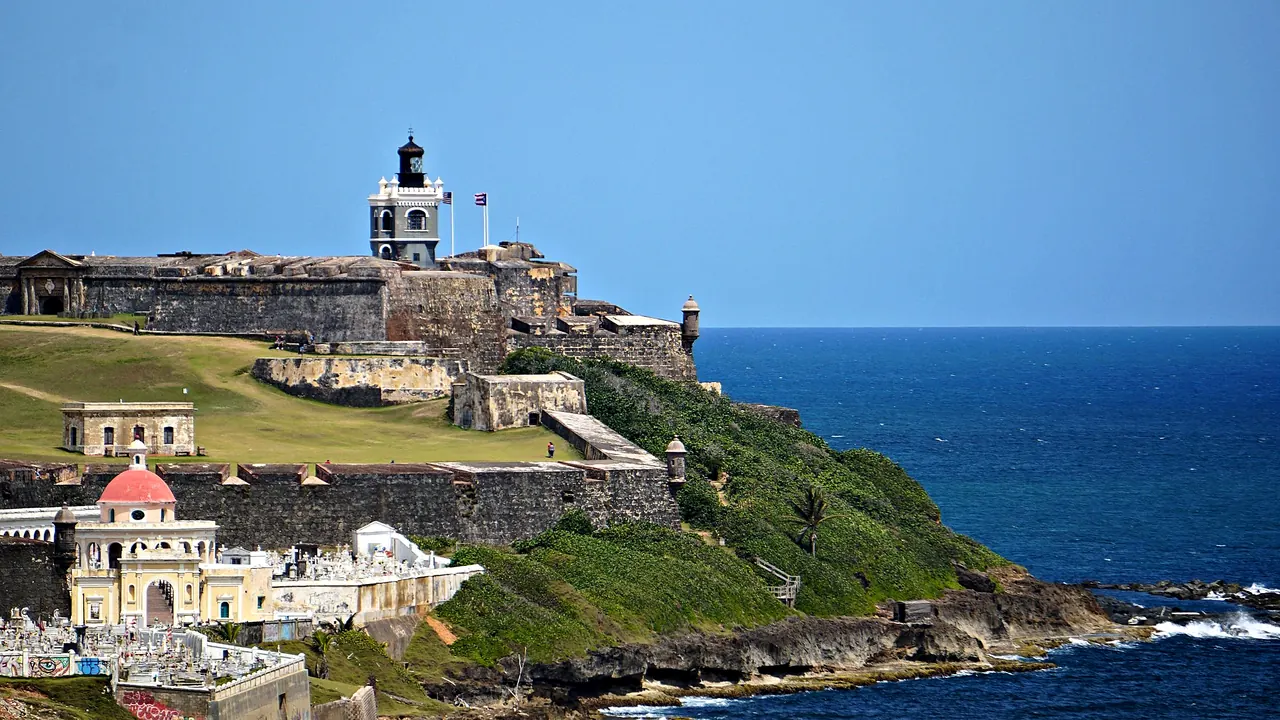
El Morro and its lighthouse above the sea in Old San Juan
- Beaches87
- Nature & outdoors80
- Food & drink70
Photo: Mariordo (Mario Roberto Durán Ortiz), CC BY-SA 4.0, cropped
Match
59
Every category weighted equally
- Beach & sun62
- Culture & arts56
- Food & nightlife58
- Family trip60
- Outdoors62
- Relax & unwind60
- Shopping & style56
- On a budget57
Puerto Rico in twelve categories
Our verdict on each, scored 0 to 100 against the same fixed benchmark cities, so a score means the same thing on every page.
Beaches & swimming. Scores 87 out of 100.
Food & drink. Scores 70 out of 100.
Culture & sights. Scores 65 out of 100.
Nightlife. Scores 70 out of 100.
Nature & outdoors. Scores 80 out of 100.
Day trips. Scores 57 out of 100.
Good for families. Scores 62 out of 100.
Getting around. Scores 38 out of 100.
Shopping & style. Scores 46 out of 100.
Affordability. Scores 37 out of 100.
Live music & performing arts. Scores 54 out of 100.
Wellness & relaxation. Scores 44 out of 100.
Puerto Rico category by category
Beaches & swimming
87The sea is warm all year, from about 26°C in winter to 29°C in late summer, and there is a lot of coast to choose from. In San Juan, Condado, Ocean Park and Isla Verde are long city beaches within walking distance of hotels. To the east, Luquillo has a calm, palm-backed bay that suits a long lazy day, and Seven Seas near Fajardo is sheltered too. The finest beaches are offshore. Flamenco Beach on Culebra is a long horseshoe of white sand on very clear water, and Vieques has quiet, undeveloped bays.
The coast differs a good deal. The north coast faces the open Atlantic, and on many beaches there, from Isabela to Rincón, winter brings big surf and strong currents, so swimmers should choose calm, protected stretches. The south and west are calmer, and the cays off La Parguera are reached by boat. Most visitors split their stay between San Juan and a few nights near the beaches they like best.
Food & drink
70Puerto Rican cooking is a filling creole cuisine built on plantain, pork, rice and sofrito. Mofongo, arroz con gandules, pasteles and alcapurrias are its everyday dishes. The island's most typical food experiences happen outside restaurants. In the hills of Guavate, south of San Juan, whole roast pig is carved at roadside lechoneras, and weekend crowds come for the food and music. The kiosks along the Luquillo shore and the fritter stands at Piñones serve fried snacks a few steps from the sand.
San Juan has the most variety. Santurce has the creative kitchens and the market square at La Placita, Old San Juan has the classic dining rooms, and the Condado has the hotel restaurants. Rum is the local drink, and the piña colada is claimed as a San Juan invention. Coffee from the central mountains is excellent and can be tasted at haciendas around Jayuya and Yauco. Outside San Juan and Ponce the choice is simple.
Culture & sights
65The heart of it is Old San Juan, five centuries of Spanish colonial town on a walled islet. The blue cobbled streets are lined with pastel houses. El Morro and San Cristóbal, huge stone forts above the ocean, are part of a UNESCO site with the city walls and La Fortaleza, the governor's residence. San Juan Cathedral and the convent and church quarter round out a district that rewards a slow day or two. In Santurce, the Museo de Arte de Puerto Rico holds the island's best collection.
Across the island, Ponce has a handsome plaza, a striped red-and-black firehouse and the Museo de Arte de Ponce, whose European paintings would stand out in a much larger city. San Germán keeps one of the oldest churches in the Americas. At Caguana and Tibes, Taíno ball courts and carved stones show what came before the Spanish. Beyond these, the sights are spread out and modest.
Nightlife
70Going out means San Juan, and there it runs late. On weekend nights the market square of La Placita de Santurce fills with crowds drinking in the street, and music spills out of the bars around it until the small hours. In Old San Juan, Calle San Sebastián and the streets around it have dense, noisy bars, and dancing to salsa and reggaeton, the music the island is known for, starts late. The Condado and Isla Verde add hotel lounges, casinos and clubs for a more polished night.
The atmosphere is warm, social and full of dancing rather than a serious club culture. Outside the capital the scene shrinks quickly. Rincón has surf bars at sunset and the beach towns have their weekend spots, but on Vieques and Culebra the night is quiet.
Nature & outdoors
80The island packs a lot of landscape into a small space. El Yunque, less than an hour east of San Juan, is a tropical rainforest of tree ferns, waterfalls and cloud-wrapped peaks, crossed by short trails. The bioluminescent bays are the other great draw. On a dark night, paddling a kayak through Mosquito Bay on Vieques, Laguna Grande near Fajardo or the bay at La Parguera lights up the water with glowing blue-green trails.
Inland, the karst country around Arecibo has haystack hills, sinkholes and the huge Río Camuy caves. The Cordillera Central runs along a quiet spine of coffee farms and steep, winding roads. On the water, Rincón and the northwest coast have serious winter surf, humpback whales pass Rincón in winter, and the reef wall off La Parguera and the waters around Culebra are the best diving and snorkelling. Summer and autumn bring hurricane season.
Day trips
57From San Juan the outings are pleasant rather than outstanding. Ponce, on the south coast and about an hour and a half away by road, is the best town to visit, with its plaza, art museum and old mansions. Rum distilleries across the bay in Cataño and elsewhere make an easy half day. The coffee haciendas in the central mountains, and the colonial church town of San Germán in the far southwest, take a longer drive.
The offshore islands are the most rewarding trip. Culebra and Vieques are reached by ferry from Ceiba or by a short flight, and each has a small, slow harbour town. They are more enjoyable with a night or two than as a rushed day out, and ferry delays are common. Since most interest lies in landscape and beaches, the list of separate places to visit runs out fairly quickly.
Good for families
62Puerto Rico works well for families who like the outdoors. Children enjoy the calm, shallow water at Luquillo and Seven Seas and the lagoons in San Juan. El Yunque has short trails to waterfalls and natural pools, and the Camuy caves have a guided route underground. A night kayak through a glowing bay suits older children best. Big resorts around Río Grande, Dorado and Fajardo have pools and kids' clubs, and the Spanish forts in Old San Juan have open lawns where families fly kites.
There is little built for children: no major theme park, zoo or aquarium. Days usually mean driving between beaches and parks. Rough Atlantic beaches on the north coast are not for small swimmers, and the summer heat is draining. Familiar shops and pharmacies, and widespread English in tourist areas, make the practical side easy.
Getting around
38Within San Juan, the old town is compact and pleasant on foot, though hilly, and the Condado and Ocean Park are walkable along the shore. Taxis and ride-hailing link the districts. Beyond that, a hire car is close to essential. The urban rail line serves commuters rather than visitors, and buses outside the capital are scarce. Highways are good, but traffic around San Juan is heavy, and mountain roads in the interior are narrow, steep and slow.
The island is not large, Rincón being about two and a half hours from the capital, so a road trip is easy to plan. The weak link is reaching Culebra and Vieques. The ferries from Ceiba often sell out or run late, so many visitors take the short flights instead, and on the islands themselves a golf cart or jeep is the usual way to get around.
Shopping & style
46Shopping is a mix of American malls and local crafts, without a real fashion or luxury district. In Old San Juan, the streets around Calle Fortaleza have galleries, cigar and rum shops and craft stores. Carved wooden santos are the classic thing to bring home. Vejigante masks, the horned carnival masks, come in two traditions: in Loíza they are carved from coconut husks, and in Ponce they are made of papier-mâché. Guayabera shirts, coffee from the mountains and aged rum round out the list.
Hato Rey and the outskirts of San Juan have large malls with the usual American and international chains. Outside the capital, shopping is mostly beach-town stores and roadside crafts.
Affordability
37Prices are at American levels. The main visiting season, from December to April, is when San Juan's beachfront hotels and the big resorts are at their most expensive, and resort fees and a hire car add to the bill. Food is where money goes further. Roadside lechoneras, beach kiosks and local fondas are good value, and rum is cheap. Guesthouses in Rincón, the west coast and the island towns cost less than the hotels in the capital, while sit-down dinners in San Juan cost as much as in a mainland US city.
Live music & performing arts
54The island's live music is its own. Salsa bands play dance nights in San Juan, and bomba, an Afro-Puerto Rican drum-and-dance tradition, is performed in Loíza and Piñones and at street gatherings in Santurce and the old town. Plena, the sung street music, appears around La Placita and at festivals. The Fiestas de la Calle San Sebastián, held each January, bring the old town to a standstill with music in every street.
For formal performances, the Centro de Bellas Artes in Santurce is the main venue and home to the Puerto Rico Symphony Orchestra. The historic Teatro Tapia in Old San Juan stages plays in Spanish, and the Casals Festival, founded by the cellist Pablo Casals, has a long classical tradition. Outside San Juan, there is little to see beyond local festivals.
Wellness & relaxation
44Relaxing here mostly means a resort stay. The big resorts at Dorado, Río Grande and Fajardo have full spas, and on the quieter islands the pace slows almost to a halt. Vieques and Culebra, with their few roads and early evenings, are where the island is most restful, and Rincón has a relaxed surf-town rhythm with yoga classes. The hot springs at Coamo, on the south side, have been used for bathing since colonial times and are the one real thermal tradition, though modest. San Juan itself is loud and full of traffic, and there is no wider bathing culture to build a trip around.
Where to stay in Puerto Rico
Most first visits start with a few nights in San Juan. Old San Juan suits walkers who want the forts, the classic dining rooms and the bars of Calle San Sebastián on the doorstep, though weekend nights are loud. The Condado and Ocean Park put a city beach outside the hotel, with restaurants along the shore, and Isla Verde, close to the airport, is the easiest beach base for a short stay. For food and late nights, nowhere else on the island compares.
East of the capital, the resort coast around Río Grande, Luquillo and Fajardo suits families. It has pools, calm water at Luquillo and Seven Seas, El Yunque nearby and the glowing lagoon at Fajardo. In the far west, Rincón is a relaxed surf town of guesthouses and sunset bars, best in winter for surfers and whale watching. It works well as a base for a road trip taking in La Parguera and San Germán.
Vieques and Culebra are the quietest bases, with few roads, early evenings and the finest beaches. Give them at least two nights, as ferries are unreliable. A good first trip pairs San Juan with the east coast or one of the islands. A second visit suits the west and south by hire car. Two bases are enough for a week.
When should you go?
Pick a month to see what it is like. The climate figures are measured averages, not a forecast.
Puerto Rico in July
Daytime high, °C
Rainfall in the month, mm
The whole year
Shaded against this city’s own year: the deepest cell is its best month for that figure and the palest its weakest.
Temperature and rainfall are climate normals, averaged over the years shown. Puerto Rico: 1991-2020 normals, San Juan / Int., Puerto Rico (8.3 km from centre).
Before you go
| Measure | Puerto Rico |
|---|---|
| Official language | Spanish, English |
| Currency | US Dollar (USD) |
| Sockets | AB120 V, 60 Hz |
| Driving side | Right |
| Time zone | UTC-4 |
| Emergency number | 911 |
| Main airport | Luis Munoz Marin International Airport (SJU)59 non-stop destinations |
| Public holidays this year | 21 days |
By the numbers
| Measure | Puerto Rico |
|---|---|
| Population | 3,285,874 |
| People per km² | 361 |
| Swim season, months above 21 °C | 12 months |
Compare Puerto Rico with
Every comparison with a written verdict behind it.