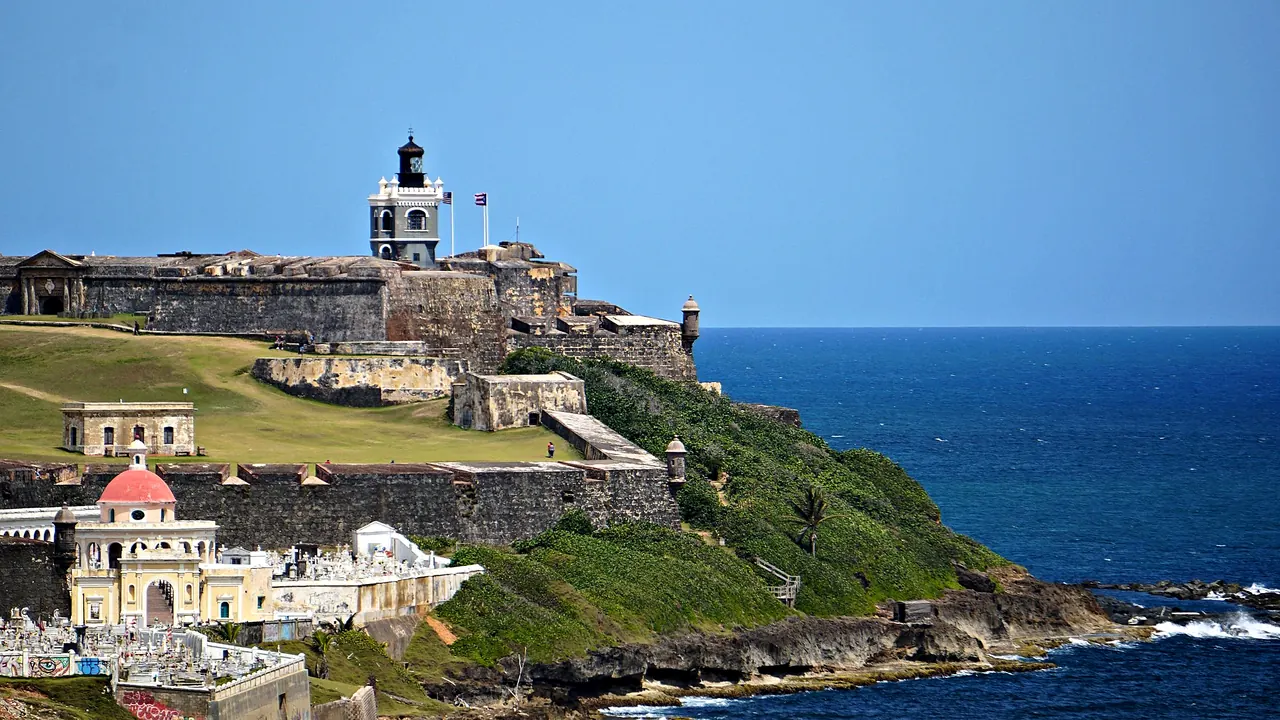
Photos: Puerto Rico by Mariordo (Mario Roberto Durán Ortiz), CC BY-SA 4.0, cropped.
British Virgin Islands or Puerto Rico?
Our verdict in twelve categories, each scored against the same fixed benchmark cities, and the climate month by month, so you can choose for your trip.
Choose British Virgin Islands for
- wellness
- beaches
The British Virgin Islands suit travellers who want the sea to be the whole trip. You sail between islands set close together across a sheltered channel, anchor off White Bay or Anegada's reefs, and spend evenings over rum before an early night. It is the quieter and more secluded choice, and the better one for doing very little. It costs more, though, and on land there is almost nothing in the way of towns, museums or food to fill a day.
Choose Puerto Rico for
- culture and sights
- live music and the arts
- nightlife
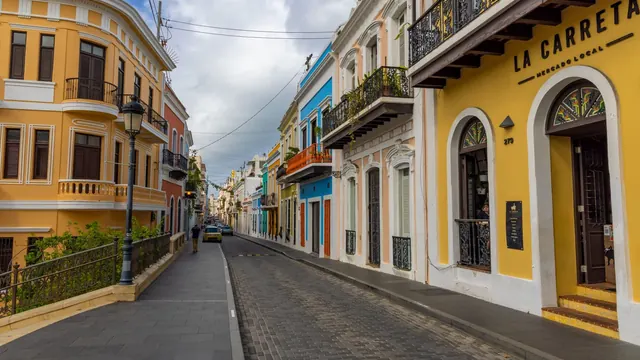
Puerto Rico is the pick if beaches are only one part of the trip you want. In one week you can walk Old San Juan's forts and cobbled streets, dance salsa late around La Placita, eat roast pork in Guavate, hike in El Yunque and kayak through a glowing bay, getting about by hire car rather than by boat. It costs less but is louder and busier, and its calmest corners are its own small islands, Vieques and Culebra.
Scoreboard
Twelve categories on one fixed scale from 0 to 100. The shaded stretch is the gap between the two.
Your match
Pick a travel style or drag the sliders, and both match scores follow your weighting.
Wins on wellness and beaches with your weighting.
Wins on culture and sights and live music and the arts with your weighting.
What matters to you?
Category by category
What the scores mean for a trip.
Beaches & swimming
Both are superb for swimming, with the same warm, clear sea, but the beaches are different in kind. In the British Virgin Islands almost every bay is sheltered inside the island chain. Many are best reached by boat: you wade ashore at White Bay, scramble through the granite pools of The Baths, or have Anegada's long reef-fringed sand largely to yourself.
Puerto Rico has far more coast and more variety. San Juan's Condado and Isla Verde are city beaches a short walk from the hotels, Luquillo is a calm, palm-backed bay, and Flamenco on Culebra matches anything in the Virgin Islands. The catch is the north coast, where winter surf and currents make many beaches unsafe for casual swimming.
Food & drink
Puerto Rico has a real cuisine of its own and is the better place to eat. Roadside lechoneras carve whole roast pig in the hills of Guavate, Santurce's kitchens and La Placita give San Juan some range, and you can taste coffee at mountain haciendas.
The British Virgin Islands offer a pleasant routine rather than a reason to come. Expect grilled fish and rotis in Road Town, lobster grilled over oil drums on Anegada and a painkiller at a Jost Van Dyke beach bar. Most produce is imported, and outside Road Town and the resorts the choice is thin.
Culture & sights
There is no real contest here. Old San Juan alone outweighs everything in the British Virgin Islands. Its walled streets, the great stone forts of El Morro and San Cristóbal and its cathedral fill a couple of days. Ponce's museum and the Taíno sites at Caguana and Tibes add more.
In the Virgin Islands, sightseeing amounts to the Old Government House Museum, the Copper Mine ruin on Virgin Gorda and a working rum distillery at Cane Garden Bay, which together fill a single afternoon.
Nightlife
Evenings in the British Virgin Islands follow the yachts. You take a dinghy between beach bars at Great Harbour, White Bay and the Bight, and there is a full-moon party at Trellis Bay, but most nights end early and there are no clubs.
San Juan runs much later. Crowds fill the streets around La Placita at weekends, the bars on Calle San Sebastián are packed, and salsa and reggaeton dancing starts after midnight. The Condado adds casinos and clubs. Away from the capital Puerto Rico quietens down too.
Nature & outdoors
In the British Virgin Islands the outdoors happens almost entirely on the water. You sail the channel, dive the wreck of the RMS Rhone and snorkel the Caves at Norman Island. Ashore, Sage Mountain's short trails and Anegada's flamingo ponds take only a few days.
Puerto Rico has far more on land. El Yunque's rainforest and waterfalls are less than an hour from San Juan, and there are the karst hills and caves of Camuy and the coffee country of the Cordillera Central. At night you can kayak through glowing bioluminescent bays. Winter adds serious surf and passing humpback whales off Rincón.
Day trips
Puerto Rico gives you more places to go. Ponce makes a proper town to visit, San Germán and the coffee haciendas reward a longer drive, and Culebra and Vieques are worth a night or two each.
From Tortola, day trips mostly mean a ferry to a small harbour such as Spanish Town or Great Harbour, which is really a beach visit. The most substantial outing crosses into the US Virgin Islands, to Charlotte Amalie's Danish warehouses and Fort Christian, and you need a passport for it.
Good for families
Puerto Rico gives families more to do. There are short rainforest walks to natural pools in El Yunque and a guided route through the Camuy caves, older children can kayak at night on a glowing bay, and the big resorts at Dorado and Fajardo have kids' clubs.
The British Virgin Islands suit families who are happy to live in the water. The bays are calm and shallow, and you can snorkel over reefs straight from the beach. But there are no attractions built for children, and boat transfers and steep roads need care with small ones.
Getting around
Neither is easy, and the effort goes into different things. In the British Virgin Islands you either take ferries between islands, charter a yacht so the travel becomes the trip, or pick one resort and stay put. Tortola's narrow roads are driven on the left.
Puerto Rico is a road trip. A hire car is close to essential beyond San Juan's walkable old town and seafront, and the highways are good, but the traffic is heavy. The ferries to Culebra and Vieques are unreliable, so many people fly instead.
Shopping & style
Puerto Rico has more to buy. Around Calle Fortaleza you will find galleries and cigar and rum shops, and there are carved santos and vejigante masks from Loíza and Ponce. The large malls in Hato Rey stock the familiar American chains.
In the British Virgin Islands, Road Town's Main Street and the marina shops cover spices, rum, resort wear and woven baskets. Serious shoppers take the boat to Charlotte Amalie.
Affordability
Neither is a cheap destination, but Puerto Rico is the easier on the budget. Its food is good value at lechoneras, beach kiosks and fondas, rum is cheap, and guesthouses in Rincón and on the small islands cost less than San Juan's hotels.
The British Virgin Islands are expensive almost everywhere, because nearly everything is imported and the resorts aim at a well-off market. The classic yacht charter is a big outlay. Sharing a boat with a group helps, but there is no budget way to do it.
Live music & performing arts
Puerto Rico has a live music culture you can plan around. There is salsa in San Juan, bomba drumming in Loíza and Santurce, and the street party of the Fiestas de la Calle San Sebastián. For a formal evening there is the symphony orchestra at the Centro de Bellas Artes or a play at the Teatro Tapia.
In the British Virgin Islands you will hear fungi scratch bands and reggae at beach bars, and Road Town's Emancipation Festival is the main event, but there is no theatre or concert life.
Wellness & relaxation
The British Virgin Islands are the more restful place. The secluded resorts on Virgin Gorda's North Sound and on the private islands, with open-air treatment rooms and yoga above the water, offer a quiet that is hard to find anywhere on Puerto Rico's main island.
Puerto Rico does have the one real bathing tradition of the two, the old hot springs at Coamo, and there are full resort spas at Dorado. Its calm, though, is mostly found on Vieques, Culebra or in Rincón, well away from San Juan's noise and traffic.
When should you go?
Pick your month. The climate figures are measured averages, not a forecast.
British Virgin Islands in July
Puerto Rico in July
Daytime high, °C
Rainfall in the month, mm
Where the figures come from
British Virgin Islands's temperatures are measured 40 km from the centre, at C. Amalie / St. Thomas Airport.
British Virgin Islands has no rain gauge within 25 km of the centre, so its rainfall comes from a gridded climate dataset read at the destination rather than from a gauge further away.
Temperature and rainfall are climate normals, averaged over the years shown. British Virgin Islands: 1991-2020 normals, C. Amalie / St. Thomas Airport (39.7 km from centre). Puerto Rico: 1991-2020 normals, San Juan / Int., Puerto Rico (8.3 km from centre).
The warmth is almost the same in both. Daytime highs sit around 29°C in winter and climb to 32°C from June to September, and the sea is warm enough to swim in every month, reaching 29°C in late summer. Neither place ever gets cool, but summer afternoons make hard work of a walk, especially on Old San Juan's hilly streets. Sightseeing on foot is more comfortable from December to April.
Rain is what separates them. The British Virgin Islands are the drier of the two. February to April is their driest stretch, and from August the rain builds into a wet late autumn. Puerto Rico, measured around San Juan, is wetter in most months and peaks at 178mm in November. Its driest months are February and March, and March is also its sunniest, with April and July close behind. November and December have the least sunshine. Late summer and autumn are hurricane season in these waters.
Which traveller are you?
For a relaxing and wellness trip, the British Virgin Islands are the better pick. Settle on one small island, swim and read, book a spa treatment above the water and go to bed early. In Puerto Rico that kind of calm means a ferry or flight to Vieques or Culebra.
On a culture and arts trip, the British Virgin Islands run out after an afternoon of ruins and one small museum. Puerto Rico offers a walled colonial capital to explore on foot, a fine art museum in Ponce and evenings of live bomba and salsa.
For sailors chartering a yacht, the British Virgin Islands are hard to beat. Each day is a short, easy hop to another island, and you can be anchored in a quiet bay by lunchtime. Puerto Rico, with its exposed Atlantic shore and far-flung islands, suits a hire car better than a boat.
Before you go
| Measure | British Virgin Islands | Puerto Rico |
|---|---|---|
| Official language | English | Spanish, English |
| Currency | US Dollar (USD) | US Dollar (USD) |
| Sockets | AB110 V, 60 Hz | AB120 V, 60 Hz |
| Driving side | Left | Right |
| Time zone | UTC-4 | UTC-4 |
| Emergency number | 999 | 911 |
| Main airport | Terrance B. Lettsome International Airport (EIS)8 non-stop destinations | Luis Munoz Marin International Airport (SJU)59 non-stop destinations |
| Public holidays this year | 14 days | 21 days |
By the numbers
| Measure | British Virgin Islands | Puerto Rico |
|---|---|---|
| Population | 39,369 | 3,285,874 |
| People per km² | 257 | 361 |
| Swim season, months above 21 °C | 12 months | 12 months |
Where else could you go?
Every comparison below shares a destination with this one, so you can follow British Virgin Islands or Puerto Rico somewhere new.
- US Virgin Islandsvs British Virgin Islands
- US Virgin Islandsvs Puerto Rico
- Arubavs Puerto Rico
- Cayman Islandsvs Puerto Rico
- Cancunvs Puerto Rico
- Hawaiivs Puerto Rico