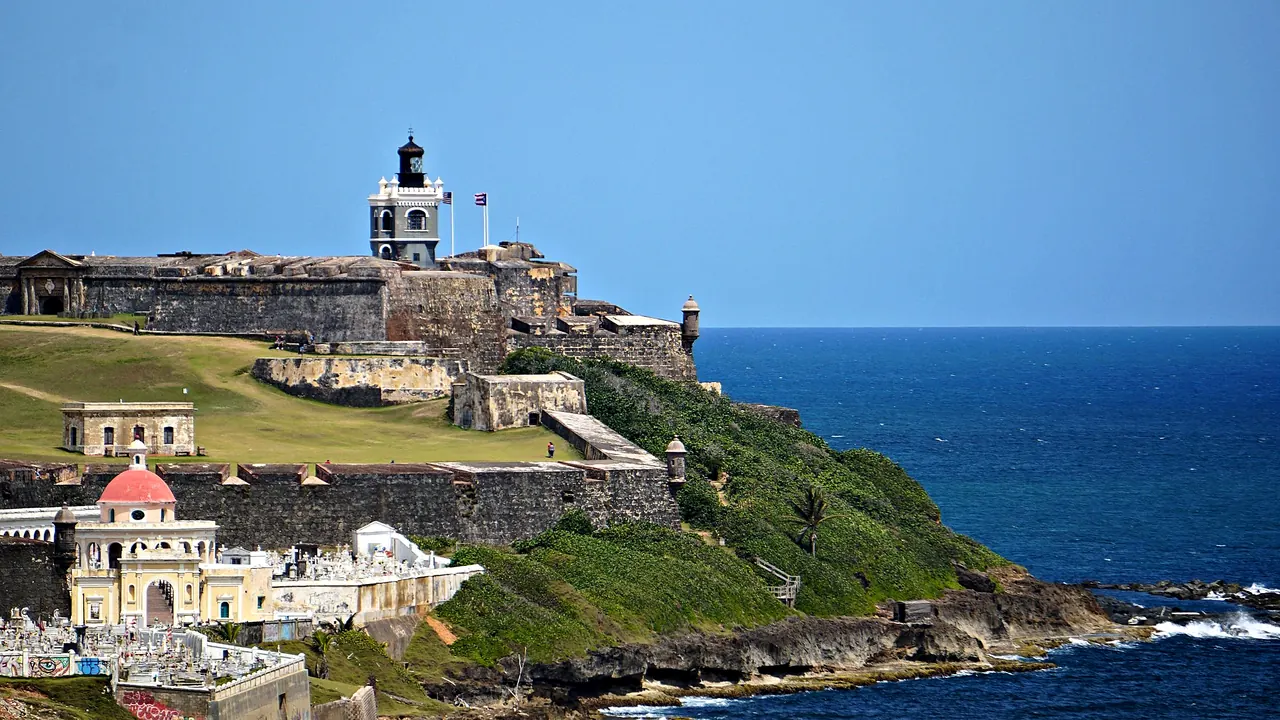
Photos: Puerto Rico by Mariordo (Mario Roberto Durán Ortiz), CC BY-SA 4.0, cropped.
Puerto Rico or St Barts?
Our verdict in twelve categories, each scored against the same fixed benchmark cities, and the climate month by month, so you can choose for your trip.
Choose Puerto Rico for
- culture and sights
- live music and the arts
- nature and the outdoors
Puerto Rico is the choice for a varied, active trip at a price most travellers can manage. Old San Juan's forts and cobbled streets, the El Yunque rainforest, the glowing bays and a salsa-fuelled night out in Santurce give a week several different kinds of day. Roadside lechoneras and west-coast guesthouses help keep the bill down. Expect to drive, and to split the stay between the capital and a beach base.
Choose St Barts for
- getting around
- shopping
- wellness
St Barts suits travellers who want a small, polished island and little else to think about: a villa, a different cove each morning, a long French lunch on the sand and a quiet evening. It has almost no sights, very few outings and no cheap side. It rewards those who come for the beaches, the calm and the boutiques of Gustavia, and who can pay for one of the most expensive places in the world.
Scoreboard
Twelve categories on one fixed scale from 0 to 100. The shaded stretch is the gap between the two.
Your match
Pick a travel style or drag the sliders, and both match scores follow your weighting.
Wins on culture and sights and live music and the arts with your weighting.
Wins on getting around and shopping with your weighting.
What matters to you?
Category by category
What the scores mean for a trip.
Beaches & swimming
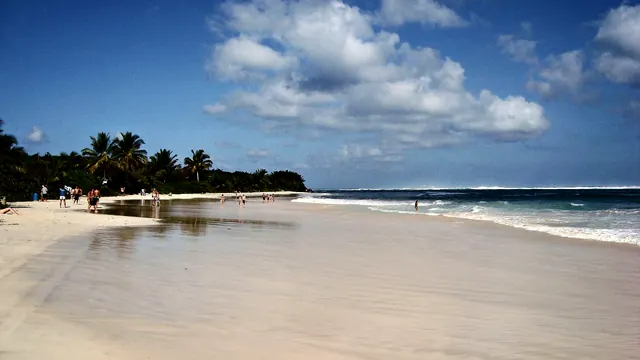
The two are level for beaches and share the same warm, clear water, but a beach day looks different on each. Puerto Rico has more coast and longer sand. There are city beaches at Condado and Isla Verde, a calm, palm-backed bay at Luquillo, and the island's finest, Flamenco on Culebra, which you reach by ferry or a short flight. On the north coast the Atlantic brings winter surf, so swimmers need to choose their spot.
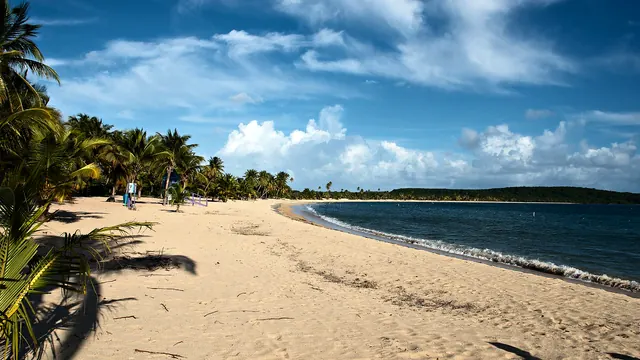
St Barts fits its beaches into a few kilometres, so you can easily try a different one each day. They are small, uncrowded coves rather than long strands. They range from wild, shadeless Saline and Gouverneur to the reef-sheltered lagoon at Grand Cul-de-Sac, and Colombier can only be reached on foot or by boat.
Food & drink
Puerto Rico has the deeper food culture. Its creole cooking of mofongo, pasteles and plantain is at its best by the roadside: whole roast pig at the lechoneras of Guavate and fritters at Piñones and along the Luquillo shore. In the city, Santurce has inventive kitchens and La Placita. Rum and coffee from the mountains round it out.
St Barts eats in a French style, with fresh baguettes, French cheese and wine in the supermarkets, and long rosé lunches on the sand at St Jean or Saline. It is polished and enjoyable, but there are few places, nearly all of them expensive, and no street food to balance them.
Culture & sights
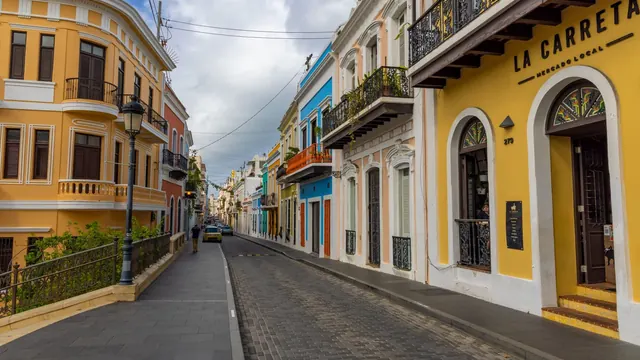
Here the gap is wide. Old San Juan alone is worth a couple of unhurried days, with the stone forts of El Morro and San Cristóbal, the city walls and the cathedral. Beyond the capital, Ponce's art museum, the old church at San Germán and the Taíno ball courts at Caguana and Tibes add more.
St Barts has an unusual Swedish past. You can see it in the clock tower and the Wall House museum in Gustavia and in the stone-walled cemeteries and the church at Lorient, but an hour or two covers it all.
Nightlife
Puerto Rico has the bigger and more varied night out, and nearly all of it is in San Juan. Crowds drink in the street around La Placita in Santurce, the bars on Calle San Sebastián are packed, and dancing to salsa and reggaeton starts late. The Condado and Isla Verde have casinos and clubs for something more polished.
St Barts goes out in a narrower, glossier way, with afternoon parties on the beach at St Jean, harbour bars in Gustavia and a couple of late clubs. It depends on the winter season and is at its peak around New Year. In late summer and autumn it goes quiet, and many places close.
Nature & outdoors
Puerto Rico has far more landscape to explore. There are the rainforest trails and waterfalls of El Yunque, night kayaking through glowing water in the bays of Vieques, Fajardo and La Parguera, the Río Camuy caves in the karst country, and the coffee hills of the Cordillera Central. Winter surf at Rincón and diving off La Parguera add more.
St Barts is a small, dry, steep island of scrubby hills and headlands. On land there is a cliff path to Colombier and not much else. Its outdoor life is on the water: snorkelling with turtles in the marine reserve, and windsurfing or paddleboarding on the Grand Cul-de-Sac lagoon.
Day trips
From a base in Puerto Rico there are more places to go. Ponce has its plaza and mansions on the south coast, the rum distilleries at Cataño make an easy half day, and there are coffee haciendas inland. Above all there are Culebra and Vieques, which are better with a night or two than as a rushed day.
From St Barts there is really only one outing: the ferry of about an hour to St Martin, where Marigot, Grand Case and Philipsburg feel busier and more commercial. Reaching the other nearby islands takes a charter boat or a small plane, so most visitors stay put.
Good for families
Puerto Rico gives children more to do, even without a theme park or aquarium. There is shallow water at Luquillo and Seven Seas, pools below the waterfalls on El Yunque's short trails, a guided route through the Camuy caves, and kids' clubs at the resorts around Dorado and Fajardo. The price is long drives, and the north-coast beaches are too rough for small swimmers.
St Barts is very safe and nothing is far, and the lagoons and Shell Beach suit small children. Beyond a villa pool and some snorkelling, though, older children soon run short of things to do on an island set up for adults.
Getting around
On both islands you really need a car, but the difficulties differ. Puerto Rico is a proper road trip, with good highways, heavy traffic around San Juan and slow mountain roads, and Rincón is about two and a half hours from the capital. Old San Juan and the Condado shoreline are walkable. The ferries to Culebra and Vieques are unreliable, so many people fly instead.
On St Barts every drive is short, but the roads are narrow, steep and full of blind hairpin bends. There is no bus, and taxis need booking. Only the Gustavia harbour and the main strip at St Jean are easy on foot, and getting to the island at all means a small plane or a ferry from St Martin.
Shopping & style
The two are broadly level for shopping, but they sell very different things. Puerto Rico offers crafts and malls. Around Calle Fortaleza in Old San Juan there are galleries, cigars, rum and carved wooden santos, vejigante masks come from Loíza and Ponce, and the big malls of Hato Rey carry the American chains.
St Barts is small but upmarket. Luxury fashion, watch and jewellery boutiques cluster around the duty-free harbour in Gustavia, and St Jean sells resort wear. There is little for anyone who is not shopping for an expensive vacation wardrobe.
Affordability
Puerto Rico is not cheap. Prices are at American levels, and the beachfront hotels in San Juan cost the most in winter. It does have a cheaper side, though: lechoneras, beach kiosks and fondas, inexpensive rum, and guesthouses in Rincón and along the west coast.
St Barts has nothing like that. It is one of the most expensive places in the world for a vacation, from the villas and beach lunches to the small-plane flight in and the rental car. Cooking in your villa only trims the bill.
Live music & performing arts
For live performance the gap is wide, and Puerto Rico is far ahead. The island has music traditions you can go out and hear on an ordinary weekend: salsa bands playing for dancers in San Juan, Afro-Puerto Rican bomba drumming in Loíza and Piñones, and plena sung in the street around La Placita, with the whole old town given over to music during the San Sebastián street festival. Behind that sits a formal stage as well, with the symphony orchestra at the Centro de Bellas Artes, Spanish-language plays at the historic Teatro Tapia and the long classical tradition of the Casals Festival.
St Barts cannot match that for most of the year. Its high point is a classical festival in January, when musicians and singers perform in the churches and open-air spaces of Gustavia, along with the steel bands of the carnival before Lent. Outside those dates, live music means bands and DJs in the harbour bars in high season, and there is no theatre or concert hall to fall back on.
Wellness & relaxation
Neither island has a bathing culture to plan a trip around, so the difference is mostly mood. In Puerto Rico you find calm away from noisy San Juan: at the resort spas of Dorado and Río Grande, on slow-paced Vieques and Culebra, in Rincón's yoga classes, or at the old hot springs of Coamo.
St Barts is restful almost everywhere. There are no high-rises or casinos, the hotel spas are excellent, and therapists will come to your villa. Spring is the quietest time, and the week around New Year is the exception.
When should you go?
Pick your month. The climate figures are measured averages, not a forecast.
Puerto Rico in July
St Barts in July
Daytime high, °C
Rainfall in the month, mm
Temperature and rainfall are climate normals, averaged over the years shown. Puerto Rico: 1991-2020 normals, San Juan / Int., Puerto Rico (8.3 km from centre). St Barts: 1991-2020 (sunshine 1961-1990) normals, Gustavia, Saint Barthelemy (0.5 km from centre).
Both islands are warm enough for the beach in every month. Daytime highs barely move, from about 29°C in winter to 32°C in late summer, and the sea never drops below 26°C. The real difference is rain. Around San Juan the dry spell is short, mainly February and March. From April the showers get heavier, and they peak in November at 178mm. St Barts is noticeably drier all year, with only light rain from January to June, and its wetter stretch comes late, from September to November.
For walking around town, December to March is the most comfortable time on both islands, because the summer heat makes long afternoons in Old San Juan tiring. St Barts also keeps its sunshine steadier through the year. Puerto Rico is at its sunniest in March, April and July and at its greyest in November and December.
Which traveller are you?
On a culture and arts trip, Puerto Rico is the clear pick. Old San Juan's forts and colonial streets, Ponce's art museum, the Taíno ceremonial sites and live bomba and salsa fill several days, while St Barts offers a clock tower and one small museum.
For a trip on a tight budget, Puerto Rico is the only realistic option. Roadside lechoneras, cheap rum and guesthouses on the west coast keep costs manageable. St Barts has no budget side at all, from the flights and rental cars to every beach lunch.
On a relaxing and wellness trip, St Barts has the edge in atmosphere. It has no high-rises, casinos or traffic, so the days settle into beach, lunch and sunset, with good hotel spas. In Puerto Rico the restful corners lie well away from its loud capital.
Before you go
| Measure | Puerto Rico | St Barts |
|---|---|---|
| Official language | Spanish, English | French |
| Currency | US Dollar (USD) | Euro (EUR) |
| Sockets | AB120 V, 60 Hz | - |
| Driving side | Right | Right |
| Time zone | UTC-4 | UTC-4 |
| Emergency number | 911 | - |
| Main airport | Luis Munoz Marin International Airport (SJU)59 non-stop destinations | Princess Juliana International Airport (SXM)44 non-stop destinations |
| Public holidays this year | 21 days | 12 days |
By the numbers
| Measure | Puerto Rico | St Barts |
|---|---|---|
| Population | 3,285,874 | 10,124 |
| People per km² | 361 | 405 |
| Swim season, months above 21 °C | 12 months | 12 months |
Where else could you go?
Every comparison below shares a destination with this one, so you can follow Puerto Rico or St Barts somewhere new.
- Sint Maartenvs St Barts
- Saint-Martinvs St Barts
- Anguillavs St Barts
- St Thomasvs Puerto Rico
- US Virgin Islandsvs Puerto Rico
- St Johnvs Puerto Rico