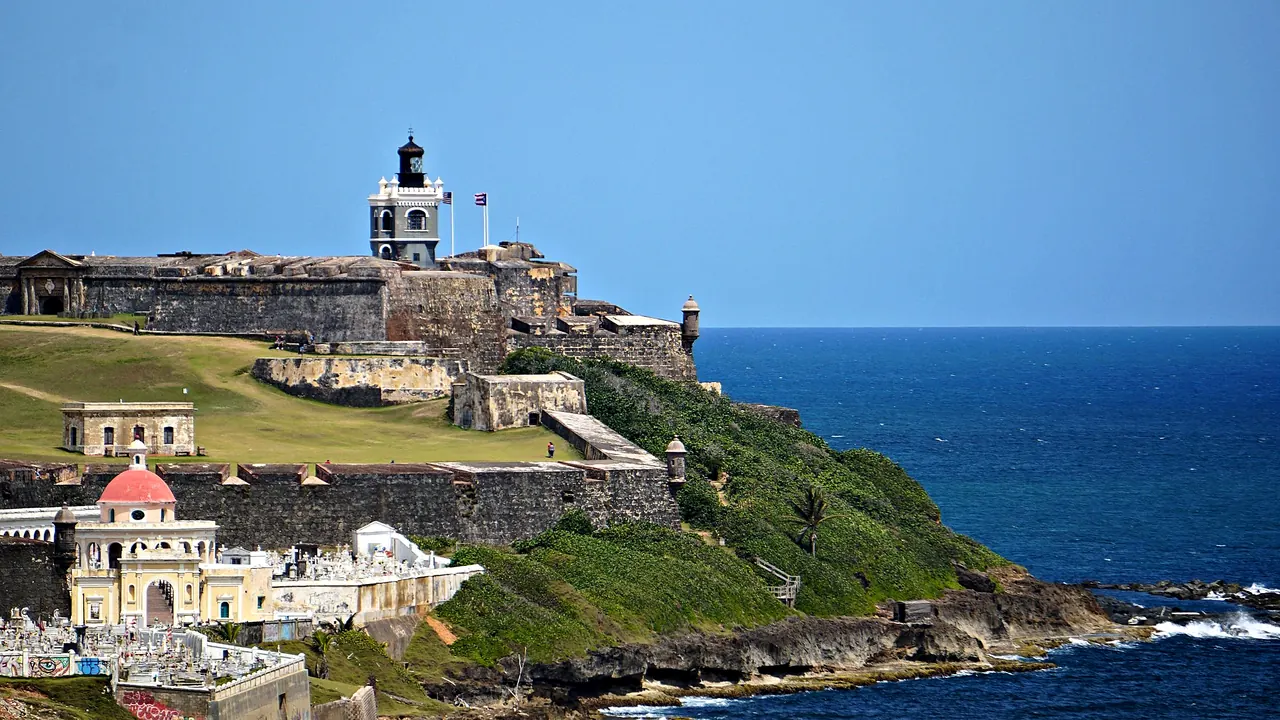
Photos: Puerto Rico by Mariordo (Mario Roberto Durán Ortiz), CC BY-SA 4.0, cropped.
Puerto Rico or St John?
Our verdict in twelve categories, each scored against the same fixed benchmark cities, and the climate month by month, so you can choose for your trip.
Choose Puerto Rico for
- nightlife
- live music and the arts
- culture and sights
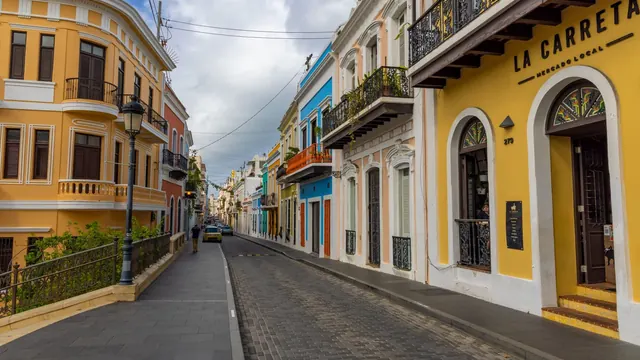
Puerto Rico suits travellers who want variety and are happy to drive. A few days in San Juan give you the walled old town, late nights around La Placita and the best eating of the two. After that you can head to the rainforest at El Yunque, kayak a glowing bay at night and choose between Atlantic surf and the calm southern coast. Families and anyone watching their spending will also find it the easier of the two.
Choose St John for
- beaches
St John is the choice when the sea is the whole point. Most of the island is national park, so the north shore bays stay undeveloped, clear and sheltered, with turtles in shallow water and reefs a short swim out. In return you give up nearly everything else. Evenings end soon after dinner, there is little to see on land and staying there is expensive, so it rewards travellers who want to swim, snorkel and switch off.
Scoreboard
Twelve categories on one fixed scale from 0 to 100. The shaded stretch is the gap between the two.
Your match
Pick a travel style or drag the sliders, and both match scores follow your weighting.
Wins on nightlife and live music and the arts with your weighting.
Wins on beaches with your weighting.
What matters to you?
Category by category
What the scores mean for a trip.
Beaches & swimming
St John has the edge, although the difference is small. Its whole north shore is a run of white-sand bays inside the national park, and the water there is usually calm and clear. Trunk Bay, Cinnamon, Maho and Francis are all within a short drive of one another, and nothing is built on them except shade trees.
Puerto Rico offers more choice, but you have to be more selective. Its best sand is offshore on Culebra and Vieques, while San Juan's city beaches are lined with hotels. Much of the north coast faces rough Atlantic surf in winter, so swimmers need Luquillo, Seven Seas or the calmer south and west.
Food & drink
Puerto Rico has a real cuisine of its own, and you can eat it all over the island: mofongo and arroz con gandules, whole pig carved at roadside stands in Guavate, fritters at Piñones and mountain coffee at the haciendas. San Juan adds the market square at La Placita and the creative cooking of Santurce.
St John eats well for its size, but almost all of it is in Cruz Bay. Menus lean on grilled fish and beach-bar food, there are a few West Indian kitchens for johnnycakes and saltfish, and most ingredients are shipped in. Many villa guests end up cooking for themselves.
Culture & sights
Puerto Rico is far richer here. Old San Juan is a walled colonial town on its own islet, with the UNESCO-listed forts of El Morro and San Cristóbal above the ocean, and Ponce and San Germán add a plaza, an art museum and one of the oldest churches in the Americas.
On St John, history means ruins in the forest. The Annaberg sugar mill, the Taíno petroglyphs on the Reef Bay Trail and the fort at Coral Bay, where the 1733 slave revolt began, are well worth seeing, but they make a morning's outing rather than a reason to come.
Nightlife
Puerto Rico wins easily, though only in San Juan. Crowds drink in the street around La Placita de Santurce, dancing to salsa and reggaeton starts late on Calle San Sebastián, and the Condado adds casinos and hotel lounges.
St John has a handful of open-air bars on the Cruz Bay waterfront and in Coral Bay, where visitors and boat crews share rum drinks until the evening winds down. It has no clubs, and anyone wanting a late night takes the ferry to St Thomas.
Nature & outdoors
Puerto Rico has the wider range. In one trip you can see the El Yunque rainforest with its waterfalls, the glowing bioluminescent bays of Vieques, Fajardo and La Parguera, the karst hills and Río Camuy caves, winter surf and passing whales at Rincón, and the reef wall off La Parguera for divers.
St John is smaller but almost entirely protected, and its strength is underwater. You can snorkel straight from the beach at Waterlemon Cay and Maho Bay among turtles, rays and coral, and walk to Ram Head or down the Reef Bay valley on land. It is intact rather than varied.
Day trips
Puerto Rico gives you more places to go, all within its own shores. Ponce makes a good day out from San Juan, there are rum distilleries in Cataño and coffee haciendas up in the mountains, and the best outing is Culebra or Vieques, ideally with a night there.
St John's trips all go by boat. Charlotte Amalie on St Thomas is a short ferry ride away, and the most memorable days are charters to Jost Van Dyke or The Baths on Virgin Gorda. Those need a passport and customs, and there are fewer options overall.
Good for families
Children who tire of sand have somewhere to go in Puerto Rico. Short El Yunque trails lead to waterfalls and natural pools, a guide takes you underground through the Camuy caves, and the lawns below the Old San Juan forts are good for flying kites. The resorts at Dorado and Río Grande have pools and kids' clubs. Keep small swimmers away from the rough north coast beaches and use calm Luquillo or Seven Seas instead.
St John suits children who will happily spend every day in the water. At Maho Bay they can stand among grazing turtles, and Trunk Bay's marked snorkel trail is a gentle first try. Away from the beach there is almost nothing aimed at them, few beaches have lifeguards, and a flight, a taxi and a ferry is a long way in with toddlers.
Getting around
Both islands really need a car, but in different ways. Puerto Rico is a road trip on good highways, with heavy traffic around San Juan and slow mountain roads. Old San Juan and the Condado are walkable, and the hard part is reaching Culebra and Vieques when the ferries sell out.
On St John the hard part is arriving: a flight to St Thomas, a taxi to Red Hook and then the ferry. After that distances are short, but the roads are steep switchbacks driven on the left. Safari taxis cover the north shore if you would rather not drive.
Shopping & style
Carved wooden santos, vejigante masks from Loíza and Ponce, cigars and aged rum fill the craft and gallery shops around Calle Fortaleza in Old San Juan. If you need something everyday, the malls in Hato Rey stock the familiar American chains. You won't find a fashion or luxury district, but there is enough to fill an afternoon.
St John's shopping fits into a couple of small courtyards by the Cruz Bay ferry dock. They have galleries, hook bracelets, hand-painted pottery and resortwear, enough for an hour. Anyone who wants more takes the ferry to the duty-free streets of Charlotte Amalie on St Thomas.
Affordability
Neither island is cheap, but Puerto Rico gives you more ways to keep the bill down. Roadside lechoneras, beach kiosks and local fondas are good value, and guesthouses in Rincón and on the west coast cost less than San Juan's hotels.
On St John, nearly everything is shipped in, so meals, groceries and villas cost a lot, and the jeep, ferries and taxis add up. The free national park beaches and trails help, as does the Cinnamon Bay campground, and rates drop in the hurricane months.
Live music & performing arts
Puerto Rico has a living music tradition that St John cannot match. You can hear salsa bands in San Juan, bomba drumming in Loíza and Piñones, and plena around La Placita, and January's Fiestas de la Calle San Sebastián fill the old town. For formal concerts there is the Centro de Bellas Artes, home of the symphony orchestra.
St John has no theatre or concert hall. Live music means a singer-guitarist or a steel pan band at a waterfront bar, and the one big occasion is the early-summer St John Festival with calypso and quelbe.
Wellness & relaxation
Both islands are about equally restful, but they offer different kinds of rest. In Puerto Rico, relaxing means choosing your spot: a full resort spa at Dorado or Fajardo, the near-silence of Vieques and Culebra, yoga in Rincón or the old thermal baths at Coamo, away from the noise of San Juan.
On St John the calm is everywhere, because the park keeps traffic and building to a minimum. A typical stay is a hillside villa, an early swim and tree frogs at night, with a visiting masseur rather than a spa programme.
When should you go?
Pick your month. The climate figures are measured averages, not a forecast.
Puerto Rico in July
St John in July
Daytime high, °C
Rainfall in the month, mm
Temperature and rainfall are climate normals, averaged over the years shown. Puerto Rico: 1991-2020 normals, San Juan / Int., Puerto Rico (8.3 km from centre). St John: 1991-2020 normals, C. Amalie / St. Thomas Airport (20 km from centre).
Both islands are warm all year. Daytime highs sit around 29°C in winter and reach 32°C from June to October, and the sea never drops below 26°C, so any month is warm enough for the beach. The best weather on both comes in February and March, which are the driest months. Around San Juan, March is also the sunniest month. Summer heat makes midday walks through Old San Juan's hilly streets tiring.
Rain builds through late summer and autumn, which is also hurricane season, and on both islands it peaks in November, when Puerto Rico gets about 178mm. St John is the drier of the two for most of the year. From April to July it gets roughly half the rain measured in Puerto Rico, which makes it the safer bet for beach days in late spring.
Which traveller are you?
For a beach and sun trip, St John comes out ahead. Its north shore bays are protected parkland with calm, clear water, turtles at Maho and a snorkel trail at Trunk Bay, and you can reach a different bay every day without long drives.
On a food and nightlife trip, Puerto Rico wins easily. You get roast pork at the Guavate lechoneras, the creative kitchens of Santurce and salsa until the small hours around La Placita and Calle San Sebastián. On St John, a few waterfront bars in Cruz Bay close early.
For a culture and arts trip, choose Puerto Rico. Old San Juan has its forts, cathedral and colonial streets, Ponce has a fine art museum, and bomba and the symphony orchestra fill the evenings. St John's plantation ruins and petroglyphs fill only a morning or two.
Before you go
| Measure | Puerto Rico | St John |
|---|---|---|
| Official language | Spanish, English | English |
| Currency | US Dollar (USD) | US Dollar (USD) |
| Sockets | AB120 V, 60 Hz | - |
| Driving side | Right | Left |
| Time zone | UTC-4 | UTC-4 |
| Emergency number | 911 | 911 |
| Main airport | Luis Munoz Marin International Airport (SJU)59 non-stop destinations | Cyril E. King Airport (STT)26 non-stop destinations |
| Public holidays this year | 21 days | 18 days |
By the numbers
| Measure | Puerto Rico | St John |
|---|---|---|
| Population | 3,285,874 | 3,881 |
| People per km² | 361 | 76 |
| Swim season, months above 21 °C | 12 months | 12 months |
Where else could you go?
Every comparison below shares a destination with this one, so you can follow Puerto Rico or St John somewhere new.
- St Thomasvs St John
- British Virgin Islandsvs St John
- Culebravs St John
- St Croixvs St John
- Viequesvs St John
- St Thomasvs Puerto Rico