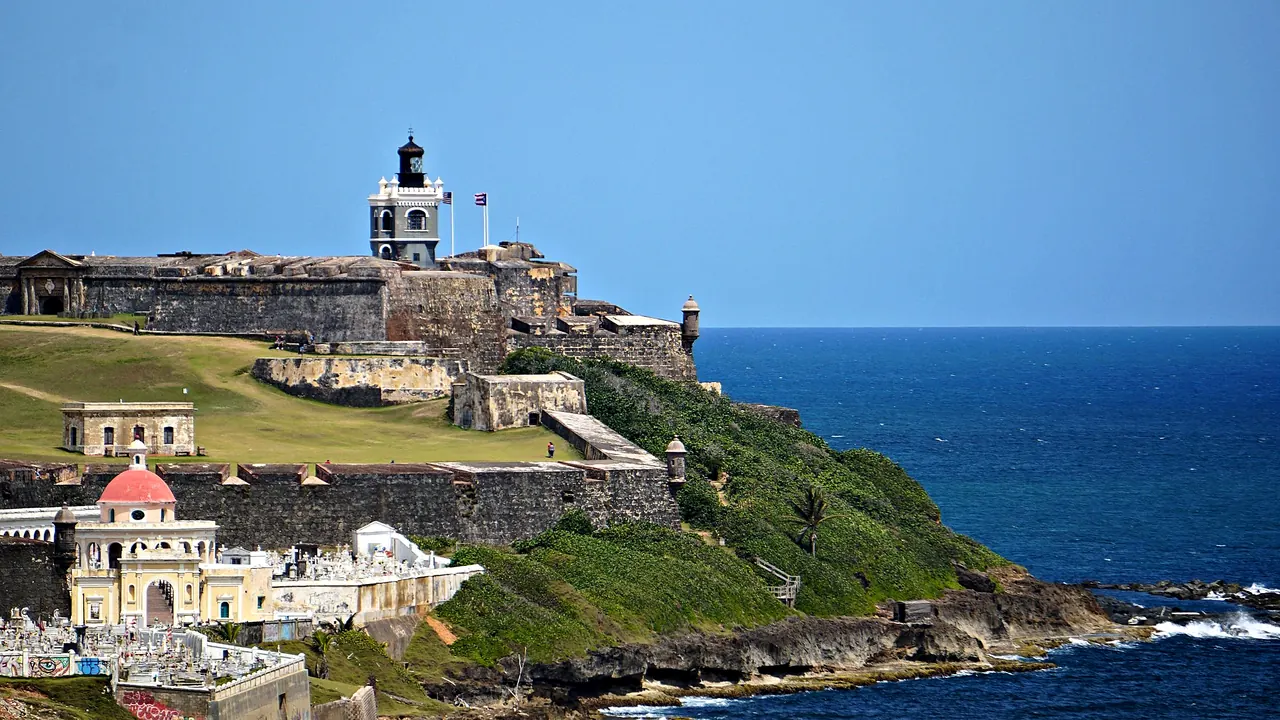
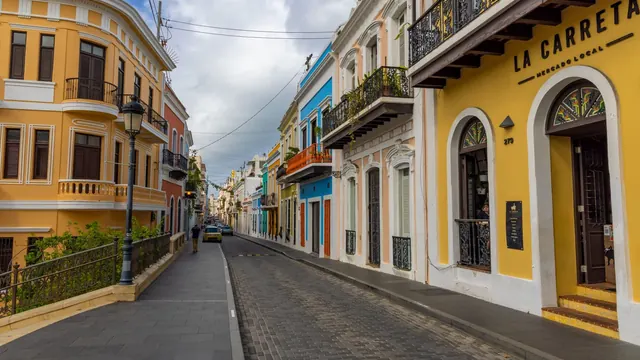
Photos: Puerto Rico by Mariordo (Mario Roberto Durán Ortiz), CC BY-SA 4.0, cropped.
Puerto Rico or Sint Maarten?
Our verdict in twelve categories, each scored against the same fixed benchmark cities, and the climate month by month, so you can choose for your trip.
Choose Puerto Rico for
- culture and sights
- nature and the outdoors
- live music and the arts
Puerto Rico is the better choice for a trip that wants more than the beach. Old San Juan's walls and forts, the rainforest of El Yunque, the glowing bays and the roast-pork stands of Guavate give it a range Sint Maarten can't match. Its salsa and street-party nights are livelier too, and it costs somewhat less, provided you're happy to drive and split the stay between the capital and the coast.
Choose Sint Maarten for
- beaches
- day trips
Sint Maarten suits travellers who mainly want sand, warm calm water and an easy island to move around. Two nations' beaches lie within half an hour of each other, Grand Case's lolos and French dining rooms are a short drive away, and ferries run to St Barths, Anguilla and Saba. There is almost nothing in the way of sights, and you pay more for the stay.
Scoreboard
Twelve categories on one fixed scale from 0 to 100. The shaded stretch is the gap between the two.
Your match
Pick a travel style or drag the sliders, and both match scores follow your weighting.
Wins on culture and sights and nature and the outdoors with your weighting.
Wins on beaches and day trips with your weighting.
What matters to you?
Category by category
What the scores mean for a trip.
Beaches & swimming
Both islands have excellent, warm swimming, and the difference lies in how the beaches are laid out. Puerto Rico has a long and varied coast. There are city beaches at Condado and Isla Verde, the calm bay at Luquillo, and its best sand offshore at Flamenco on Culebra and the empty bays of Vieques. On many north-coast beaches, though, winter brings surf and currents that rule out swimming.
Sint Maarten puts everything within a short drive. Mullet Bay, Dawn Beach, Orient Bay and the sheltered water off Pinel Island are all reachable in under half an hour, and the leeward side is usually calm. On cruise days Great Bay and Maho get crowded, so it's worth heading out early.
Food & drink
Puerto Rico has a fuller cuisine of its own. Mofongo, arroz con gandules and alcapurrias are everyday dishes, whole pigs are carved at the Guavate lechoneras, fritter stands line the shore at Piñones, and Santurce has creative kitchens around La Placita. Rum and mountain coffee complete the picture.
Sint Maarten's best eating is concentrated in Grand Case on the French side, at its lolo barbecue stalls and French-Creole restaurants. Away from there, the Dutch side mostly offers steakhouses and grills for visitors. Most ingredients are imported, so the choice is narrower and the bills are higher.
Culture & sights
This is where the two islands are furthest apart. Old San Juan is a walled colonial town about five centuries old, with El Morro and San Cristóbal above the sea, and it can easily fill two days. Beyond the capital you can add Ponce's plaza and its museum of European painting, the old church at San Germán and the Taíno ball courts at Tibes.
On Sint Maarten, history comes down to the 1793 Courthouse on Front Street, a small museum and the ruins of two forts, Fort Amsterdam and Fort Louis. Most people see it all in a morning between beach days.
Nightlife
Puerto Rico has the stronger nights, and San Juan is where they happen. Crowds drink in the street around La Placita de Santurce, the bars on Calle San Sebastián are packed, and salsa and reggaeton dancing starts late and keeps going.
Sint Maarten's night out is a resort-island version. There are sunset beach bars, casinos and a few clubs around Simpson Bay and Maho, and the French side has slower dinners in Grand Case. It is fun, but it has less local character than San Juan.
Nature & outdoors
Puerto Rico has far more landscape to explore. El Yunque's rainforest and waterfalls are less than an hour from the capital. Kayaking at night on Mosquito Bay or Laguna Grande lights the water up blue-green, and further inland are the karst hills and Río Camuy caves. On the coast, Rincón has winter surf and passing humpback whales.
Sint Maarten's outdoors is mostly about the sea. You can snorkel at Creole Rock, dive in the Man of War Shoal marine park, kitesurf at Orient Bay or go sailing in the trade winds. On land, the dry-forest walks up Pic Paradis and Sentry Hill are pleasant but small in scale.
Day trips
The outings are about equally good, but they lead to very different places. From San Juan you mostly stay on Puerto Rico itself. You can visit Ponce, the rum distilleries at Cataño and the coffee haciendas in the mountains. Culebra and Vieques are better with a night or two than as a quick day out.
Sint Maarten works as a hub for other islands, and other countries. Ferries reach St Barths and Gustavia in about an hour, Anguilla's quiet beaches from Marigot, and volcanic Saba, and the French half of the island makes a day out in itself. Rough seas can make the crossings uncomfortable.
Good for families
Puerto Rico gives children more to do away from the sand. There are short El Yunque trails to natural pools, a guided route underground at the Camuy caves, a glowing-bay kayak for older children, and lawns for kite-flying by the Old San Juan forts. You will need to drive between these, and the rough north-coast beaches are not for small swimmers.
Sint Maarten is simpler and more compact. It has shallow water at Simpson Bay, Mullet Bay and Pinel Island, zip lines on Sentry Hill and apartments for self-catering. Once the beaches are done, though, there is little else, and very little to do on a rainy day.
Getting around
On both islands you will want a hire car, and neither has public transport that visitors can rely on. Puerto Rico is the bigger drive. Rincón is about two and a half hours from San Juan, the interior roads are slow, and the Culebra and Vieques ferries often sell out or run late, so many people fly instead.
On Sint Maarten the distances are short, but jams around Simpson Bay, the causeway and Philipsburg, worst on cruise days, slow you down. The informal minibuses are cheap, and you can drive across the open border to the French side without stopping.
Shopping & style
The shopping is about as good on both islands but quite different in kind. In Puerto Rico you buy things made there: carved santos, vejigante masks from Loíza or Ponce, guayabera shirts, mountain coffee and aged rum from Old San Juan's craft shops, with American malls in Hato Rey. Sint Maarten is a duty-free port, so Front Street sells watches, jewellery, electronics and liquor, and Marigot adds French perfume boutiques and a harbour market.
Affordability
Neither island is cheap, but Puerto Rico is the easier one to manage on less money. Roadside lechoneras, beach kiosks and fondas keep meals cheap, rum costs little, and guesthouses in Rincón and the west undercut the San Juan hotels.
Sint Maarten is costly in the winter season. Imported food makes restaurant meals expensive, and you have to pay for cars and taxis too. Apartments around Simpson Bay, supermarket self-catering and the Grand Case lolos are the main ways to bring the costs down.
Live music & performing arts
The real difference is that Puerto Rico's music is its own and you can hear it all year, while Sint Maarten's comes mostly in one burst at Carnival. Bomba drumming and dancing are performed in Loíza and Piñones, plena is sung around La Placita, and salsa bands play dance nights in San Juan. For a seated evening, the Centro de Bellas Artes in Santurce is home to the symphony orchestra, and the historic Teatro Tapia stages plays in Spanish. Each January the Fiestas de la Calle San Sebastián fill the old town with music.
On Sint Maarten there is no theatre or concert hall to plan a night around. Carnival in spring is the exception, with calypso and soca contests, steel pan and late-night jump-ups. For the rest of the year, live music means a band or a DJ in a beach bar or resort lounge.
Wellness & relaxation
Neither island has much of a bathing tradition, and on both, relaxing mostly means a resort spa. Puerto Rico has a little more. The Coamo hot springs have been used since colonial times, Vieques and Culebra are very quiet with early evenings, and Rincón offers yoga at an easy surf-town pace.
On Sint Maarten, the most peaceful stays are near Dawn Beach or on the French side. Cruise crowds and traffic on the Dutch side break the calm.
When should you go?
Pick your month. The climate figures are measured averages, not a forecast.
Puerto Rico in July
Sint Maarten in July
Daytime high, °C
Rainfall in the month, mm
Temperature and rainfall are climate normals, averaged over the years shown. Puerto Rico: 1991-2020 normals, San Juan / Int., Puerto Rico (8.3 km from centre). Sint Maarten: 1991-2020 normals, Juliana Airport, Saint Maarten (8 km from centre).
The two islands share the same steady heat. Daytime highs stay around 29°C in winter and reach about 32°C from June to October, and the sea is warm enough for swimming in every month. The best stretch for both is late winter and spring, when the air is less humid and the rain is at its lowest. Puerto Rico is at its brightest in March and April, with about 53mm of rain in March. Summer and autumn are hotter, wetter and fall in the hurricane season, which makes long walks through Old San Juan or Philipsburg tiring at midday.
Sint Maarten is the drier and more evenly sunny of the two. It gets less rain than Puerto Rico for most of the year, and in December and January it has noticeably more sunshine. Both islands are wettest in late autumn, and Puerto Rico peaks at about 178mm in November. Puerto Rico's rain is also spread more widely through the summer months.
Which traveller are you?
On a culture and arts trip, Puerto Rico is the clear choice. You get Old San Juan's UNESCO-listed forts and colonial streets, the art museums in Santurce and Ponce, and Taíno sites at Caguana. Live bomba, salsa and the Casals Festival tradition add to that, while Sint Maarten's sights fill only a morning.
For an outdoors trip, choose Puerto Rico too. El Yunque's rainforest trails, night kayaking on the bioluminescent bays, the Río Camuy caves, winter surf at Rincón and the reef wall off La Parguera go far beyond Sint Maarten's hill walks, snorkelling and kitesurfing.
On a beach and sun trip, Sint Maarten has the edge in convenience. Calm leeward bays, Orient Bay and Pinel Island are all close together, and the winters are drier and sunnier. Puerto Rico's finest sand is on Culebra and Vieques, which means ferries or flights.
Before you go
| Measure | Puerto Rico | Sint Maarten |
|---|---|---|
| Official language | Spanish, English | English, Dutch |
| Currency | US Dollar (USD) | Caribbean Guilder (XCG) |
| Sockets | AB120 V, 60 Hz | - |
| Driving side | Right | Right |
| Time zone | UTC-4 | UTC-4 |
| Emergency number | 911 | - |
| Main airport | Luis Munoz Marin International Airport (SJU)59 non-stop destinations | Princess Juliana International Airport (SXM)44 non-stop destinations |
| Public holidays this year | 21 days | 14 days |
By the numbers
| Measure | Puerto Rico | Sint Maarten |
|---|---|---|
| Population | 3,285,874 | 43,847 |
| People per km² | 361 | 1,290 |
| Swim season, months above 21 °C | 12 months | 12 months |
Where else could you go?
Every comparison below shares a destination with this one, so you can follow Puerto Rico or Sint Maarten somewhere new.
- Saint-Martinvs Sint Maarten
- St Thomasvs Puerto Rico
- US Virgin Islandsvs Puerto Rico
- St Johnvs Puerto Rico
- British Virgin Islandsvs Puerto Rico
- St Croixvs Puerto Rico