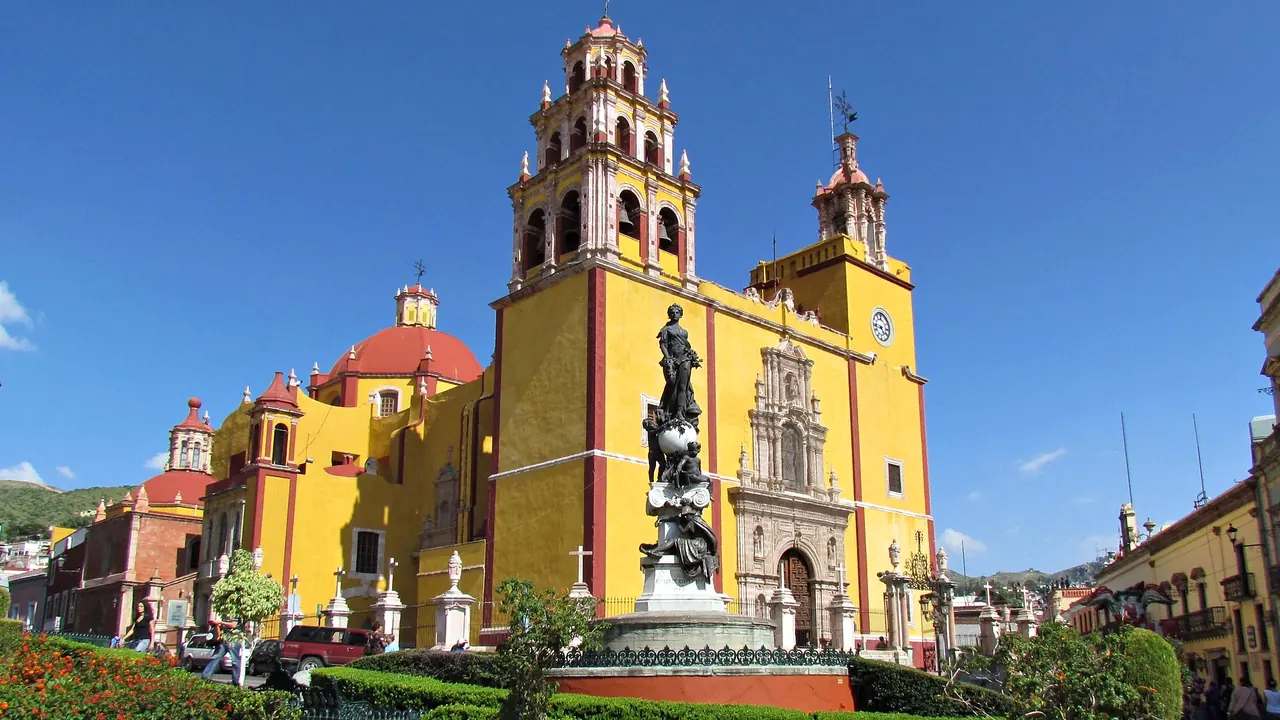
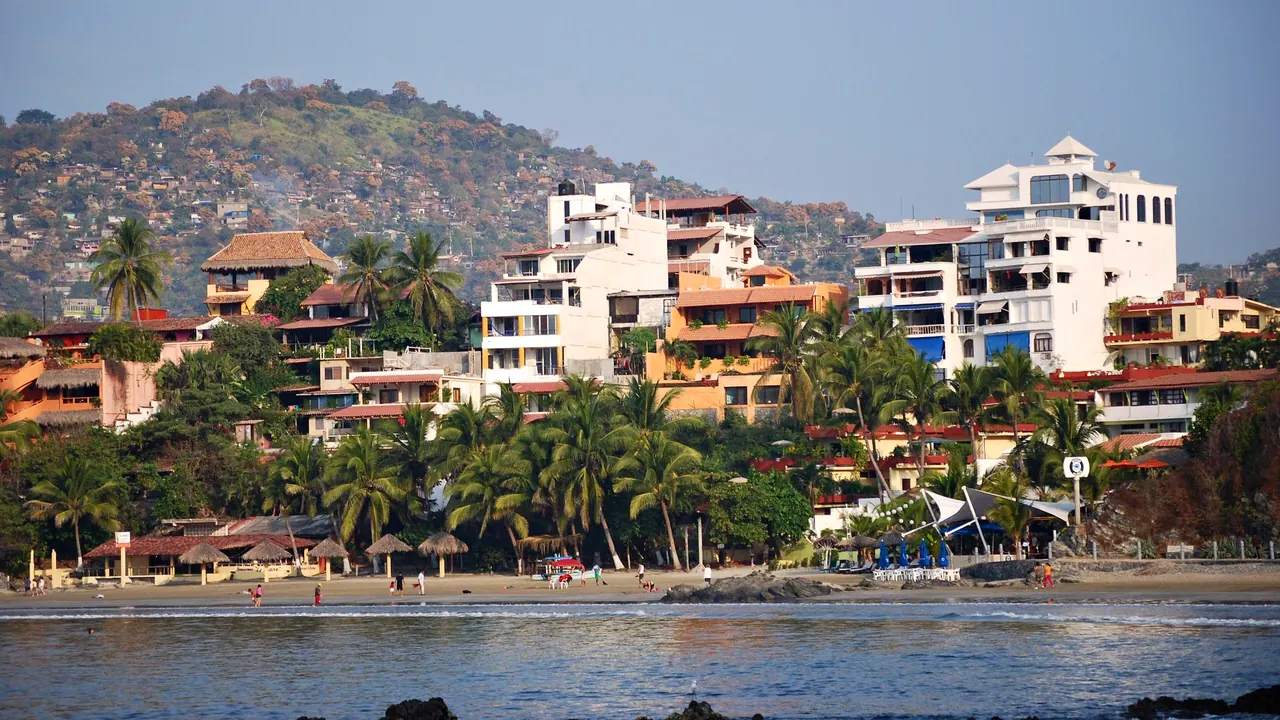
Photos: Guanajuato by Sandra Dominic Saldaña Garcia, CC BY-SA 3.0, cropped; Zihuatanejo by AlejandroLinaresGarcia, CC BY-SA 4.0, cropped.
Guanajuato or Zihuatanejo?
Our verdict in twelve categories, each scored against the same fixed benchmark cities, and the climate month by month, so you can choose for your trip.
Choose Guanajuato for
- culture and sights
- day trips
- live music and the arts
Guanajuato is the choice for travellers who want a town to explore on foot. It is a painted colonial ravine full of churches, museums, the Teatro Juárez and the Cervantino tradition, and it is the best base in the Bajío for San Miguel de Allende, Dolores Hidalgo and Querétaro. Day-to-day costs are lower and its students keep the evenings livelier. There is no sea, though, and the steep stairways ask for strong legs.
Choose Zihuatanejo for
- beaches
- families
- nature and the outdoors
If the trip is about warm water and a slow pace, Zihuatanejo wins easily. Its sheltered bay, with La Ropa and Las Gatas, gives calm swimming all year. Families get shallow water and resort pools in Ixtapa, and time outdoors means boats, snorkelling and the lagoons. There is little in the way of sights or stage, and there are few outings beyond the coast.
Scoreboard
Twelve categories on one fixed scale from 0 to 100. The shaded stretch is the gap between the two.
Your match
Pick a travel style or drag the sliders, and both match scores follow your weighting.
Wins on culture and sights and day trips with your weighting.
Wins on beaches and families with your weighting.
What matters to you?
Category by category
What the scores mean for a trip.
Beaches & swimming
There is no contest here. Guanajuato lies in the mountains far from either coast. Swimming there means a hotel pool or a drive out to one of the warm-water balnearios in the countryside.
Zihuatanejo is built around its bay. La Ropa is a long, calm crescent of pale sand, and Las Gatas has an old stone reef that keeps the water clear for snorkelling. Ixtapa adds wide open beaches, though the surf at El Palmar needs respect. The sea is warm enough to swim in all year.
Food & drink
Both cities offer cheap, honest local cooking rather than fine dining, and in both the choice thins out after a few days. The difference is in what is cooked. Guanajuato's food belongs to the mountains and its mining past: enchiladas mineras, gorditas from street stalls, and the cajeta and candied fruit sold under the iron roof of the Mercado Hidalgo.
Zihuatanejo cooks fish caught that morning. Look for tiritas cured in lime, and pescado a la talla grilled over coals at the palapas on La Ropa and Las Gatas. On Thursdays across Guerrero, families sit down to pozole.
Culture & sights
Guanajuato is the sight in itself: ochre, pink and blue houses stacked up a ravine, tied together by steep alleys and small plazas. The Basilica of Our Lady of Guanajuato stands over the centre, the baroque Templo de la Valenciana looks down from the hill by the old silver mines, and the university's grand stairway is a landmark of its own. Smaller stops repay the climbing.
The Quijote museum is much richer than its subject suggests, the mummies are the town's famous macabre curiosity, and lanes such as the Callejón del Beso each come with a legend.\n\nZihuatanejo has far less to see. The Museo Arqueológico de la Costa Grande on the waterfront is worth an hour for its picture of the pre-Hispanic peoples of this coast. Beyond that there is a plain grid of whitewashed streets and a church. The real pleasure is watching a fishing port go about its day, with the morning catch landed at the pier.
Nightlife
Neither city is worth the trip for nightlife alone, but Guanajuato's university gives it more to do. From Thursday to Saturday, evenings start on the terraces of the Jardín de la Unión and Plaza San Fernando and move on to mezcal bars and a few small clubs in old stone buildings.
Evenings in Zihuatanejo mean a drink at sunset and a long dinner. Ixtapa, up the coast, has louder beach bars and a handful of clubs, but they only really fill in the winter season and on Mexican long weekends.
Nature & outdoors
Guanajuato's outdoors is modest and dry. You can climb to the Pípila or the rocks of La Bufa above the ravine, stroll around the colonial Presa de la Olla, or head further out to the oak forest and bike trails of the Sierra de Santa Rosa. It suits someone who likes a hill and a view.
Zihuatanejo offers more, and nearly all of it is on the water. There is snorkelling and diving at Las Gatas and Isla Ixtapa, sport fishing, humpback whales in winter and kayaks on the calm bay. On land, herons and spoonbills gather at Barra de Potosí and turtles nest later in the year. Hiking is limited, though.
Day trips
Guanajuato sits at the centre of the Bajío's colonial towns. San Miguel de Allende is about an hour and a half away, and Dolores Hidalgo, with its Talavera workshops, about an hour. Querétaro's aqueduct and old centre take around two hours to reach.
León, Mineral de Pozos and the wineries can fill more days. From Zihuatanejo the choice is smaller and mostly more coast: surf at Troncones, a fish lunch at Barra de Potosí, or the ball court at Xihuacan. Anything larger is too far for an easy day.
Good for families
Guanajuato works mainly for older children. The funicular, the tunnels under the town and the singing callejoneadas go down well, while the mummies divide opinion. The steep stairways are hard work with a pushchair, and there is no zoo, aquarium or theme park to fall back on.
Zihuatanejo suits families with younger children better, as long as the beach is the plan. La Ropa and Las Gatas have calm, warm water for paddling, and Ixtapa's resorts add pools and kids' clubs. Boat rides, crocodile spotting and turtle releases fill the rest of the time, and the strong sun is the main thing to plan for.
Getting around
In Guanajuato almost everything is a short walk from the Jardín de la Unión. Traffic runs through tunnels beneath the town, and a funicular climbs to the Pípila. The walking is steep and slow at about 2000m, but you rarely need a ride.
Zihuatanejo's centre is walkable too, but the beaches are spread around the bay, and the hills between them often have no pavements. Taxis, colectivos and the water taxi to Las Gatas become part of every day.
Shopping & style
Neither city is a shopping destination, though Guanajuato has a little more to browse. Mercado Hidalgo sells leather, cajeta and sweets, the shops in the centre carry majolica-style ceramics and silver, and León is close by for leather and shoes in quantity. Zihuatanejo's artisans' market is good for hammocks, embroidery, Taxco silver and Olinalá lacquerware, but beyond it there are only a few resort-wear boutiques and Ixtapa's small plaza.
Affordability
Both are inexpensive, but Guanajuato stretches a budget further. Market meals, buses, taxis and museum entries all cost little, and only the boutique colonial hotels, the restaurants on the main plazas and rooms during the Cervantino push up the bill. In Zihuatanejo, staying in town and eating at taquerías keeps costs low. The hillside hotels above La Ropa, the Ixtapa resorts and the winter high season make a beach stay noticeably dearer.
Live music & performing arts
Guanajuato has a real stage life, and it peaks in October. The Festival Internacional Cervantino then fills the Teatro Juárez, the plazas and the university courtyards with theatre, dance and orchestras from many countries. The rest of the year, the estudiantinas lead their callejoneadas through the alleys most evenings, alongside a modest programme of concerts and plays.
Zihuatanejo has its yearly guitar festival, and in high season some restaurants have bands, trova singers or mariachis. Beyond that there is no theatre or concert life.
Wellness & relaxation
Guanajuato offers hotel spas, massages in converted colonial mansions, and thermal balnearios such as Comanjilla about an hour away. In the town itself, though, weekend crowds and street music late into the night make it hard to switch off.
Zihuatanejo is the easier place to unwind, mostly because of its pace. With no sights to chase, days go to shade, books and swims. Temazcal sweat lodges, yoga, and spas in the hotels above La Ropa and in Ixtapa round it out.
When should you go?
Pick your month. The climate figures are measured averages, not a forecast.
Guanajuato in July
Zihuatanejo in July
Daytime high, °C
Rainfall in the month, mm
Where the figures come from
Zihuatanejo has no weather station within reach, so its figures come from a gridded climate model rather than a measured record, and read a broad area rather than the city itself.
Temperature and rainfall are climate normals, averaged over the years shown. Guanajuato: 1991-2020 normals, Guanajuato, Gto. (0.7 km from centre). Zihuatanejo: 1991-2020 normals, TerraClimate 4 km grid at the town, no weather station within 90 km.
Guanajuato's altitude shows most in winter. December and January bring mild highs of about 23°C with dry, sunny days, and October to March is the best stretch for walking the alleys. By April and May the afternoons reach 32°C. These are the sunniest weeks of the year, but the heat makes the stairways tiring. The rains run from June to September and are heaviest in July, at about 186mm, and the hills turn green.
Zihuatanejo is hot in every month, with highs that barely move, and the sea never drops below 27°C, so there is always beach weather. What changes is the rain. November to May is dry and the easiest time for long beach days. June to October is wet and humid, peaking at about 285mm in September, and the midday heat is hard going then. The two cities share a dry season from November to March, which suits a trip that combines them.
Which traveller are you?
For a beach and sun trip, only Zihuatanejo makes sense. Guanajuato is a long day's drive from either coast. Zihuatanejo has warm, sheltered water at La Ropa and Las Gatas in every month, with snorkelling and boat rides to Isla Ixtapa as well.
On a culture and arts trip, Guanajuato is the clear pick. The UNESCO-listed town, the Alhóndiga, Diego Rivera's birthplace and the Teatro Juárez fill two or three days. The Cervantino festival is the high point in October, and San Miguel de Allende and Querétaro are within easy reach.
On a family trip with young children, Zihuatanejo is far easier. It has calm, shallow water at La Ropa, resort pools and kids' clubs in Ixtapa, and a small town that is simple to manage. Guanajuato's stairways defeat pushchairs, so it suits older children who enjoy walking.
Before you go
| Measure | Guanajuato | Zihuatanejo |
|---|---|---|
| Official language | Spanish, Nahuatl, Yucatec Maya | Spanish, Nahuatl, Yucatec Maya |
| Currency | Mexican Peso (MXN) | Mexican Peso (MXN) |
| Sockets | AB127 V, 60 Hz | AB127 V, 60 Hz |
| Driving side | Right | Right |
| Time zone | UTC-6 | UTC-6 |
| Emergency number | 911 | 911 |
| Elevation | 2,045 m | 13 m |
| Main airport | Guanajuato International Airport (BJX)23 km from centre22 non-stop destinations | Ixtapa-Zihuatanejo International Airport (ZIH)11 km from centre17 non-stop destinations |
| Public holidays this year | 9 days | 9 days |
By the numbers
| Measure | Guanajuato | Zihuatanejo |
|---|---|---|
| City population | 70,068 | 70,760 |
| Museums within 10 km | 8 | 1 |
| UNESCO World Heritage sites within 50 km | 3 | 0 |
| Swim season, months above 21 °C | - | 12 months |
Where else could you go?
Every comparison below shares a destination with this one, so you can follow Guanajuato or Zihuatanejo somewhere new.
- San Miguel de Allendevs Guanajuato
- Acapulcovs Zihuatanejo
- Guadalajaravs Guanajuato
- Mexico Cityvs Guanajuato
- Mexico Cityvs Zihuatanejo
- San Miguel de Allendevs Zihuatanejo