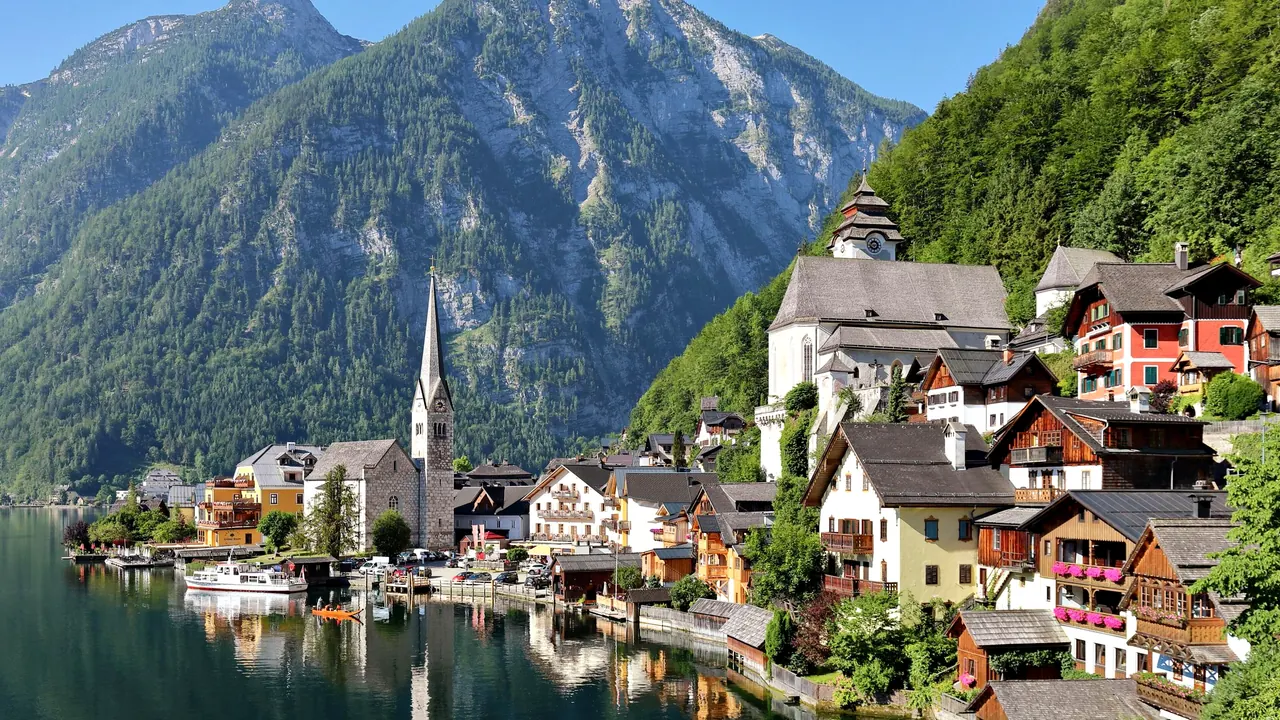
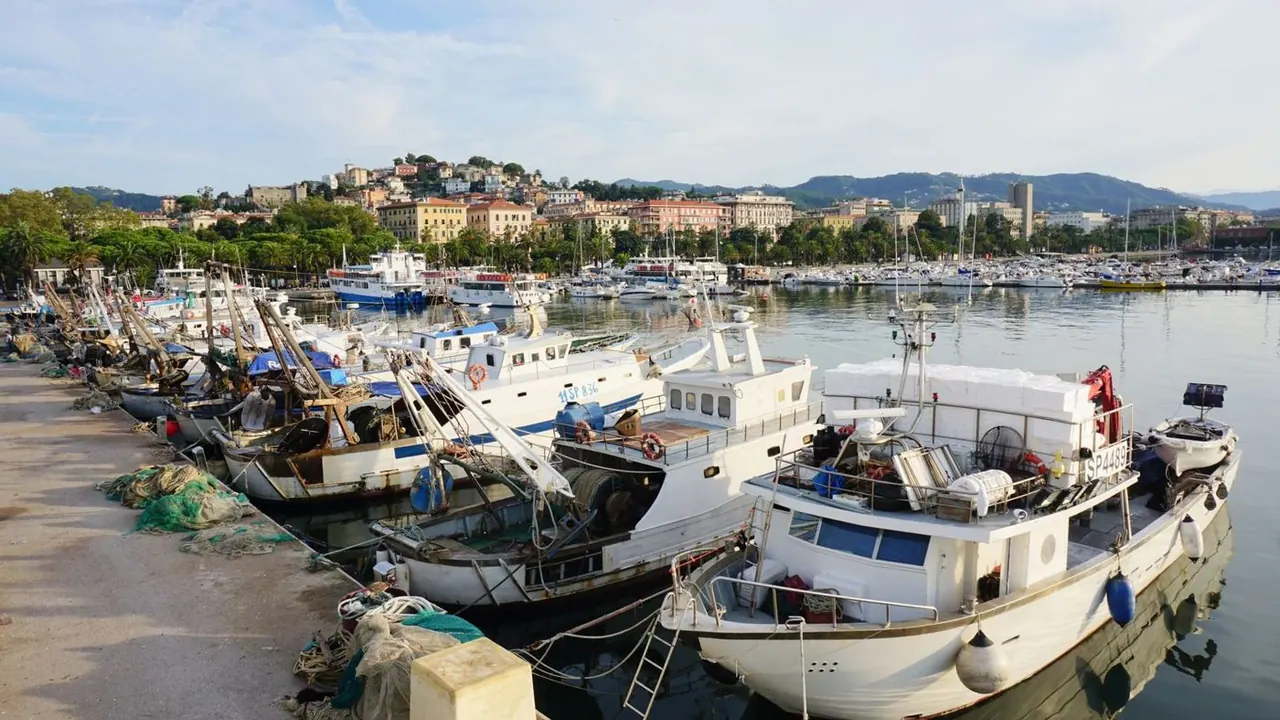
Photos: Hallstatt by C.Stadler/Bwag, CC BY-SA 4.0, cropped; La Spezia by Irina Balashova, Pexels License.
Hallstatt or La Spezia?
Our verdict in twelve categories, each scored against the same fixed benchmark cities, and the climate month by month, so you can choose for your trip.
Choose Hallstatt for
- wellness
- nature and the outdoors
Hallstatt is for travellers who put the mountains first. The Dachstein massif rises straight from the village, with cable cars, ice caves and the walk to the Gosausee, and the lake goes quiet once the day visitors leave. It suits a short, slow stay built around hiking and still water, as long as you can live with simple food, costly rooms and nothing to do after dark.
Choose La Spezia for
- food and drink
- beaches
- nightlife
If you want a base with more going on, La Spezia is the better choice. The Cinque Terre villages are minutes away by train, and the warm sea at Lerici and Palmaria is close by. Farinata and gulf mussels, aperitivo evenings and lower room prices than the coast villages complete the picture. It suits a week of varied outings by train and boat rather than a mountain retreat.
Scoreboard
Twelve categories on one fixed scale from 0 to 100. The shaded stretch is the gap between the two.
Your match
Pick a travel style or drag the sliders, and both match scores follow your weighting.
Wins on wellness and nature and the outdoors with your weighting.
Wins on food and drink and beaches with your weighting.
What matters to you?
Category by category
What the scores mean for a trip.
Beaches & swimming
Hallstatt only has an Alpine lake. The water is clear but cold, around 20°C at best, and you swim from a jetty lawn in the village or the lido at Obertraun. It makes a bracing dip after a hike, not a day of lying in the sun.
La Spezia gives you the real Mediterranean, warmer and with far more places to choose from. There are sheltered sand and pebble strips at San Terenzo and Lerici, rocky coves of very clear water around Portovenere and Palmaria, and the long sandy beach at Monterosso a train ride away. Beaches are small, though, and many are paid bathing establishments, so plan on an outing rather than a resort stay.
Food & drink
Eating in Hallstatt means a few guesthouse dining rooms serving schnitzel, goulash and dumplings. The one local speciality is char or whitefish from the lake. Kitchens can close early, and for anything more, people head to the patisseries of Bad Ischl.
La Spezia gives you far more to eat. Wood-oven farinata, mesciua soup, pesto on testaroli and mussels farmed off Portovenere make up a cuisine with its own character. The covered market on Piazza Cavour and the Cinque Terre whites and Sciacchetrà add to it. It is still a provincial port rather than a dining destination, but you can eat well every day.
Culture & sights
Hallstatt fills a rich half day, or a full day at most, while La Spezia keeps you busy for a day or two, and the history in each is of a very different kind. Hallstatt's is ancient: seven thousand years of salt mining, the Iron Age burial ground that gave the Hallstatt culture its name, and the painted skulls of the Beinhaus. All of it sits within a UNESCO-listed village that is itself the main sight.
La Spezia is a nineteenth-century naval city of arcades and Liberty-style facades, so its culture is found in museums rather than old streets. There are early Italian paintings at the Museo Amedeo Lia, centuries of seafaring at the naval museum, and the strange Lunigiana stele statues in the Castello San Giorgio.
Nightlife
Hallstatt has no nightlife at all: dinner, a glass of wine by the water and a dark lakeside walk end the day. La Spezia at least has a proper aperitivo hour. Via del Prione, Piazza Verdi and the promenade fill with people over spritz, and in summer the crowd moves to the waterfront bars at Lerici and San Terenzo, though the city still goes to bed early.
Nature & outdoors
Hallstatt has the bigger landscape. From Obertraun a cable car climbs the Krippenstein to the Five Fingers platform and the Dachstein ice caves. The Echerntal leads past waterfalls towards the glacier, and in summer there are hut-to-hut walks and via ferratas, with ski touring and freeride in winter.
La Spezia's outdoors is coastal: terraced cliffs, the Sentiero Azzurro and the quieter ridge paths of the Cinque Terre, the loop around Palmaria, and kayaking and diving in the gulf. The Apuan Alps an hour inland add mountain hiking. Even so, the summer heat and the crowds on the coastal paths make it less of an outdoors base than the Dachstein.
Day trips
La Spezia is one of the best bases anywhere for day trips. The Cinque Terre villages are minutes away by train, Portovenere and Lerici are a short bus or boat ride, and walled Sarzana and Roman Luni are close by. Pisa and Lucca are about an hour by train, and Genoa and Portofino are easy too, all without a car.
Hallstatt has fine outings around the Salzkammergut. You can visit Bad Ischl and the Kaiservilla, St Wolfgang's altarpiece, Gmunden's lake castle, and Salzburg about an hour and a half by car. Buses and the lakeside railway are slow and need planning, though, so it is a more limited base.
Good for families
Neither place is built for children, but the trouble is different in each. Hallstatt has the bigger single thrills: the salt mine with its funicular, wooden slides and underground lake, and the ice caves for older children. The village itself is a steep, narrow lane that is hard with a pushchair, so families usually stay in Obertraun.
La Spezia's flat centre and seafront gardens are easy with small children. Shallow beaches at San Terenzo and boat trips around Portovenere fill the days, though the steep villages and packed trains of the Cinque Terre suit older children better.
Getting around
Hallstatt is tiny and largely car-free, but it is steep, with steps up to the church. Arriving is awkward: the station is across the lake, reached by a small boat, and buses to Obertraun, Gosau and Bad Ischl are thin outside summer, so many visitors hire a car.
La Spezia is easier. The flat centre puts the station, market and seafront within a short walk. Trains along the coast and inland, buses around the gulf and seasonal ferries cover the whole area, and a car is more hindrance than help. The one weak point is crowded trains in high summer.
Shopping & style
Both places are modest for shopping, but La Spezia has an actual high street. Via del Prione and Corso Cavour have chains, shoe shops and some boutiques, and the edible souvenirs are worth taking home: pesto, olive oil, Sciacchetrà and Monterosso anchovies. Hallstatt has a single lane of souvenir stalls, where the salt from the local mine is the one buy with a story behind it.
Affordability
Hallstatt is the costlier stay. There are few rooms and visitors come from all over the world, so lakeside guesthouses charge well above the Austrian average and fill early. The salt mine, funicular and cable car add up, which is why budget travellers sleep in Obertraun, Bad Goisern or Bad Ischl.
La Spezia is a mid-priced town. Many people stay there because rooms cost less than in the Cinque Terre villages, and farinata, trattorias and local trains are fair value. Summer is still not cheap once trail passes and bathing establishments are added, and spring and autumn are easier on the budget.
Live music & performing arts
Hallstatt has nothing to plan an evening around, just a brass band on feast days and the odd church concert. For a real performance you go to Bad Ischl's summer operetta or to Salzburg.
La Spezia has more, though on a small scale. The Teatro Civico runs a season of theatre and concerts, and in summer a long-running jazz festival and open-air concerts fill piazzas and castle courtyards around the gulf. Opera still means a trip to Genoa or Pisa.
Wellness & relaxation
Hallstatt sits in a real spa region. Bad Ischl, half an hour away, has had salt-brine baths since the nineteenth century and a large thermal complex, and Bad Aussee and Bad Goisern carry the same tradition. Early mornings with mist on the lake add to the calm, as long as you avoid the village at midday.
La Spezia has no bathing culture of its own, apart from hotel spas and the small thermal baths at Equi Terme an hour inland. Its rest comes from slowing down instead: a long lunch in Tellaro or an off-season afternoon on Palmaria.
When should you go?
Pick your month. The climate figures are measured averages, not a forecast.
Hallstatt in July
La Spezia in July
Daytime high, °C
Rainfall in the month, mm
Where the figures come from
Hallstatt's temperatures are measured 56 km from the centre, at Salzburg.
Hallstatt has no rain gauge within 25 km of the centre, so its rainfall comes from a gridded climate dataset read at the city rather than from a gauge further away.
La Spezia's temperatures are measured 65 km from the centre, at Pisa / S. Giusto.
La Spezia has no rain gauge within 25 km of the centre, so its rainfall comes from a gridded climate dataset read at the city rather than from a gauge further away.
Temperature and rainfall are climate normals, averaged over the years shown. Hallstatt: 1991-2020 normals, Salzburg (55.5 km from centre). La Spezia: 1991-2020 normals, Pisa / S. Giusto (64.8 km from centre).
Hallstatt is best from June to September. Days are mild then, around 25°C at the peak, and good for hiking. Summer is also the wettest time, though, with about 178mm in July, so expect showers and mist on the lake. Spring and October are cool but still fine for valley walks. Winter turns cold and dark, close to freezing by day, which suits snow on the Krippenstein far better than strolling the village.
La Spezia's year runs the other way. Its summers are dry and very sunny, with highs of 30°C and the sea at 25°C by August. That is perfect for swimming but hard work on the coastal paths. April, May and September are the best months for walking in the Cinque Terre, and the sea is comfortable from June into early October. The rain arrives in October and November, peaking at around 151mm, while the mild winters still allow pleasant walks around town.
Which traveller are you?
On a beach and sun trip, La Spezia is the clear pick. It has warm sea from June into early October, coves at Lerici and Tellaro and sand at Monterosso. Hallstatt's cold mountain lake is good for a quick dip at best.
For a food and nightlife trip, La Spezia wins again by a long way. Farinata, gulf mussels and Cinque Terre whites lead into aperitivo on Via del Prione. Hallstatt offers lake char, kitchens that close early and silence after dark.
On an outdoors trip, Hallstatt has the edge. Mountain country starts at the edge of the village: the Krippenstein cable car, the ice caves, the Gosausee walk and via ferratas in summer, with ski touring in winter. The Cinque Terre paths are lovely but more crowded.
Before you go
| Measure | Hallstatt | La Spezia |
|---|---|---|
| Official language | German, Austrian Sign Language | Italian |
| Currency | Euro (EUR) | Euro (EUR) |
| Sockets | CF230 V, 50 Hz | CFL230 V, 50 Hz |
| Driving side | Right | Right |
| Time zone | UTC+1, UTC+2 in summer | UTC+1, UTC+2 in summer |
| Emergency number | 112 | 112 |
| Elevation | 511 m | 3 m |
| Main airport | Salzburg Airport (SZG)55 km from centre64 non-stop destinations | Pisa International Airport (PSA)65 km from centre82 non-stop destinations |
| Public holidays this year | 16 days | 13 days |
By the numbers
| Measure | Hallstatt | La Spezia |
|---|---|---|
| City population | 741 | 92,119 |
| People per km² | 12 | 1,792 |
| Museums within 10 km | 3 | 12 |
| UNESCO World Heritage sites within 50 km | 2 | 2 |
| Swim season, months above 21 °C | - | 4 months |
Where else could you go?
Every comparison below shares a destination with this one, so you can follow Hallstatt or La Spezia somewhere new.
- Salzburgvs Hallstatt
- Portofinovs La Spezia
- Luccavs La Spezia
- Pisavs La Spezia
- Genoavs La Spezia
- Florencevs La Spezia