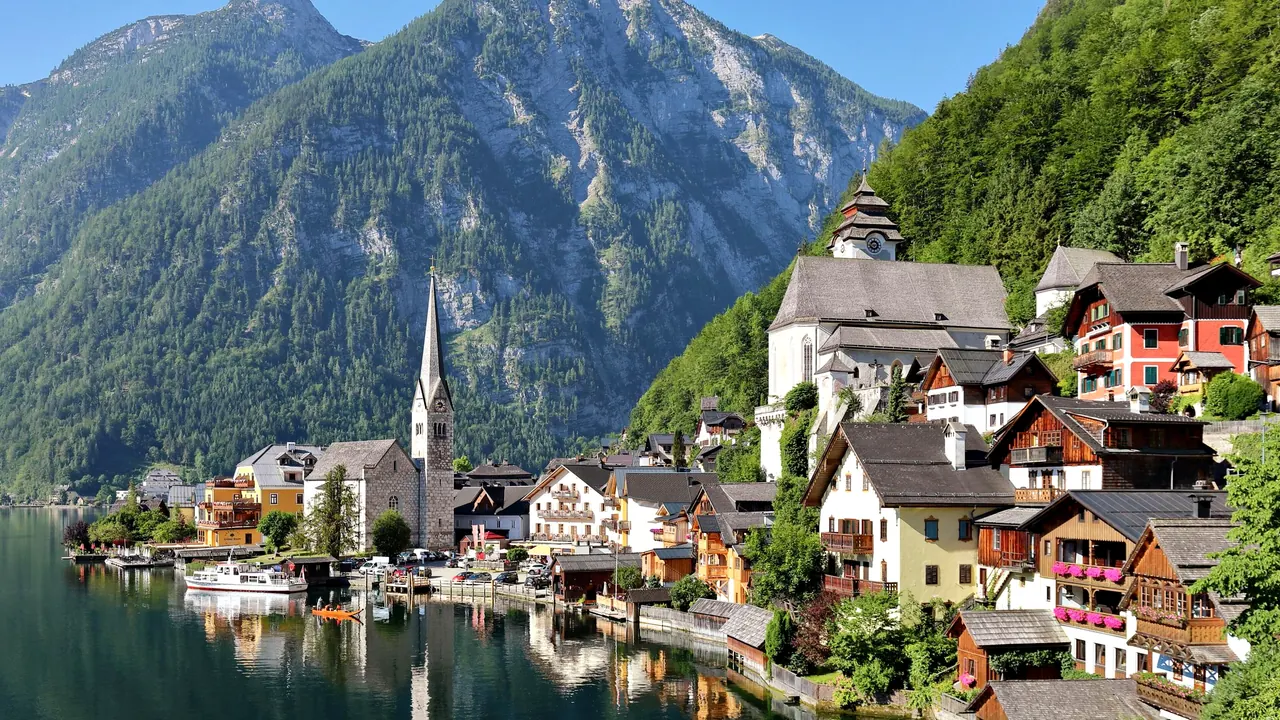
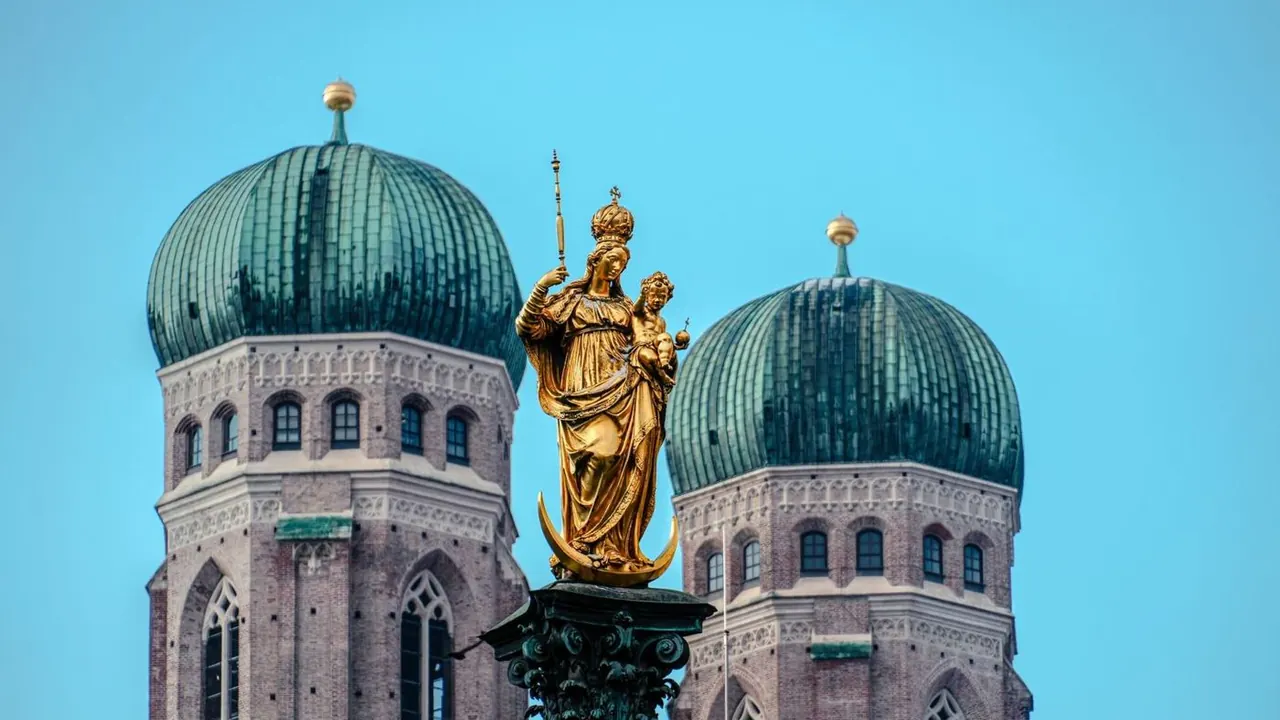
Photos: Hallstatt by C.Stadler/Bwag, CC BY-SA 4.0, cropped; Munich by 0xd1ma, Pexels License.
Hallstatt or Munich?
Our verdict in twelve categories, each scored against the same fixed benchmark cities, and the climate month by month, so you can choose for your trip.
Choose Hallstatt for
- nature and the outdoors
Hallstatt is for travellers who want mountains outside the window and very quiet evenings. The Dachstein, the ice caves and the lakeside paths begin at the edge of the village, and once the day visitors leave there is little to do but sit by the water. It suits a short, slow stay built around walking and views. It does not suit a trip that needs restaurants, shops or anything to do after dark.
Choose Munich for
- live music and the arts
- shopping
- nightlife
Munich gives you far more in one place: great art collections, world-class opera, beer gardens, easy trains and a long list of day trips, with the Alps still close enough for a day in the mountains. Choose it for a full city trip, with family or without, where the outdoors is one part of the plan rather than the whole reason for coming.
Scoreboard
Twelve categories on one fixed scale from 0 to 100. The shaded stretch is the gap between the two.
Your match
Pick a travel style or drag the sliders, and both match scores follow your weighting.
Wins on nature and the outdoors with your weighting.
Wins on live music and the arts and shopping with your weighting.
What matters to you?
Category by category
What the scores mean for a trip.
Beaches & swimming
Neither is a swimming destination, and both offer cold, clear Alpine water in high summer. In Hallstatt the lake is right beside you, but the steep shore leaves only a small lawn and jetty in the village and the lido at Obertraun. From Munich you take a train to the Starnberger See or the Ammersee, where the lawns are wider and the water slightly gentler, or you join the locals on the Isar's gravel banks.
Food & drink
Eating in Hallstatt is limited to a few guesthouse dining rooms and terraces serving schnitzel, goulash and char or whitefish from the lake. The view is often better than the plate, and kitchens can close early.
Munich gives you far more to choose from. Its brewery beer halls and beer gardens serve roast pork and white sausage, the Viktualienmarkt is good for grazing, coffee and cake are taken seriously, and there is a tier of starred restaurants for a special dinner.
Culture & sights
Hallstatt's history goes very deep. Salt has been mined in the mountain for seven thousand years, the village gave its name to an Iron Age culture, and the painted skulls of the Beinhaus are unforgettable. Still, the salt mine, the small museum and the village itself take about a day.
Munich can fill a week. The Alte Pinakothek and its neighbours in the Kunstareal, the Wittelsbach rooms of the Residenz, Nymphenburg and the vast Deutsches Museum put it in a different league for anyone who travels for art and museums.
Nightlife
Evenings in Hallstatt mean a late dinner, a glass of wine by the water and a walk in the dark. Nothing stays open late, which is exactly what overnight guests come for. Munich has an actual night out: long beer hall evenings, cocktail and gay bars around Gärtnerplatz and Glockenbach, student pubs in Schwabing, and a few techno clubs that run until morning at weekends.
Nature & outdoors
Hallstatt has the stronger outdoors, because it sits inside the mountains rather than looking at them. The Krippenstein cable car rises from Obertraun to the Five Fingers platform and the Dachstein ice caves, the Echerntal path climbs past waterfalls, and hut-to-hut routes, via ferratas and winter ski touring start nearby.
Munich comes close in its own way. Its foothills and lakes, Garmisch and the Zugspitze are about an hour or more away by train, and within the city it has the English Garden, the Eisbach surfers and long cycle paths along the Isar.
Day trips
Munich is the better base for excursions, mostly because of the railway. Augsburg, Nuremberg, Regensburg, Salzburg, Innsbruck and the royal castles of Neuschwanstein and Herrenchiemsee are all reachable without a car.
Hallstatt's outings are lovely but closer to home: Bad Ischl and the Kaiservilla, St Wolfgang's altarpiece, Gmunden's lake castle and Altaussee, with Salzburg as a long day. Without a car, buses and the lakeside line make each trip a matter of planning.
Good for families
Hallstatt has a couple of real highlights for children, with the miners' slides and underground lake in the salt mine and, for older children, the icy caves of the Dachstein. Beyond those, the single steep, crowded lane is hard going with a pushchair.
Munich is much easier for a family stay. The Hellabrunn zoo along the Isar, the hands-on rooms of the Deutsches Museum, beer gardens with playgrounds and smooth, pushchair-friendly transport mean the days take little effort, and Legoland is within reach for a day out.
Getting around
Inside Hallstatt you walk everywhere in minutes, though often up steps and steep paths. The difficulty is getting in and out: the station is across the lake, so you arrive by boat, and buses towards Obertraun, Gosau and Bad Ischl are thin outside summer, so many visitors bring a car.
Munich is simpler in every way. It has a walkable old town, one integrated U-Bahn, S-Bahn and tram network that reaches the museums, lakes and airport, and flat streets for cycling, so a car is more trouble than help.
Shopping & style
Shopping in Hallstatt fills half an hour on the main lane, with salt from the mine as the one souvenir worth carrying home. Munich is a real shopping city, with luxury houses on Maximilianstrasse, department stores along the pedestrian axis, Dallmayr's old delicatessen, specialist Tracht tailors and design boutiques in Glockenbach and Schwabing.
Affordability
Neither is cheap, but Hallstatt is harder on the budget. It has very few rooms for the visitors it draws, meals are priced at resort level, and the salt mine, funicular and cable car soon add up. The usual way to save is to sleep in Obertraun, Bad Goisern or Bad Ischl.
Munich's hotels are dear too, especially during the Oktoberfest and the big trade fairs, but it gives you more ways to spend less. You can bring a picnic to a beer garden, the parks and the Isar cost nothing, and Sunday museum entry is almost free.
Live music & performing arts
In Hallstatt, live music means the village brass band on feast days and the odd summer concert in church. For anything more you go to Bad Ischl for operetta or to Salzburg.
Munich is one of Europe's great music cities. The Bavarian State Opera plays at the National Theatre, three major orchestras perform in halls such as the Herkulessaal, and the Cuvilliés Theatre, the Gärtnerplatztheater and a strong jazz club scene give you something on most nights.
Wellness & relaxation
Hallstatt's calm comes from its setting: mist on the lake at dawn and empty evenings, with the brine baths of Bad Ischl and Bad Aussee a short drive away. Around midday, though, the crowds in the lane break the peace.
Munich has more to offer. You can bathe under the vaults of the Art Nouveau Müller'sches Volksbad, try the German sauna rituals, or spend a day at the huge thermal complex at Erding. Slow afternoons in a beer garden or on the English Garden lawns make it easier to unwind than you might expect in a big city.
When should you go?
Pick your month. The climate figures are measured averages, not a forecast.
Hallstatt in July
Munich in July
Daytime high, °C
Rainfall in the month, mm
Where the figures come from
Hallstatt's temperatures are measured 56 km from the centre, at Salzburg.
Hallstatt has no rain gauge within 25 km of the centre, so its rainfall comes from a gridded climate dataset read at the city rather than from a gauge further away.
Temperature and rainfall are climate normals, averaged over the years shown. Hallstatt: 1991-2020 normals, Salzburg (55.5 km from centre). Munich: 1991-2020 normals, München (1.9 km from centre).
The two places have almost the same temperatures through the year. Summer days reach about 25°C in July and August, and in winter the highs are only a few degrees above freezing. Late spring, early summer and September are the best months for walking in either. The swimming seasons differ a little. Hallstatt's deep lake warms slowly and is only really worth a dip in July and August. Munich's lakes are used for swimming from about June to early September, though the water stays fresh even then. Winter is grey and raw in both, with snow on the high ground above Hallstatt.
The real difference is rain. Hallstatt sits under the mountains and is much wetter, with around 178mm in July against 119mm in Munich, and it gets a little less sunshine through the summer. If you go to Hallstatt, leave spare days in case mist and showers settle in. Munich's drier, sunnier summers make a fixed itinerary easier.
Which traveller are you?
On an outdoors trip, Hallstatt is the better base. The Krippenstein cable car, the ice caves, the Echerntal waterfalls and the walk to the Gosausee start at the edge of the village, while from Munich every mountain day begins with a train journey.
For a culture and arts trip, Munich wins easily. The Pinakotheks, the Residenz and the Deutsches Museum could fill several days, and evenings can go to the State Opera or one of three major orchestras. Hallstatt's history and its skull-filled charnel house are worth half a day.
On a food and nightlife trip, choose Munich. Beer halls, chestnut-shaded beer gardens, the Viktualienmarkt and the bars around Gärtnerplatz give you plenty of choice. Hallstatt has a few guesthouse kitchens serving lake fish and goes silent by evening.
Before you go
| Measure | Hallstatt | Munich |
|---|---|---|
| Official language | German, Austrian Sign Language | German |
| Currency | Euro (EUR) | Euro (EUR) |
| Sockets | CF230 V, 50 Hz | CF230 V, 50 Hz |
| Driving side | Right | Right |
| Time zone | UTC+1, UTC+2 in summer | UTC+1, UTC+2 in summer |
| Emergency number | 112 | 112 |
| Elevation | 511 m | 519 m |
| Main airport | Salzburg Airport (SZG)55 km from centre64 non-stop destinations | Munich Airport (MUC)29 km from centre210 non-stop destinations |
| Public holidays this year | 16 days | 12 days |
By the numbers
| Measure | Hallstatt | Munich |
|---|---|---|
| City population | 741 | 1,505,036 |
| People per km² | 12 | 4,844 |
| Museums within 10 km | 3 | 75 |
| UNESCO World Heritage sites within 50 km | 2 | 1 |
Where else could you go?
Every comparison below shares a destination with this one, so you can follow Hallstatt or Munich somewhere new.
- Salzburgvs Hallstatt
- Innsbruckvs Munich
- Salzburgvs Munich
- Bledvs Hallstatt
- Grazvs Hallstatt
- Nurembergvs Munich