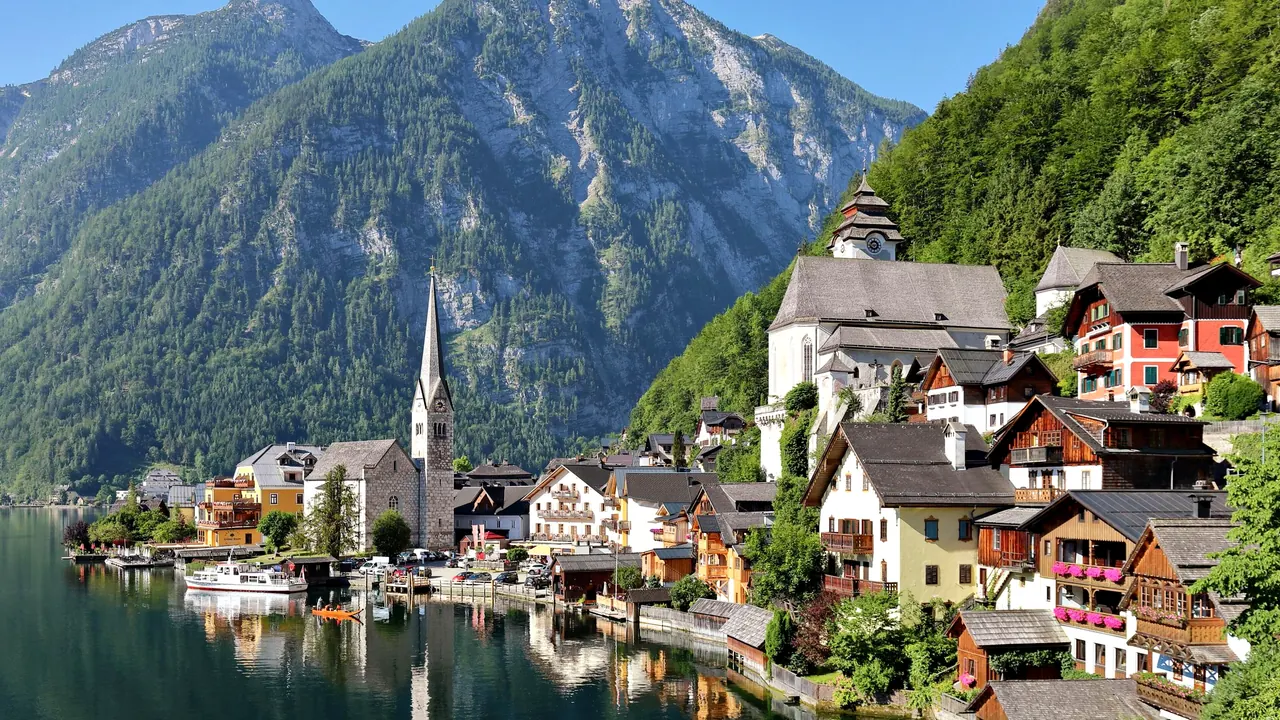
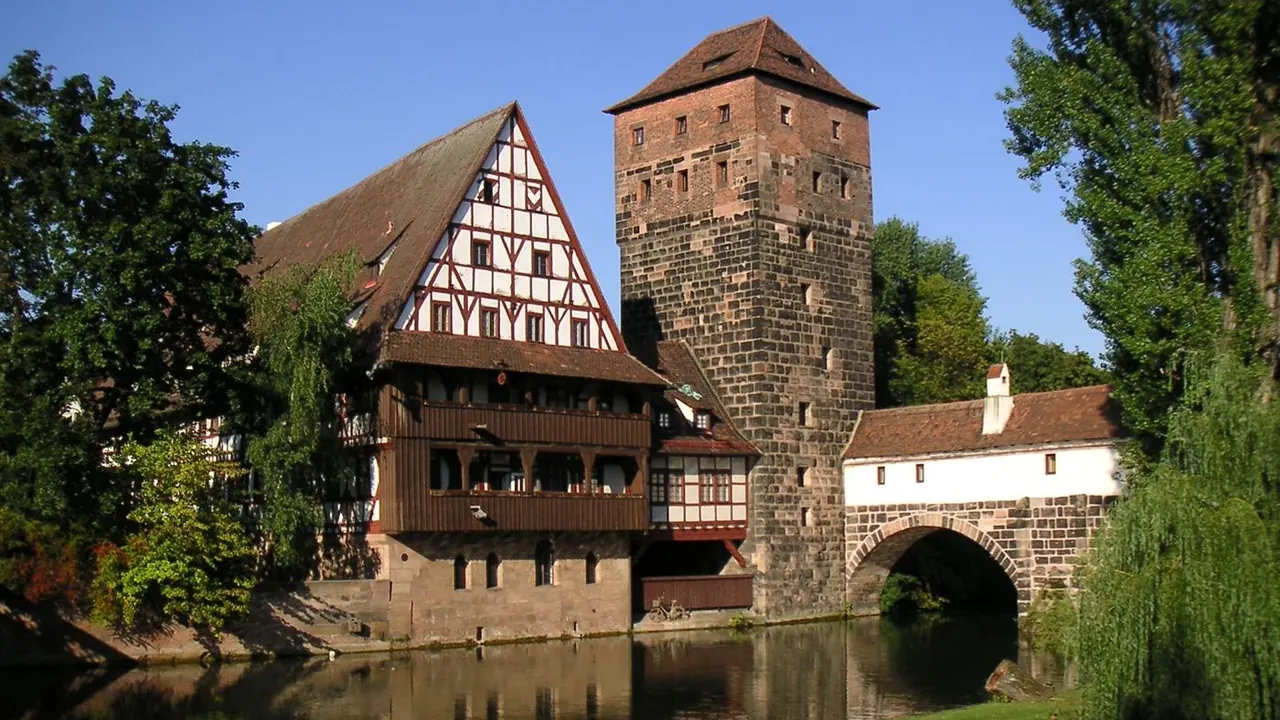
Photos: Hallstatt by C.Stadler/Bwag, CC BY-SA 4.0, cropped; Nuremberg by Horst Gutmann, CC BY 2.0, cropped.
Hallstatt or Nuremberg?
Our verdict in twelve categories, each scored against the same fixed benchmark cities, and the climate month by month, so you can choose for your trip.
Choose Hallstatt for
- nature and the outdoors
- beaches
Hallstatt suits travellers who come for mountains and water rather than a list of sights: walkers, people drawn to the Dachstein ice caves and the Krippenstein, and couples happy with quiet evenings by the lake. It works best as a night or two in the high country, with the busy midday hours spent on the water or the trails. A cheaper bed in Obertraun or Bad Goisern stretches the stay further.
Choose Nuremberg for
- live music and the arts
- nightlife
- culture and sights
For a proper city trip, Nuremberg is the stronger choice. It has a walled old town and imperial castle, a major national museum, the sobering Nazi-era sites, Franconian beer and bratwurst, an opera house and a real evening out, all within walking distance or on one transport ticket. It also costs less to stay in, and trains run straight to Bamberg, Regensburg and Würzburg.
Scoreboard
Twelve categories on one fixed scale from 0 to 100. The shaded stretch is the gap between the two.
Your match
Pick a travel style or drag the sliders, and both match scores follow your weighting.
Wins on nature and the outdoors and beaches with your weighting.
Wins on live music and the arts and nightlife with your weighting.
What matters to you?
Category by category
What the scores mean for a trip.
Beaches & swimming
Neither is a place for a swimming vacation, but Hallstatt at least has water on the doorstep. There is a bathing lawn and jetty at the north end of the village and a lido at Obertraun, good for a bracing dip in clear Alpine water in high summer.
In Nuremberg a swim means a city pool or an hour's trip to the Brombachsee and the other Franconian lakes. Their water is warmer and they have small sandy strips, but going there is an outing in its own right.
Food & drink
As a place to eat, Nuremberg is well ahead, because a whole regional cuisine is set against one good lakeside meal. Hallstatt has a few guesthouse dining rooms and terraces cooking Austrian standards, and the dish worth trying is char or whitefish from the lake, eaten once with the water in view. Kitchens can shut early after the day visitors leave, and for anything more you would go to the old patisseries of Bad Ischl.
Nuremberg has a regional kitchen to work through over several meals. Franconian cooking is hearty, pork-heavy and made to go with beer, and the city has its own sweet tradition in Lebkuchen, the spiced gingerbread baked here for centuries and sold all year. Away from the regional cooking, the restaurants are ordinary for a city of its size, but there is still far more to choose from at dinner than in Hallstatt.
Culture & sights
Nuremberg has enough sightseeing for several days. There are the Kaiserburg and the medieval walls, the churches of St Sebaldus and St Lorenz, Dürer's house, and the Germanisches Nationalmuseum, which could fill a day by itself. Then there is the twentieth century, at the Rally Grounds and in Courtroom 600.
Hallstatt's heritage is older and more concentrated. It has seven thousand years of salt mining, the burial ground that gave the Hallstatt culture its name, and the painted skulls of the Beinhaus. Still, the village, the salt mine and the small museum take a day at most.
Nightlife
Hallstatt has no nightlife. Once the tour groups leave, an evening means dinner, a glass of wine by the water and a walk in the dark. Nuremberg offers a relaxed night out built around bars: taverns and wine bars in the old town, students on the squares in summer, and small alternative bars in Gostenhof's old working-class streets, with a few clubs for weekends.
Nature & outdoors
Hallstatt sits in some of the finest scenery in the Alps. A cable car climbs the Krippenstein to the Five Fingers platform and the Dachstein ice caves, the Echerntal leads past waterfalls towards the glacier, and the Gosausee is a classic Alpine view. Summer brings hut-to-hut hiking and via ferratas, and winter brings ski touring.
Nuremberg's outdoors is gentler. The Reichswald forest begins at the edge of the city, and about an hour away Franconian Switzerland has limestone towers, caves and good rock climbing. It is fine country for walkers and cyclists, but there are no high mountains.
Day trips
Nuremberg is the better base for day trips, mainly because the trains do the work. Bamberg, Regensburg and Würzburg are each about an hour away, Rothenburg ob der Tauber and Dinkelsbühl a little further, and Munich is an hour by fast train.
Hallstatt has a lovely set of outings in the Salzkammergut: the Kaiservilla in Bad Ischl, St Wolfgang's altarpiece and Gmunden's lake castle, with Salzburg about an hour and a half away. Without a car, though, every trip takes planning around buses and the lakeside railway.
Good for families
Nuremberg is the easier choice with children. It has centuries of toy-making behind its Toy Museum, a railway museum with full-size locomotives, a zoo in wooded old quarries with a dolphin and manatee house, and its own children's Christmas market in Advent.
Hallstatt has a few hits, especially the miners' slides and underground lake of the salt mine, and the ice caves for older children. The village itself is a steep single lane, crowded at midday and hard work with a pushchair.
Getting around
On foot both are easy: Hallstatt is a few minutes from end to end, and Nuremberg's old town is about 1.5km across inside the walls. Beyond the centre they are very different. Nuremberg's U-Bahn, trams and S-Bahn run on one ticket out to the zoo, the Rally Grounds and Fürth, and regional trains reach the day-trip towns, so a car is unnecessary.
Hallstatt's station is on the far shore, reached by a small boat, and buses to Obertraun, Gosau and Bad Ischl are limited outside summer. Many visitors find a car worth having.
Shopping & style
In Hallstatt, souvenirs are all there is to buy. A short stroll along the main lane passes carved wood, schnapps and dirndl accessories, and the one buy worth taking home is salt from the mine above the village, in grinders or bath mixes.
Shopping in Nuremberg has more character, though it is still not a reason to come. Lebkuchen comes in decorated tins, and wooden toys and tin figures are sold at the craft workshops of the Handwerkerhof by the station gate. In Advent the Christkindlesmarkt on the Hauptmarkt is among Germany's most famous. Out of season, Königstraße and Breite Gasse are mostly chain stores.
Affordability
A bed in Hallstatt is expensive. The village has few rooms and draws visitors from all over the world, so lakeside guesthouses charge well above the Austrian average, and the salt mine, the funicular and the Dachstein cable car add up. Staying in Obertraun, Bad Goisern or Bad Ischl and coming in for the day keeps costs down.
A few days in Nuremberg ask much less of the budget. Tavern meals are filling, local beer and public transport cost little, and hotels are fairly priced except during the big trade fairs and the Advent market season.
Live music & performing arts
Nuremberg has a full season to plan evenings around. The Staatstheater stages opera, ballet and drama in its Art Nouveau house, two orchestras play in the Meistersingerhalle, and in summer there are the open-air concert in the Luitpoldhain and the free Bardentreffen in the squares.
Hallstatt has a brass band on feast days and the odd church concert. For more, you would go to the operetta in Bad Ischl or Salzburg's classical season.
Wellness & relaxation
Both offer about as much rest, but of different kinds. In Hallstatt the calm comes from the place itself, especially the misty early mornings and the evenings after the crowds leave. The salt-brine baths of Bad Ischl and Bad Aussee are a short drive away.
In Nuremberg the rest is more organised. A large thermal spa with sauna gardens in Fürth is a U-Bahn ride away, though visitors should expect the nude, mixed saunas common in Germany. The saline pools of Bad Windsheim are about an hour away, and slow afternoons in a beer garden are the local way to unwind.
When should you go?
Pick your month. The climate figures are measured averages, not a forecast.
Hallstatt in July
Nuremberg in July
Daytime high, °C
Rainfall in the month, mm
Where the figures come from
Hallstatt's temperatures are measured 56 km from the centre, at Salzburg.
Hallstatt has no rain gauge within 25 km of the centre, so its rainfall comes from a gridded climate dataset read at the city rather than from a gauge further away.
Temperature and rainfall are climate normals, averaged over the years shown. Hallstatt: 1991-2020 normals, Salzburg (55.5 km from centre). Nuremberg: 1991-2020 normals, Nuernberg (5.5 km from centre).
The temperatures are almost identical. Both places reach about 25°C in July and August and stay a few degrees above freezing from December to February. In either place, May, June, September and early October are the most comfortable months for long walks. July and August are the only months when the Hallstätter See is warm enough for a swim, and even then it is cold.
Rain is the real difference. Hallstatt sits under the Alps and is far wetter, with summer months of up to 178mm, while Nuremberg's wettest month brings 77mm. Mountain days in Hallstatt therefore need waterproofs and some flexibility. Nuremberg gets a little more sunshine from May to August. Hallstatt has the brighter midwinter, but Nuremberg is the easier place to spend a grey winter's day, with its museums and its Advent market.
Which traveller are you?
On an outdoors trip, Hallstatt is the clear pick. Mountain country starts at the edge of the village, with the Krippenstein cable car, the ice caves, the walk to the Gosausee and via ferratas. Nuremberg's forests and Franconian Switzerland are gentler and further away.
For a culture and arts trip, choose Nuremberg. The castle, walls and Gothic churches, the Germanisches Nationalmuseum, the Rally Grounds and Courtroom 600 fill several days, and the Staatstheater adds opera and ballet. Hallstatt's salt mine and Beinhaus take a single day.
On a food and nightlife trip, Nuremberg wins easily. It has Franconian breweries, beer gardens on the Pegnitz, bratwurst and Schäufele, then bars in Gostenhof. In Hallstatt, kitchens close early and the evening ends with a walk by the lake.
Before you go
| Measure | Hallstatt | Nuremberg |
|---|---|---|
| Official language | German, Austrian Sign Language | German |
| Currency | Euro (EUR) | Euro (EUR) |
| Sockets | CF230 V, 50 Hz | CF230 V, 50 Hz |
| Driving side | Right | Right |
| Time zone | UTC+1, UTC+2 in summer | UTC+1, UTC+2 in summer |
| Emergency number | 112 | 112 |
| Elevation | 511 m | 209 m |
| Main airport | Salzburg Airport (SZG)55 km from centre64 non-stop destinations | Nuremberg Airport (NUE)5 km from centre56 non-stop destinations |
| Public holidays this year | 16 days | 12 days |
By the numbers
| Measure | Hallstatt | Nuremberg |
|---|---|---|
| City population | 741 | 531,159 |
| People per km² | 12 | 2,848 |
| Museums within 10 km | 3 | 50 |
| UNESCO World Heritage sites within 50 km | 2 | 1 |
Where else could you go?
Every comparison below shares a destination with this one, so you can follow Hallstatt or Nuremberg somewhere new.
- Salzburgvs Hallstatt
- Bledvs Hallstatt
- Grazvs Hallstatt
- Munichvs Nuremberg
- Stuttgartvs Nuremberg
- Cortina d'Ampezzovs Hallstatt