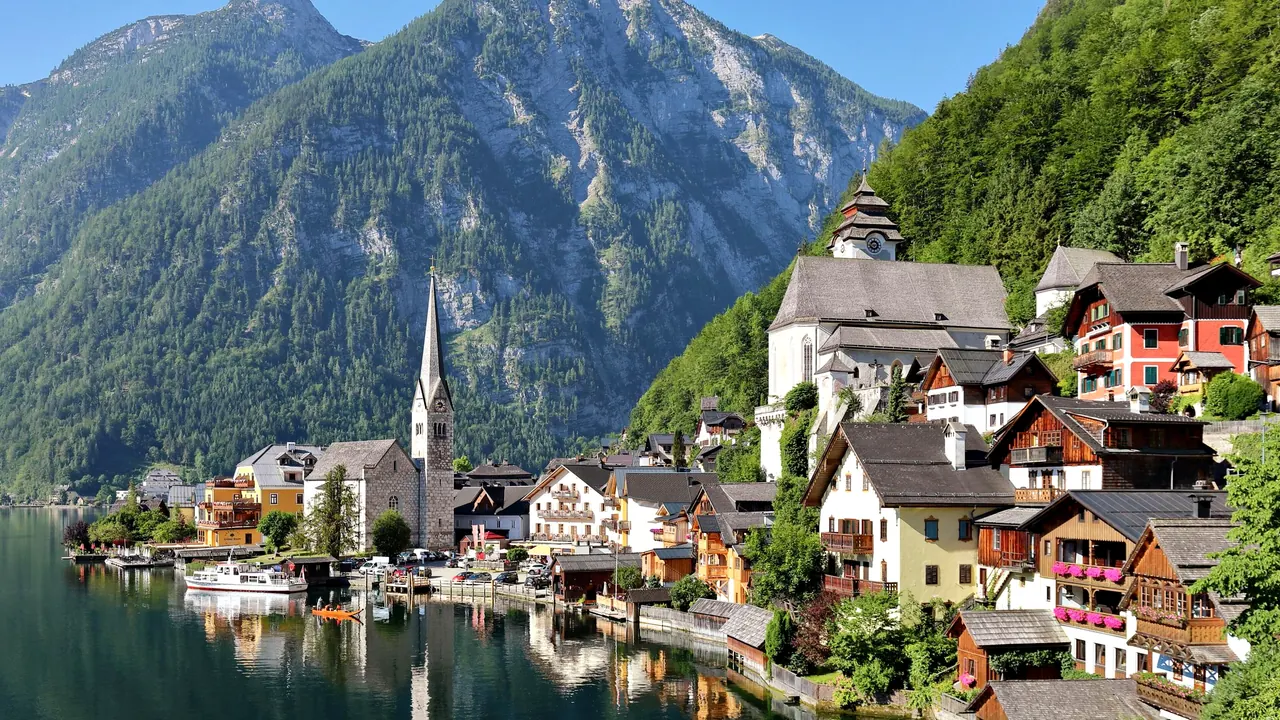
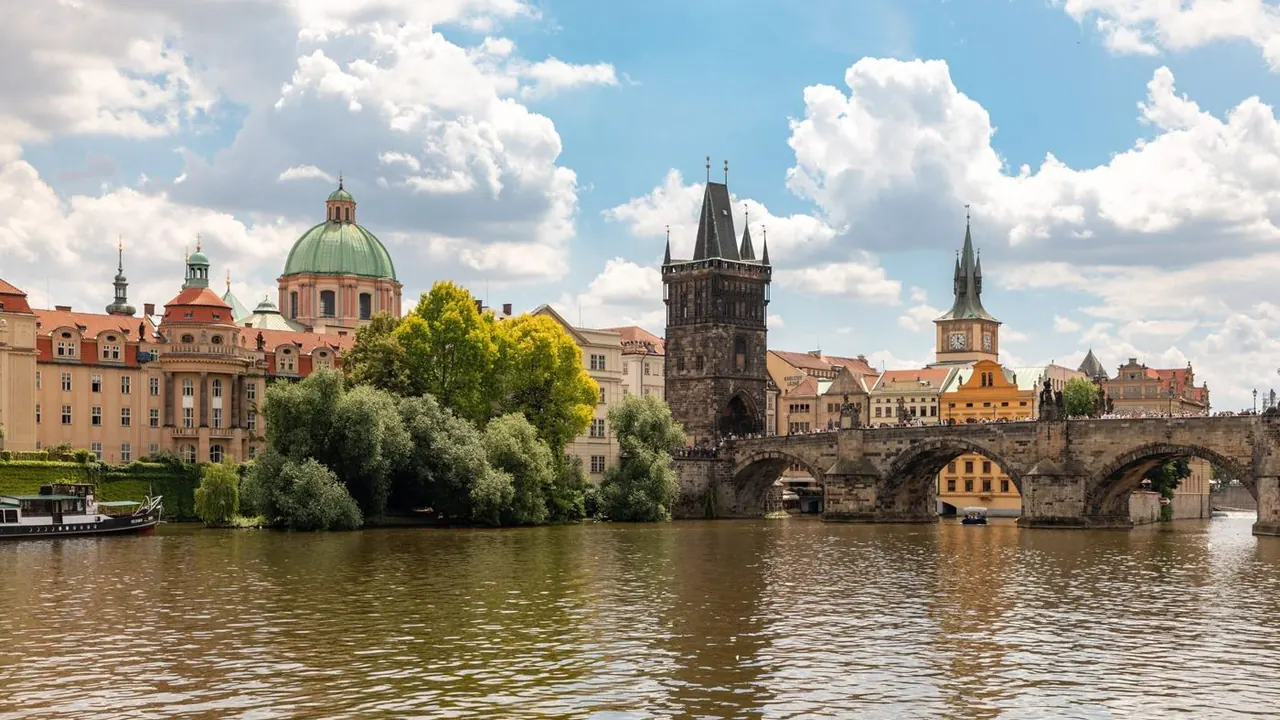
Photos: Hallstatt by C.Stadler/Bwag, CC BY-SA 4.0, cropped; Prague by Dietmar Rabich, CC BY-SA 4.0, cropped.
Hallstatt or Prague?
Our verdict in twelve categories, each scored against the same fixed benchmark cities, and the climate month by month, so you can choose for your trip.
Choose Hallstatt for
- nature and the outdoors
- beaches
- wellness
Hallstatt suits travellers who want mountains more than monuments. Give it a night or two by a deep Alpine lake under the Dachstein, and fill the days with the Krippenstein cable car, the ice caves and the walk to the Gosausee. It is a quiet, expensive village with nothing to do after dark. That makes it best for walkers and couples who will happily give up restaurants and bars for mist on the water and an early start on the trails.
Choose Prague for
- live music and the arts
- nightlife
- culture and sights
Choose Prague for a city trip with real depth. The Castle, Baroque Mala Strana, the Old Town and the Jewish Quarter fill several days of sightseeing. Evenings run from opera at the National Theatre to long pub tables in Zizkov, and trams make it all easy without a car. It is also the cheaper of the two by a wide margin, though its countryside is gentler and its old centre far more crowded.
Scoreboard
Twelve categories on one fixed scale from 0 to 100. The shaded stretch is the gap between the two.
Your match
Pick a travel style or drag the sliders, and both match scores follow your weighting.
Wins on nature and the outdoors and beaches with your weighting.
Wins on live music and the arts and nightlife with your weighting.
What matters to you?
Category by category
What the scores mean for a trip.
Beaches & swimming
Neither is a swimming destination, but Hallstatt at least has water on its doorstep. The Hallstätter See is deep, clear and cold. There is a bathing lawn and jetty in the village and a larger lido at Obertraun, good for a bracing dip after a hike in high summer.
Prague has no swimming in the centre, because the Vltava there is for boats. A swim means the Dzban reservoir in the Sarka valley, an outdoor pool, or a day trip to the Slapy reservoir. In Hallstatt a swim fits naturally into the day, while in Prague it is a separate outing.
Food & drink
Prague has much more to eat and drink. Its great strength is beer, Pilsner-style lager poured with care and a long line of microbreweries, with roast pork, svickova and chlebicky to go with it. Away from the Old Town's tourist menus, Vinohrady, Karlin and Letna add cafés, Moravian wine bars and a modest modern restaurant scene.
Hallstatt has a few guesthouse dining rooms and lakeside terraces serving Austrian standards. Its one local speciality is char and whitefish from the lake. Kitchens close early and there is little choice, so in Hallstatt food is a pleasant part of the stay rather than a reason to come.
Culture & sights
Both are UNESCO sites, but on very different scales. Hallstatt's listing covers a village and its landscape: painted houses on a ledge above the lake, a salt mine worked for some seven thousand years, the small museum on the Iron Age Hallstatt culture and the painted skulls of the Beinhaus. All of it fits into a day.
Prague needs three or four days just for the essentials. There is the Castle with St Vitus Cathedral, the Baroque palaces of Mala Strana, the Charles Bridge, the Old Town and Josefov's synagogues. Beyond those come Art Nouveau and Cubist buildings and the National Gallery's collections spread across several palaces.
Nightlife
Hallstatt effectively has no nightlife. Once the day visitors leave, an evening means dinner, a glass of wine by the lake and a walk in the dark. Prague is a well-known drinking city, with cheap neighbourhood pubs in Zizkov, wine bars in Vinohrady, summer beer gardens on Letna and techno clubs in Holesovice. Anyone who wants a night out should choose Prague.
Nature & outdoors
For mountain scenery the two are not close. Hallstatt lies at the foot of the Dachstein, with high peaks rising straight from the lake shore. The Krippenstein cable car climbs to the Five Fingers platform and the giant ice caves, the Echerntal leads past waterfalls towards the glacier, and the walk to the Gosausee ends at one of the great Alpine views. Summer adds via ferratas and paddling on the lake, and winter brings ski touring.
Prague is green for a capital, with orchards on Petrin Hill, the old royal park of Stromovka and the rocky Divoka Sarka gorge on its edge. Its best walking is about two hours out, among the sandstone towers of Bohemian Switzerland. That country is gentle and has no mountains, so Prague suits a woodland walk or a riverside cycle rather than a trip built around the outdoors.
Day trips
Prague is the easier base for day trips. Kutna Hora with its cathedral and ossuary, Karlstejn castle and Terezin are each about an hour away, much of it by train. Melnik's vineyards are close as well, and Dresden and Karlovy Vary are about two hours away.
Hallstatt's region is lovely too. Bad Ischl and the Kaiservilla are half an hour away, the Wolfgangsee towns and Gmunden on the Traunsee are further on, and Salzburg is about an hour and a half by car. The difference is effort: from Hallstatt you need a car, or careful planning with buses and the lakeside railway.
Good for families
Neither is easy with a pushchair, since both mean steps, slopes and midday crowds, but they appeal to children in different ways. Hallstatt's highlights are real adventures: the salt mine's wooden miners' slides and underground lake, the ice caves and rowing boats on the lake. They suit older children best and fill a few hours rather than a long stay.
Prague has more variety for several days. There is the storybook castle, the astronomical clock with its moving apostles, the large zoo at Troja and the mirror maze on Petrin, with easy tram rides in between.
Getting around
You can walk the whole of Hallstatt in a few minutes, and the centre is largely free of cars. Getting there and away is harder: a boat crosses from the station on the far shore, and the regional buses are thin, so a car helps for the wider area. Prague's centre is easy to walk, with metro lines, trams that run through the night and one ticket for everything, so no visitor needs a car. Both are hard on the feet, Hallstatt with its steep steps and Prague with its cobbles.
Shopping & style
Shopping in Hallstatt takes half an hour along a lane of souvenir shops, and the one thing worth taking home is salt from the local mine. Prague has real range, from luxury labels on Parizska and chains on Na Prikope to Bohemian crystal, garnet jewellery and marionettes. Its design and vintage shops in Vinohrady and Holesovice add more. Prague is for browsing rather than a reason to come, but it can easily fill an afternoon.
Affordability
Prague is much easier on the budget. Beer, pub lunches and public transport stay cheap. Sleeping a few tram stops from the centre and eating in Zizkov or Karlin keeps costs low, as long as you avoid the tourist menus and exchange booths around Old Town Square.
Hallstatt has few rooms and visitors from all over the world, so rooms, meals, the salt mine and the cable car all cost Alpine resort prices. The usual answer is to stay in Obertraun, Bad Goisern or Bad Ischl and come into the village for the day.
Live music & performing arts
Prague is one of Europe's classic music cities. It has three opera stages, including the Estates Theatre where Mozart conducted the premiere of Don Giovanni, and the Czech Philharmonic plays at the Rudolfinum. Black-light theatre and marionette shows need no Czech.
Hallstatt has a brass band on feast days and the occasional church concert, but nothing to plan an evening around. Music lovers staying there go to Bad Ischl for summer operetta or to Salzburg.
Wellness & relaxation
Neither place has much of a spa culture of its own, and they are restful in different ways. Hallstatt's calm comes at the edges of the day, with mist on the lake in the morning and empty lanes in the evening. The old brine baths of Bad Ischl and Bad Aussee are close by.
In Prague, rest means the city: grand coffee houses, the terraced gardens below the castle and quiet benches on Kampa island. Beyond that it offers hotel spas and massage studios, while the country's famous spa towns are far away in western Bohemia.
When should you go?
Pick your month. The climate figures are measured averages, not a forecast.
Hallstatt in July
Prague in July
Daytime high, °C
Rainfall in the month, mm
Where the figures come from
Hallstatt's temperatures are measured 56 km from the centre, at Salzburg.
Hallstatt has no rain gauge within 25 km of the centre, so its rainfall comes from a gridded climate dataset read at the city rather than from a gauge further away.
Temperature and rainfall are climate normals, averaged over the years shown. Hallstatt: 1991-2020 normals, Salzburg (55.5 km from centre). Prague: 1991-2020 normals, Praha-Libus (8.1 km from centre).
Temperatures in the two places are almost the same through the year. Both peak at about 25°C in July and August and drop to near freezing from December to February, so neither suits long days outdoors in midwinter. The real difference is rain. Hallstatt sits among mountains, is wet all year and is wettest in summer, with about 178mm in July against Prague's 76mm. Prague also gets noticeably more sunshine from April to August, though in the darkest months Hallstatt sees a little more sun than Prague's grey skies.
For Hallstatt, June to September is the season for hiking and for a cold lake swim on the warmest days, and September usually brings drier weather after the summer downpours. Prague is at its most comfortable for walking the streets in May, June and September, when it is warm but not hot. Its winters are cold and grey but fairly dry, so a short city break there is still possible in the off season.
Which traveller are you?
On an outdoors trip, Hallstatt is the clear choice. The Dachstein starts at the edge of the village, with cable cars, ice caves, hut-to-hut routes and the walk to the Gosausee. Prague's best hiking, in the sandstone country, is gentle and two hours away.
For a culture and arts trip, choose Prague. Its whole centre is historic, from the Castle to Josefov, and evenings bring opera at the National Theatre or the Czech Philharmonic. Hallstatt gives one fine day of salt-mine history and little after dark.
On a food and nightlife trip, Prague wins again. Its pubs pour excellent lager until late, Vinohrady adds wine bars and Holesovice has techno. In Hallstatt there are only a few lakeside terraces, kitchens close early and the village is silent by nightfall.
Before you go
| Measure | Hallstatt | Prague |
|---|---|---|
| Official language | German, Austrian Sign Language | Czech |
| Currency | Euro (EUR) | Czech Koruna (CZK) |
| Sockets | CF230 V, 50 Hz | CE230 V, 50 Hz |
| Driving side | Right | Right |
| Time zone | UTC+1, UTC+2 in summer | UTC+1, UTC+2 in summer |
| Emergency number | 112 | 112 |
| Elevation | 511 m | 235 m |
| Main airport | Salzburg Airport (SZG)55 km from centre64 non-stop destinations | Václav Havel Airport Prague (PRG)12 km from centre178 non-stop destinations |
| Public holidays this year | 16 days | 13 days |
By the numbers
| Measure | Hallstatt | Prague |
|---|---|---|
| City population | 741 | 1,397,880 |
| People per km² | 12 | 2,817 |
| Museums within 10 km | 3 | 88 |
| UNESCO World Heritage sites within 50 km | 2 | 1 |
Where else could you go?
Every comparison below shares a destination with this one, so you can follow Hallstatt or Prague somewhere new.
- Salzburgvs Hallstatt
- Dresdenvs Prague
- Bledvs Hallstatt
- Grazvs Hallstatt
- Cortina d'Ampezzovs Hallstatt
- Munichvs Hallstatt