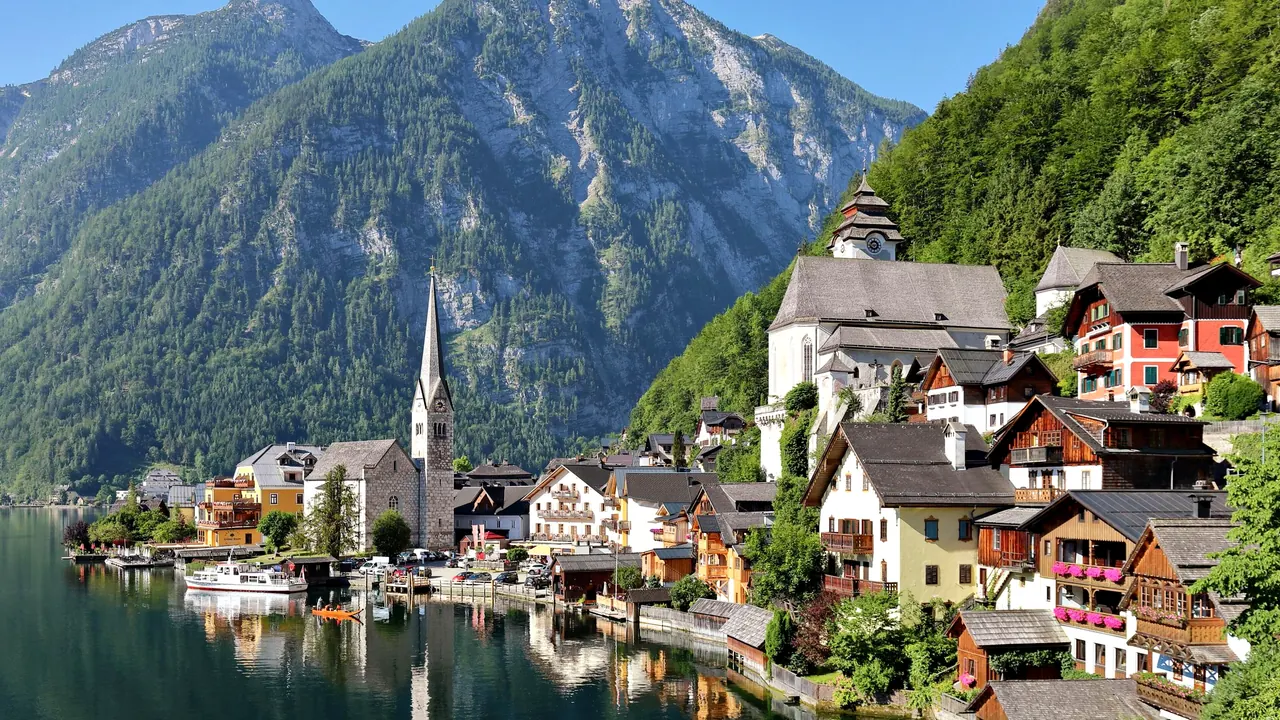
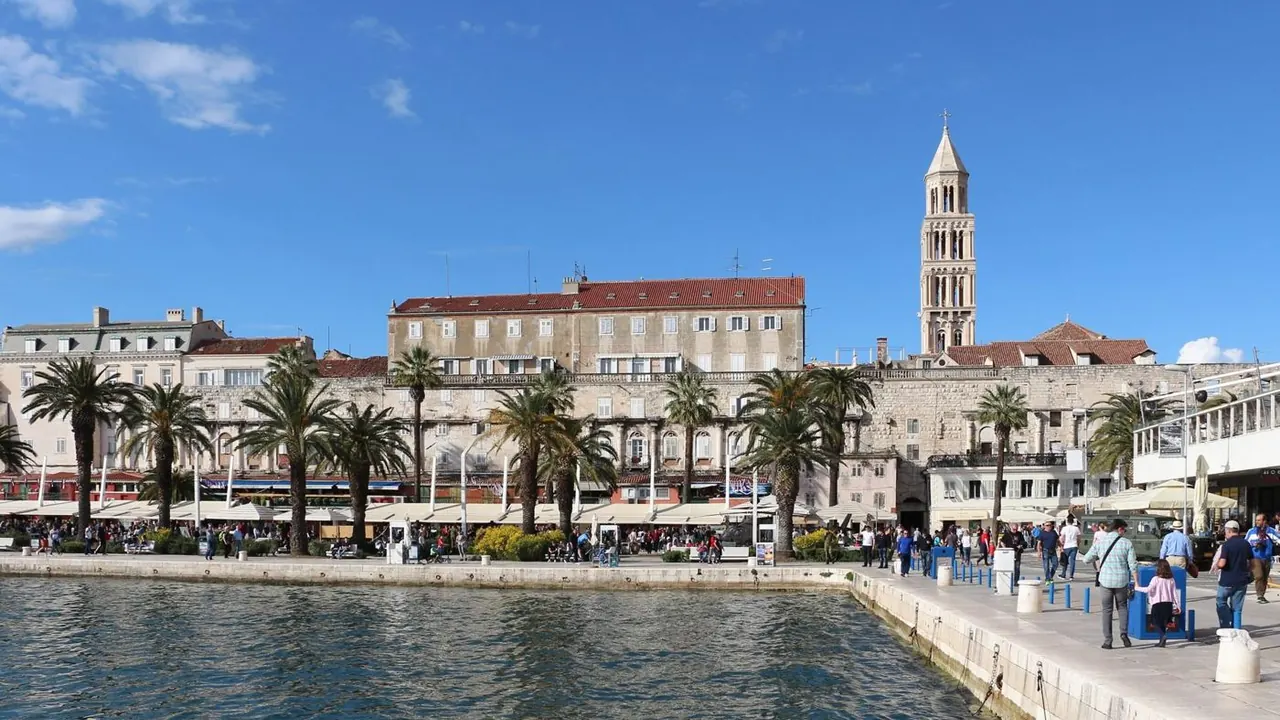
Photos: Hallstatt by C.Stadler/Bwag, CC BY-SA 4.0, cropped; Split by Bernard Gagnon, CC BY-SA 4.0, cropped.
Hallstatt or Split?
Our verdict in twelve categories, each scored against the same fixed benchmark cities, and the climate month by month, so you can choose for your trip.
Choose Hallstatt for
- nature and the outdoors
- wellness
Hallstatt suits travellers who come for mountains and stillness: hikers, photographers and winter ski tourers who want the Dachstein on the doorstep and a lake that falls silent once the day crowds leave. It is a place for a few slow days with early nights, ideally with a car for the wider Salzkammergut. You trade simple food, frequent rain and high room prices for some of the finest scenery in the Alps.
Choose Split for
- nightlife
- beaches
- food and drink
Choose Split if you want a fuller vacation by the sea. You can swim from town, wander a Roman palace that people still live in, eat Dalmatian cooking, spend summer evenings out and reach an island by ferry. It suits couples, friends and families alike, and it costs noticeably less once you avoid the height of summer.
Scoreboard
Twelve categories on one fixed scale from 0 to 100. The shaded stretch is the gap between the two.
Your match
Pick a travel style or drag the sliders, and both match scores follow your weighting.
Wins on nature and the outdoors and wellness with your weighting.
Wins on nightlife and beaches with your weighting.
What matters to you?
Category by category
What the scores mean for a trip.
Beaches & swimming
Hallstätter See is a mountain lake that stays cool even in high summer. Swimming here means a quick, bracing dip from the jetty lawn in the village or the lido at Obertraun, usually after a hike, and the steep shores leave little room to spread a towel.
Split is a real sea-swimming city from June into early October, with warm, clear Adriatic water a walk from the old town. Bačvice has shallow sand and the local game of picigin, the coves around Marjan offer pine shade and deeper water, and ferries to Brač, Šolta and Hvar lead to longer beaches. Along most of the shore, expect pebbles and concrete platforms rather than sand.
Food & drink
Hallstatt's choice is short: guesthouse schnitzel, goulash and dumplings, plus smoked or pan-fried char and whitefish from the lake, which is the one dish worth seeking out. Kitchens may close early in the evening, and for real choice people drive to Bad Ischl.
Split gives you a whole regional cuisine to work through, from black risotto and pašticada to octopus baked under the peka, along with a fish market, the Pazar and local Plavac Mali and Pošip to drink. The better meals are in the konobas of Varoš rather than inside the palace walls, and things are quieter in winter.
Culture & sights
Both places are built around one remarkable site, but on a different scale. In Hallstatt the sight is the village itself and its deep prehistory: seven thousand years of salt mining, the Iron Age burial ground that gave the Hallstatt culture its name, the mine, the small museum and the painted skulls of the Beinhaus. It all fits into a day.
Split has more to see. Diocletian's Palace is a Roman complex that people still live in, with the Peristyle, a cathedral inside the emperor's mausoleum and the vaulted substructures. Around it are Venetian streets, Narodni Trg and the Meštrović Gallery on Marjan, enough for two full days.
Nightlife
Hallstatt has effectively no nightlife. After the day visitors leave, an evening means dinner, a glass of wine on a terrace and a walk beside the dark lake. In summer Split fills the palace alleys and stairways with small bars and has beach bars and clubs around Bačvice that run into the early hours, though from October to May it shrinks back to coffee and wine with locals.
Nature & outdoors
This is the one area where Hallstatt clearly leads. High mountain country starts at the edge of the village: the Krippenstein cable car up to the Five Fingers platform and the Dachstein ice caves, the Echerntal waterfalls, the walk to the Gosausee, hut-to-hut routes and via ferratas in summer, and freeride and ski touring in winter.
Split's outdoors is very good in a different way, more sea than summit. Marjan's pine woods sit at the edge of town, Mosor and Biokovo have ridge walks, the Cetina canyon at Omiš offers rafting and canyoning, and Krka's waterfalls are an hour away, with kayaking and island sailing as well. What it lacks is the glaciers and sheer Alpine scale, and midsummer heat makes hiking hard.
Day trips
Hallstatt's outings are the lake towns of the Salzkammergut: imperial Bad Ischl and the Kaiservilla, the altarpiece at St Wolfgang, Gmunden's lake castle on the Traunsee and Altaussee on the Styrian side. Salzburg makes a long but rewarding day. Without a car, all of these trips take planning.
Split gives you more variety for less effort. Trogir, with its UNESCO-listed medieval core, is about half an hour away, and Šibenik, home of the UNESCO-listed Cathedral of St James, is about an hour. Salona and Klis Fortress are close by. In summer, ferries from the harbour make Hvar and Brač easy days out, and Vis is a longer island trip.
Good for families
Neither place is built around children, but Split is the easier of the two. Hallstatt has a couple of real highlights: the salt mine with its wooden slides and underground lake, and the Krippenstein ice caves for older children. The village itself, though, is one steep, crowded lane that is hard going with a pushchair, so families usually stay in Obertraun instead.
Split gives small children shallow water at Bačvice, space to run on Marjan and a ferry ride that often turns out to be the highlight. The catch is July and August, when heat and crowds wear young children out.
Getting around
Both centres are for walking, not driving. Hallstatt's is only a few minutes from end to end, though it has steps and steep lanes. The hard part is getting in and out: the railway station is across the lake, buses are sparse outside summer, and a car makes the Salzkammergut far easier.
Split's car-free centre is larger but still walkable. The ferry port, bus station and railway station all sit together on the harbour, so you can reach the islands and coastal towns without a car. Expect polished stone steps in the palace and slow summer traffic on the coast road.
Shopping & style
Neither place is a shopping destination. Hallstatt's lane of souvenir shops makes half an hour of browsing, and the one distinctive buy is salt from the local mine.
Split offers a little more, with fashion chains on Marmontova and galleries inside the palace. Its best browsing is the Pazar market, where dried figs, honey, olive oil and Dalmatian wine make better things to take home.
Affordability
Hallstatt is the more expensive place to stay. Rooms are few, demand comes from all over the world, meals are priced at resort level, and the salt mine, funicular and cable car all add to the bill. The usual way to save is to sleep in Obertraun, Bad Goisern or Bad Ischl and come in for the day.
Split is costly in July and August, but rooms cost far less in May, June, late September and winter. All year, markets, bakeries, local buses and the konobas away from the Riva keep everyday spending moderate.
Live music & performing arts
Hallstatt offers a brass band on feast days and the odd church concert, so a night of music means a drive to Salzburg or to Bad Ischl's summer operetta. Split has the Croatian National Theatre for opera and ballet, the Split Summer Festival with performances in the Peristyle, and klapa singers whose harmonies fill the domed vestibule of the palace. Outside summer, though, Split's calendar thins out as well.
Wellness & relaxation
Hallstatt sits in an old spa region, with the historic brine baths of Bad Ischl and Bad Aussee close by, although the village itself has little more than hotel saunas. Its own kind of rest comes in the early mornings and evenings, when the tour groups have gone. At midday the lane is crowded, so on a slow day you spend those hours on the lake or in the hills.
Split has no bathing tradition, only hotel spas along the coast east of the centre. What it does have is fjaka: long coffees on the Riva and empty streets in the afternoon heat. It is calmest in May, June and September. In midsummer the old town stays loud late into the night, and real rest means the pine woods of Marjan or a trip to an island.
When should you go?
Pick your month. The climate figures are measured averages, not a forecast.
Hallstatt in July
Split in July
Daytime high, °C
Rainfall in the month, mm
Where the figures come from
Hallstatt's temperatures are measured 56 km from the centre, at Salzburg.
Hallstatt has no rain gauge within 25 km of the centre, so its rainfall comes from a gridded climate dataset read at the city rather than from a gauge further away.
Temperature and rainfall are climate normals, averaged over the years shown. Hallstatt: 1991-2020 normals, Salzburg (55.5 km from centre). Split: 1991-2020 (sunshine 1971-2000, rainfall 1981-2010) normals, Split / Marjan (0.9 km from centre).
Hallstatt's warm season is short. Highs reach about 25°C in July and August, which is pleasant for hiking and a cold lake swim, but summer is also the wettest time of year, with around 178mm of rain in July and mist that can sit on the lake for days. June and September are good walking months. From November to March it is cold and grey, better for snow on the Krippenstein than for strolling the village.
Split is the opposite. Summer is its dry, sunny season, with July and August near 31°C and the sea around 25°C. That is ideal for swimming but hot for walking the old town or hiking the ridges. May, June, September and early October are the best all-round months. The rain sets in from November, which brings about 100mm, but even in winter Split stays mild enough to walk around comfortably at a time when Hallstatt is close to freezing.
Which traveller are you?
On a beach and sun trip, Split is the clear choice. The Adriatic is warm and clear from June into early October, Bačvice and the Marjan coves are a walk from town, and island ferries lead to longer beaches. Hallstatt offers only a chilly Alpine lake.
For an outdoors trip, Hallstatt has the edge. The Dachstein begins at the edge of the village, with ice caves, the Five Fingers platform, the Gosausee walk, via ferratas and winter ski touring. Split's hiking and rafting are good, but less dramatic and very hot in summer.
On a food and nightlife trip, choose Split. Family-run konobas, the fish market and local Dalmatian wines give you plenty to eat and drink, and summer nights go on in the palace bars and the clubs around Bačvice. Hallstatt has a few guesthouse dining rooms and goes quiet by evening.
Before you go
| Measure | Hallstatt | Split |
|---|---|---|
| Official language | German, Austrian Sign Language | Croatian |
| Currency | Euro (EUR) | Euro (EUR) |
| Sockets | CF230 V, 50 Hz | CF230 V, 50 Hz |
| Driving side | Right | Right |
| Time zone | UTC+1, UTC+2 in summer | UTC+1, UTC+2 in summer |
| Emergency number | 112 | 112 |
| Elevation | 511 m | 0 m |
| Main airport | Salzburg Airport (SZG)55 km from centre64 non-stop destinations | Split Saint Jerome Airport (SPU)12 km from centre69 non-stop destinations |
| Public holidays this year | 16 days | 14 days |
By the numbers
| Measure | Hallstatt | Split |
|---|---|---|
| City population | 741 | 160,577 |
| People per km² | 12 | - |
| Museums within 10 km | 3 | 11 |
| UNESCO World Heritage sites within 50 km | 2 | 4 |
| Swim season, months above 21 °C | - | 4 months |
Where else could you go?
Every comparison below shares a destination with this one, so you can follow Hallstatt or Split somewhere new.
- Salzburgvs Hallstatt
- Mostarvs Split
- Zadarvs Split
- Bledvs Hallstatt
- Grazvs Hallstatt
- Cortina d'Ampezzovs Hallstatt