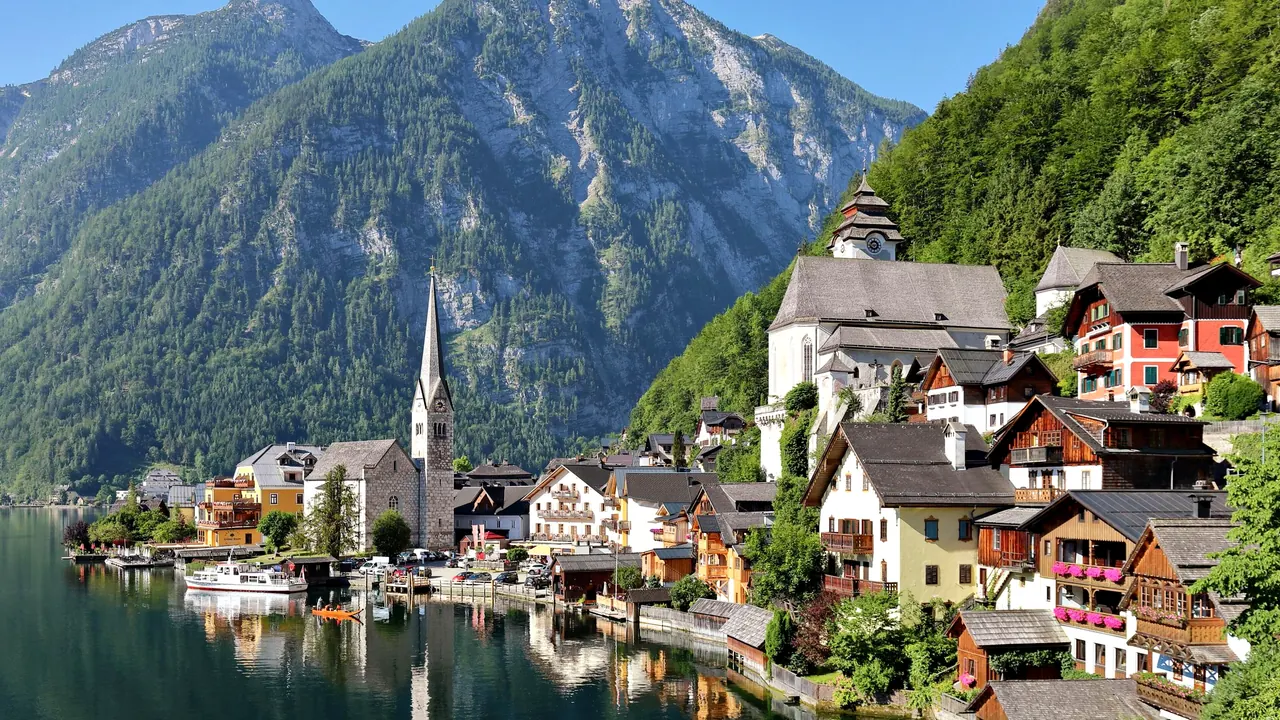
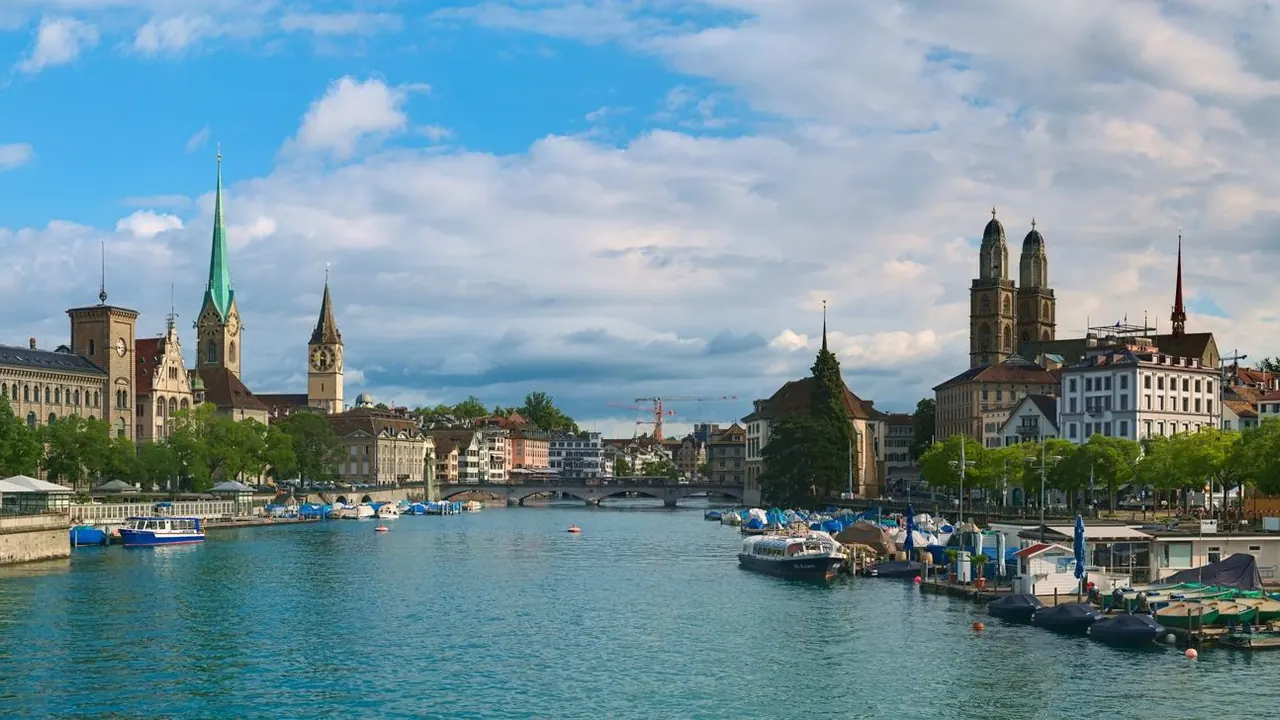
Photos: Hallstatt by C.Stadler/Bwag, CC BY-SA 4.0, cropped; Zurich by Daniel Kraft, CC BY-SA 3.0, cropped.
Hallstatt or Zurich?
Our verdict in twelve categories, each scored against the same fixed benchmark cities, and the climate month by month, so you can choose for your trip.
Choose Hallstatt for
- prices
- nature and the outdoors
Hallstatt is for travellers who come for the mountains rather than a town. The Dachstein rises straight from the lake, with the Krippenstein, the ice caves and the Gosausee walk close by, and the evenings are hushed once the day visitors have gone. It works best as a stay of a night or two, ideally with a car, for people who are happy with simple food and nothing to do after dark.
Choose Zurich for
- live music and the arts
- nightlife
- shopping
Zurich suits a fuller trip with the Alps in the background. It has opera and the Kunsthaus, clubs in Kreis 4 and 5, lake lidos in summer and trains that reach Lucerne, Bern and the Rhine Falls without any planning. Families and anyone who wants evenings out will find it much easier going, as long as their budget can stretch even further than Hallstatt asks.
Scoreboard
Twelve categories on one fixed scale from 0 to 100. The shaded stretch is the gap between the two.
Your match
Pick a travel style or drag the sliders, and both match scores follow your weighting.
Wins on prices and nature and the outdoors with your weighting.
Wins on live music and the arts and nightlife with your weighting.
What matters to you?
Category by category
What the scores mean for a trip.
Beaches & swimming
Neither place has a beach, but Zurich is the better place to swim. Its lake is a few degrees warmer, and the lidos at Utoquai, Enge and Mythenquai have lawns and wooden decks. On the Limmat, the river baths at Letten let you float downstream with the current, a short walk from the old town.
Hallstätter See is deeper and colder and reaches about 20°C at best. The lawn and jetty at the north end of the village and the lido at Obertraun are good for a quick, bracing swim after a hike, but the steep shores leave little room for an afternoon on the grass.
Food & drink
Zurich has far more choice. You can eat Geschnetzeltes with rösti in the Altstadt guild houses, have fondue in winter, try the tea rooms on Paradeplatz and their Luxemburgerli, or go to the international places around Langstrasse, with Swiss lake-shore wine on most lists.
In Hallstatt, eating means a few guesthouse dining rooms and terraces serving schnitzel and dumplings. The local speciality is char or whitefish from the lake. Kitchens can close early, so anyone who cares about food will want a trip to Bad Ischl's patisseries.
Culture & sights
Hallstatt's history goes back much further. People have mined salt here for some seven thousand years, the village gave its name to an early European culture, and the painted skulls of the Beinhaus are unique. Still, the salt mine, the small museum and the village itself fill a day at most.
Zurich has more to see over a longer stay. The Kunsthaus, the Swiss National Museum and the Museum Rietberg cover art and history in depth. The Grossmünster, the Fraumünster with its Chagall windows and the guild houses on the Limmat make the old town worth two or three days.
Nightlife
For a night out, these two could hardly be further apart. In Hallstatt the evening ends where dinner does. There is no bar to move on to and no music to find, so if a late drink matters to you, stay somewhere else and visit the village by day.
Zurich gives you a real choice of nights. Electronic music is the city's strength, and at weekends its dance floors keep going until daylight. On warm evenings, plenty of people simply sit with a drink on the banks of the Limmat. Midweek is much tamer, so plan a going-out trip around a Friday and a Saturday.
Nature & outdoors
Hallstatt has the edge because the mountains start at the village. The Krippenstein cable car climbs to the Five Fingers platform and the ice caves, paths run up the Echerntal towards the glacier, and the Gosausee view is one of the classics of the Alps. In winter there is freeride skiing on the same slopes.
Zurich's nature is gentler and closer to town. There are lake promenades with the Glarus Alps in view and forest trails on the Uetliberg. Rigi, Pilatus and the Flumserberg pistes are about an hour away by train. Hallstatt's mist and Zurich's winter fog both affect the views.
Day trips
Both are good bases, but Zurich is the easier one. Lucerne, Bern, Basel and St Gallen's abbey library are each about an hour away by train, and the Rhine Falls with Stein am Rhein, Rapperswil by boat and Einsiedeln are closer still, all without a car.
From Hallstatt, the Salzkammergut lake towns are lovely day trips: the Kaiservilla in Bad Ischl, the altarpiece at St Wolfgang and Gmunden's lake castle. Salzburg makes a long day out. Without a car, though, every outing depends on buses and the lakeside railway and needs planning.
Good for families
Zurich is much easier with children. The zoo has its Madagascar rainforest hall and forest playgrounds, the lidos have shallow water, and Technorama and the Swiss Museum of Transport make good day trips. Trams and trains cope easily with buggies.
Hallstatt's salt mine, with its wooden slides and underground lake, is a real hit, and older children remember the ice caves. Away from those, the single steep lane is hard work with a pushchair, and families are better off staying in Obertraun.
Getting around
Zurich is about as easy to get around as a city can be. Trams, S-Bahn trains, funiculars and even the lake boats all use one ticket, and the airport is a short train ride from the main station.
Hallstatt is small enough to cross on foot in minutes, though it is steep in places. Getting in and out is the hard part: the station is on the far shore, a boat takes you over, and buses to Obertraun and Gosau run less often outside summer. Many visitors decide a car is worth having.
Shopping & style
Zurich is a real shopping city. Bahnhofstrasse runs to the lake past watchmakers and jewellers, the Altstadt lanes have boutiques and antique shops, and the arches of the old railway viaduct in Zurich West hold design shops. Hallstatt's one lane of souvenir shops takes half an hour, and the thing worth buying there is salt from the mine above the village.
Affordability
Neither is cheap, but Hallstatt costs less. It is expensive by Austrian standards, with few rooms and resort-level meals, but you can save a good deal by sleeping in Obertraun, Bad Goisern or Bad Ischl and coming in for the day.
Zurich is among the most expensive cities in the world, and there is no cheaper town nearby to stay in instead. Savings there are small: supermarket lunches, picnics by the lake, the free lidos and a visitor card that covers transport and museums.
Live music & performing arts
Zurich has a full programme, with opera and ballet at the Opernhaus, the Tonhalle Orchestra in its restored hall and the Schauspielhaus for German-language theatre. The Rote Fabrik and Kreis 4 and 5 host jazz, indie and electronic acts, and the Theater Spektakel brings performances to the lake shore in summer.
Hallstatt has only the village brass band on feast days and the occasional summer concert in church. For an evening of music you would drive to Bad Ischl's summer operetta or to Salzburg.
Wellness & relaxation
Zurich has more to offer in town. The baths in the vaults of the old Hürlimann brewery have a rooftop pool, and in winter the wooden bathing houses on the lake and the Limmat become saunas with cold dips between sessions. Roman Baden is twenty minutes away by train.
Hallstatt's calm comes from the landscape: mist on the lake at dawn and an empty lane after the tour groups leave. For proper bathing, you go to the brine baths at Bad Ischl, about half an hour away.
When should you go?
Pick your month. The climate figures are measured averages, not a forecast.
Hallstatt in July
Zurich in July
Daytime high, °C
Rainfall in the month, mm
Where the figures come from
Hallstatt's temperatures are measured 56 km from the centre, at Salzburg.
Hallstatt has no rain gauge within 25 km of the centre, so its rainfall comes from a gridded climate dataset read at the city rather than from a gauge further away.
Temperature and rainfall are climate normals, averaged over the years shown. Hallstatt: 1991-2020 normals, Salzburg (55.5 km from centre). Zurich: 1991-2020 normals, Zurich Town / Ville. (2.2 km from centre).
Through the year the two run at almost the same temperatures. Hallstatt peaks at about 25°C in July and August, with Zurich a degree behind, so in both places a lake swim belongs to high summer. Neither gets too hot, and May, June and September are pleasant for walking the streets or the trails. December and January are cold, with daytime highs only a few degrees above freezing. November and February are a little milder but still chilly and grey.
The real difference is rain. Hallstatt sits under the mountains and is wetter in every month, most of all in summer, with about 178mm in July against 126mm in Zurich. That means hiking there often comes with showers, and the rain only eases from late September. Zurich has the gloomier late autumn and winter. December brings only about 43 hours of sunshine, and from October to January Hallstatt gets noticeably more.
Which traveller are you?
On an outdoors trip, Hallstatt is the better base. The Dachstein massif begins at the edge of the village, with the Krippenstein cable car, the ice caves, the Echerntal waterfalls and the walk to Gosausee. From Zurich, the high mountains are an hour away by train.
For a food and nightlife trip, Zurich wins easily. Kreis 4 and 5 have casual international kitchens and clubs that run until morning, and on summer nights people drink in the lake bathing houses. In Hallstatt you get smoked lake fish and a quiet night.
On a family trip with children, Zurich is far easier. The trams take buggies, the zoo and the shallow lake lidos fill whole days, and Technorama is close by. Children love Hallstatt's salt mine, but the steep, crowded lane soon tires families out.
Before you go
| Measure | Hallstatt | Zurich |
|---|---|---|
| Official language | German, Austrian Sign Language | French, German, Italian, Romansh |
| Currency | Euro (EUR) | Swiss Franc (CHF) |
| Sockets | CF230 V, 50 Hz | CJ230 V, 50 Hz |
| Driving side | Right | Right |
| Time zone | UTC+1, UTC+2 in summer | UTC+1, UTC+2 in summer |
| Emergency number | 112 | 112 |
| Elevation | 511 m | 408 m |
| Main airport | Salzburg Airport (SZG)55 km from centre64 non-stop destinations | Zürich Airport (ZRH)9 km from centre226 non-stop destinations |
| Public holidays this year | 16 days | 10 days |
By the numbers
| Measure | Hallstatt | Zurich |
|---|---|---|
| City population | 741 | 440,935 |
| People per km² | 12 | 5,016 |
| Museums within 10 km | 3 | 63 |
| UNESCO World Heritage sites within 50 km | 2 | 1 |
Where else could you go?
Every comparison below shares a destination with this one, so you can follow Hallstatt or Zurich somewhere new.