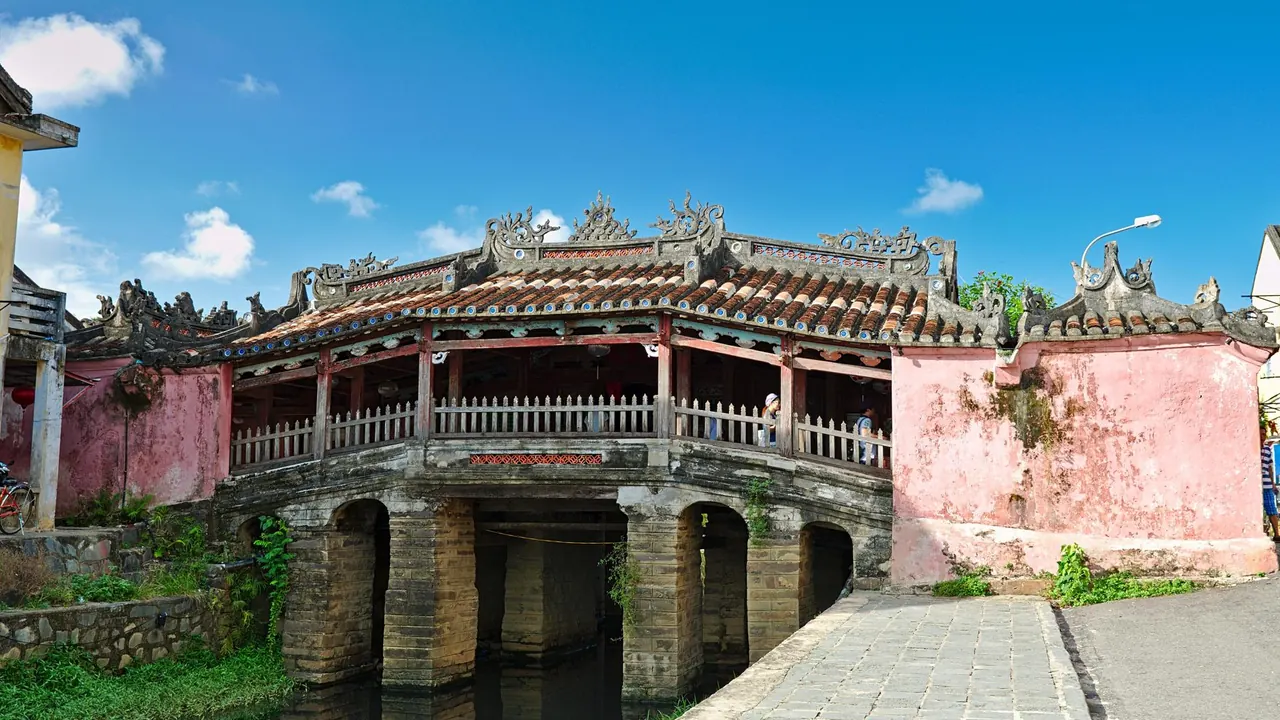
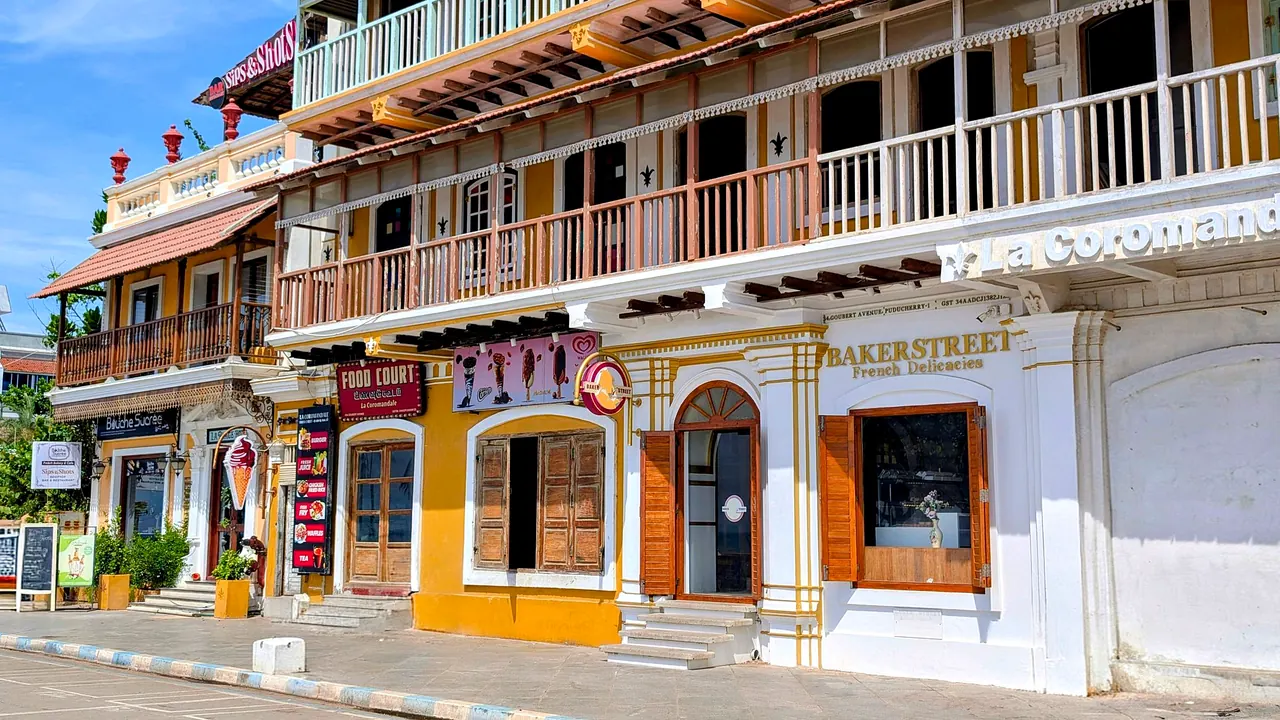
Photos: Hoi An by François Guerraz, CC BY-SA 3.0, cropped; Pondicherry by Tushar, Pexels License.
Hoi An or Pondicherry?
Our verdict in twelve categories, each scored against the same fixed benchmark cities, and the climate month by month, so you can choose for your trip.
Choose Hoi An for
- beaches
- nature and the outdoors
- families
Hoi An is the better choice for a rounded trip that mixes a beautiful old town with time on the sand. Its wooden merchant streets give more to look at than anything in Pondicherry. A long, swimmable beach is a bicycle ride away, and the countryside, the reefs off the Cham Islands and the hands-on activities make it the easier pick for families and anyone who wants to be outdoors.
Choose Pondicherry for
- day trips
- live music and the arts
Pondicherry suits the traveller who comes to slow down and look inward, or to see the great temples of Tamil Nadu. The Ashram and Auroville give it a depth of yoga and meditation that Hoi An's massage rooms don't try to match. Mahabalipuram, Chidambaram and Gingee make it a better base for day trips, but the sea here is for walking beside, not for swimming in.
Scoreboard
Twelve categories on one fixed scale from 0 to 100. The shaded stretch is the gap between the two.
Your match
Pick a travel style or drag the sliders, and both match scores follow your weighting.
Wins on beaches and nature and the outdoors with your weighting.
Wins on day trips and live music and the arts with your weighting.
What matters to you?
Category by category
What the scores mean for a trip.
Beaches & swimming
Hoi An has the proper beach. An Bang is about 5km away through rice fields, the sand runs almost unbroken toward Da Nang, and from spring to late summer the sea is calm enough for long swims. You can easily split a stay between a riverside room in town and a few days by the water.
Pondicherry's waterfront is a promenade above boulders. For sand you go to Serenity Beach and the Auroville shore by scooter, or take a boat through the backwaters to Paradise Beach. The water is warm, but the surf and currents keep most people in the shallows, and modest dress is expected on local beaches.
Food & drink
Hoi An's cooking belongs to the town itself. You can only eat cao lau properly here, and with white rose dumplings, chicken rice and its stuffed banh mi, eaten on plastic stools at the riverside market, it makes eating a real reason to come. Cooking classes that start in the market or at Tra Que add to it, though the riverfront menus repeat themselves.
Pondicherry offers two cuisines in one small town: banana-leaf meals and filter coffee in the Tamil Quarter, and bakeries and Franco-Tamil Creole dishes in the French one. Wine and beer are easy to find, which is unusual in this part of India. It is charming, but there are fewer dishes you could not find elsewhere.
Culture & sights
Hoi An's old town gives more to see. Hundreds of wooden merchant houses, the covered Japanese Bridge and the carved Fujian and Cantonese assembly halls show Chinese, Japanese and Vietnamese trading cultures layered into one port, and the streets are at their best by lantern light.
Pondicherry's appeal is the contrast between its two quarters: ochre French villas on one side of the canal, and Tamil houses with verandas and carved pillars on the other. Its landmarks are smaller and spread across different faiths, from the Sacred Heart basilica to the Manakula Vinayagar temple elephant and the silent Ashram samadhi.
Nightlife
Neither town is for a big night, and both are quiet before midnight. In Hoi An the evening ritual is floating a paper candle on the river, with a few rowdier backpacker bars on An Hoi islet. Anyone wanting clubs goes to Da Nang.
Pondicherry has more places to drink than you might expect, because alcohol is cheaper here than in the rest of Tamil Nadu. Rooftop lounges in the French Quarter and shacks near Serenity Beach fill up with weekend visitors from Chennai and Bangalore, but they also close early.
Nature & outdoors
Hoi An has more variety close to hand. There are flat rice paddies and vegetable gardens to cycle through, nipa palm waterways at Cam Thanh to explore by basket boat, and coral to snorkel around the protected Cham Islands. Within about an hour and a half you reach the forested Son Tra peninsula with its langurs and the climb over the Hai Van Pass.
Pondicherry sits on a hot, flat plain with no hills. Its outdoors is mostly the sea, with surf lessons at Serenity Beach and dives on reefs and wrecks. Inland, flamingos and pelicans winter on Ousteri Lake, and the Pichavaram mangroves can be rowed about two hours south.
Day trips
Pondicherry is surrounded by Tamil temple country. You can see the Pallava Shore Temple and rock reliefs at Mahabalipuram, the living Nataraja temple at Chidambaram, Gingee Fort spread over three granite hills, and the pilgrim town of Tiruvannamalai. Each is a full day by car.
Hoi An has two strong outings and then little else: the Cham temple ruins at My Son, and Da Nang's Museum of Cham Sculpture with the Marble Mountains on the way. Ba Na Hills is more amusement park than heritage, and Hue is too far for a day.
Good for families
Hoi An gives children much more to do. They can make silk lanterns, spin in basket boats, join a cooking class and swim in calm water in season, and resorts between town and the beach have pools and space. There is also a large theme park and safari park along the coast.
Pondicherry is pleasant with children in a smaller way. Children can run along the Promenade when it closes to traffic in the evening, and the Botanical Garden has its toy train. But there is no zoo or aquarium of note, the surf means paddling under close watch, and the heat lasts most of the year, so it suits older children best.
Getting around
Both have small, flat centres you can walk, but Hoi An is a little easier beyond the centre. Much of its old town is closed to motor traffic for long stretches of the day, and borrowed hotel bicycles get you to the beach and the rice villages on quiet lanes.
Pondicherry's French Quarter is lovely to walk, but its beaches, Auroville and the lake mean an auto-rickshaw, an app taxi or a scooter on rough, busy roads. In both, day trips need a driver, as there is no useful public transport for visitors.
Shopping & style
Hoi An gives you a clear reason to shop: tailoring. Workshops will make a suit, dress or coat to measure within a day or two, and shoes and bags too, though you should allow time for several fittings. Lanterns, ceramics and the An Hoi night market fill out the rest, often with the same stock.
Pondicherry is for smaller, considered purchases. Look for block-printed cotton and linen in the French Quarter, handmade paper and incense from the Ashram's workshops, and pottery and natural soaps from Auroville.
Affordability
Both are very cheap, and you can live well in either on a modest budget. In Hoi An the extras are the old town heritage ticket and the riverfront restaurants. Bicycles are often free, and street food costs almost nothing.
In Pondicherry costs rise in the restored colonial boutique hotels of the French Quarter, especially at weekends and in winter. Staying across the canal in the Tamil Quarter keeps a stay cheap, and drinks cost less than in neighbouring states.
Live music & performing arts
Live performance is thin in both, and neither is worth choosing for its stage. Hoi An has more you can rely on finding in the evening: bai choi, the sung card game of central Vietnam, short folk music shows and a large outdoor history spectacle on the river.
Pondicherry's performances are occasional but more serious when they happen. You might catch a Bharatanatyam recital, a Carnatic concert, an event at the French cultural centre or a show in Auroville's halls, and temple festivals bring pipes and drums into the streets.
Wellness & relaxation
Both are made for slowing down, but they rest you in different ways. In Hoi An, rest means massage parlours on every street, resort pools and quiet rice fields between town and the sea, with yoga classes if you want them.
Pondicherry goes further into the inner side. There is meditation in the Ashram courtyard, Auroville's yoga, breathwork and holistic therapies in forest guesthouses, Ayurvedic treatment centres, and yoga courses lasting several weeks.
When should you go?
Pick your month. The climate figures are measured averages, not a forecast.
Hoi An in July
Pondicherry in July
Daytime high, °C
Rainfall in the month, mm
Temperature and rainfall are climate normals, averaged over the years shown. Hoi An: 1991-2020 normals, Da Nang (23.5 km from centre). Pondicherry: 1991-2020 (rainfall 1961-1990) normals, Cuddalore (19.8 km from centre).
Hoi An is at its best from February to April, when the rain is light and days are warm without being harsh. From May to August it gets hot, up to 35°C, but these are the sunniest months, the sea is at its warmest and the water is calm, so it is the time for the beach. Then the monsoon arrives. September to December are wet and stormy, with October bringing around 726mm, rough seas and red flags. January is mild but often grey.
Pondicherry is hotter all year, and the sea stays warm in every month. Its best window is narrower: January to March, when rain is scarce and highs are about 30°C. From April to September the heat builds to 37°C, so you walk the streets in the early morning or evening. The heaviest rain comes later than in Hoi An, peaking at about 456mm in November. Both are wet in late autumn, but only Hoi An gives you a hot, sunny summer that is good for swimming.
Which traveller are you?
On a beach and sun trip, Hoi An is the clear pick. From spring to late summer you can swim off An Bang's long sandy shore in calm water. Pondicherry's Bay of Bengal surf and currents mostly limit you to wading near lifeguards.
On a family trip with young children, Hoi An also wins. Lantern-making, basket boats, cycling through rice fields, resort pools and a gentle shoreline keep children busy. Pondicherry has the car-free evening Promenade and little else made for children.
For a relaxing and wellness trip, Pondicherry offers more depth. You can sit in silent meditation at the Ashram, and Auroville runs yoga courses lasting days or weeks, with Ayurvedic treatments besides. Hoi An's version is massage, pools and quiet paddies, which is pleasant but lighter.
Before you go
| Measure | Hoi An | Pondicherry |
|---|---|---|
| Official language | Vietnamese | Hindi, English |
| Currency | Dong (VND) | Indian Rupee (INR) |
| Sockets | ACFG220 V, 50 Hz | CM230 V, 50 Hz |
| Driving side | Right | Left |
| Time zone | UTC+7 | UTC+5:30 |
| Emergency number | Police 113, ambulance 115, fire 114 | 108 or 112 |
| Elevation | 13 m | 3 m |
| Main airport | Da Nang International Airport (DAD)23 km from centre47 non-stop destinations | Chennai International Airport (MAA)123 km from centre67 non-stop destinations |
By the numbers
| Measure | Hoi An | Pondicherry |
|---|---|---|
| City population | 121,716 | - |
| Museums within 10 km | 5 | 3 |
| UNESCO World Heritage sites within 50 km | 2 | 0 |
| Swim season, months above 21 °C | 12 months | 12 months |
Where else could you go?
Every comparison below shares a destination with this one, so you can follow Hoi An or Pondicherry somewhere new.
- Da Nangvs Hoi An
- Huevs Hoi An
- Mysorevs Pondicherry
- Nha Trangvs Hoi An
- Da Latvs Hoi An
- Kochivs Pondicherry