Photos: Holbox by Bruno Rijsman, CC BY-SA 2.0, cropped; Yucatan by Maciej Cisowski, Pexels License.
Holbox or Yucatan?
Our verdict in twelve categories, each scored against the same fixed benchmark cities, and the climate month by month, so you can choose for your trip.
Choose Holbox for
- beaches
- nature and the outdoors
- getting around
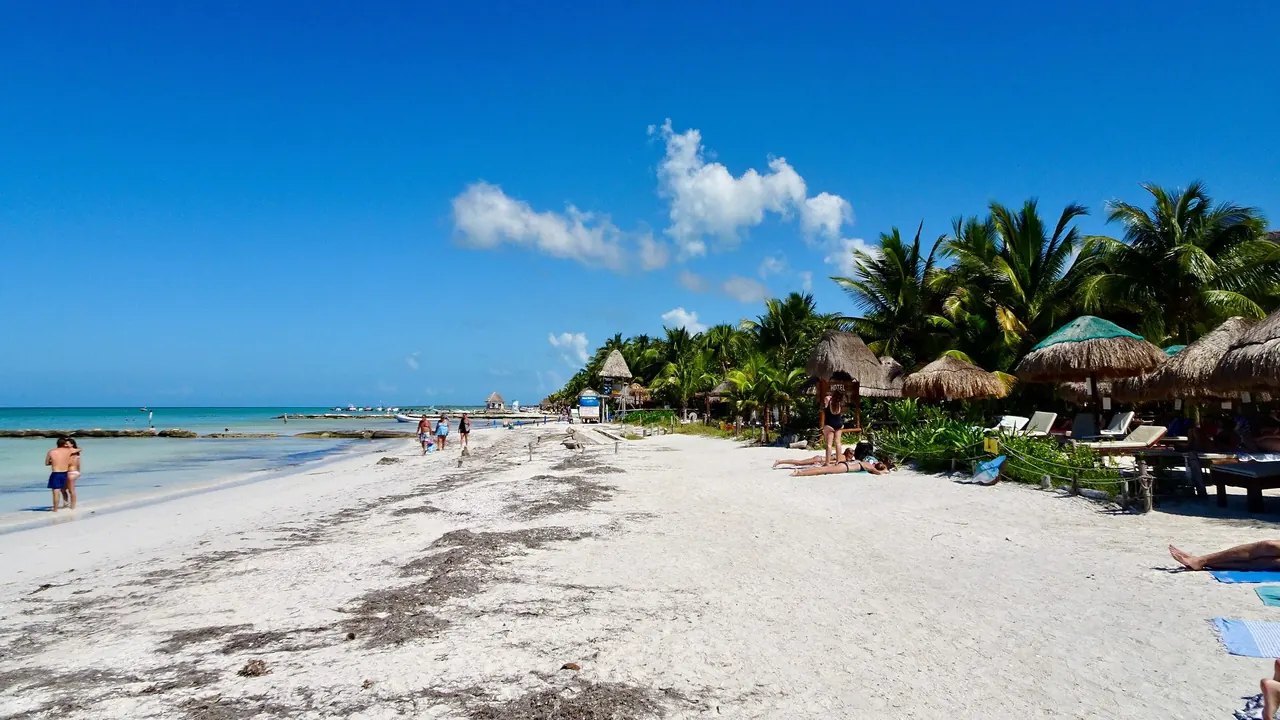
Holbox is for a trip where the beach is the whole point. It has one long shore of pale sand on warm water you can wade far out into, a car-free village of sandy streets right behind it and, in summer, the chance to swim beside whale sharks. It suits travellers who are happy to stay in one place for several days, between a hammock, a flamingo boat trip and a slow drink on the square, and who don't mind a small choice of food and very little else to do.
Choose Yucatan for
- culture and sights
- day trips
- live music and the arts
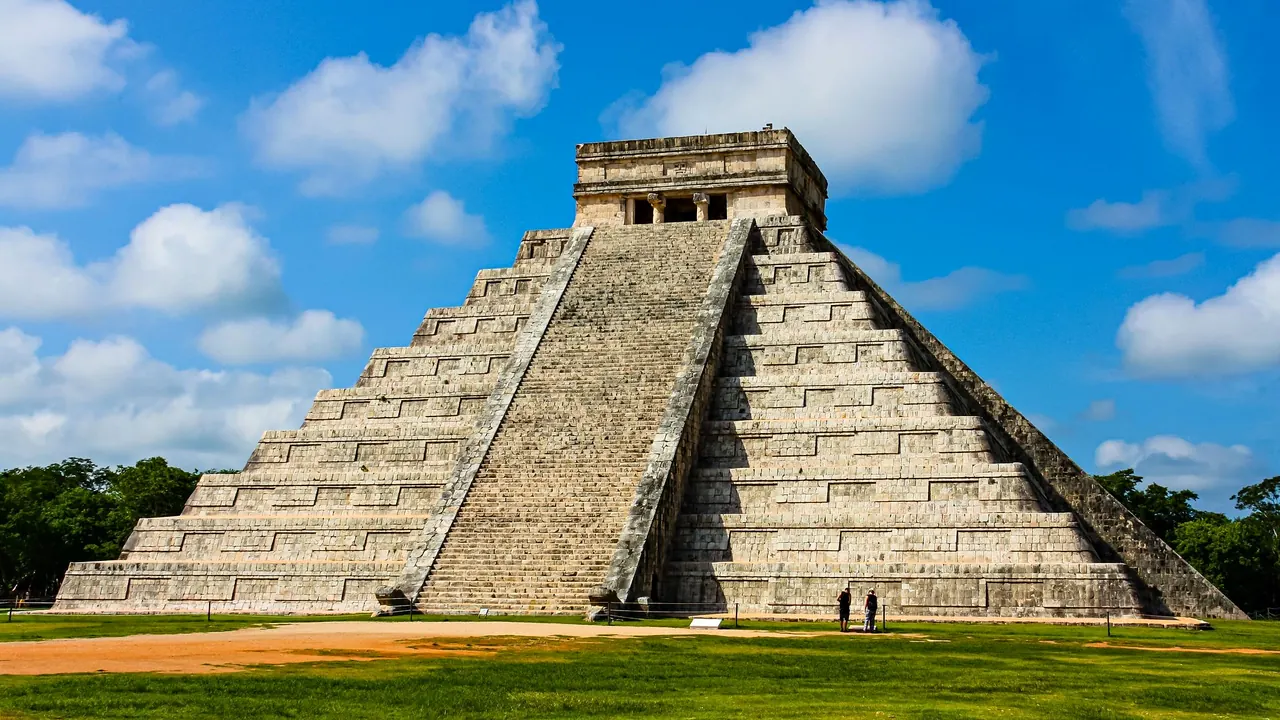
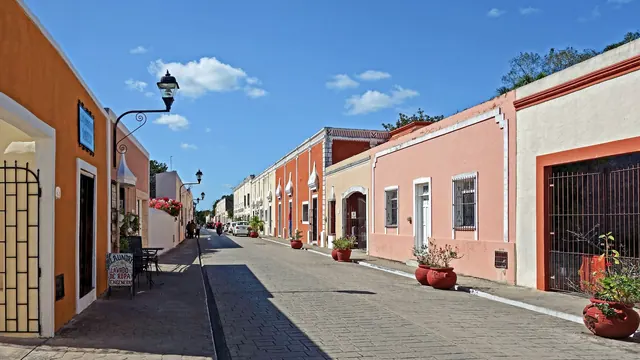
If you want to move around and see things, choose Yucatan. It has Chichen Itza and Uxmal, colonial Mérida, Valladolid and yellow Izamal, cenotes for swimming and one of Mexico's most distinctive cuisines. That makes a far fuller trip, and a cheaper one. The coast plays only a small part, and the inland heat calls for early starts, but for a first look at this corner of Mexico it gives you much more variety.
Scoreboard
Twelve categories on one fixed scale from 0 to 100. The shaded stretch is the gap between the two.
Your match
Pick a travel style or drag the sliders, and both match scores follow your weighting.
Wins on beaches and nature and the outdoors with your weighting.
Wins on culture and sights and day trips with your weighting.
What matters to you?
Category by category
What the scores mean for a trip.
Beaches & swimming
Both look out on the Gulf, with shallow, calm, often greenish water and some seaweed, but Holbox is built around its beach and Yucatan is not. On the island the whole north shore is fine pale sand directly behind the village. The quieter stretches are west towards Punta Cocos for sunsets and east to the sandbar at Punta Mosquito.
Yucatan's coast is a long, low strip of fishing and weekend towns such as Progreso, Sisal and El Cuyo. They are a drive from Mérida, and winter north winds can spoil some days there. The swims most visitors remember there are inland, in clear, cool cenotes around Homún, Cuzamá and Valladolid.
Food & drink
Holbox feeds you well for a few days on ceviche, grilled fish, octopus and the island's lobster pizza, eaten in sand-floored places around the square. The menus soon start to repeat, though, and there is no market or real Yucatecan cooking.
Yucatan is where that cooking comes from. Sour orange, achiote and the underground pib oven give you cochinita pibil, sopa de lima, papadzules and poc chuc. In Mérida you can eat breakfast tacos at the Lucas de Gálvez and Santiago markets, buy marquesitas from carts in the plazas and try Lebanese-Yucatecan kibis, which gives you far more to explore.
Culture & sights
Holbox's only sights are its painted wooden houses and street murals. Nobody goes there for history.
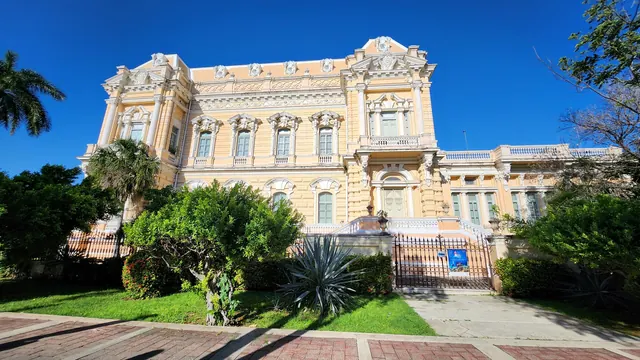
Yucatan is one of the great places to see the Maya world. Chichen Itza and the Puuc stone mosaics of Uxmal lead a list that continues with Kabah, Sayil, Labná and Ek Balam. On top of the ruins there is a full colonial layer: Mérida's cathedral and the mansions of Paseo de Montejo, Valladolid's colonial grid, Izamal's yellow convent town and the old henequen haciendas.
Nightlife
Neither is a party place, but Mérida gives you more of an evening. On Holbox, nights mean sunset drinks, a few reggae and cocktail bars with sand floors and the odd beach party, and the island is mostly asleep before midnight.
Mérida's evenings start late because of the heat and fill the historic centre. Around Calle 60 there are cantinas that bring botanas with every round, plus mezcal bars, rooftop terraces and a few clubs further north. It is still a sociable scene rather than a wild one.
Nature & outdoors
Holbox's wildlife is more remarkable. Between about June and September you can swim beside whale sharks offshore. The lagoon holds flamingos and frigatebirds, plankton glows in the shallows on dark nights, and winter winds bring kitesurfers to the flats.
Yucatan spreads its nature across a larger, drier landscape. It has cenotes and caverns for snorkelling and diving, flamingo and crocodile boat trips in the reserves at Celestún and Ría Lagartos, plus birding and cycling between villages. Neither place has hills for hiking, and inland the heat keeps outdoor days to the cooler months.
Day trips
From Holbox the outings go by boat to sandbars, mangroves and Isla Pajaros, not to towns. Valladolid and the big ruins are too far to reach and get back from in a day once you count the ferry.
Yucatan is made for day trips. From Mérida you can follow the Puuc route, reach Izamal in about an hour, head to the coast at Celestún or stretch as far as walled Campeche. From Valladolid, Ek Balam, Río Lagartos, Cobá and even the Caribbean towns of Tulum and Playa del Carmen are all within reach.
Good for families
Holbox has the better sea for small children, warm and so shallow they can paddle far out, and a village with no cars. Beyond that there is little for them. The sand streets defeat a pushchair, mosquitoes follow the rain and the journey in takes most of a day.
Yucatan gives children more to remember: cenotes, flamingo boats and iguanas sunning on the ruins, with Mérida's plazas full of local families at weekends. The price is midday heat and long car days, so it works best with early starts and a pool in the afternoon.
Getting around
Getting around is about as easy in both, but in very different ways. On Holbox you walk or cycle along sand streets and take a golf-cart taxi to the far ends of the beach. The effort comes in getting there, by road to Chiquila and then the passenger ferry.
Yucatan is a region you drive. Straight, flat roads, a toll highway and good long-distance buses link Mérida, Valladolid and the main ruins, while colectivos or tours reach the scattered cenotes and reserves.
Shopping & style
Holbox has a few stalls around its square selling beachwear, jewellery and hammocks.
Yucatan is where those hammocks are made and sold properly. In and around Mérida's Lucas de Gálvez market you can buy guayabera shirts, embroidered huipiles and jipi palm hats, and there are design shops and galleries along Paseo de Montejo, as well as small craft centres in Izamal and Valladolid.
Affordability
Holbox costs noticeably more. Everything arrives by ferry, hotels and meals are priced for visitors, and a whale shark swim is a big expense. Many places take cash only and there are few cash machines, so bring enough from the mainland.
Yucatan is easy on the budget, with market lunches, cheap intercity buses and simple guesthouses in Mérida and Valladolid. Only the restored haciendas, the boutique mansions and the fees at the ruins push spending up.
Live music & performing arts
On Holbox, music means a guitarist or small band in a beach bar or on the square some evenings.
Mérida puts on a proper programme and much of it is free. Through the week there are trova serenades, jarana dancers balancing trays on their heads and a Maya ballgame re-enactment in front of the cathedral. For something more formal, the Yucatán Symphony Orchestra plays its season and the nineteenth-century Teatro José Peón Contreras stages performances, and village vaquerías add dancing further out.
Wellness & relaxation
Both are good places to unwind, but the rest comes from different things. On Holbox it comes from the place itself: no cars, low buildings, hammocks over the shallows and the calm beach west of the village, with yoga and beach massages on top.
In Yucatan you rest at a hotel or hacienda. Old henequen estates have spas in former machine rooms and offer temazcal steam ceremonies. Quiet Izamal and Valladolid make good alternatives to noisier Mérida.
When should you go?
Pick your month. The climate figures are measured averages, not a forecast.
Holbox in July
Yucatan in July
Daytime high, °C
Rainfall in the month, mm
Where the figures come from
Holbox has no weather station within reach, so its figures come from a gridded climate model rather than a measured record, and read a broad area rather than one spot.
Yucatan's temperatures are measured 65 km from the centre, at Merida / lic Manuel Crecencio.
Yucatan has no rain gauge within 25 km of the centre, so its rainfall comes from a gridded climate dataset read at the destination rather than from a gauge further away.
Temperature and rainfall are climate normals, averaged over the years shown. Holbox: 2001-2020 normals, NASA POWER reanalysis grid, no weather station within 90 km. Yucatan: 1991-2020 normals, Merida / lic Manuel Crecencio (65.4 km from centre).
On Holbox the sea is warm enough to swim in all year, from about 24°C in winter to 28°C in late summer. Daytime highs stay in the high twenties or just above all year, so the beach works in every month. The driest, most settled weather runs from about February to April. Rain builds from late May. June, September and October are the wettest months, each with around 170mm, and July and August are noticeably drier in between. In the wet months the sandy streets turn muddy and the mosquitoes are at their worst.
Yucatan's figures are measured inland, where most visitors stay, and it is much hotter there. Highs reach 37°C in April and May, which makes midday at the ruins or in town hard going. November to February are the best months for sightseeing: still warm and sunny, much easier for walking and mostly dry. Inland, the rain peaks in June and again in September, and the Gulf coast's sea is about as warm as Holbox's all year.
Which traveller are you?
For a beach and sun trip, Holbox is the clear choice. The beach starts at the end of the village street, the water is warm and shallow for a long way out, and quiet stretches towards Punta Cocos and Punta Mosquito fill the days.
On a culture and arts trip, Yucatan has everything and Holbox has almost nothing. You get the Maya cities of Chichen Itza, Uxmal and the Puuc hills, Mérida's colonial centre and cathedral, Izamal's convent, and free trova and jarana performances in the plazas in the evenings.
For a food and nightlife trip, go to Yucatan. Mérida's markets and restaurants serve a whole regional cuisine, from cochinita pibil to relleno negro, and its evenings in Calle 60's cantinas and on rooftop terraces go on well past the hour when Holbox has gone quiet.
Before you go
| Measure | Holbox | Yucatan |
|---|---|---|
| Official language | Spanish, Nahuatl, Yucatec Maya | Spanish, Nahuatl, Yucatec Maya |
| Currency | Mexican Peso (MXN) | Mexican Peso (MXN) |
| Sockets | AB127 V, 60 Hz | AB127 V, 60 Hz |
| Driving side | Right | Right |
| Time zone | UTC-5 | UTC-6 |
| Emergency number | 911 | 911 |
| Main airport | Cancún International Airport (CUN)136 non-stop destinations | Manuel Crescencio Rejón International Airport (MID)22 non-stop destinations |
| Public holidays this year | 9 days | 9 days |
By the numbers
| Measure | Holbox | Yucatan |
|---|---|---|
| Population | 1,841 | 2,320,898 |
| People per km² | 33 | - |
| Swim season, months above 21 °C | 12 months | 12 months |
Where else could you go?
Every comparison below shares a destination with this one, so you can follow Holbox or Yucatan somewhere new.
- Isla Mujeresvs Holbox
- Riviera Mayavs Holbox
- Cozumelvs Holbox
- Tulumvs Holbox
- Tulumvs Yucatan
- Riviera Mayavs Yucatan