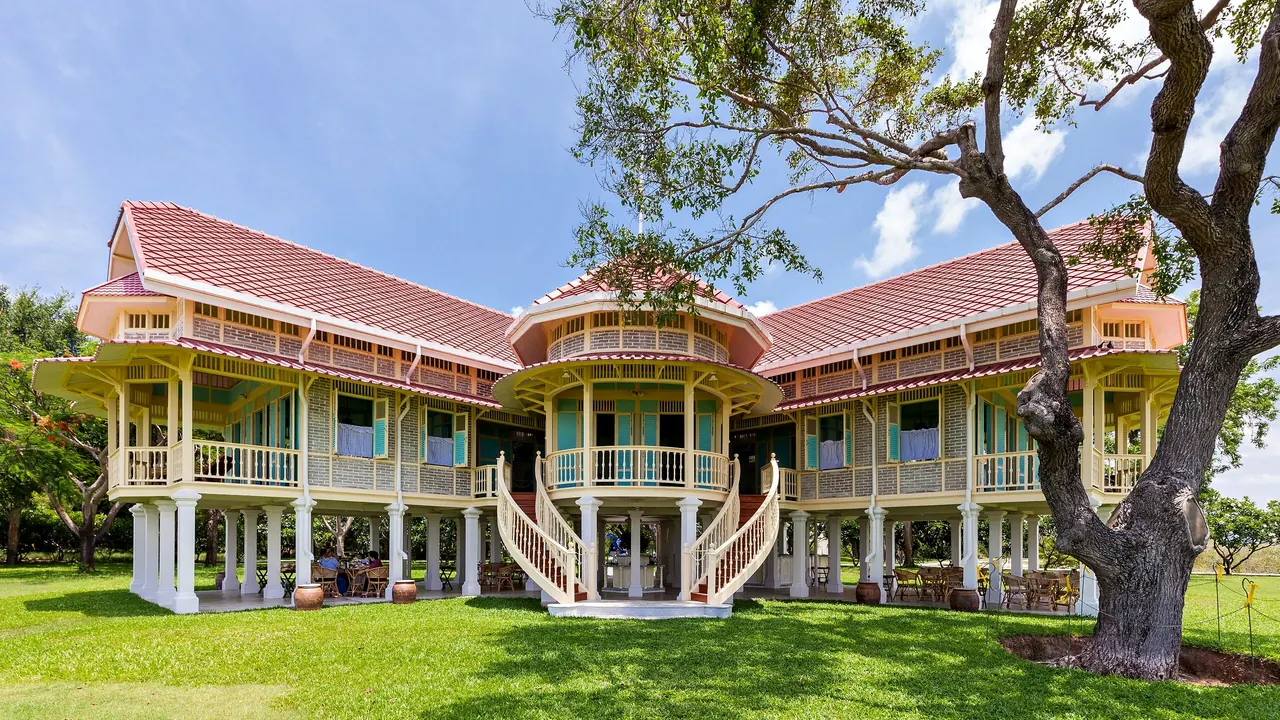
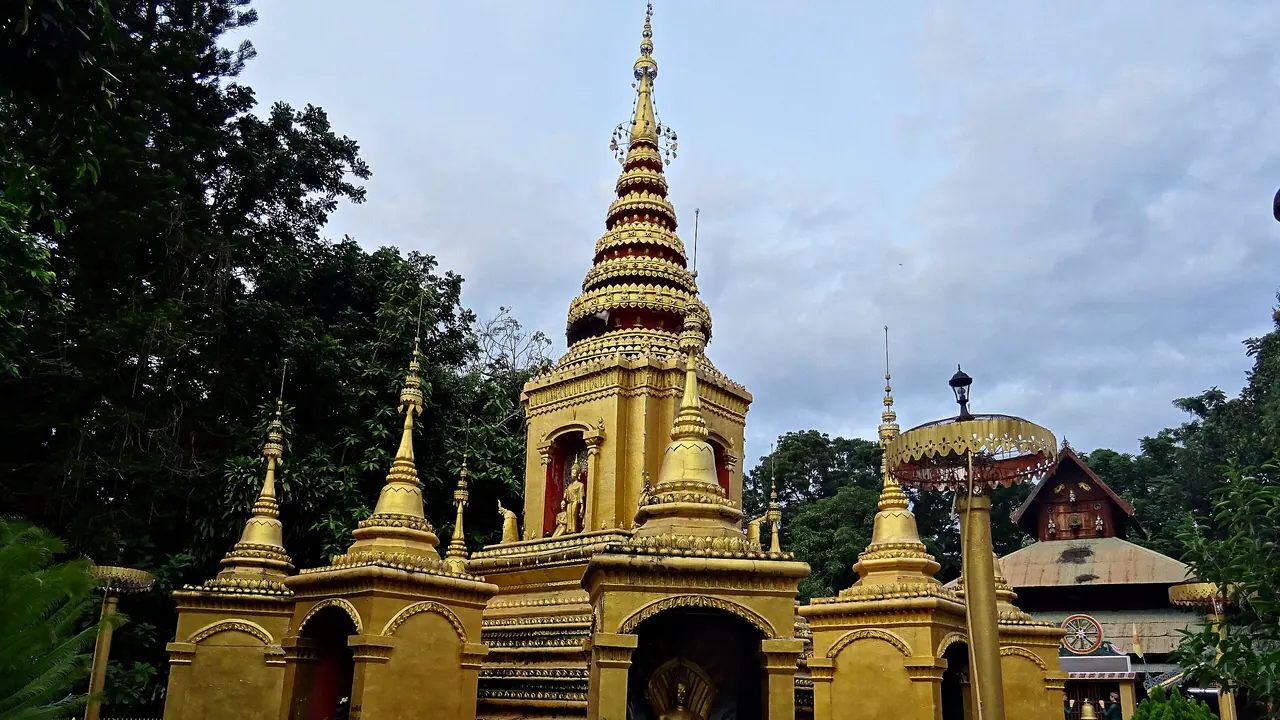
Photos: Hua Hin by allPhoto Bangkok, Pexels License; Pai by Christophe95, CC BY-SA 4.0, cropped.
Hua Hin or Pai?
Our verdict in twelve categories, each scored against the same fixed benchmark cities, and the climate month by month, so you can choose for your trip.
Choose Hua Hin for
- beaches
- day trips
- families
Hua Hin is the choice for a sea-and-sand trip with comfort around it. The Gulf water is warm and calm, the resorts have big pools and kids' clubs, and it has some of Asia's best-known destination spas. Phetchaburi's palace and cave temple are close enough for a day out. It suits families, couples who want to rest, and anyone who would rather be driven than ride a scooter.
Choose Pai for
- live music and the arts
- prices
- nature and the outdoors
Pai is for travellers who want mountains rather than a coastline. The valley is the attraction: rice fields, Pai Canyon, waterfalls and hot springs. Bungalows and night-market dinners cost very little, and in the evenings there are acoustic sets in backpacker bars. It suits young independent travellers and confident scooter riders with time to spare. It suits small children, or anyone who needs the sea, much less well.
Scoreboard
Twelve categories on one fixed scale from 0 to 100. The shaded stretch is the gap between the two.
Your match
Pick a travel style or drag the sliders, and both match scores follow your weighting.
Wins on beaches and day trips with your weighting.
Wins on live music and the arts and prices with your weighting.
What matters to you?
Category by category
What the scores mean for a trip.
Beaches & swimming
This is the biggest gap between the two. Hua Hin is a real beach town, with kilometres of pale sand from the old pier to Khao Takiab and quieter stretches at Khao Tao and towards Pranburi. The Gulf is warm and usually calm. The catches are milky water, a narrow strip of sand at high tide and jellyfish at some times of year.
Pai has no coast at all. Swimming means a guesthouse pool, a splash under Mo Paeng waterfall or floating down the Pai River on an inner tube in the hot season. That is pleasant enough, but no substitute for a beach.
Food & drink
Hua Hin eats better, mainly because of the sea. You can pick crab, squid and whole fish by weight at the restaurants on stilts by the pier, and graze on grilled river prawns at the Dechanuchit Road night market. Fine dining in the big resorts adds range, though this is still good provincial cooking rather than a reason to come.
Pai's food is cheaper and simpler. There is khao soi and Shan cooking on the walking street and Yunnanese noodles in Santichon. Many cafés serve vegan plates, smoothie bowls and espresso to long-staying travellers rather than cooking for local tastes.
Culture & sights
Neither town is a cultural destination, but Hua Hin has more to fill a day. Its past as a royal seaside retreat survives in the red-and-cream railway station with its royal pavilion and in the teak palace of Maruekhathaiyawan. Wat Khao Takiab and the giant seated monk at Wat Huay Mongkol complete the list.
Pai's list is shorter: the white Buddha of Wat Phra That Mae Yen at sunset, a few Shan-style temples, the old iron bridge from the Second World War era and Santichon's mud-brick houses. Half a day covers it.
Nightlife
Both towns have small evening scenes, and the difference is who fills them. In Hua Hin the nights centre on the beer bars, sports screens and hostess bars around Soi Bintabaht, aimed mostly at older Western men. Rooftop and beachfront bars serve sunset drinks, and those few lanes stay open past midnight.
Pai's bars belong to young backpackers. There are reggae bars, garden bars strung with fairy lights off the walking street and the odd party out of town. They are sociable but mostly finished soon after midnight. Neither town has proper clubs.
Nature & outdoors
Pai has the edge, because the landscape starts at the edge of town. Rice fields, forested hills, the eroded ridges of Pai Canyon, waterfalls and misty viewpoints such as Yun Lai are a short scooter ride away. Further out there are treks, rafting in the wet season and the Tham Lod cave.
Hua Hin's nature takes more of a drive but is well worth it. Khao Sam Roi Yot has limestone peaks and the Phraya Nakhon cave with its pavilion in a shaft of light, and Kaeng Krachan has rainforest with gibbons and elephants. In the breezy months the town is also one of Thailand's best places for kitesurfing.
Day trips
Hua Hin is far better placed for days out. Phetchaburi, about an hour north, has a hilltop palace, a cave temple and some of the country's finest old murals. Amphawa's canals and the Damnoen Saduak floating market make a longer but rewarding day.
Pai sits at the end of a winding mountain road. Chiang Mai and Mae Hong Son are about three hours away, which makes them a change of base rather than an outing. Soppong and the hill-tribe villages around it are the main trip close by.
Good for families
Hua Hin is made for family stays in a way that Pai is not. Resorts with big pools, kids' clubs and gardens on the sand, a gentle sea, two water parks and pony rides fill the days. The busy highway and the midday heat need care.
Pai can suit older children who like the outdoors, with farm visits, hot springs and river tubing. With little ones it is hard work: the road from Chiang Mai often makes passengers sick, most sights need a scooter or a driver, and the evenings are geared to young backpackers.
Getting around
Hua Hin stretches for kilometres along the Phetkasem highway, but the green shared songthaews that run up and down it make the coastal strip easy to cover without your own vehicle. Taxis, ride-hailing and tuk-tuks fill the gaps, and trains and buses run to Bangkok, though the journey takes a good few hours. Walking is the weak point, with uneven pavements and a highway that is daunting to cross.
You can cross Pai's centre on foot in minutes, but the canyon, waterfalls and hot springs are spread across the valley and no public transport goes to them. Most visitors rent a scooter, which suits experienced riders and catches out beginners on the hill roads. The other options are a hired songthaew, a taxi or a tour.
Shopping & style
In both towns shopping mostly means markets, and Hua Hin has more of them. Its weekend art-and-craft markets sell handmade ceramics, jewellery and clothing, and a couple of large malls and plenty of tailors cover the practical side.
Pai's walking street is charming to browse, with hill-tribe textiles, woven bags and cotton trousers, much of it made locally. The stalls repeat each other, though, and there are no larger stores.
Affordability
Both are cheap by Western standards, and Pai is the cheaper of the two. Its simple bungalows, night-market dinners and scooter rental are why travellers stay for weeks, and most sights in the valley are free or nearly so.
Hua Hin is good value for mid-range hotels with pools, market meals and massages. But the beachfront resorts charge international rates, imported drinks are heavily taxed, and Thai weekend visitors push room rates up on Fridays and Saturdays.
Live music & performing arts
Pai is where you are more likely to come across live music by chance. On most nights several bars host acoustic sets, blues, reggae or jazz jams, with local and travelling musicians taking turns on an open stage. The standard varies, but the mood is friendly.
In Hua Hin, live music mostly means cover bands in bars and hotel lounges, plus the occasional Thai dance show put on for resort guests. The town's royal link to jazz only shows in the years when a beach festival is held. Neither town has a theatre or a regular concert programme.
Wellness & relaxation
Both towns are made for slowing down, but in different ways. Hua Hin is the more polished choice. It has residential destination spas offering detox, yoga and fitness coaching in seafront gardens, a spa in almost every resort and massages under the trees on the beach.
Pai has what Hua Hin lacks: natural hot springs, with the Tha Pai springs in a forest park just south of town. It also has cheap massage shops and yoga and meditation retreats. The spas are simple, and the smoky haze in spring makes the valley less restful.
When should you go?
Pick your month. The climate figures are measured averages, not a forecast.
Hua Hin in July
Pai in July
Daytime high, °C
Rainfall in the month, mm
Where the figures come from
Hua Hin's sunshine is measured 83 km from the centre, at Prachuap Khirikhan.
Pai's temperatures are measured 64 km from the centre, at Mae Hong Son.
Pai's station stands 242 m below the city centre, so the centre is likely a little cooler than the figures say.
Pai has no rain gauge within 25 km of the centre, so its rainfall comes from a gridded climate dataset read at the city rather than from a gauge further away.
Pai's sunshine is measured 86 km from the centre, at Chiang Mai.
Temperature and rainfall are climate normals, averaged over the years shown. Hua Hin: 1961-1990 (sunshine 1981-2010, rainfall 1981-2010) normals, Hua Hin (1.8 km from centre). Pai: 1971-2000 (sunshine 1991-2020, rainfall 1991-2020) normals, Mae Hong Son (63.7 km from centre).
Hua Hin is warm every month, with highs between 29°C and 33°C and the Gulf at around 28°C or more all year, so you can use the beach whenever you go. The best months are December to April, when it is dry and sunny. Rain builds from May and peaks in October at about 221mm, the one month that can really interrupt beach days.
Pai changes more through the year. November to February is its season: dry and sunny, with cool valley mornings that make walking and riding out to viewpoints a pleasure. March and April turn very hot, up to 38°C, and smoke from field burning hides the hills. From May to October the monsoon soaks the valley, with August the wettest month. December to February suits both towns. In spring, Hua Hin is the better choice. In the middle of the year Hua Hin's coast stays drier than Pai's valley.
Which traveller are you?
On a beach and sun trip, choose Hua Hin. It is a seaside town where the whole day can be built around the water, and you can swim in any month. Pai is a mountain valley, so a swim there is an extra between rides, not the reason to go.
On a family trip with young children, Hua Hin is the easier choice. With a resort as your base, small children have everything they need close by and the days take little planning. Pai suits adventurous older children, but getting there and getting around would wear out toddlers and their parents.
On a trip on a tight budget, Pai makes your money last longer. The valley's main pleasure is the landscape, which costs nothing to look at, and the town is set up for travellers living on little for weeks. Hua Hin can be done cheaply too, but its beach comforts make it easy to spend more.
Before you go
| Measure | Hua Hin | Pai |
|---|---|---|
| Official language | Thai | Thai |
| Currency | Baht (THB) | Baht (THB) |
| Sockets | ABCF220 V, 50 Hz | ABCF220 V, 50 Hz |
| Driving side | Left | Left |
| Time zone | UTC+7 | UTC+7 |
| Emergency number | Police 191, ambulance 1669, fire 199 | Police 191, ambulance 1669, fire 199 |
| Elevation | 9 m | 509 m |
| Main airport | Suvarnabhumi Airport (BKK)150 km from centre150 non-stop destinations | Chiang Mai International Airport (CNX)86 km from centre28 non-stop destinations |
By the numbers
| Measure | Hua Hin | Pai |
|---|---|---|
| City population | 59,369 | 3,598 |
| People per km² | 687 | - |
| Museums within 10 km | 0 | 0 |
| UNESCO World Heritage sites within 50 km | 0 | 0 |
| Swim season, months above 21 °C | 12 months | - |
Where else could you go?
Every comparison below shares a destination with this one, so you can follow Hua Hin or Pai somewhere new.
- Chiang Maivs Pai
- Pattayavs Hua Hin
- Bangkokvs Hua Hin
- Chiang Raivs Pai
- Kanchanaburivs Hua Hin
- Ayutthayavs Hua Hin