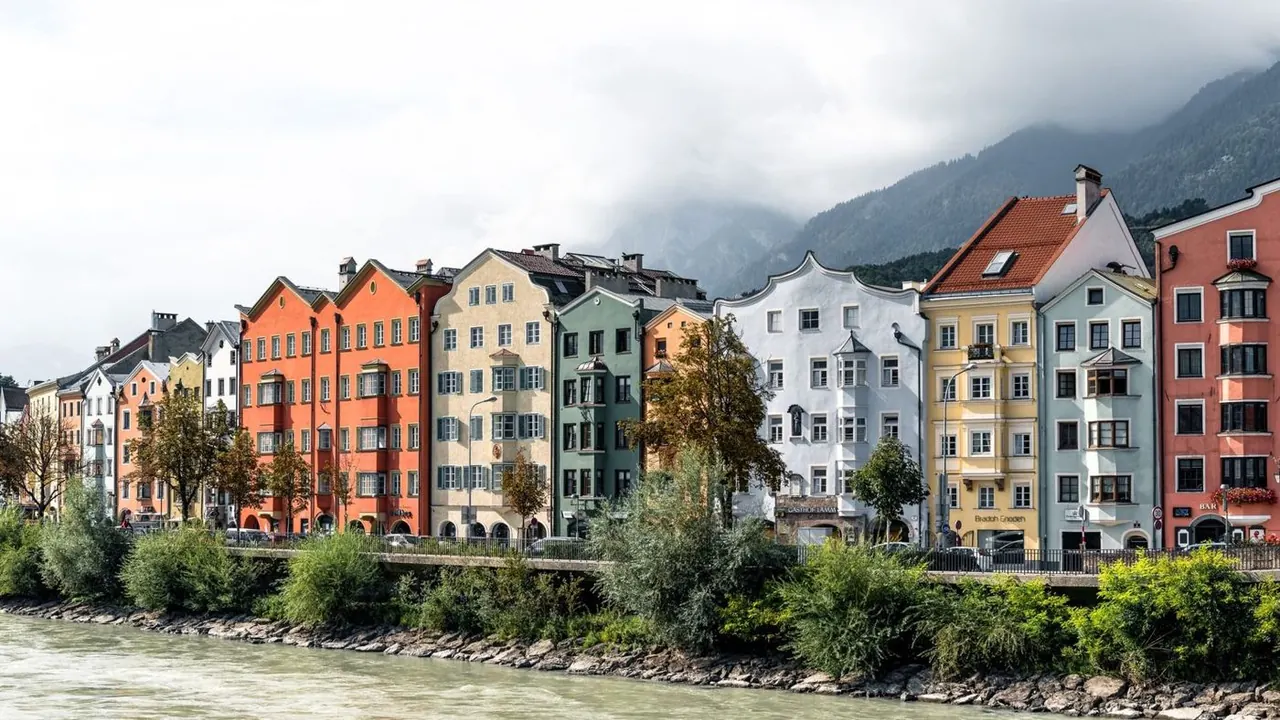
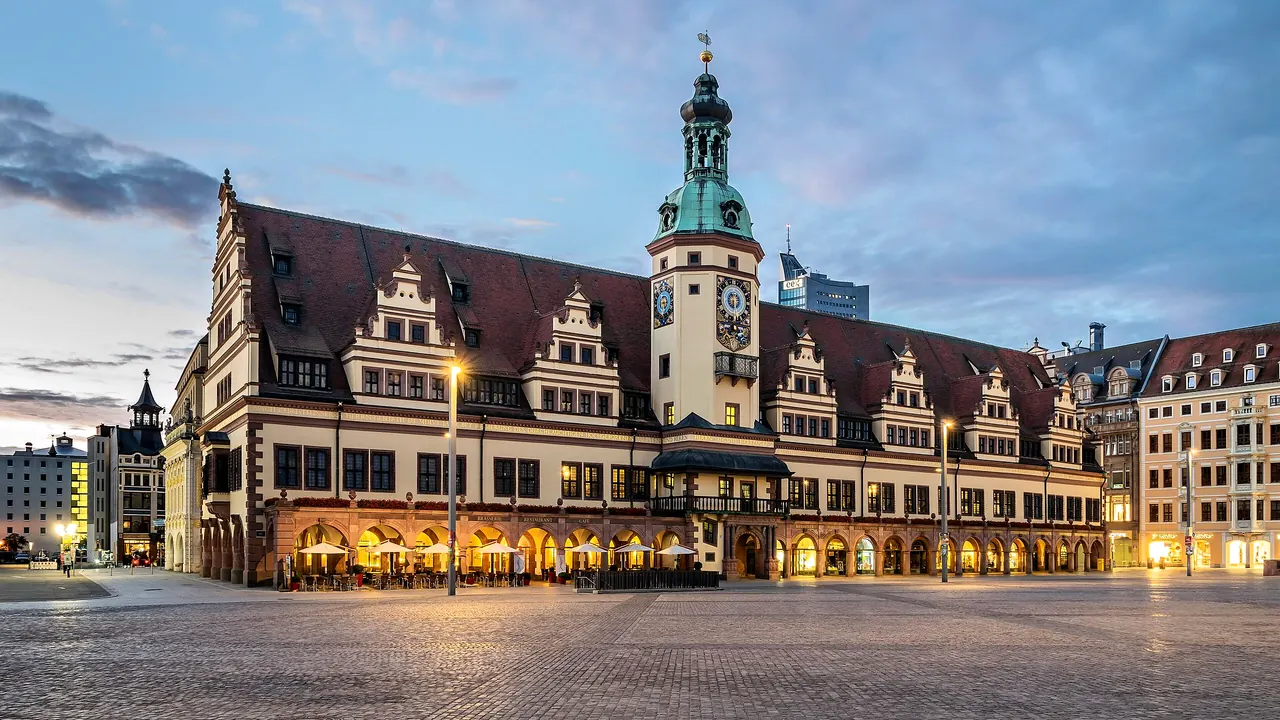
Photos: Innsbruck by Wolfgang Weiser, Pexels License; Leipzig by Krzysztof Golik, CC BY-SA 4.0, cropped.
Innsbruck or Leipzig?
Our verdict in twelve categories, each scored against the same fixed benchmark cities, and the climate month by month, so you can choose for your trip.
Choose Innsbruck for
- nature and the outdoors
- wellness
- getting around
Innsbruck is for travellers who want the mountains to be the trip. A funicular from the edge of the old town connects with cable cars to a high ridge, so skiing, hut-to-hut hiking, via ferratas and paragliding all start a short ride from a Habsburg palace and a coffee house. It suits active couples, skiers and families who like the outdoors, and anyone who wants to finish the day with a sauna and mountain air. You pay Alpine prices for all of this, and the nights end early.
Choose Leipzig for
- live music and the arts
- nightlife
- prices
Leipzig rewards people who travel for music, nights out and easy rail trips. Bach's church, the Gewandhaus Orchestra and the opera house sit a few minutes' walk apart, the clubs in old factories run until morning, and Dresden, Weimar and Berlin are all close enough for a day trip by train. Rooms cost less, the city is flat and easy to cycle, and the only outdoors on offer is a floodplain forest and a ring of former mines turned into lakes, not summits.
Scoreboard
Twelve categories on one fixed scale from 0 to 100. The shaded stretch is the gap between the two.
Your match
Pick a travel style or drag the sliders, and both match scores follow your weighting.
Wins on nature and the outdoors and wellness with your weighting.
Wins on live music and the arts and nightlife with your weighting.
What matters to you?
Category by category
What the scores mean for a trip.
Beaches & swimming
Neither city is anywhere near a coast, but Leipzig has the better lake swimming. Its former lignite mines have been flooded to make the Cospudener See and Markkleeberger See, which have sandy shores and beach bars and can be reached by tram or bike.
Innsbruck's swimming is in small, shallow lakes on the plateaus, such as the Lanser See, which are pleasant on a hot day, and in the Achensee, a beautiful lake that is too cold for most people. In both cities this is an afternoon out in high summer and nothing more.
Food & drink
The food is equally good in both, but different in character. Innsbruck's best meals are Gröstl, dumplings and Kaiserschmarrn at mountain huts, where the views do much of the work. Leipzig is more of a city for coffee and beer: it has some of Europe's oldest coffee houses and its own salty, sour Gose. Its more varied, casual eating is in the Südvorstadt and along the canals in Plagwitz, which gives it a slightly wider range than Innsbruck's old-town inns.
Culture & sights
Both cities take two or three days to see, but the stories they tell are very different. Innsbruck's is Habsburg splendour packed into arcaded streets by the Inn: the Golden Roof, the Hofburg, and the Hofkirche, where 28 bronze figures stand around the tomb of Maximilian I. On the edge of town, Ambras Castle adds armour, Habsburg portraits and one of the earliest cabinets of curiosities.
Leipzig's history is about trade and politics. The Nikolaikirche, where the Monday prayers of 1989 began, and the former Stasi headquarters at the Runde Ecke tell the story of how East Germany ended, and Bach is buried in the Thomaskirche. The old town's covered trade-fair passages, such as the Mädlerpassage, are a sight in their own right. Further out are the three Grassi museums and the Monument to the Battle of the Nations.
Nightlife
Leipzig is the clear choice for going out. Its club scene grew up in empty factories and warehouses, it is built around electronic music, and weekend nights go on past dawn without strict door policies. The Karli, Connewitz and the bars in old mills in Plagwitz give you several areas to choose from.
Innsbruck's nightlife is mostly one strip of bars and small clubs in the arches under the railway viaduct, plus pubs near the university. In winter, many visitors go to après-ski in the resorts instead.
Nature & outdoors
Here the two cities could hardly be more different. From Innsbruck you can reach a ridge at about 2,300m on the Nordkette in under half an hour from the old town, with the Karwendel behind it and the Stubai Glacier holding snow for most of the year. Hiking, skiing, via ferratas, paragliding and rafting all start close to the city.
Leipzig's outdoors is gentle and flat: shady paths through the Auwald floodplain forest, canoe trips along the canals, and cycling or sailing around the mine lakes. For real hills you need a two-hour train ride to Saxon Switzerland or the Harz.
Day trips
Both cities are good bases, and Leipzig has the edge for the number of famous towns close by. Dresden and Weimar are about an hour away by train, Erfurt and Halle are closer still, and Wittenberg, Naumburg, Dessau's Bauhaus buildings and even Berlin are all easy to reach without a car.
Innsbruck's trips cross more borders. They include Hall in Tirol and glassblowing in Rattenberg, Munich and Salzburg about two hours away, and Bolzano and Merano over the Brenner Pass. Neuschwanstein is within reach by car.
Good for families
Both cities are easy with children, but they work best for different families. Innsbruck suits families who like being outdoors: the Alpenzoo, which keeps only Alpine animals, adventure trails and playgrounds by the mountain huts, and ski schools in winter. A wet day there needs more planning.
Leipzig copes better with bad weather. Its large zoo includes Gondwanaland, a covered tropical hall, and the Belantis theme park and sandy lake shores are nearby for warm days. Once those are done, though, there is not much else aimed at children.
Getting around
You can easily get around either city without a car, but in different ways. Innsbruck's flat, compact centre has an unusual extra: the funicular at the edge of the old town connects with the Nordkette cable cars, and ski buses run out to the slopes in winter. A car only helps for the remote valleys.
Leipzig adds a large tram network, an S-Bahn line under the centre, and flat streets with plenty of cycle lanes. Every day trip leaves from the same central station.
Shopping & style
Leipzig has the slightly more interesting shopping, mostly in the west of the city: design and vintage shops and record stores on Karl-Heine-Strasse, and galleries at the Spinnerei, a former cotton mill. Its covered arcades also keep the mainstream chains dry. Innsbruck is better for things made in the region, such as loden jackets, woodcarvings, Speck and schnapps, and it has excellent outdoor and ski shops. In either city, shopping fills an afternoon rather than a trip.
Affordability
Leipzig is the cheaper stay, mainly because rooms near the old town cost less than in most German cities. The exception is the big trade-fair weeks, when prices jump, so check the fair dates before booking. Elsewhere, Leipzig costs what you would expect in Germany.
Innsbruck adds an Alpine resort premium to Western European prices, which is highest in ski season and around the Christmas markets, and cable car tickets add up quickly on an active trip. Visiting in spring or autumn and buying a guest or city card makes it less expensive.
Live music & performing arts
Leipzig is one of the great music cities, and the gap here is wide. The Gewandhaus Orchestra and the opera house face each other on Augustusplatz, the Thomanerchor sings Bach in his own church most weekends during term, and the city also has operetta, theatre, jazz clubs and the huge Wave-Gotik-Treffen at Whitsun.
Innsbruck has a solid regional programme at the Tiroler Landestheater and folk evenings with yodelling. Its highlight is the summer Festival of Early Music, which uses historic venues such as the Spanish Hall at Ambras. It is worth checking whether it falls during your dates.
Wellness & relaxation
Innsbruck is the better place to slow down. Hotels in Igls and the surrounding plateau villages have spas with mountain views, the large thermal complexes in the Ötztal and the Zillertal are about an hour away, and an evening in a mountain hut does the rest.
Leipzig's wellness is modern German sauna culture in pool complexes and a few lakeside saunas. The proper spa towns are separate trips, and its restful side is really quiet walks in the Auwald.
When should you go?
Pick your month. The climate figures are measured averages, not a forecast.
Innsbruck in July
Leipzig in July
Daytime high, °C
Rainfall in the month, mm
Temperature and rainfall are climate normals, averaged over the years shown. Innsbruck: 1991-2020 normals, Innsbruck-Flughafen (3.3 km from centre). Leipzig: 1991-2020 (sunshine 1961-1990, rainfall 1961-1990) normals, Leipzig-Holzhausen (5.7 km from centre).
Both cities have cold winters, with daytime highs of about 4°C in January, and warm summers that peak in the mid-twenties. Innsbruck reaches 26°C in July, and July and August are the only months when either city's lakes are pleasant for a swim. The big difference is rain. Innsbruck's summer is its wettest season, with afternoon downpours building to about 144mm in August. Leipzig stays much drier all year, and even its wettest month, June, gets about 67mm, which makes it the more reliable city for walking the streets from May to September.
Innsbruck is brighter in winter, with roughly twice Leipzig's sunshine in January. That, along with the snow on the surrounding slopes, makes it the better choice from December to March. For walking in Innsbruck, late spring and September are the best times: warm days, less rain than high summer and long sunny spells. Leipzig is at its best from May to September. Its short, grey days from November to February are best spent indoors at concerts and museums.
Which traveller are you?
On an outdoors trip, choose Innsbruck without hesitation. Ridges, glaciers and the Karwendel nature park are reachable by cable car from the centre, with skiing in winter and hiking, biking and rafting in summer. Flat Leipzig offers forest paths and paddling instead.
For a culture and arts trip, Leipzig is the stronger choice. Its sights are on a par with Innsbruck's, but its music is in a different league: the Gewandhaus Orchestra, the Thomanerchor singing in Bach's own church, a full opera house and the Bachfest every June.
On a food and nightlife trip, Leipzig wins on the nights. Clubs in converted factories play electronic music until dawn, and the Karli and Plagwitz have long rows of bars and casual kitchens. Innsbruck's food is good but limited, and its nights out are small and end early.
Before you go
| Measure | Innsbruck | Leipzig |
|---|---|---|
| Official language | German, Austrian Sign Language | German |
| Currency | Euro (EUR) | Euro (EUR) |
| Sockets | CF230 V, 50 Hz | CF230 V, 50 Hz |
| Driving side | Right | Right |
| Time zone | UTC+1, UTC+2 in summer | UTC+1, UTC+2 in summer |
| Emergency number | 112 | 112 |
| Elevation | 574 m | 110 m |
| Main airport | Innsbruck Airport (INN)4 km from centre40 non-stop destinations | Leipzig/Halle Airport (LEJ)13 km from centre20 non-stop destinations |
| Public holidays this year | 16 days | 11 days |
By the numbers
| Measure | Innsbruck | Leipzig |
|---|---|---|
| City population | 132,499 | 615,932 |
| People per km² | 1,263 | 2,068 |
| Museums within 10 km | 28 | 40 |
| UNESCO World Heritage sites within 50 km | 1 | 1 |
Where else could you go?
Every comparison below shares a destination with this one, so you can follow Innsbruck or Leipzig somewhere new.
- Munichvs Innsbruck
- Cortina d'Ampezzovs Innsbruck
- Dresdenvs Leipzig
- Salzburgvs Innsbruck
- Berlinvs Leipzig
- Hallstattvs Innsbruck