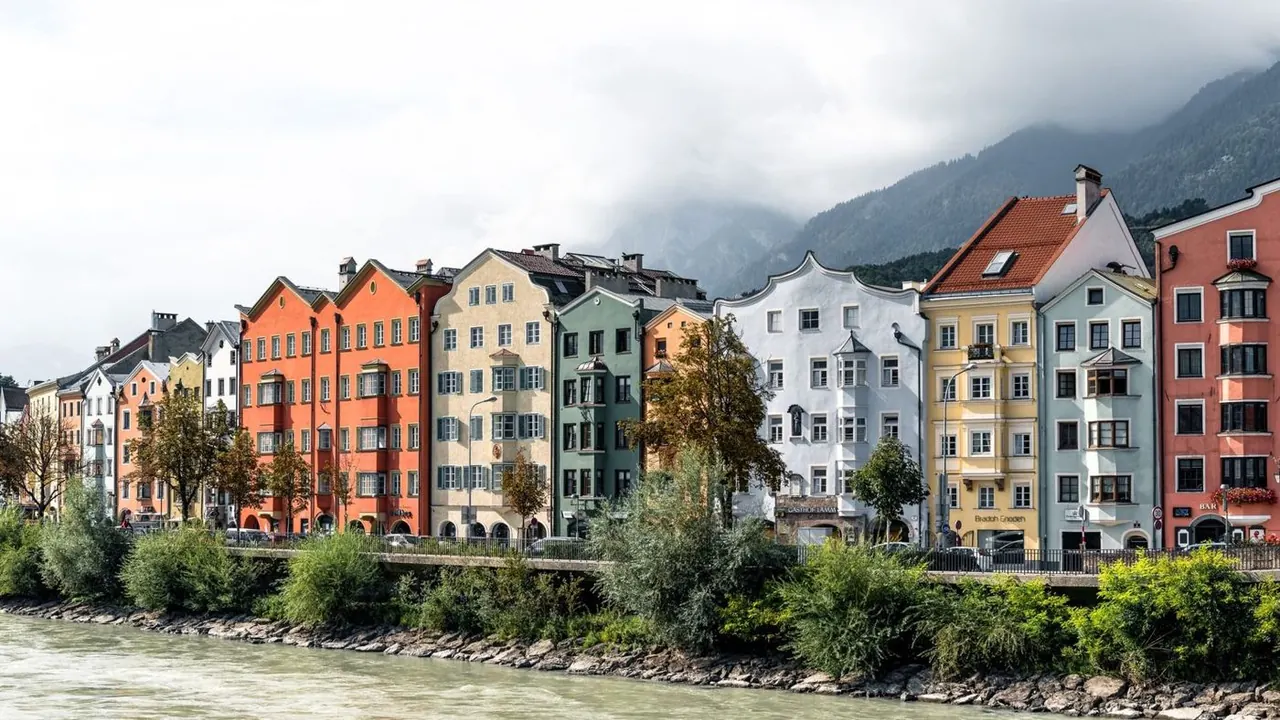
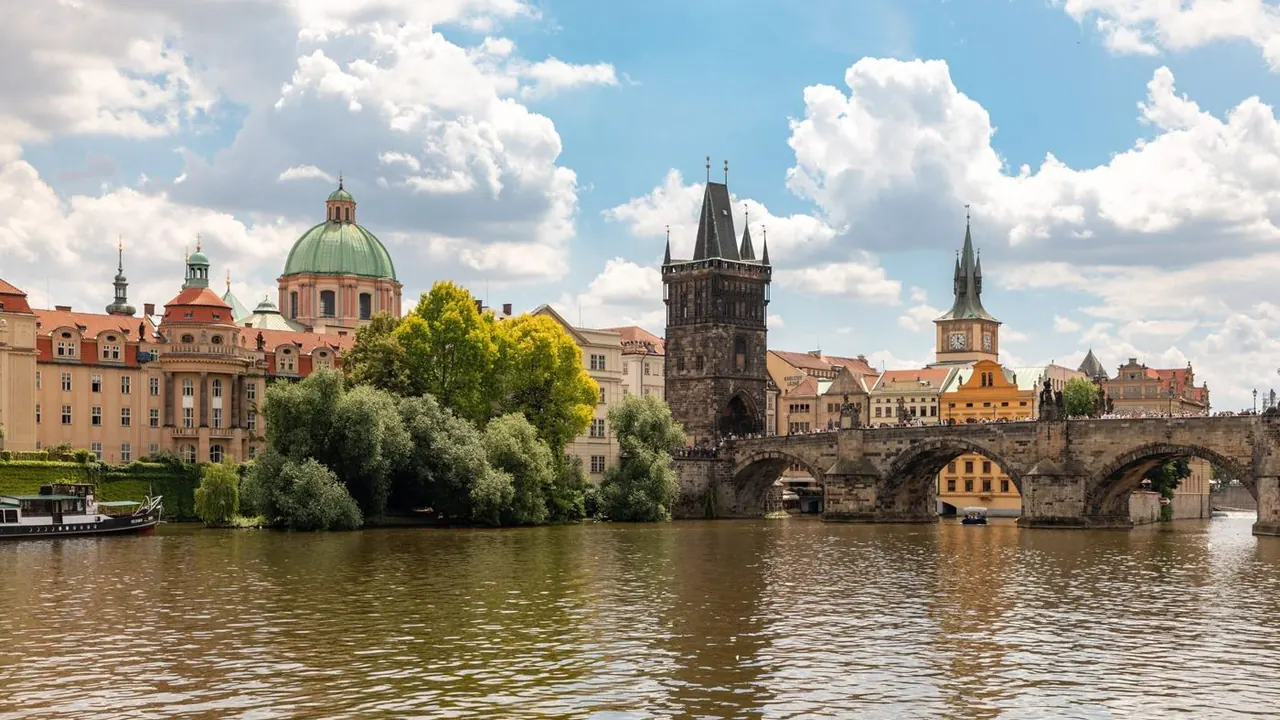
Photos: Innsbruck by Wolfgang Weiser, Pexels License; Prague by Dietmar Rabich, CC BY-SA 4.0, cropped.
Innsbruck or Prague?
Our verdict in twelve categories, each scored against the same fixed benchmark cities, and the climate month by month, so you can choose for your trip.
Choose Innsbruck for
- nature and the outdoors
- families
- beaches
Innsbruck is for travellers who want the mountains to be the point of the trip. Cable cars from the edge of the old town put you on an Alpine ridge before your coffee has gone cold, and the same valleys give you skiing in winter and hut-to-hut hiking, climbing and rafting in summer. It also suits families who want fresh air and gentle trails rather than crowds. The town's sights fill two or three days pleasantly, but the evenings are quiet and a stay costs more.
Choose Prague for
- live music and the arts
- nightlife
- culture and sights
Prague rewards anyone who comes for the city itself. The intact historic centre, the castle quarter and the Charles Bridge are among Europe's great urban sights, and opera, concerts and a deep pub culture fill the evenings in ways Innsbruck cannot. Your money also goes further, especially once you eat and drink a few tram stops out. Its countryside is gentle rather than dramatic, so walkers and skiers will feel the lack of peaks.
Scoreboard
Twelve categories on one fixed scale from 0 to 100. The shaded stretch is the gap between the two.
Your match
Pick a travel style or drag the sliders, and both match scores follow your weighting.
Wins on nature and the outdoors and families with your weighting.
Wins on live music and the arts and nightlife with your weighting.
What matters to you?
Category by category
What the scores mean for a trip.
Beaches & swimming
Neither city is a swimming destination, but Innsbruck has a slight advantage in high summer. The shallow lakes on the plateaus above town, such as the Lanser See and the Natterer See, warm up enough for a relaxed afternoon, and the clear Achensee makes a beautiful if chilly outing.
Prague's options are plainer and further out: the Dzban reservoir in the Sarka gorge, outdoor pools, or the wooded banks of the Slapy reservoir an hour south. In both cities a swim is a hot-day extra, never the reason to go.
Food & drink
Both kitchens are hearty and meat-heavy, but Prague gives you more to work with. Its beer culture is the real draw, with unpasteurised tank lager, microbreweries and the pub snacks that go with them, and the neighbourhoods of Vinohrady, Karlin and Letna add Moravian wine bars, good cafés and a modest modern restaurant scene. The trick is to avoid the tourist menus around Old Town Square.
Innsbruck's best meals come with a view: Gröstl, Kaspressknödel or Kaiserschmarrn at a mountain hut after a morning's walk. In town the choice narrows to traditional inns and Viennese-style coffee houses, with no market or street-food culture to explore.
Culture & sights
Prague is in a different league here. Its whole centre is a UNESCO site, and the walk from the castle and St Vitus Cathedral down through Baroque Mala Strana, over the Charles Bridge and into the Gothic lanes and synagogues of the Old Town and Josefov is one of Europe's great city walks. Add Art Nouveau and the rare Cubist buildings, and three or four days barely feel enough.
Innsbruck's heritage is smaller but polished: the Golden Roof, the Hofburg, Maximilian's bronze-ringed tomb in the Hofkirche and the curiosities of Ambras Castle. It is a rewarding couple of days, without Prague's crowds and without its scale.
Nightlife
Prague is by far the better place for a night out. Cheap, excellent beer keeps the pubs of Zizkov full of locals and students until late, Vinohrady adds wine and cocktail bars, and on summer evenings the beer gardens on Letna and Riegrovy sady fill up. Clubbers can pick between the big dawn-closing clubs in the centre and the more interesting techno spaces in Holesovice.
Innsbruck's evenings revolve around the bars and small clubs in the brick arches under the railway viaduct, plus pubs near the university. It is friendly and student-driven but soon exhausted, and in winter much of the partying moves out to après-ski in the resorts.
Nature & outdoors
This is where Innsbruck leaves Prague far behind. A funicular from the old town links to cable cars climbing to about 2,300m on the Nordkette, with Austria's largest nature park, the Karwendel, just over the ridge and glaciers in the Stubai valley across the way. Skiing, hut-to-hut hiking, via ferratas, paragliding and rafting are all on the doorstep.
Prague's green side is gentle: orchards on Petrin Hill, the old royal park of Stromovka and the rocky Divoka Sarka gorge. The sandstone towers of Bohemian Switzerland make excellent hiking within two hours, but there are no mountains anywhere near.
Day trips
Both make strong bases, and the choice comes down to what you want from a day out. Innsbruck sits on the main Alpine rail routes, so medieval Hall in Tirol is ten minutes away, Munich and Salzburg are each under two hours, and over the Brenner Pass lie the Italian arcades of Bolzano and Merano. By car, Neuschwanstein and the Bavarian castles are within reach.
From Prague the theme is Bohemian history: the silver town of Kutna Hora with its ossuary, Karlstejn castle above its wooded valley, the sobering memorial at Terezin and the wine town of Melnik. Dresden is an easy rail trip, while Cesky Krumlov works better as an overnight stay.
Good for families
Innsbruck is the easier choice with children. The funicular that climbs to the Alpenzoo, with its ibex, bears and wolves, carries on into the mountains, and summer brings adventure trails, hut playgrounds and warm plateau lakes, with ski schools and gentle slopes in winter. Rainy days take some planning, as the town's sights are mostly for adults.
Prague has a superb hillside zoo at Troja and a storybook look children love, from the castle guards to the astronomical clock. But cobbles and steep lanes defeat pushchairs, the castle stairs are long, and the summer crowds in the old centre wear little ones out.
Getting around
Both cities are easy without a car, but the transport serves different ends. Innsbruck's small, flat centre is quick to cross on foot, and its real advantage is vertical: the Hungerburg funicular starts at the edge of the old town, while trams and ski buses run straight out to Igls, the Stubai valley and the slopes.
Prague is the bigger city and covers it well, with three metro lines and a dense tram network that runs through the night. The cobbles are tiring underfoot and awkward with suitcases, and pickpockets work the crowded trams through Mala Strana.
Shopping & style
Prague offers more variety. Parizska Street has the luxury labels behind Art Nouveau facades, and the distinctive buys are Bohemian crystal, garnet jewellery, marionettes and wooden toys. Skip the identical souvenir shops of the old centre for the design and vintage shops of Vinohrady and Holesovice.
Innsbruck's shopping is more practical. Maria-Theresien-Strasse carries the chains, the old-town arcades sell crystal and Tyrolean crafts, and the excellent ski and outdoor shops are the real strength. Loden jackets, Speck and schnapps make good things to take home.
Affordability
Prague is noticeably the cheaper city. Beer, pub lunches and public transport stay inexpensive, and staying a few tram stops out in Vinohrady or Karlin and eating in neighbourhood pubs stretches a budget well. Just steer clear of the restaurants with a view and the currency exchange booths in the tourist core.
Innsbruck has Alpine resort prices, highest in ski season and around the Christmas markets. Cable car tickets mount up on an active trip, though the guest and city cards soften the blow, and spring and autumn are clearly cheaper.
Live music & performing arts
Prague is one of Europe's great music cities. You can hear opera at the gilded National Theatre or at the Estates Theatre, where Don Giovanni premiered, and the Czech Philharmonic plays at the Rudolfinum. Black-light theatre and marionette shows need no Czech, and church and palace concerts fill most evenings.
Innsbruck offers a solid regional programme at the Tiroler Landestheater and with its symphony orchestra. Its one standout is the summer Festival of Early Music, held in settings such as the Spanish Hall at Ambras Castle. It is worth catching if your dates line up, but it is no reason to plan a trip around.
Wellness & relaxation
Neither city has thermal baths of its own, and the two offer different kinds of rest. Innsbruck's is Alpine: hotel spas with saunas and mountain views up in Igls and the plateau villages, quiet walks in clean air, and the big thermal complexes of the Ötztal and Zillertal about an hour away.
Prague's slower pleasures are urban: an afternoon in a grand old coffee house, the terraced Baroque gardens below the castle, or a bench on Kampa island. Its hotel spas and novelty beer baths are pleasant enough, but real calm means staying away from the noisy tourist core.
When should you go?
Pick your month. The climate figures are measured averages, not a forecast.
Innsbruck in July
Prague in July
Daytime high, °C
Rainfall in the month, mm
Temperature and rainfall are climate normals, averaged over the years shown. Innsbruck: 1991-2020 normals, Innsbruck-Flughafen (3.3 km from centre). Prague: 1991-2020 normals, Praha-Libus (8.1 km from centre).
The two cities follow a similar curve, with warm summers peaking around 26°C in Innsbruck and a degree cooler in Prague, and cold winters close to freezing in both. From May to September the days are warm and long enough for the plateau lakes above Innsbruck, which are best in July and August, or for evenings outdoors by the Vltava in Prague. The big difference is rain. In Innsbruck it builds from June, and August is the wettest month at about 144mm, with mountain storms. Prague's wettest months stay nearer 80mm, so its summers are more reliable for a full day on foot.
In winter the balance tips the other way. From November to January, Innsbruck gets nearly twice as much sunshine as Prague, and that clear Alpine light over snow is what makes its cold months so good. Prague's winter days are short and grey, better for museums and concerts than for wandering. For walking in comfort, Prague is at its best from late May through June and again in September. Innsbruck is better in late May and September, either side of its wet summer.
Which traveller are you?
For an outdoors trip, Innsbruck wins easily. The Nordkette ridge is half an hour from the old town, the Karwendel park lies just behind it, and ski areas, glacier slopes, via ferratas and rafting rivers surround the city. Prague offers parks and pleasant sandstone hikes, not mountains.
On a culture and arts trip, Prague is the clear choice. Its castle, Mala Strana, the Old Town and Josefov form one of Europe's most complete historic centres, and three opera houses, the Rudolfinum and the Prague Spring festival fill the evenings. Innsbruck's Habsburg sights take two days.
For a food and nightlife trip, choose Prague. Carefully poured lager in classic pubs, wine bars in Vinohrady, summer beer gardens on Letna and a techno circuit in Holesovice make long evenings easy, while Innsbruck's hearty inns and bar strip under the railway arches stay small.
Before you go
| Measure | Innsbruck | Prague |
|---|---|---|
| Official language | German, Austrian Sign Language | Czech |
| Currency | Euro (EUR) | Czech Koruna (CZK) |
| Sockets | CF230 V, 50 Hz | CE230 V, 50 Hz |
| Driving side | Right | Right |
| Time zone | UTC+1, UTC+2 in summer | UTC+1, UTC+2 in summer |
| Emergency number | 112 | 112 |
| Elevation | 574 m | 235 m |
| Main airport | Innsbruck Airport (INN)4 km from centre40 non-stop destinations | Václav Havel Airport Prague (PRG)12 km from centre178 non-stop destinations |
| Public holidays this year | 16 days | 13 days |
By the numbers
| Measure | Innsbruck | Prague |
|---|---|---|
| City population | 132,499 | 1,397,880 |
| People per km² | 1,263 | 2,817 |
| Museums within 10 km | 28 | 88 |
| UNESCO World Heritage sites within 50 km | 1 | 1 |
Where else could you go?
Every comparison below shares a destination with this one, so you can follow Innsbruck or Prague somewhere new.