Ireland
Connemara
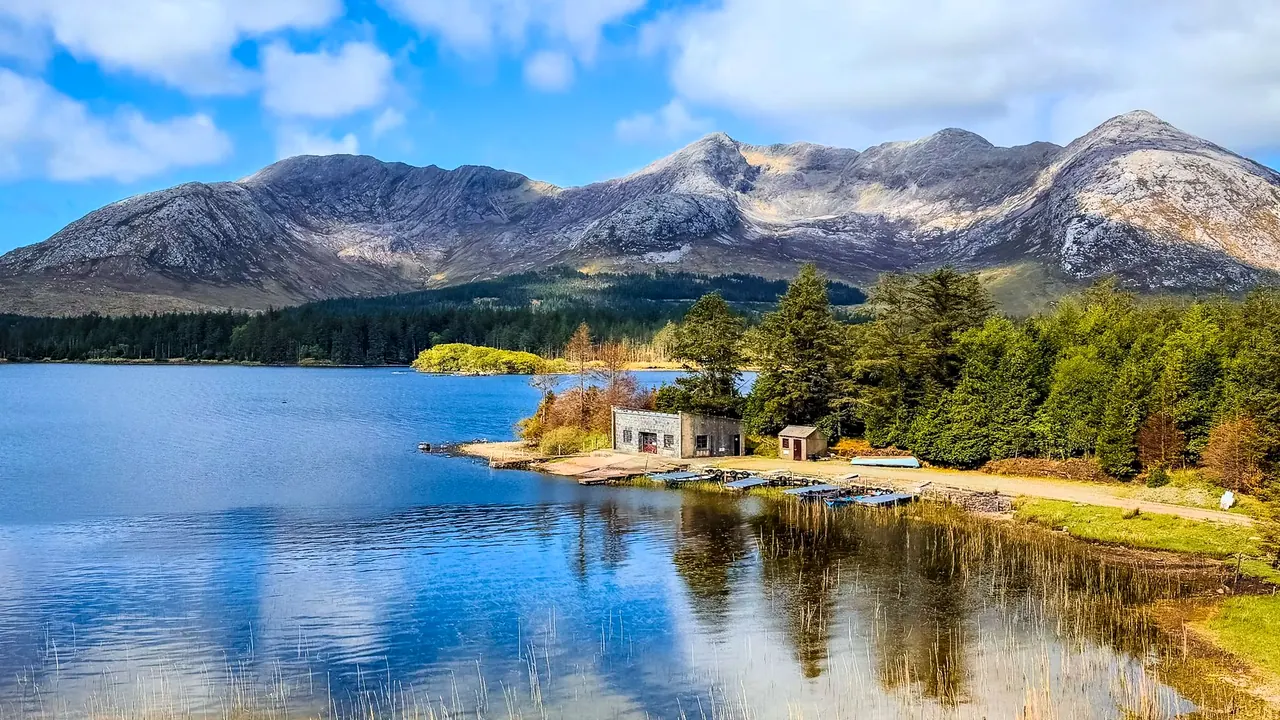
Lough Inagh below the mountains of the Inagh valley
- Nature & outdoors82
- Day trips58
- Wellness & relaxation42
Photo: Michael Deligan, CC BY-SA 4.0, cropped
Match
39
Every category weighted equally
- Beach & sun40
- Culture & arts37
- Food & nightlife34
- Family trip42
- Outdoors48
- Relax & unwind42
- Shopping & style35
- On a budget39
Connemara in twelve categories
Our verdict on each, scored 0 to 100 against the same fixed benchmark cities, so a score means the same thing on every page.
Beaches & swimming. Scores 35 out of 100.
Food & drink. Scores 38 out of 100.
Culture & sights. Scores 32 out of 100.
Nightlife. Scores 22 out of 100.
Nature & outdoors. Scores 82 out of 100.
Day trips. Scores 58 out of 100.
Good for families. Scores 40 out of 100.
Getting around. Scores 35 out of 100.
Shopping & style. Scores 20 out of 100.
Affordability. Scores 35 out of 100.
Live music & performing arts. Scores 30 out of 100.
Wellness & relaxation. Scores 42 out of 100.
Connemara category by category
Beaches & swimming
35The beaches are lovely to look at. Dog's Bay and Gurteen near Roundstone are twin crescents of white shell sand on either side of a narrow tombolo, the Coral Strand at Carraroe is made of crunchy maerl, and Glassilaun, Omey and the strands around Renvyle and Ballyconneely have pale sand and clear, turquoise water on a bright day.
The catch is the Atlantic. Even in July and August the sea rarely gets beyond about 15°C, and a warm, still beach day is never guaranteed. Locals swim all year in the Irish way, briskly and often in wetsuits, and families paddle in the sheltered bays, but beach life is something to fit around the weather rather than the heart of a stay.
Food & drink
38Eating here comes down to good raw materials served plainly. Connemara hill lamb, mussels from Killary Harbour, oysters, crab, lobster and smoked salmon turn up on menus in Clifden, Roundstone, Letterfrack and Leenane, usually as seafood chowder, a pub plate or a small dining room in a country house hotel. Clifden has the widest choice, with a handful of serious kitchens alongside the pubs.
Outside the towns, choice thins quickly and many places shorten their hours or close outside the summer. There is no street food or market culture to speak of, and a visitor who wants variety tends to drive to Galway city for a night.
Culture & sights
32Kylemore Abbey is the one landmark everyone comes to see: a Victorian castle on the shore of a lake below the mountains, with a Gothic church and a large restored walled garden. Beyond it the heritage is quieter and scattered. Clifden is a planned Victorian town with the ruin of its founder's castle on the Sky Road, Derrigimlagh bog holds the Marconi wireless station site and the spot where Alcock and Brown landed after the first nonstop transatlantic flight in 1919, and Pearse's Cottage at Ros Muc recalls the 1916 leader.
Much of the culture is lived rather than displayed. South Connemara is the largest Irish-speaking district in the country, with stone walls, famine villages and holy wells across the landscape, but there are no major museums.
Nightlife
22A night out here is a pub night. Clifden has a short main street of busy pubs that fill up in summer and around the August pony show, and the villages each have one or two bars where locals, walkers and visitors share the same counter. Things stay friendly and chatty rather than late or loud, there are no clubs, and outside the summer most evenings are quiet. Anyone after a proper night out drives or takes the bus to Galway city.
Nature & outdoors
82The landscape is the reason to come. The quartzite peaks of the Twelve Bens rise straight out of bog and lake, the Maumturks run parallel to the east, and Killary Harbour cuts a narrow fjord between Galway and Mayo. Connemara National Park at Letterfrack has the easy classic, the loop up Diamond Hill, while the Glencoaghan horseshoe and the Maumturk ridge are serious, often pathless days for experienced hillwalkers.
The coast is a maze of inlets, islands and headlands, best seen along the Sky Road west of Clifden, around Roundstone and out at Renvyle. Kayaking, sailing, cycling quiet bog roads and pony trekking on the native Connemara ponies all fit easily into a stay. Light changes by the hour, and rain is part of the deal in every season; late spring and early autumn often bring the clearest days.
Day trips
58Galway city sits at Connemara's eastern edge, about an hour's drive from Clifden, with its medieval streets, Spanish Arch and university quarter. From Rossaveal, ferries cross to the Aran Islands, where Inis Mór has the cliff-edge stone fort of Dún Aonghasa and a web of walled lanes best seen by bike. Smaller Inishbofin, reached from Cleggan, makes a gentler island day with an old harbour and a quiet village.
North over Killary, Westport in Mayo is a handsome Georgian town with Westport House, and the village of Cong, with its ruined Augustinian abbey, lies between Lough Corrib and Lough Mask. The Burren and the Cliffs of Moher are reachable from the eastern side of the region, but they make for a long day.
Good for families
40It suits outdoorsy families who are happy to make their own fun. Children can paddle in the sheltered bays near Roundstone and Renvyle, ride Connemara ponies, scramble around rock pools, take the short trails and play area at the national park in Letterfrack and explore the gardens at Kylemore. The roads are quiet, the people relaxed and the scale manageable.
There is little built for children, though: no zoo, aquarium or theme park, and a run of wet days with young children can feel long. A rented cottage or a hotel with indoor space and a car to get to Galway city for rainy-day activities make a real difference.
Getting around
35A car is all but essential. Distances are short on the map, but the roads are narrow, winding and often single track, shared with sheep, cyclists and tour coaches in summer, so an hour's drive covers less ground than you'd expect. A regular coach service links Galway with Clifden through Oughterard and Maam Cross, which works for reaching a base, but the beaches, trailheads and villages beyond it are hard to reach without your own wheels.
Clifden and Roundstone are small enough to walk, and cycling the quiet back roads is a pleasure in good weather. The islands depend on ferries, which can be cancelled in rough seas.
Shopping & style
20Shopping is a few craft and gift shops, mostly in Clifden, with a handful more in Roundstone, Letterfrack and at Kylemore. The things worth taking home are local: green Connemara marble, hand-knitted wool sweaters, tweed, pottery and books on the region's history and language. There are no shopping streets or markets of any size, and serious shoppers head to Galway city.
Affordability
35Ireland is an expensive country, and Connemara in summer is no exception. Rooms in Clifden and the country house hotels by the lakes are dear in July and August and book up early, eating out costs as much as in any Irish town, and the need for a hire car adds to the bill. Family-run B&Bs, self-catering cottages and pub food keep a stay manageable, and the main sights, the national park and the walking are mostly free, but this is not a budget destination.
Live music & performing arts
30The music here is traditional and informal. In summer, pubs in Clifden and the villages host trad sessions most nights, with fiddles, flutes and bodhráns around a table, and the Irish-speaking south of the region keeps alive sean-nós, the old unaccompanied singing style, along with set dancing. The Clifden Arts Festival, held every September for decades, brings readings, concerts and small performances to the town.
There is no theatre, concert hall or opera, and sessions thin out in winter. Formal performances mean a trip to Galway city.
Wellness & relaxation
42There are no thermal baths or bathing traditions, so wellness here comes from the pace. Days are slow, the evenings long in summer and the roads quiet, and a stay in a country house hotel by a lake or a cottage near the sea is restful in itself. A few hotels run spas with treatments and pools, and the Irish habit of a cold sea dip followed by a hot drink is easy to join on any strand. People come here to switch off, not for a spa break.
Where to stay in Connemara
Clifden is the natural first base. It is the region's only real town and small enough to walk. It has the widest choice of places to eat, the busiest pubs and trad sessions most summer nights, and the coach from Galway runs there. The Sky Road starts at the edge of town, and Kylemore, the national park and the strands around Ballyconneely are all a short drive away. It suits first-timers, food lovers and anyone who wants a sociable evening.
Roundstone is the quieter choice. It is a small harbour village, also easy to walk, and sits close to the white sand at Dog's Bay and Gurteen, so it suits families and a slow stay by the sea. In the north, Letterfrack, Renvyle and Leenane put you beside Connemara National Park, Killary Harbour and the Twelve Bens. This is the best area for walkers and outdoorsy families, and lakeside country house stays are close by.
South Connemara, around Carraroe and Ros Muc, works well for a second visit. Come for the Irish language, sean-nós singing and the ferry to the Aran Islands from Rossaveal, and it is also nearer Galway city. With a car, one base covers most of the region. On a longer trip, splitting the stay between the north and the south saves a lot of slow driving.
When should you go?
Pick a month to see what it is like. The climate figures are measured averages, not a forecast.
Connemara in July
Daytime high, °C
Rainfall in the month, mm
The whole year
Shaded against this destination’s own year: the deepest cell is its best month for that figure and the palest its weakest.
Where the figures come from
Connemara's temperatures are measured 83 km from the centre, at Belmullet.
Connemara has no rain gauge within 25 km of the centre, so its rainfall comes from a gridded climate dataset read at the destination rather than from a gauge further away.
Connemara's sunshine is measured 70 km from the centre, at Galway.
Temperature and rainfall are climate normals, averaged over the years shown. Connemara: 1991-2020 (sunshine 1981-2010) normals, Belmullet (82.8 km from centre).
Before you go
| Measure | Connemara |
|---|---|
| Official language | English, Irish |
| Currency | Euro (EUR) |
| Sockets | G230 V, 50 Hz |
| Driving side | Left |
| Time zone | UTC, UTC+1 in summer |
| Emergency number | 112 |
| Main airport | Ireland West Airport Knock (NOC)18 non-stop destinations |
| Public holidays this year | 11 days |
By the numbers
| Measure | Connemara |
|---|---|
| Swim season, months above 21 °C | None |
Compare Connemara with
Every comparison with a written verdict behind it.
- Cornwall
- County Kerry
- Isle of Skye
- Isles of Scilly
- Lake District
- Pembrokeshire
- Scottish Highlands
- Snowdonia