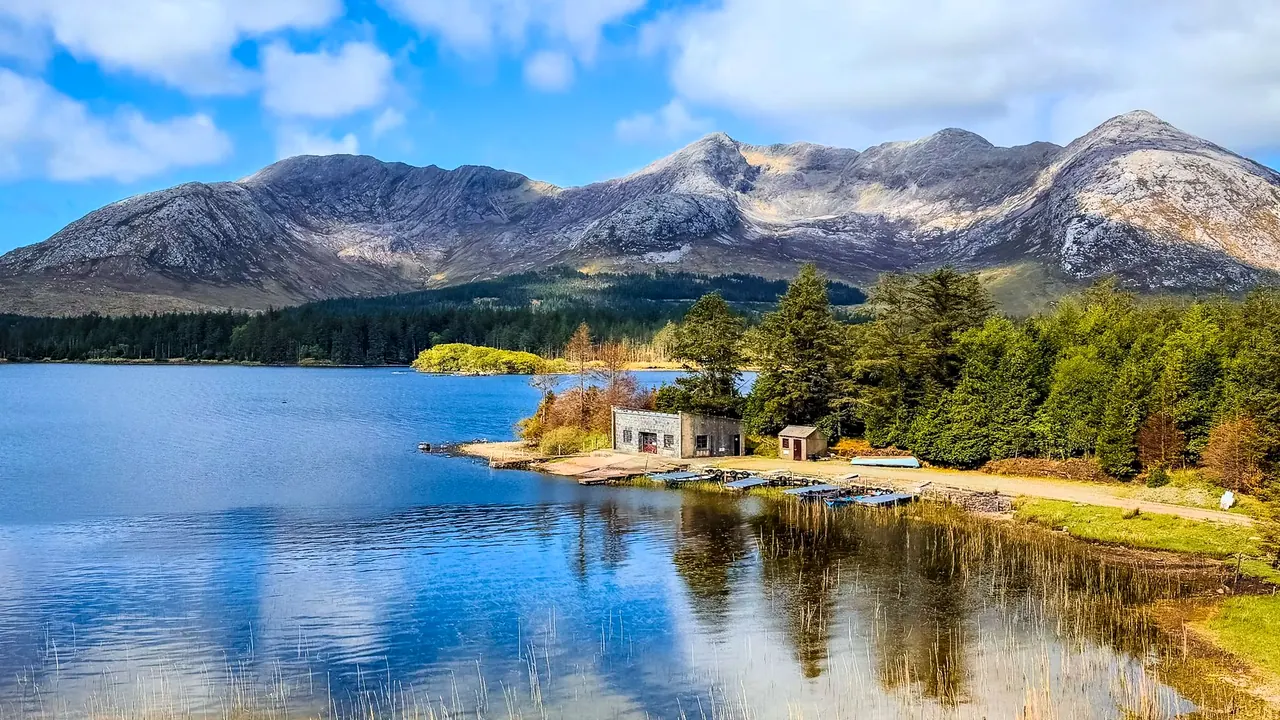
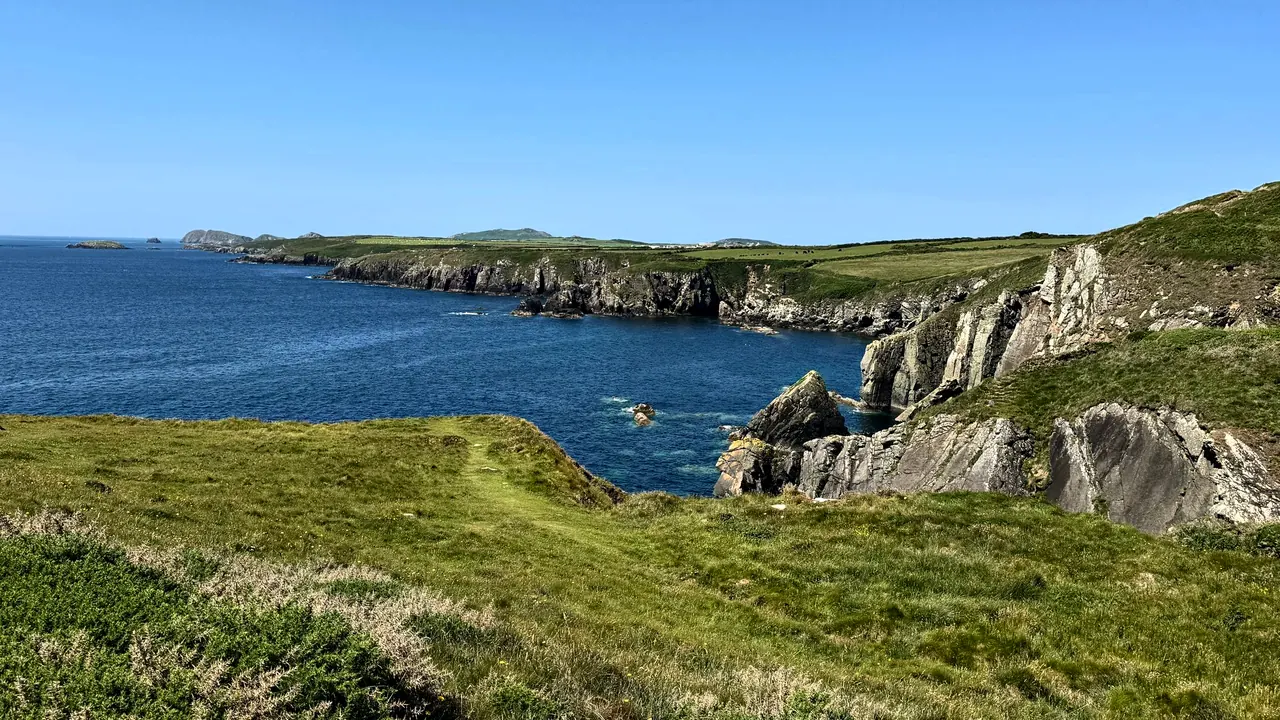
Photos: Connemara by Michael Deligan, CC BY-SA 4.0, cropped; Pembrokeshire by Petra Nesti, Pexels License.
Connemara or Pembrokeshire?
Our verdict in twelve categories, each scored against the same fixed benchmark cities, and the climate month by month, so you can choose for your trip.
Choose Connemara for
- day trips
- wellness
- live music and the arts
Connemara is for travellers who come mainly for wild, empty country: quartzite peaks rising out of bog, a fjord at Killary, and an Irish-speaking south where the music is a pub session or unaccompanied sean-nós. It suits hillwalkers, couples who want a lakeside country house and slow days, and anyone happy to drive on to the Aran Islands or into Galway for the things the region lacks. The trade-off is fewer sights, wetter weather and less for children.
Choose Pembrokeshire for
- culture and sights
- families
- beaches
Pembrokeshire is the easier all-round choice, especially with a family. The sand is better and the beaches are more numerous, with lifeguards in summer and towns like Tenby and Saundersfoot built around them. Its castles and the cathedral at St Davids give rainy days a purpose, and the weather is a little sunnier and drier. The coast path and the puffin and seal islands give it outdoor appeal of its own.
Scoreboard
Twelve categories on one fixed scale from 0 to 100. The shaded stretch is the gap between the two.
Your match
Pick a travel style or drag the sliders, and both match scores follow your weighting.
Wins on day trips and wellness with your weighting.
Wins on culture and sights and families with your weighting.
What matters to you?
Category by category
What the scores mean for a trip.
Beaches & swimming
Pembrokeshire is the beach destination of the two. Its range runs from Tenby's town sands and the walk-in cove at Barafundle to surf beaches like Whitesands and sheltered bays on the Marloes peninsula. Many have summer lifeguards, and there are enough beaches to find a quiet one in August.
Connemara's strands are just as striking to look at, especially the twin shell-sand crescents of Dog's Bay and Gurteen and the maerl of the Coral Strand. However, there are fewer of them, the sea is a little colder and the weather is less reliable, so beach time is something you fit around other plans.
Food & drink
Both regions are much alike here: good local produce, simply cooked, with little choice outside a few towns. The difference is in what's on the plate. Connemara means Killary mussels, oysters and hill lamb, with Clifden as the one place with real choice. Pembrokeshire leans on crab and lobster, salt-marsh lamb, farmhouse cheese and dairy ice cream, and its farmers' markets and farm shops make it easier for self-caterers.
Culture & sights
Pembrokeshire has far more to see. St Davids gives you a cathedral and the ruined Bishop's Palace in a city the size of a village. Pembroke Castle leads a ring of Norman fortresses, and Pentre Ifan and Castell Henllys reach back into prehistory.
Connemara has one big sight in Kylemore Abbey and its walled garden. After that come the Marconi and Alcock and Brown sites on Derrigimlagh bog and Pearse's Cottage. Its real strength is living culture: the Irish-speaking south, with its stone walls and famine villages, rather than places to visit.
Nightlife
Neither region is somewhere to go out late, and there are no clubs in either. In Connemara, evenings centre on Clifden's short street of pubs and village bars where walkers and locals share the counter. In Pembrokeshire, the one lively spot is Tenby's harbour on summer weekends, with groups on weekends away and a few bars open late. Elsewhere it's a quiet country inn.
Nature & outdoors
Both are outstanding outdoor regions, but the landscapes differ. Connemara is mountain country: the Twelve Bens and Maumturks, the fjord of Killary Harbour and ridge walks like the Glencoaghan horseshoe that call for experienced hillwalkers. There are also pony treks and quiet bog roads to cycle.
Pembrokeshire is about the coast and the sea. Its coast path follows about 300km of cliffs and arches. Offshore, Skomer has puffins, Ramsey has seal pups and Grassholm has its gannet colony. There is also coasteering, surfing and sea kayaking, which make it the livelier choice if you want to get in the water.
Day trips
Connemara has the stronger day trips because Galway city is about an hour from Clifden, with medieval streets and plenty of evening life. Ferries from Rossaveal reach Inis Mór and the cliff fort of Dún Aonghasa, and Westport and Cong lie just over the Mayo border.
From Pembrokeshire, most trips lead to somewhere similar but smaller: the monks' island of Caldey, Cardigan, Aberaeron and Dylan Thomas's Laugharne. They are pleasant outings, but there is no city to match Galway close by.
Good for families
Pembrokeshire is far easier with children. Tenby and Saundersfoot have beaches right in town, and there is crabbing off the harbour walls. Boat trips go out to the puffin and seal islands, while a farm park with an indoor funfair and several soft-play centres help on rainy days.
Connemara suits families who are happy outdoors, with ponies, rock pools, sheltered bays and the play area at Letterfrack. However, it has nothing built for wet days, so a run of rain usually means driving to Galway.
Getting around
You'll want a car in both, but Pembrokeshire is a little more forgiving. Branch railway lines reach Tenby, Pembroke and Fishguard, and seasonal coastal buses let you walk one-way stretches of the path. Its narrow lanes are the main hassle, along with beach car parks that fill early.
Connemara has a single coach route from Galway to Clifden. Its single-track roads wind slowly past sheep and tour coaches, and island ferries can be cancelled in rough seas.
Shopping & style
Neither is a shopping destination, but Pembrokeshire has more to browse. Narberth has independent shops, delis and antiques, and the woollen mills weave Welsh blankets. Connemara's shopping comes down to a few craft shops, mostly in Clifden, selling green marble, hand-knits and tweed. Serious shoppers head to Galway.
Affordability
Both are expensive in July and August. Pembrokeshire is easier on the budget, with campsites, self-catering and moderate pub meals. It is also much cheaper in spring and early autumn.
Connemara reflects Ireland's high prices: the lakeside country house hotels and Clifden rooms are dear in summer and book up early. Hiring a car adds to the cost, although B&Bs and free walking help.
Live music & performing arts
Connemara has the richer living tradition. On summer nights there are trad sessions in Clifden and village pubs, sean-nós singing and set dancing in the Irish-speaking south, and the Clifden Arts Festival in September.
Pembrokeshire has more formal settings but less going on. There is the early-summer classical festival in St Davids Cathedral, small theatres in Milford Haven and Fishguard, and otherwise the odd folk night or choir.
Wellness & relaxation
Connemara is the better place to slow right down. Its calm comes from lakeside country house hotels and cottages near the sea, and a few hotel spas offer treatments and a pool. The local habit of a cold dip on any strand, followed by a hot drink, is easy to join. There are no thermal baths or bathing traditions in either region.
In Pembrokeshire, rest is more active: you walk a stretch of the coast path and come back to a room with a view. What it has that Connemara lacks is a handful of yoga and retreat stays in farmhouses and on the coast. These suit anyone who wants a few days with some structure rather than a spa.
When should you go?
Pick your month. The climate figures are measured averages, not a forecast.
Connemara in July
Pembrokeshire in July
Daytime high, °C
Rainfall in the month, mm
Where the figures come from
Connemara's temperatures are measured 83 km from the centre, at Belmullet.
Connemara has no rain gauge within 25 km of the centre, so its rainfall comes from a gridded climate dataset read at the destination rather than from a gauge further away.
Connemara's sunshine is measured 70 km from the centre, at Galway.
Pembrokeshire's temperatures are measured 46 km from the centre, at Aberporth.
Pembrokeshire has no rain gauge within 25 km of the centre, so its rainfall comes from a gridded climate dataset read at the destination rather than from a gauge further away.
Temperature and rainfall are climate normals, averaged over the years shown. Connemara: 1991-2020 (sunshine 1981-2010) normals, Belmullet (82.8 km from centre). Pembrokeshire: 1991-2020 normals, Aberporth (46.2 km from centre).
Connemara is at its best in April and May, the driest and brightest part of its year, with clear light for the hills. Summer is mild rather than warm, with highs of about 18°C in July and August. That is fine for walking but never hot, and with the sea at about 16°C at its peak every swim is brisk. The rain builds from August and reaches about 140mm a month in November and December, when the short, wet days suit only walkers who are happy in waterproofs.
Pembrokeshire is just as warm in summer, but it is drier in every month and sunnier for most of the year. Late spring and early summer are its best stretch, and May is both the sunniest month and one of the driest. Its sea warms a little further, to about 17°C in August, so in late summer it is a degree above Connemara's. That suits short dips, though most people still wear wetsuits. Its winters are less wet than Connemara's but a degree or two colder by day.
Which traveller are you?
On a family trip with children, Pembrokeshire is the better choice. Its lifeguarded sandy beaches sit right in Tenby and Saundersfoot, there are boat trips to see seals and puffins, and a farm park and soft-play centres help on wet days. Connemara has none of that built-in backup.
For a beach and sun trip, Pembrokeshire is the better bet, although neither is a place to bake. Barafundle, Whitesands and Broad Haven offer more choice, it gets more sunshine and the sea is slightly warmer. Connemara's white shell strands are beautiful, but they are colder and wetter.
For a relaxing and wellness trip, Connemara is the quieter place to unwind. A country house hotel by a lake, long summer evenings and near-empty roads make for real stillness, and a few hotel spas add comfort. Pembrokeshire is restful too, but busier around its beach towns in summer.
Before you go
| Measure | Connemara | Pembrokeshire |
|---|---|---|
| Official language | English, Irish | English |
| Currency | Euro (EUR) | Pound Sterling (GBP) |
| Sockets | G230 V, 50 Hz | G230 V, 50 Hz |
| Driving side | Left | Left |
| Time zone | UTC, UTC+1 in summer | UTC, UTC+1 in summer |
| Emergency number | 112 | 112 or 999 |
| Main airport | Ireland West Airport Knock (NOC)18 non-stop destinations | Cardiff International Airport (CWL)32 non-stop destinations |
| Public holidays this year | 11 days | 8 days |
By the numbers
| Measure | Connemara | Pembrokeshire |
|---|---|---|
| Population | - | 125,818 |
| People per km² | - | 78 |
| Swim season, months above 21 °C | None | None |
Where else could you go?
Every comparison below shares a destination with this one, so you can follow Connemara or Pembrokeshire somewhere new.
- Cornwallvs Pembrokeshire
- County Kerryvs Connemara
- Snowdoniavs Pembrokeshire
- Devonvs Pembrokeshire
- Jurassic Coastvs Pembrokeshire
- Cotswoldsvs Pembrokeshire