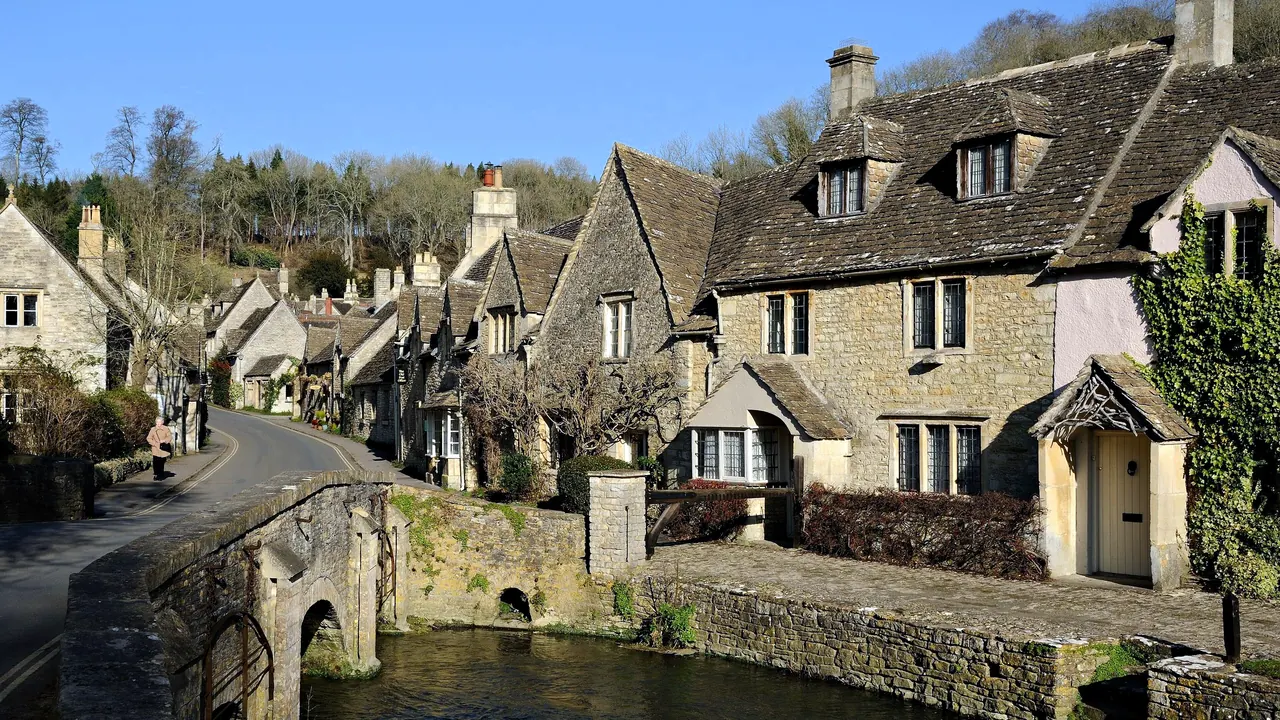
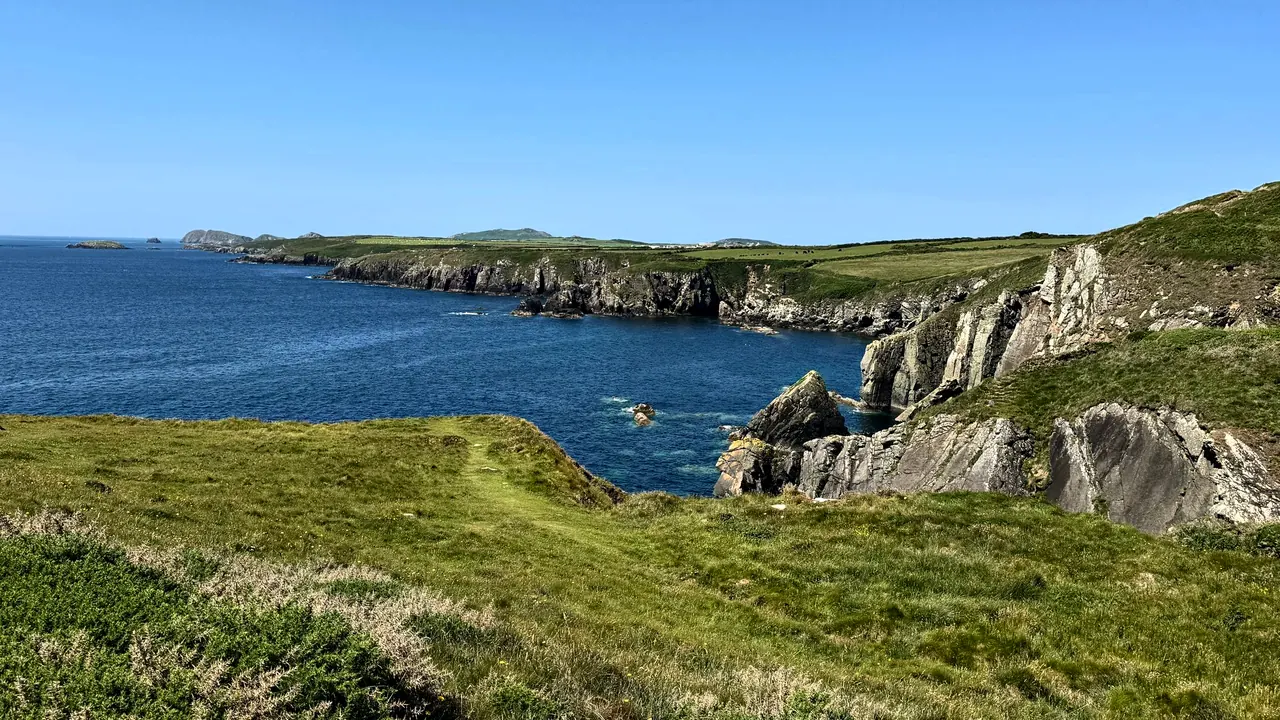
Photos: Cotswolds by Saffron Blaze, CC BY-SA 3.0, cropped; Pembrokeshire by Petra Nesti, Pexels License.
Cotswolds or Pembrokeshire?
Our verdict in twelve categories, each scored against the same fixed benchmark cities, and the climate month by month, so you can choose for your trip.
Choose Cotswolds for
- day trips
- wellness
- shopping
The Cotswolds suit travellers who want England at its most settled and polished: honey-stone villages, wool churches, Blenheim and Hidcote, good pub dinners and a country-house spa to come back to. It makes a strong base for a wider tour, because Oxford, Bath, Stratford and Warwick are all within easy reach. Pick it for culture, comfort and a slower pace inland, and accept that there is no sea and that staying is expensive.
Choose Pembrokeshire for
- beaches
- nature and the outdoors
- prices
Pembrokeshire is the better choice if you want the coast and the wild. Its sandy beaches, the cliff path, puffins on Skomer and seals on Ramsey give days spent outside a sense of scale that the gentle wolds cannot match. It is a vacation for walking, surfing, kayaking and rock-pooling with children. You give up the great houses, the theatre and the wide range of day trips, and you swim in a cold sea, but it costs less and feels far more remote.
Scoreboard
Twelve categories on one fixed scale from 0 to 100. The shaded stretch is the gap between the two.
Your match
Pick a travel style or drag the sliders, and both match scores follow your weighting.
Wins on day trips and wellness with your weighting.
Wins on beaches and nature and the outdoors with your weighting.
What matters to you?
Category by category
What the scores mean for a trip.
Beaches & swimming
This is where the two regions differ most. The Cotswolds have no coast to speak of. The Severn shore is mudflats and fierce tides, so a swim means the sandy lake beach at the Cotswold Water Park or a cold river pool.
Pembrokeshire is built around its beaches, from the dune-backed cove at Barafundle to the long, open sweeps of Newgale and Whitesands. Even in August you can find a quieter bay. The sea stays cool, so expect short swims, often in a wetsuit.
Food & drink
The Cotswolds eat better, mostly thanks to their country pubs. Beamed inns around Stow, Chipping Campden and the Coln valley serve local lamb and game, and Cheltenham adds fine dining and a wider choice of cuisines.
Pembrokeshire's strength is its ingredients rather than its restaurants: crab and lobster from the small harbours, salt-marsh lamb and dairy-farm ice cream. Good tables are few outside St Davids, Narberth and Fishguard, so self-caterers with a farm-shop basket often eat best.
Culture & sights
The Cotswolds pack far more sights into a small area. Whole wool-trade townscapes survive at Chipping Campden, Burford and Bibury's Arlington Row, and the wool churches of Northleach and Fairford are among the finest in England. Blenheim Palace, Sudeley Castle and Chedworth Roman Villa are all a short drive apart and can fill several days.
Pembrokeshire's heritage is older and more spread out. It includes the cathedral and roofless Bishop's Palace at St Davids, the Norman castles at Pembroke and Carew, and the Pentre Ifan burial chamber up in the Preseli Hills. It is atmospheric, but the museums are small and a few days covers it.
Nightlife
Neither region is for a night out, and in both most villages are quiet by eleven. The difference is in where the little nightlife there is can be found. In the Cotswolds it is Cheltenham's cocktail bars around the Promenade and Montpellier, which are livelier on race weekends. In Pembrokeshire it is Tenby's harbour pubs on a summer weekend, with groups on weekends away and a seaside feel that fades once the season ends.
Nature & outdoors
Pembrokeshire is the stronger of the two outdoors. Its national park coast has about 300km of path over cliffs, arches and stacks, with puffins on Skomer, seal pups on Ramsey and gannets crowding Grassholm. Surfing, coasteering and sea kayaking add active days to the walking.
The Cotswolds offer gentler country of dry-stone walls, beech woods and quiet river valleys. The best views are from the escarpment at Broadway Tower or Cleeve Hill, and the Cotswold Way follows that edge to Bath. It is lovely walking, but nothing here is wild.
Day trips
The Cotswolds are far better placed for days out. Oxford, Bath, Stratford-upon-Avon, Warwick Castle, Gloucester Cathedral and Worcester are all within about an hour, and several can be reached by train.
From Pembrokeshire the trips are smaller and slower: a boat to the monks' island of Caldey, the harbours of Aberaeron and New Quay up the coast, or Dylan Thomas's boathouse at Laugharne. They are pleasant outings, but none is a major destination in its own right.
Good for families
Both regions are easy, safe choices with children, but the days look different. In the Cotswolds they are built around attractions: rhinos at the Cotswold Wildlife Park, the model village at Bourton-on-the-Water, lambing on farm parks and Warwick Castle to the north. All of these mean time in the car.
Pembrokeshire offers simpler seaside fun, with sandy lifeguarded beaches, crabbing off harbour walls and boat trips to see seals. Tenby and Saundersfoot let you walk straight to the sand, though a cold sea and wet days can cut the fun short.
Getting around
In both regions a car is close to essential, and in both the lanes are narrow and the summer car parks fill early. The difference is in what you can do without one. Cotswold rail stations such as Moreton-in-Marsh and Kingham link to London, and footpaths join neighbouring villages, which makes a walking stay possible. Pembrokeshire's seasonal coastal buses are designed for one-way walks on the coast path, and the county's branch lines end at Tenby, Pembroke and Fishguard.
Shopping & style
The Cotswolds have the better shopping. Tetbury and Stow are known for antique dealers, Burford and Broadway have galleries and homeware shops, and Cheltenham's Regency arcades and Montpellier boutiques give the region a proper high street.
Pembrokeshire has a smaller choice. Narberth's independent shops are the highlight, and Welsh blankets from the traditional woollen mills are what most people take home, while Tenby leans heavily on buckets and souvenirs.
Affordability
Pembrokeshire is the cheaper of the two, although neither is a bargain. Its cottages and campsites charge peak rates during the school summer break, but pub meals are moderately priced and spring or early autumn bring real savings. In the Cotswolds, manor-house hotels and stone cottages cost well above most of rural England, and the stately homes and gardens each charge full admission. A shared cottage or a chain hotel in Cheltenham keeps the bill down.
Live music & performing arts
The Cotswolds have much more on stage. Cheltenham has the Victorian Everyman Theatre and long-running jazz, classical and literature festivals, Longborough stages summer opera in a barn, and the Royal Shakespeare Company is a short drive away at Stratford.
In Pembrokeshire, the classical festival under the ancient roof of St Davids Cathedral in early summer is the main event. Beyond that there are small theatres in Milford Haven and Fishguard, and folk sessions in pubs.
Wellness & relaxation
The Cotswolds are made for pampering. Country-house hotels have serious spas set in converted barns and gardens, and Bath's rooftop thermal pool, fed by Britain's only natural hot springs, is close to the southern wolds.
Pembrokeshire relaxes you differently, with empty lanes, sea views and long cliff walks. It has only a handful of hotel spas and some farmhouse retreats, and no bathing tradition to compare with Bath.
When should you go?
Pick your month. The climate figures are measured averages, not a forecast.
Cotswolds in July
Pembrokeshire in July
Daytime high, °C
Rainfall in the month, mm
Where the figures come from
Cotswolds has no rain gauge within 25 km of the centre, so its rainfall comes from a gridded climate dataset read at the destination rather than from a gauge further away.
Cotswolds's sunshine is measured 46 km from the centre, at Lyneham.
Pembrokeshire's temperatures are measured 46 km from the centre, at Aberporth.
Pembrokeshire has no rain gauge within 25 km of the centre, so its rainfall comes from a gridded climate dataset read at the destination rather than from a gauge further away.
Temperature and rainfall are climate normals, averaged over the years shown. Cotswolds: 1961-1990 (sunshine 1991-2020, rainfall 1991-2020) normals, Fairford Royal Air Force Base (22.5 km from centre). Pembrokeshire: 1991-2020 normals, Aberporth (46.2 km from centre).
Both regions are at their best from late May to September, but their summers feel different. Inland, the Cotswolds warm up more, reaching about 22°C in July, the sunniest month. Pembrokeshire stays cooler, at around 18°C on the coast, but its sunshine peaks earlier, in May and June, which suits the coast path and the seabird season. For beach days, August and early September are the best months there, when the sea reaches about 17°C. That is still a brisk swim, and the Cotswolds have no sea at all.
Autumn arrives harder in the west. Pembrokeshire turns wet from October, with November the wettest month at around 121mm, and wind and rain make the coast less inviting. The Cotswolds get less rain over the winter months, though they are slightly colder, with January highs around 5°C. That leaves crisp days for village walks between pub fires. Spring suits both regions, with bluebells in the beech woods and the first puffins offshore.
Which traveller are you?
On a beach and sun trip, Pembrokeshire is the clear choice. Barafundle, Whitesands, Newgale and the town beaches of Tenby give you real sand, rock pools and lifeguarded bays. The Cotswolds offer only a lake beach at the Water Park.
For a culture and arts trip, the Cotswolds are much the better base. The wool-trade villages, Blenheim Palace and Chedworth are all close, the Everyman and Cheltenham's festivals cover the arts, and Stratford's Royal Shakespeare theatres are within easy reach. Oxford and Bath are near enough for a day each.
On a relaxing and wellness trip, the Cotswolds are better. Country-house hotels with proper spas, long lunches and Bath's thermal waters nearby make rest easy to arrange. Pembrokeshire is calming, but its quiet comes from coast walks rather than treatment rooms.
Before you go
| Measure | Cotswolds | Pembrokeshire |
|---|---|---|
| Official language | English | English |
| Currency | Pound Sterling (GBP) | Pound Sterling (GBP) |
| Sockets | G230 V, 50 Hz | G230 V, 50 Hz |
| Driving side | Left | Left |
| Time zone | UTC, UTC+1 in summer | UTC, UTC+1 in summer |
| Emergency number | 112 or 999 | 112 or 999 |
| Main airport | Bristol Airport (BRS)117 non-stop destinations | Cardiff International Airport (CWL)32 non-stop destinations |
| Public holidays this year | 8 days | 8 days |
By the numbers
| Measure | Cotswolds | Pembrokeshire |
|---|---|---|
| Population | - | 125,818 |
| People per km² | - | 78 |
| Swim season, months above 21 °C | - | None |
Where else could you go?
Every comparison below shares a destination with this one, so you can follow Cotswolds or Pembrokeshire somewhere new.
- Isle of Wightvs Cotswolds
- Peak Districtvs Cotswolds
- Jurassic Coastvs Cotswolds
- Cornwallvs Pembrokeshire
- Snowdoniavs Pembrokeshire
- Devonvs Pembrokeshire