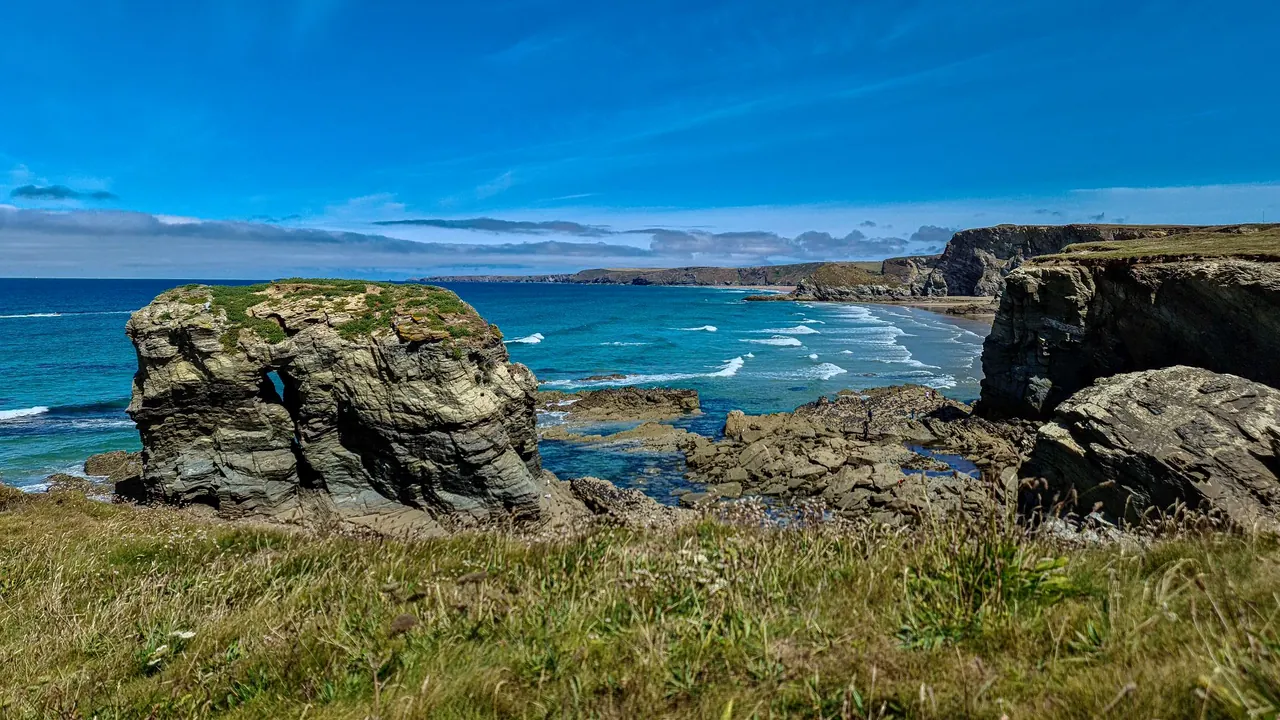
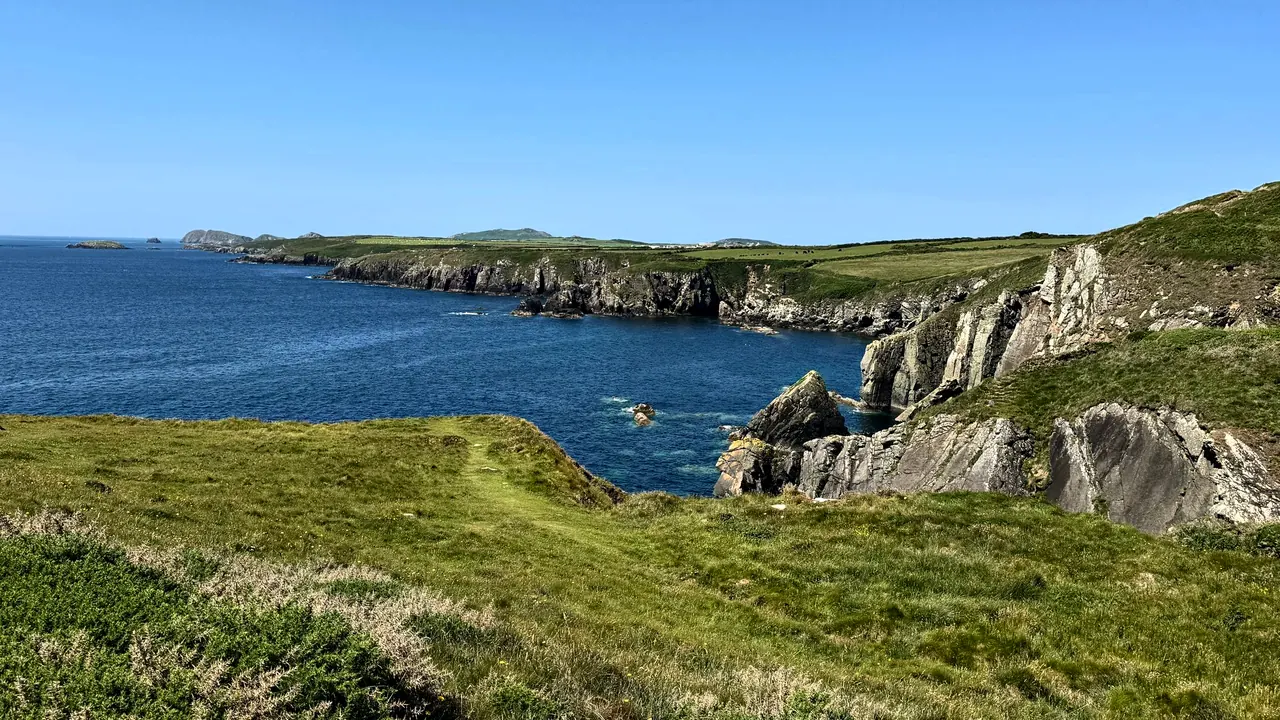
Photos: Cornwall by Howard Senton, Pexels License; Pembrokeshire by Petra Nesti, Pexels License.
Cornwall or Pembrokeshire?
Our verdict in twelve categories, each scored against the same fixed benchmark cities, and the climate month by month, so you can choose for your trip.
Choose Cornwall for
- food and drink
- nightlife
- wellness
Cornwall suits travellers who want more than a beach and a footpath from their week on the coast. It has the stronger seafood towns in Padstow, St Ives and Falmouth, more for children on rainy days, spa hotels above the sand, the Minack Theatre and at least one town, Newquay, that stays up late. It is also busier and more expensive, and in high summer the lanes and car parks show it.
Choose Pembrokeshire for
- prices
- getting around
- nature and the outdoors
Pembrokeshire is the quieter, smaller choice, and the better one for people who come mainly for the coast itself. The national park shoreline, the island seabird colonies and the long sandy bays are as good as anything in Cornwall, the county is quick to cross, and day-to-day costs are lower. You give up the restaurant towns, the evening life and the wet-weather attractions, so it suits walkers, wildlife watchers and families happy with simple days.
Scoreboard
Twelve categories on one fixed scale from 0 to 100. The shaded stretch is the gap between the two.
Your match
Pick a travel style or drag the sliders, and both match scores follow your weighting.
Wins on food and drink and nightlife with your weighting.
Wins on prices and getting around with your weighting.
What matters to you?
Category by category
What the scores mean for a trip.
Beaches & swimming
Cornwall and Pembrokeshire are evenly matched for beaches, and the water is just as cold at both. The difference is in character. Cornwall offers a wider range of settings: the big surf beaches of the north coast at Fistral and Watergate Bay, the white sand and turquoise water of Porthcurno and Pedn Vounder in the far west, and Kynance Cove under its serpentine cliffs.
Pembrokeshire's strength is wide, clean sand, and it is easier to find room to yourself. The broad bays at Newgale, Broad Haven and Whitesands and the walk-in dunes behind Barafundle stay quieter in August than the busiest Cornish coves.
Food & drink
Cornwall is clearly the better place to eat. Newlyn's fishing fleet supplies a coast of seafood restaurants, with Padstow, Rock, St Ives, Porthleven and Falmouth all serious about their cooking, and Camel Valley sparkling wine and Cornish cider are local too.
Pembrokeshire has fine ingredients, including harbour crab, salt-marsh lamb and early potatoes, but few kitchens to match them. Outside Fishguard, St Davids and Narberth the menus repeat, so the farm shops and farmers' markets serve a self-catering cook better than they serve someone who wants to eat out.
Culture & sights
The two are level on heritage, but they lean towards different centuries. Cornwall's sights are more varied and more modern: Tate St Ives and the Hepworth garden, the mining engine houses around Botallack, St Michael's Mount on its tidal causeway and the Eden Project's biomes.
Pembrokeshire goes further back in time. It has the cathedral and ruined Bishop's Palace at St Davids, Pembroke Castle and its ring of Norman fortresses, and the Pentre Ifan burial chamber in the bluestone hills of the Preseli. Both need a car, but Pembrokeshire's sights fit into fewer days.
Nightlife
Neither is a place for nights out, but Cornwall has more to offer after dark. Newquay fills with surfers, students and stag groups in summer and has a few clubs, and Falmouth's university gives it a livelier bar scene. In Pembrokeshire, a summer weekend in Tenby is the high point, and the rest of the county means a pint in a village inn and quiet roads by eleven.
Nature & outdoors
Both coastlines are outstanding, and they differ more in what you do there than in quality. Cornwall is the surfing county, with reliable swell at Newquay, Bude and Sennen. It also has the granite cliffs of Penwith, the Lizard heathland, Bodmin Moor and the flat Camel Trail for cycling.
Pembrokeshire is the better choice for wildlife and continuous protected coast. Puffins nest on Skomer, gannets crowd Grassholm and seal pups lie on Ramsey's beaches in autumn, and the cliffs where coasteering began are all inside the national park.
Day trips
Cornwall has the bigger outings, even if most of them are another harbour town much like the last. The real exception is the Isles of Scilly, reached by a short flight or a long ferry from Penzance, which makes a full and memorable day. From the east of the county, Plymouth's historic Barbican and the Devon towns on the edge of Dartmoor bring a city and a different landscape within reach.
Pembrokeshire's trips are smaller, though they are more mixed in kind: a boat from Tenby to Caldey and its monks' island, castles at Cardigan and Laugharne, Dylan Thomas's boathouse, and dolphin-watching from New Quay's quay. None of them is a destination in its own right, and Gower and Swansea, about two hours away, are as far as a day out really goes.
Good for families
Cornwall is the easier family choice, mostly because of what it offers when the weather turns. The Eden Project, the seal sanctuary at Gweek, Newquay's zoo and aquarium and a small theme park fill wet days. Sheltered beaches such as Porthminster and Gyllyngvase suit toddlers.
Pembrokeshire offers simpler days of crabbing, rock pools and seal-watching boat trips, with a farm park and soft play as indoor back-ups. Tenby and Saundersfoot, where you can walk from your room to the sand, are its best bases for young children.
Getting around
Both are really car destinations with narrow, high-hedged lanes, and the difference lies in scale. Cornwall is long, and its summer queues and parking problems in St Ives and Port Isaac are worse. On the other hand, its branch lines to St Ives, Falmouth, Newquay and Looe make a car-free stay in one town practical.
Pembrokeshire takes about an hour to cross. Its seasonal coastal buses are built for walkers, letting you walk one stretch of the path and ride back to the start.
Shopping & style
Cornwall has more to browse, though neither is a shopping destination. St Ives has the densest run of galleries and potteries, Penzance's Chapel Street and Fowey add antiques and makers' studios, Newquay sells surf gear and Truro has a proper high street. Pembrokeshire's highlights are Narberth's independent shops and the Welsh blankets woven in its old woollen mills, which are the best thing to take home from either county.
Affordability
Pembrokeshire is the cheaper of the two, though neither is cheap in July and August. In Cornwall, sought-after cottages book out early, seafood dining rooms are expensive and parking and attraction tickets keep adding to the bill. Pembrokeshire's pubs and cafés cost less, and its days are mostly spent on free beaches and the coast path. In both, spring and early autumn bring prices down noticeably.
Live music & performing arts
Cornwall has the one stage worth planning a trip around. The Minack Theatre's open-air seats are cut into the cliff above Porthcurno, and the county adds the Hall for Cornwall in Truro, Padstow's May Day celebration and a large August festival near Newquay. Pembrokeshire's main event is the classical festival held in St Davids Cathedral in early summer. Beyond that, it has small theatres in Milford Haven and Fishguard and folk sessions in pubs.
Wellness & relaxation
Cornwall has more to offer anyone who wants pampering as well as peace. There are spa hotels above the beaches at Watergate Bay, Carbis Bay and St Mawes, and wood-fired saunas on the sand to pair with a cold swim. Pembrokeshire's calm comes almost entirely from its emptiness, with a handful of country-house spas and farmhouse retreats. Outside August, though, it is easier to find real quiet there than in Cornwall's busier resorts.
When should you go?
Pick your month. The climate figures are measured averages, not a forecast.
Cornwall in July
Pembrokeshire in July
Daytime high, °C
Rainfall in the month, mm
Where the figures come from
Cornwall has no rain gauge within 25 km of the centre, so its rainfall comes from a gridded climate dataset read at the destination rather than from a gauge further away.
Cornwall's sunshine is measured 28 km from the centre, at Camborne.
Pembrokeshire's temperatures are measured 46 km from the centre, at Aberporth.
Pembrokeshire has no rain gauge within 25 km of the centre, so its rainfall comes from a gridded climate dataset read at the destination rather than from a gauge further away.
Temperature and rainfall are climate normals, averaged over the years shown. Cornwall: 1991-2020 normals, Saint Mawgan (5.7 km from centre). Pembrokeshire: 1991-2020 normals, Aberporth (46.2 km from centre).
Both are Atlantic coasts with almost the same year. Around the main resort areas, summer days peak at about 19°C in Cornwall and a degree lower in Pembrokeshire. The sea in both is warmest in August and September at about 17°C, so beach weather means June to September, with short swims or a wetsuit. May and June are the best months for walking and wildlife. They are the sunniest of the year in both places, and May is usually the driest, with about 52mm of rain in Cornwall.
From October the rain sets in hard. November brings over 120mm in Pembrokeshire, and the days shorten and darken. Cornwall's winters are a little milder, with January highs of around 9°C against 7°C in Pembrokeshire, which makes Cornwall slightly kinder for a coastal walk out of season. Neither is too hot at any time of year, and both are at their wettest from late autumn to midwinter.
Which traveller are you?
For a food and nightlife trip, choose Cornwall. Padstow, Newlyn's catch and Falmouth's dining rooms give it a real seafood scene, and Newquay and Falmouth keep bars open late. Pembrokeshire offers good produce, but its evenings end in village inns.
On a trip on a tight budget, Pembrokeshire stretches the money further. Camp or rent a farm cottage near the coast path, and come in May or June, the sunniest months, before the school break. Cornwall's sought-after coastal towns are much harder to do cheaply.
On an outdoors trip, Pembrokeshire has the edge. Its coast is almost all national park, with puffins on Skomer, seals on Ramsey and coasteering where the sport began. Cornwall answers with better surf at Newquay and Bude and the granite cliffs of Penwith.
Before you go
| Measure | Cornwall | Pembrokeshire |
|---|---|---|
| Official language | English | English |
| Currency | Pound Sterling (GBP) | Pound Sterling (GBP) |
| Sockets | G230 V, 50 Hz | G230 V, 50 Hz |
| Driving side | Left | Left |
| Time zone | UTC, UTC+1 in summer | UTC, UTC+1 in summer |
| Emergency number | 112 or 999 | 112 or 999 |
| Main airport | Cornwall Airport Newquay (NQY)15 non-stop destinations | Cardiff International Airport (CWL)32 non-stop destinations |
| Public holidays this year | 8 days | 8 days |
By the numbers
| Measure | Cornwall | Pembrokeshire |
|---|---|---|
| Population | 575,525 | 125,818 |
| People per km² | 162 | 78 |
| Swim season, months above 21 °C | None | None |
Where else could you go?
Every comparison below shares a destination with this one, so you can follow Cornwall or Pembrokeshire somewhere new.
- Isles of Scillyvs Cornwall
- Devonvs Cornwall
- Snowdoniavs Pembrokeshire
- Jurassic Coastvs Cornwall
- Devonvs Pembrokeshire
- Jurassic Coastvs Pembrokeshire