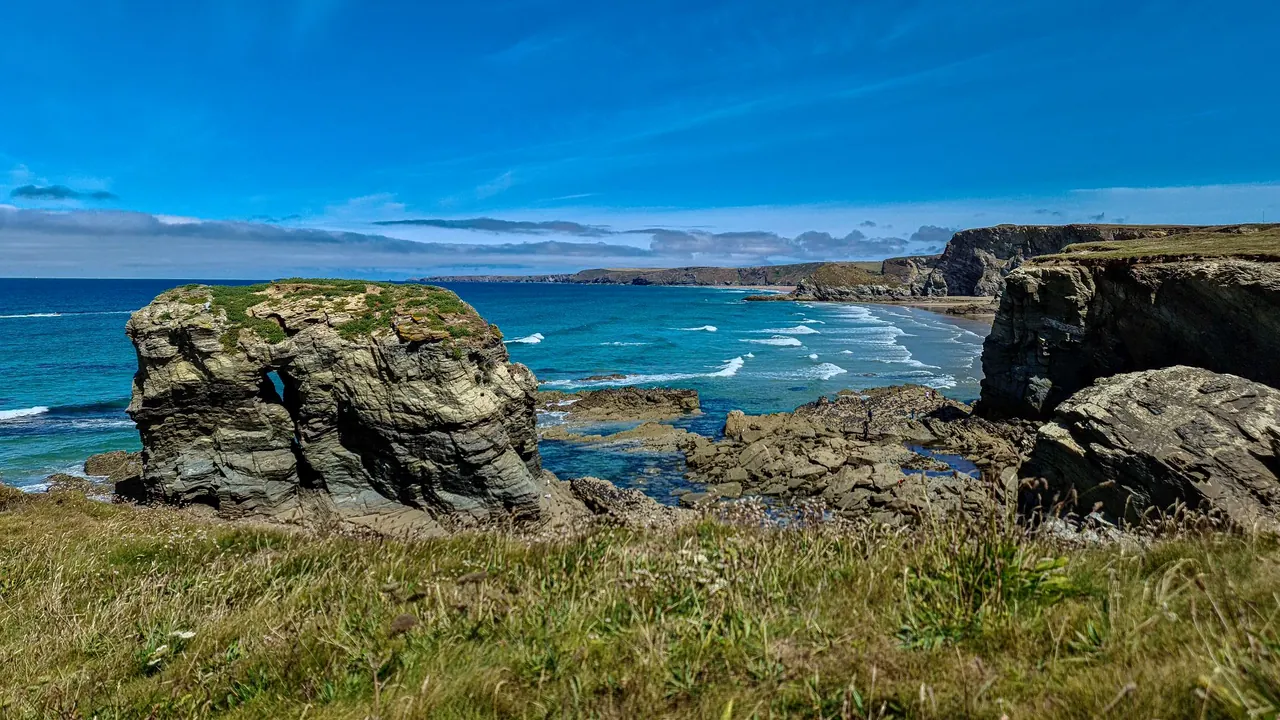
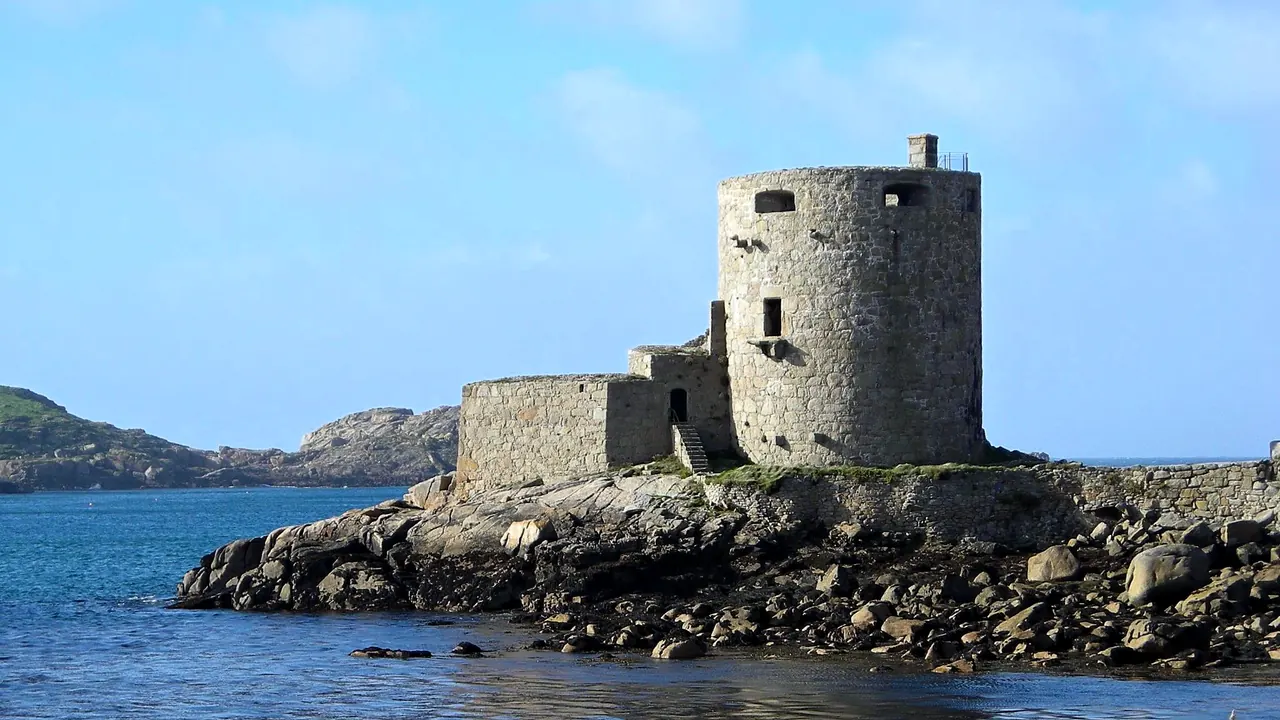
Photos: Cornwall by Howard Senton, Pexels License; Isles of Scilly by Mark Percy, CC BY-SA 2.0, cropped.
Cornwall or Isles of Scilly?
Our verdict in twelve categories, each scored against the same fixed benchmark cities, and the climate month by month, so you can choose for your trip.
Choose Cornwall for
- day trips
- live music and the arts
- nightlife
Cornwall suits a trip with range and movement. In one county you get surf beaches on the north coast, white-sand coves in the far west, St Ives and its galleries, St Michael's Mount, a long run of fishing towns to eat your way along, and Newquay or Falmouth when you want a livelier evening. It works best for families, groups and anyone who wants each day to look different, as long as you can put up with summer traffic, narrow lanes and parking.
Choose Isles of Scilly for
- getting around
The Isles of Scilly are for travellers who want to slow right down. Visitors need no car, crowds are rare and there is very little to do after dark. The days follow the tides and the boat times between five small islands, with seals, puffins and near-empty shell-sand bays. You give up choice in food, culture and entertainment, and getting there is harder. In return you get a quiet, self-contained island week that the mainland cannot offer in high summer.
Scoreboard
Twelve categories on one fixed scale from 0 to 100. The shaded stretch is the gap between the two.
Your match
Pick a travel style or drag the sliders, and both match scores follow your weighting.
Wins on day trips and live music and the arts with your weighting.
Wins on getting around with your weighting.
What matters to you?
Category by category
What the scores mean for a trip.
Beaches & swimming
Cornwall's beaches cover far more ground and more kinds of beach. You can surf at Fistral or Watergate Bay, walk the long sands of Gwithian and Godrevy, swim in the turquoise water at Porthcurno, or go to Kynance Cove under its serpentine cliffs. For calmer water there are the sheltered coves around Falmouth and Fowey. The best-known beaches fill up during the school summer break.
Scilly's bays are fewer and smaller, but they are pale shell sand with very clear water, and Par Beach on St Martin's or Rushy Bay on Bryher can be almost empty even in August. There is no surf to speak of. The sea is equally cold in both places, so the warm, shallow bays on the islands are the gentler place to swim.
Food & drink
Cornwall has much more choice. Fish from Newlyn supplies menus along the coast, from fish-and-chip counters to ambitious seafood restaurants in Padstow, Rock and Porthleven, and pasties, cream teas, Camel Valley sparkling wine and Cornish cider fill in around them.
On Scilly, eating means island produce in a handful of places: crab and lobster from local boats, island-reared beef, honesty stalls and farm ice cream. Hugh Town has most of the restaurants, and each off-island has a pub or hotel dining room. Many visitors cook for themselves, and outside the main season choice becomes very limited.
Culture & sights
Cornwall has more major sights and a wider spread of them. Highlights include St Michael's Mount on its tidal causeway, Tintagel's clifftop ruins, the mining engine houses around Botallack, Tate St Ives and the Hepworth garden, Truro Cathedral and the Eden Project. You could fill a week moving between them.
Scilly's heritage is on a smaller scale and suits a slower pace. On St Mary's there are the Garrison walls around Star Castle and Bronze Age graves at Innisidgen, Tresco has its castles, and Tresco Abbey Garden holds the shipwreck figureheads of the Valhalla collection. It is atmospheric, but two or three days cover it all.
Nightlife
Neither is a nightlife destination, but Cornwall at least has somewhere to go. Newquay fills with surfers and stag and hen groups in summer, and Falmouth's students keep a smaller scene going. Elsewhere evenings are spent in pubs and on harbour terraces.
On Scilly the main event of a summer evening is the pilot gig races in the harbour, followed by a pint on the quay. There are no clubs at all, and if you are staying on an off-island, the last boat home ends the night.
Nature & outdoors
Both are coastal landscapes, but Cornwall offers more of it and more to do in it. The South West Coast Path runs past the granite cliffs of Penwith, the Lizard heathland and the high cliffs near Boscastle. Inland there is Bodmin Moor, and Newquay, Bude and Sennen have Britain's most reliable surf.
Scilly is gentler and smaller, low heath and tors that you can walk around in a few hours per island, but its wildlife is close at hand. Boats take you to grey seals at the Western Rocks and to see puffins on Annet, you can snorkel with seals, and every October birdwatchers arrive to look for rare migrants.
Day trips
Cornwall gives you far more places to go: St Ives, Newlyn, Mousehole, Port Isaac, Fowey, the Falmouth ferry to St Mawes, inland Truro, and Plymouth's Barbican from the east of the county. From Penzance, the Isles of Scilly themselves make a long but memorable day out.
From Scilly, the outings are the off-islands and nothing beyond them. Tresco feels manicured, Bryher wild, St Martin's long and quiet, and St Agnes the most remote. Each makes a pleasant day of walking, a beach and lunch, but the mainland is too far for a comfortable return trip.
Good for families
Cornwall is the better-equipped family destination. Its lifeguarded beaches suit bodyboarding, and it has places to go in the rain, including the Eden Project, the Gweek seal sanctuary, Newquay's zoo and aquarium and a theme park near Helston. The Camel Trail is an easy family bike ride.
Scilly offers something different, the freedom to let children roam with barely any traffic, crabbing from quays and seal-spotting boat trips. But there is nothing made for children, little to do when it rains, and toddlers need watching on the boats.
Getting around
Once you are there, Scilly is the easier place. Nobody brings a car, Hugh Town is compact, and each off-island can be walked end to end in an hour or two, with launches from St Mary's linking them. The harder part is the journey out, by a long ferry from Penzance or a short flight that fog often delays, and rough weather can cancel crossings.
Cornwall mostly means driving on narrow, high-hedged lanes, with summer queues and scarce parking in St Ives, Padstow and Port Isaac. The branch railway lines to St Ives, Falmouth, Newquay and Looe do make a car-free stay in one of those towns workable.
Shopping & style
Cornwall has far more shopping, though it is mostly art and craft rather than brands. St Ives has the densest cluster of galleries and potteries. Falmouth, Fowey and Penzance's Chapel Street add antiques and makers' studios, Newquay has surf shops and Truro has a proper high street.
Scilly has a few short streets in Hugh Town and scattered studios on the off-islands. The most distinctive thing to take home is a box of scented narcissi from the flower farms.
Affordability
Both are expensive, but Scilly costs more. On top of island prices you pay for the plane or ferry out and a boat fare each day you visit another island, food costs more because everything arrives by sea, and Tresco is the dearest of all. Self-catering and the campsites on four of the islands are the ways to save.
Cornwall is costly over the school summer break, with parking and attraction tickets adding up. But pubs, pasties and self-catering keep the bill down, and spring and autumn are noticeably cheaper.
Live music & performing arts
Cornwall has one stage worth planning a trip around: the Minack Theatre, cut into the cliffs above Porthcurno. The Hall for Cornwall in Truro hosts touring shows, and the folk tradition runs from pub sessions and male voice choirs to Padstow's May Day.
On Scilly there is no theatre or venue at all. Live music means an occasional pub folk session or a concert in a church hall.
Wellness & relaxation
Cornwall is the better choice for a stay built around treatments. Spa hotels look out over the sea at Watergate Bay, Carbis Bay and St Mawes, and a sauna on the sand followed by a cold plunge in the Atlantic is a habit many locals keep even in winter. The peace depends on the season, though. In August the lanes and beaches are full, so the slow coastal walks and empty estuary villages belong to spring and autumn.
Scilly is the other way round. It has few treatments, only a handful of hotel spas and pools on Tresco and St Mary's. But its quiet does not depend on the month. There are no cars and few people even in high summer, the tides and the launch timetable set the pace, and the day ends with the sun going down over the Western Rocks rather than with a spa booking.
When should you go?
Pick your month. The climate figures are measured averages, not a forecast.
Cornwall in July
Isles of Scilly in July
Daytime high, °C
Rainfall in the month, mm
Where the figures come from
Cornwall has no rain gauge within 25 km of the centre, so its rainfall comes from a gridded climate dataset read at the destination rather than from a gauge further away.
Cornwall's sunshine is measured 28 km from the centre, at Camborne.
Isles of Scilly has no rain gauge within 25 km of the centre, so its rainfall comes from a gridded climate dataset read at the destination rather than from a gauge further away.
Isles of Scilly's sunshine is measured 78 km from the centre, at Camborne.
Temperature and rainfall are climate normals, averaged over the years shown. Cornwall: 1991-2020 normals, Saint Mawgan (5.7 km from centre). Isles of Scilly: 1991-2020 normals, Scilly, Saint Mary'S (0.7 km from centre).
The two share almost the same climate, so the seasons line up closely. Beach weather runs from June to September, when daytime highs reach about 19°C in July and August. The Atlantic is coolest in March and warms slowly to a peak of about 17°C in August, so swims are short in both places. May and June are the brightest and driest months, which makes late spring the best time for coast walks and wildlife. That suits the Scilly puffins especially, as they nest from spring to midsummer. It never gets too hot for walking in either place.
The rain sets in from October and stays heavy through the winter, with more than 100mm most months from October to January. On the islands winter is a touch milder, about 10°C in January and February rather than Cornwall's 9°C, but they are slightly wetter in early spring and September. Cornwall is very slightly warmer in May and June. Throughout the year the bigger difference is the wind and sea on the boat crossings to Scilly, not the temperature.
Which traveller are you?
On a food and nightlife trip, Cornwall is the clear choice. Padstow, St Ives, Porthleven and Falmouth have serious seafood cooking, and Newquay and Falmouth keep bars open late through the summer. Scilly offers a crab sandwich, a few pubs and an early night.
On a family trip with children of different ages, Cornwall copes better: teenagers can learn to surf at Bude or Newquay, and wet days have fallbacks. Scilly suits outdoorsy children who are happy with picnics and a different small island each day.
For a relaxing and wellness trip, Cornwall has the edge if rest means treatments, a sea-view pool and a good dinner, best in spring or autumn when the coast empties. Scilly suits a simpler rest: long walks, a book and evenings with nothing planned.
Before you go
| Measure | Cornwall | Isles of Scilly |
|---|---|---|
| Official language | English | English |
| Currency | Pound Sterling (GBP) | Pound Sterling (GBP) |
| Sockets | G230 V, 50 Hz | G230 V, 50 Hz |
| Driving side | Left | Left |
| Time zone | UTC, UTC+1 in summer | UTC, UTC+1 in summer |
| Emergency number | 112 or 999 | 112 or 999 |
| Main airport | Cornwall Airport Newquay (NQY)15 non-stop destinations | St. Mary's Airport (ISC)2 non-stop destinations |
| Public holidays this year | 8 days | 8 days |
By the numbers
| Measure | Cornwall | Isles of Scilly |
|---|---|---|
| Population | 575,525 | 2,281 |
| People per km² | 162 | 140 |
| Swim season, months above 21 °C | None | None |
Where else could you go?
Every comparison below shares a destination with this one, so you can follow Cornwall or Isles of Scilly somewhere new.
- Devonvs Cornwall
- Pembrokeshirevs Cornwall
- Jurassic Coastvs Cornwall
- Devonvs Isles of Scilly
- Pembrokeshirevs Isles of Scilly
- Jurassic Coastvs Isles of Scilly