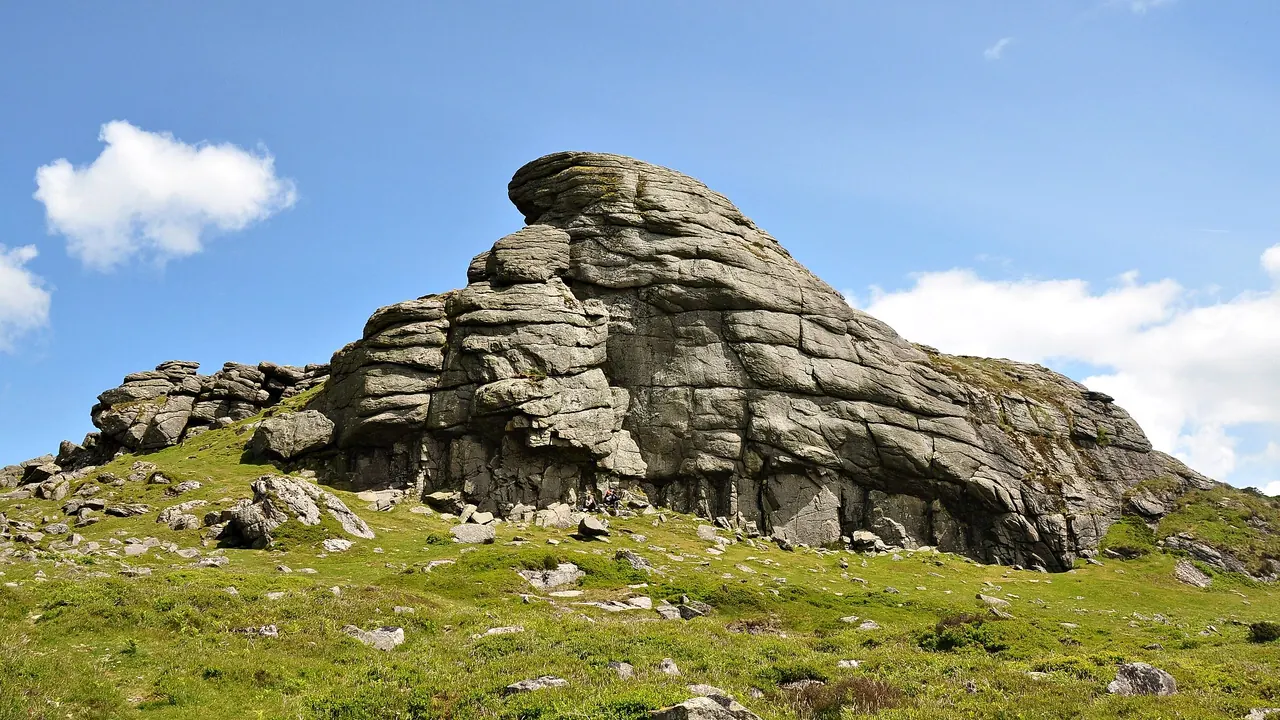
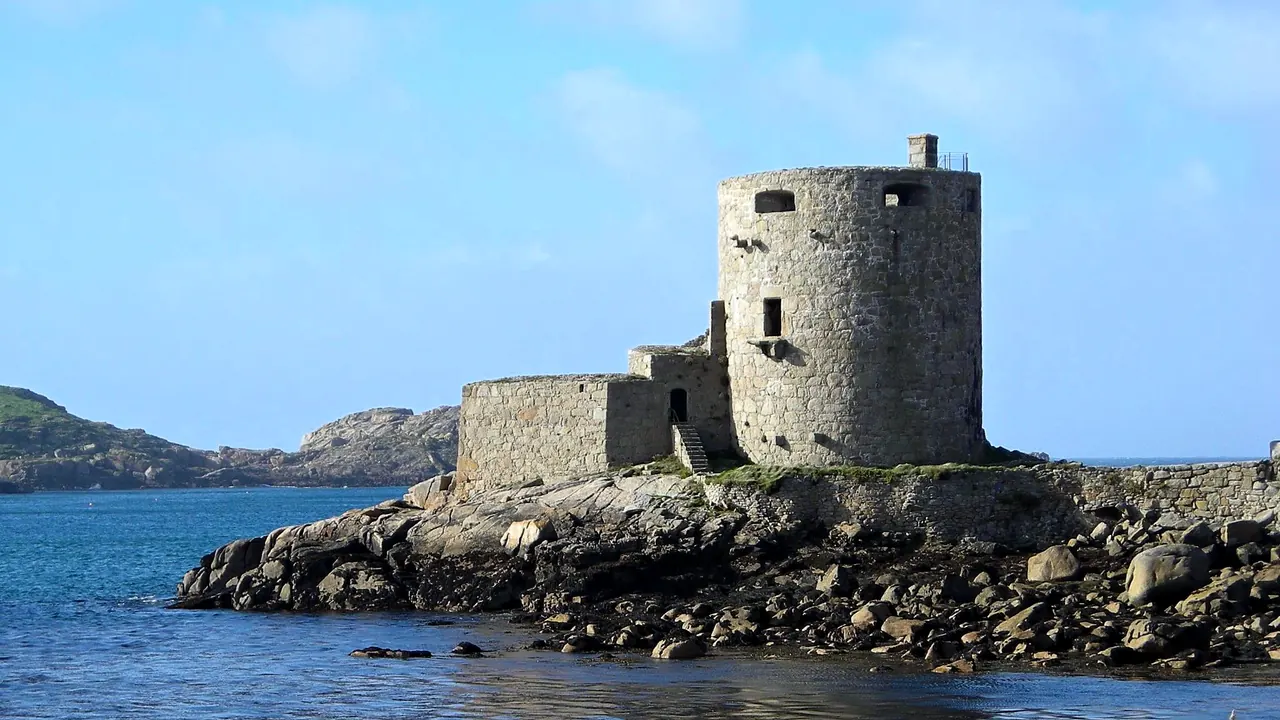
Photos: Devon by Nilfanion, CC BY-SA 3.0, cropped; Isles of Scilly by Mark Percy, CC BY-SA 2.0, cropped.
Devon or Isles of Scilly?
Our verdict in twelve categories, each scored against the same fixed benchmark cities, and the climate month by month, so you can choose for your trip.
Choose Devon for
- day trips
- live music and the arts
- prices
Devon suits a longer touring vacation with a car and a list of plans. It has two coasts, Dartmoor and Exmoor, Exeter Cathedral and outings that reach into Cornwall, Dorset and Bath. It is the better pick for families who need zoos and steam railways in reserve, for anyone who wants more than one pub to choose from in the evening, and for keeping the bill under control.
Choose Isles of Scilly for
- getting around
- beaches
The Isles of Scilly are for travellers who want to leave the car behind and let tides and boat times set the day. The shell-sand bays are emptier and clearer, seals and puffins come close on the boat trips, and evenings are almost silent. You give up choice in food, entertainment and outings, and you pay more for the privilege, but few places in Britain feel so far removed.
Scoreboard
Twelve categories on one fixed scale from 0 to 100. The shaded stretch is the gap between the two.
Your match
Pick a travel style or drag the sliders, and both match scores follow your weighting.
Wins on day trips and live music and the arts with your weighting.
Wins on getting around and beaches with your weighting.
What matters to you?
Category by category
What the scores mean for a trip.
Beaches & swimming
Both have the same cold Atlantic water, so the difference is the setting, not the swimming. Devon offers range: surf and dunes at Woolacombe, Saunton and Croyde on the north coast, sheltered estuary sand at Bantham and Bigbury on the south, and resort beaches in Torbay with lifeguards and ice cream.
Scilly's beaches are smaller and quieter, with pale shell sand and clear turquoise water at Par Beach, Pentle Bay and Rushy Bay. They look closer to the tropics than to the English seaside and you will rarely share them, but there is no surf and no promenade.
Food & drink
Devon has far more to choose from. Brixham's catch, Salcombe crab and farmhouse cider turn up across the county. Dartmouth, the Exe estuary and the pubs on the edge of Dartmoor give real choice, and Exeter and Plymouth cover the rest.
Scilly eats well but simply: crab and lobster from local boats, island beef, eggs from honesty stalls and a crab sandwich above a beach. Most of the restaurants are in Hugh Town, each off-island has a pub and a café or two, and outside the main season there is much less on offer.
Culture & sights
The gap here is one of scale. Exeter Cathedral, with its long Gothic vault, and Plymouth's Barbican and Mayflower Steps make a proper city day in Devon. Country houses such as Castle Drogo, Buckland Abbey and Agatha Christie's Greenway add plenty more, though they are spread across the county.
Scilly's history is compact and tied to the sea: the Garrison and Star Castle on St Mary's, Bronze Age graves, Cromwell's Castle on Tresco and the shipwreck figureheads in Tresco Abbey Garden. It holds your interest for two or three days, but it cannot fill a week planned around culture the way Devon can.
Nightlife
Neither is a place for a big night out, but Devon at least gives you options. Exeter and Plymouth have student crowds and busy weekends around the Barbican and Union Street, and Torquay has a few seaside bars and clubs in summer.
On Scilly the evening is a pint in Hugh Town or an off-island pub, perhaps after watching the gig crews race in the harbour. There are no clubs, and on the off-islands the last boat home ends the night.
Nature & outdoors
Devon has much more ground to cover. Dartmoor's open granite moorland, Exmoor's high sea cliffs, the Jurassic Coast around Sidmouth and Beer and the whole South West Coast Path give weeks of walking. There is also surfing at Croyde and long, easy cycling on the Tarka Trail.
Scilly offers close-up wildlife rather than scale. Seals on the Western Rocks, puffins on Annet in early summer and rare migrant birds in October are the draw, and each island's coastal path takes only a few hours. The sheltered channels are superb for kayaking and snorkelling, but a keen walker will have covered everything in a few days.
Day trips
Devon makes a good base for outings. Bath is about an hour and a half from Exeter by train, Wells, Glastonbury and Bristol are also within reach, and Lyme Regis lies to the east. Clovelly and Lundy are in the north, and Cornwall's Eden Project and Fowey are easy from Plymouth. Most of these need a car, and summer traffic slows them down.
On Scilly the only outing is island-hopping. Tresco, Bryher, St Martin's and St Agnes each make a fine day, but once you have seen them there is nowhere else to go, because the mainland is too far for a comfortable return trip.
Good for families
Devon has a long tradition of family vacations. It offers lifeguarded sandy beaches, Paignton Zoo, the National Marine Aquarium, farm parks and the steam line to Kingswear for wet days. The price is driving narrow lanes and queuing for car parks in August.
Scilly gives children a different kind of freedom: almost no traffic, calm shallow bays, crabbing from the quays and boat trips to see seals. Nothing there is built for children, though, so a spell of Atlantic weather leaves little to do indoors.
Getting around
Once you have arrived, Scilly is far simpler. Visitors do not bring cars, each off-island can be walked end to end in an hour or two, and launches link them with St Mary's when the tide and weather allow. Getting there is the hard part, either the long ferry from Penzance or a short flight that fog often delays.
Devon is easy to reach by main-line train to Exeter and Plymouth, but beyond those cities you really need a car to reach the coast and the moor. That means single-track lanes, reversing to passing places and tight parking in the harbour towns.
Shopping & style
What separates them is how many towns are worth browsing. Devon has several, though all are small-scale. Totnes has independent and alternative shops along its steep high street and a weekly market. Honiton is known for antiques, and Dartmouth and Salcombe have galleries and sailing clothes. Exeter and Plymouth have the usual chains for anything you forgot to pack.
Scilly has only Hugh Town's short streets, with a few gift shops, outdoor clothing and a bookshop, plus small galleries and craft studios on the off-islands. The most typical thing to buy is a box of scented narcissi from the island flower farms, posted home in winter or spring.
Affordability
Devon is the cheaper of the two, though it is not cheap in summer. The harbour towns and surf villages are expensive, while Torbay, Plymouth and the inland villages give fair value and spring brings prices down.
On Scilly you pay more for nearly everything: getting there, the few beds, food shipped in by sea and a fare for every boat trip. The campsites and self-catering cottages are the main ways to keep the cost down.
Live music & performing arts
For a night at the theatre, only one of these will do. Plymouth's Theatre Royal hosts touring musicals, opera and ballet, Exeter has the Northcott Theatre and evensong in the cathedral, and Dartington Hall keeps up its summer music. Scilly has no theatre or concert hall at all, so the most you can count on is a folk session in a pub or a concert in a church hall.
Wellness & relaxation
The two are much alike: neither has thermal baths, both have a few hotel spas, and on both the rest comes from slowing down. In Devon that means spa hotels in country houses, cold-water swimming at Plymouth's Art Deco Tinside Lido and quiet estuary villages.
Scilly takes the quiet further, with no traffic, days set by the tides and evenings watching the light fade over the outer rocks. It is easier to switch off there, but harder to book a treatment.
When should you go?
Pick your month. The climate figures are measured averages, not a forecast.
Devon in July
Isles of Scilly in July
Daytime high, °C
Rainfall in the month, mm
Where the figures come from
Devon's temperatures are measured 31 km from the centre, at Exeter Airport.
Devon has no rain gauge within 25 km of the centre, so its rainfall comes from a gridded climate dataset read at the destination rather than from a gauge further away.
Devon's sunshine is measured 44 km from the centre, at Plymouth.
Isles of Scilly has no rain gauge within 25 km of the centre, so its rainfall comes from a gridded climate dataset read at the destination rather than from a gauge further away.
Isles of Scilly's sunshine is measured 78 km from the centre, at Camborne.
Temperature and rainfall are climate normals, averaged over the years shown. Devon: 1973-2025 (sunshine 1981-2010, rainfall 1991-2020) normals, Exeter Airport (31.1 km from centre). Isles of Scilly: 1991-2020 normals, Scilly, Saint Mary'S (0.7 km from centre).
Both are at their best from May to September. Devon, measured on the mainland, gets warmer in summer, reaching about 22°C in July against 19°C on Scilly, and its high summer is a little sunnier too. At both the sea is the same cold Atlantic, peaking around 17°C in August, so from June to September beach days mean brisk swims in either place.
Winter narrows the gap and turns it around. From December to February Scilly is a degree or two milder by day, though by March Devon has caught up and edges ahead. Scilly is also the wetter of the two in late autumn and winter, with about 119mm in each of November and December. Devon's rain sets in from October as well and makes Dartmoor heavy going. April and May are dry and bright at both, and good months for walking the coast paths before the summer warmth.
Which traveller are you?
For a beach and sun trip, the Isles of Scilly win on setting and space: pale shell sand, water clear enough to see the seabed, and bays on St Martin's and Tresco that rarely fill. Devon's summers are warmer, though, and it has surf.
On a family trip with children, Devon is the safer choice. Lifeguarded beaches, Paignton Zoo, the National Marine Aquarium and steam railways cover the wet days. Scilly has nothing like them, even though its traffic-free islands let older children roam freely.
On a trip on a tight budget, Devon is far easier. Torbay, Plymouth and inland villages give good value, and stays in spring or autumn cost much less. Scilly adds a flight or ferry, a boat fare for every island day and food shipped in by sea.
Before you go
| Measure | Devon | Isles of Scilly |
|---|---|---|
| Official language | English | English |
| Currency | Pound Sterling (GBP) | Pound Sterling (GBP) |
| Sockets | G230 V, 50 Hz | G230 V, 50 Hz |
| Driving side | Left | Left |
| Time zone | UTC, UTC+1 in summer | UTC, UTC+1 in summer |
| Emergency number | 112 or 999 | 112 or 999 |
| Main airport | Exeter International Airport (EXT)25 non-stop destinations | St. Mary's Airport (ISC)2 non-stop destinations |
| Public holidays this year | 8 days | 8 days |
By the numbers
| Measure | Devon | Isles of Scilly |
|---|---|---|
| Population | 1,209,773 | 2,281 |
| People per km² | 180 | 140 |
| Swim season, months above 21 °C | None | None |
Where else could you go?
Every comparison below shares a destination with this one, so you can follow Devon or Isles of Scilly somewhere new.
- Jurassic Coastvs Devon
- Cornwallvs Isles of Scilly
- Cornwallvs Devon
- Isle of Wightvs Devon
- Pembrokeshirevs Devon
- Cotswoldsvs Devon