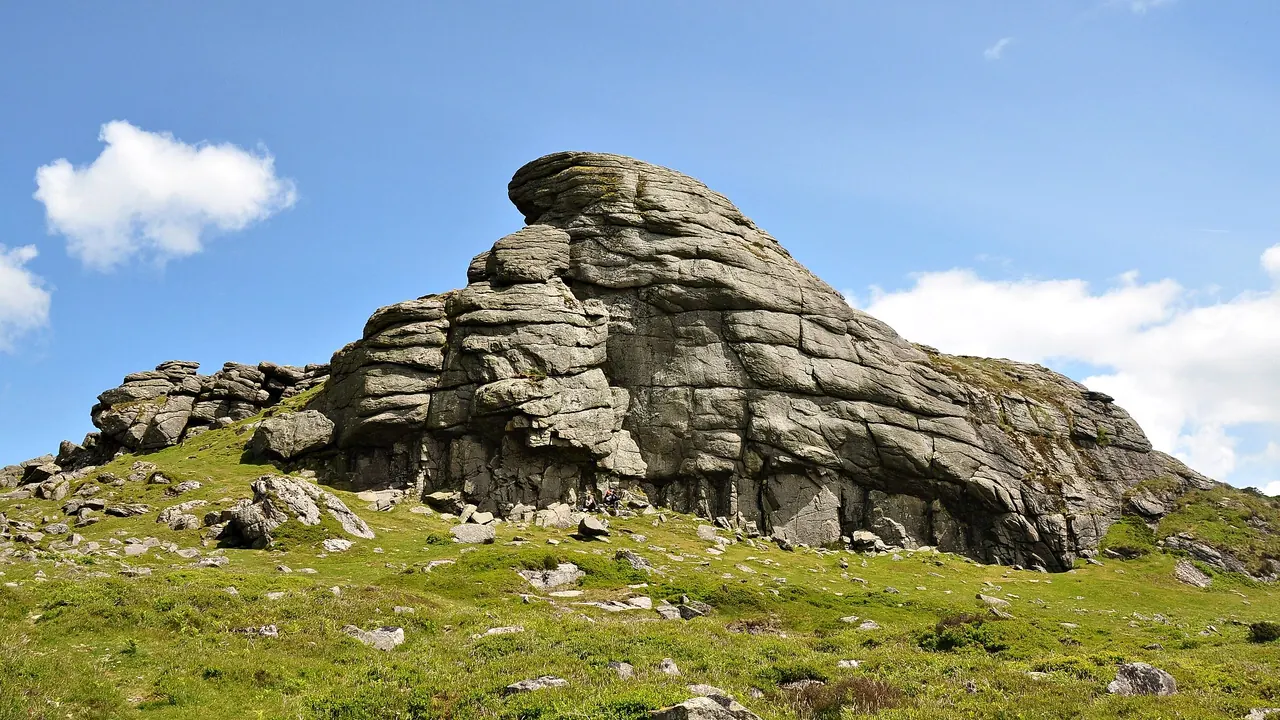
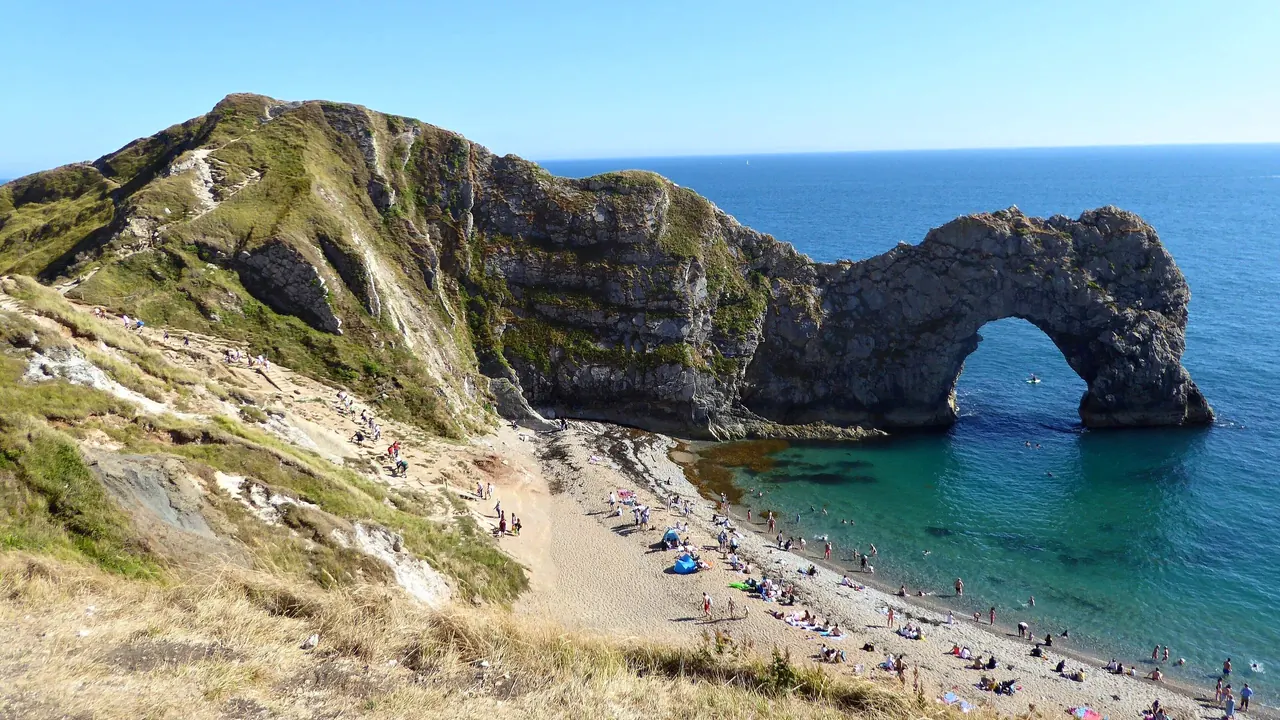
Photos: Devon by Nilfanion, CC BY-SA 3.0, cropped; Jurassic Coast by Ethan Doyle White, CC BY-SA 4.0, cropped.
Devon or Jurassic Coast?
Our verdict in twelve categories, each scored against the same fixed benchmark cities, and the climate month by month, so you can choose for your trip.
Choose Devon for
- live music and the arts
- day trips
- culture and sights
Devon suits travellers who want more than one kind of landscape and some town life in the evenings. It gives you two coasts, the open moorland of Dartmoor at its centre, and two proper cities, Exeter and Plymouth, with a cathedral, a big theatre and the widest choice of restaurants in either destination. It also has more day trips, from Bath by train to Cornwall over the Tamar, so a week or two here rarely feels repetitive.
Choose Jurassic Coast for
Jurassic Coast does not lead in any category we score.
The Jurassic Coast is the narrower and quieter choice, and that is its appeal. It is one long coastline with one subject, its rocks, and the trip is built around Durdle Door, Lulworth, Chesil Beach and fossil hunting below the cliffs at Charmouth and Lyme Regis. Come for walking, geology and early nights in a harbour pub, and accept that culture, evening entertainment and restaurant choice are all thinner than in Devon.
Scoreboard
Twelve categories on one fixed scale from 0 to 100. The shaded stretch is the gap between the two.
Your match
Pick a travel style or drag the sliders, and both match scores follow your weighting.
Wins on live music and the arts and day trips with your weighting.
Has no clear advantage with the weighting you have chosen.
What matters to you?
Category by category
What the scores mean for a trip.
Beaches & swimming
The two are level for beaches, and they even share some: Exmouth and Sidmouth sit on Devon's south coast and at the western end of the Jurassic Coast. The difference is in the sand. Devon has the Atlantic surf beaches of Woolacombe, Saunton and Croyde, and sheltered estuary sand around Bantham and Bigbury.
The Jurassic Coast's middle stretch is mostly steep shingle at Lulworth, Durdle Door and Charmouth, with clear water but little paddling. Its easy sand is at the two ends, in Weymouth's bay and Studland's dunes. The sea is equally cold on both.
Food & drink
Devon eats a little better and over a wider area. Brixham supplies the fish, Dartmouth and the South Hams harbours have the best tables, and Exeter and Plymouth add restaurants of every kind.
The Jurassic Coast offers similar produce, from crab and cream teas to cider, with Dorset Blue Vinny and local sparkling wine of its own. Its range is narrower, though, and the good cooking is concentrated around Bridport and Lyme Bay, with little beyond pub menus in the quieter villages.
Culture & sights
Devon has clearly more to see. Exeter Cathedral, with its long Gothic vault, and Plymouth's Elizabethan Barbican give it two real city centres, and Castle Drogo, Buckland Abbey and Greenway add country houses within reach.
On the Jurassic Coast, heritage is smaller and mostly about fossils: Mary Anning's Lyme Regis and its museum, plus the ruins of Corfe Castle. Thomas Hardy's Dorchester and Maiden Castle are just inland. It is worth a visit, but it rarely fills a rainy week.
Nightlife
Neither destination is for late nights, but Devon at least has Exeter and Plymouth, where students keep the Barbican and Union Street busy at weekends. On the Jurassic Coast, Weymouth's seafront strip is the only option, and anyone wanting more drives to Bournemouth. Expect an early night in Lyme Regis or Swanage.
Nature & outdoors
Both are excellent for the outdoors, and they share the stretch of coast around Sidmouth and Beer, but the landscapes differ. Devon has wild interiors as well as coast: Dartmoor's granite tors and ponies, Exmoor's high sea cliffs and red deer, surf at Croyde and long cycle trails.
The Jurassic Coast is a single line of cliffs, and the drama is geological: Durdle Door, Chesil Beach, the chalk stacks of Old Harry Rocks and the switchback path over Golden Cap. Fossil hunting, climbing on Portland and sailing in Weymouth Bay take the place of moorland, and the hills are gentler.
Day trips
Devon has more to reach. Bath is an easy train ride from Exeter, Cornwall's Eden Project and Fowey open up from Plymouth, and inside the county there are the river boat trip down the Dart, cobbled Clovelly and the sail to Lundy.
From the Jurassic Coast, outings mostly head inland to Dorset market towns such as Sherborne and Shaftesbury, or by chain ferry to Poole Harbour and Brownsea Island. Salisbury and Stonehenge need a longer drive. Exeter is the nearest city, which says something about where the bigger trips are.
Good for families
Both have been doing the classic family seaside for generations and are about equal for children. Devon has more big attractions, with Paignton Zoo and Plymouth's National Marine Aquarium, plus lifeguarded sand and Dartmoor ponies.
The Jurassic Coast has the more memorable activity, hunting for fossils at Charmouth, along with Weymouth's donkeys and the tank museum at Bovington. Its steep cliff paths and rockfalls mean closer watching of small children.
Getting around
You will want a car in either. Devon's advantage is a main rail line linking Exeter, Plymouth and Torbay, though its high-hedged single-track lanes test any driver.
The Jurassic Coast is longer than it looks, about two and a half hours from end to end, and its buses run in stages with changes. Without a car, the sensible plan is to base yourself in one town and walk the coast path between bus stops.
Shopping & style
Neither is a shopping destination, but Devon has slightly more: alternative Totnes, Honiton's antiques, galleries in Dartmouth and Salcombe, and city high streets in Exeter and Plymouth. On the Jurassic Coast, Bridport's street market and vintage quarter are the best of it, and polished ammonites from Lyme Regis are the souvenir you cannot buy in Devon.
Affordability
Costs are much the same: both are pricey in July and August, when cottages in the prettiest harbours and villages charge peak rates and parking fees add up. The cheaper bases differ. In Devon, Torbay, Plymouth and the inland villages give more for the money. On the Jurassic Coast, the savings are in Weymouth and the campsites and caravan parks.
Live music & performing arts
Devon has a real stage in Plymouth's Theatre Royal, with touring opera, ballet and musicals. Exeter adds the Northcott Theatre, cathedral evensong and concerts, and Dartington has its summer music.
The Jurassic Coast offers summer shows at Weymouth's pavilion, small arts venues in Lyme Regis and Bridport, and folk in the pubs. For anything larger, people drive to Exeter or Poole.
Wellness & relaxation
Neither has a spa tradition to build a trip around, and in both the real rest comes from the pace: a long day on the cliffs, a quick, cold swim and an unhurried evening in a cottage. Devon gives you a little more on top of that. It has more hotels with spas, in grand houses and above the sea, and in Plymouth there is Tinside Lido, a 1930s seawater pool on the Hoe where you can swim outdoors without facing the waves.
The Jurassic Coast offers less to book. Its few hotel spas and occasional yoga retreats inland are thinner on the ground. It is better suited to doing very little, since its small harbour villages and Purbeck hamlets go quiet once high summer has passed.
When should you go?
Pick your month. The climate figures are measured averages, not a forecast.
Devon in July
Jurassic Coast in July
Daytime high, °C
Rainfall in the month, mm
Where the figures come from
Devon's temperatures are measured 31 km from the centre, at Exeter Airport.
Devon has no rain gauge within 25 km of the centre, so its rainfall comes from a gridded climate dataset read at the destination rather than from a gauge further away.
Devon's sunshine is measured 44 km from the centre, at Plymouth.
Jurassic Coast's temperatures are measured 66 km from the centre, at Bournemouth Airport.
Jurassic Coast has no rain gauge within 25 km of the centre, so its rainfall comes from a gridded climate dataset read at the destination rather than from a gauge further away.
Temperature and rainfall are climate normals, averaged over the years shown. Devon: 1973-2025 (sunshine 1981-2010, rainfall 1991-2020) normals, Exeter Airport (31.1 km from centre). Jurassic Coast: 1991-2020 normals, Bournemouth Airport (65.7 km from centre).
The two share almost the same weather, so the season is the same for both. July and August are the warmest months, with highs of about 22°C, and June and September are only a little cooler. The sea warms slowly and peaks at around 17°C in late summer, so swimming is a short dip from July to September. May to August bring the most sunshine. It is never too hot for walking, which makes spring and early autumn good for the coast path and the moors.
The difference shows outside summer. Devon is noticeably wetter from October to January, with about 100mm or more a month, and its moorland interior can be fogbound in any season. The Jurassic Coast is a little drier through the year, especially in early spring, so March and April walking there tends to stay drier underfoot. Winter is mild on both coasts but grey and short of sun, which suits a quiet cottage stay better than a beach trip.
Which traveller are you?
On a culture and arts trip, Devon is the stronger choice. Exeter Cathedral, Plymouth's Barbican and Theatre Royal, Dartington's music and a ring of country houses give you far more to see and hear than the Jurassic Coast's small museums and Corfe Castle.
For a food and nightlife trip, choose Devon. Dartmouth's harbour restaurants, Brixham's fish and the wider choice in Exeter and Plymouth go further than Bridport and Lyme Bay, and only Devon's two cities have a real night out after dinner.
For fossil hunters and anyone drawn by geology, the Jurassic Coast is the place. The beaches at Charmouth and Lyme Regis give up ammonites after winter storms, guided walks help beginners, and the cliffs from Exmouth to Old Harry Rocks lay out 185 million years in order.
Before you go
| Measure | Devon | Jurassic Coast |
|---|---|---|
| Official language | English | English |
| Currency | Pound Sterling (GBP) | Pound Sterling (GBP) |
| Sockets | G230 V, 50 Hz | G230 V, 50 Hz |
| Driving side | Left | Left |
| Time zone | UTC, UTC+1 in summer | UTC, UTC+1 in summer |
| Emergency number | 112 or 999 | 112 or 999 |
| Main airport | Exeter International Airport (EXT)25 non-stop destinations | Exeter International Airport (EXT)25 non-stop destinations |
| Public holidays this year | 8 days | 8 days |
By the numbers
| Measure | Devon | Jurassic Coast |
|---|---|---|
| Population | 1,209,773 | - |
| People per km² | 180 | - |
| Swim season, months above 21 °C | None | None |
Where else could you go?
Every comparison below shares a destination with this one, so you can follow Devon or Jurassic Coast somewhere new.
- Isle of Wightvs Jurassic Coast
- Cornwallvs Devon
- Cotswoldsvs Jurassic Coast
- Isle of Wightvs Devon
- Cornwallvs Jurassic Coast
- Pembrokeshirevs Devon