United Kingdom
Jurassic Coast
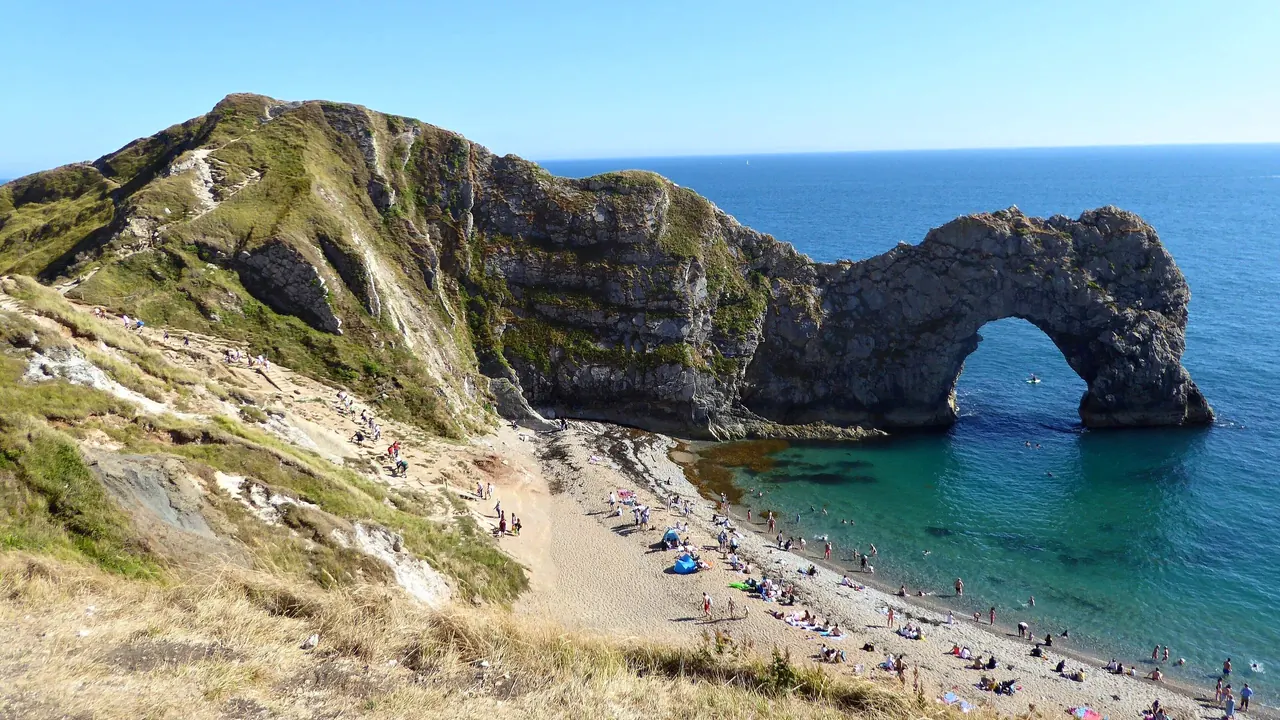
Durdle Door above its beach on a summer day
- Nature & outdoors77
- Families66
- Day trips58
Photo: Ethan Doyle White, CC BY-SA 4.0, cropped
Match
41
Every category weighted equally
- Beach & sun43
- Culture & arts37
- Food & nightlife33
- Family trip48
- Outdoors50
- Relax & unwind44
- Shopping & style36
- On a budget40
Jurassic Coast in twelve categories
Our verdict on each, scored 0 to 100 against the same fixed benchmark cities, so a score means the same thing on every page.
Beaches & swimming. Scores 44 out of 100.
Food & drink. Scores 44 out of 100.
Culture & sights. Scores 38 out of 100.
Nightlife. Scores 15 out of 100.
Nature & outdoors. Scores 77 out of 100.
Day trips. Scores 58 out of 100.
Good for families. Scores 66 out of 100.
Getting around. Scores 33 out of 100.
Shopping & style. Scores 26 out of 100.
Affordability. Scores 35 out of 100.
Live music & performing arts. Scores 20 out of 100.
Wellness & relaxation. Scores 34 out of 100.
Jurassic Coast category by category
Beaches & swimming
44In summer this is a real seaside region, and the beach is the centre of many stays here. The best sand is at the two ends. Studland Bay in Purbeck has long, shallow beaches backed by dunes. Weymouth has a wide, gently shelving bay. Exmouth and Sidmouth have red-cliffed beaches in the west. In between, Lulworth Cove, Durdle Door and Charmouth are mostly shingle, with clear water that shelves steeply.
The sea is cool. It reaches about 17°C in August and September and is bracing before July. Swimming is a short dip rather than a long float, and the beaches feel busiest from July to early September. Families looking for easy, safe paddling should stay at Weymouth or Studland.
Food & drink
44Food here is about local produce rather than a city restaurant scene. The coast lands crab, lobster, mackerel and scallops. Crab sandwiches, fish and chips and simple seafood shacks on the harbours at West Bay, Lyme Regis and Weymouth are the classic meals. Inland Dorset adds cream teas, Dorset Blue Vinny cheese, apple cake and local cider. Vineyards on the county's chalk slopes make English sparkling wine, and several open for tastings.
Bridport, with its big street market, is the region's food town. Lyme Regis and the Purbeck villages have some serious seafood kitchens and good country pubs. Range is narrow, though, and quiet villages offer little beyond pub menus, so food lovers do best basing themselves around Bridport and Lyme Bay.
Culture & sights
38The heritage here is modest and scattered, and much of it is tied to fossils. Lyme Regis is where Mary Anning made her finds, and its small museum and the Charmouth heritage centre explain the coast's 185 million years of rock. The grandest single sight is the ruined Corfe Castle above its stone village in Purbeck. Portland has a Tudor castle and the quarries that supplied St Paul's Cathedral.
Dorchester, just inland, is Thomas Hardy's town, with the county museum, Roman remains and the vast Iron Age ramparts of Maiden Castle nearby. Pretty Georgian resorts like Sidmouth and Lyme Regis add to the charm, but this is not a place to come for museums.
Nightlife
15Evenings here mean a pint in a harbour or village pub, perhaps with a folk session, and an early night. Weymouth is the only town with a seafront strip of bars and a couple of late venues, busiest on summer weekends and with stag and hen groups. Elsewhere, in Lyme Regis, Swanage or the Purbeck villages, things wind down by eleven. Anyone wanting a real night out has to go beyond the coast to Bournemouth.
Nature & outdoors
77This is the region's reason to exist as a destination. Ninety-five miles of cliffs between Exmouth and Studland expose 185 million years of geology in order. There are red Triassic sandstone in Devon, crumbling dark cliffs full of ammonites around Charmouth and Lyme Regis, and chalk and limestone in Purbeck. Durdle Door, Lulworth Cove, the shingle bank of Chesil Beach and the chalk stacks of Old Harry Rocks are among the best-known coastal landforms in Britain.
The South West Coast Path runs the whole length, steep and switchback around Golden Cap and Lulworth. Fossil hunting on the beaches after winter storms is the signature activity. Portland adds sea-cliff climbing and Weymouth Bay has excellent sailing, while kayaking and coasteering run in summer. Hills are rolling rather than high.
Day trips
58The best day trips here head inland into country towns. Exeter, with its cathedral and quayside, is close to the western end. Dorchester and Bridport are easy from the middle of the coast, and abbey-town Sherborne and hilltop Shaftesbury are under an hour from Weymouth. From Purbeck, the chain ferry crosses to Poole Harbour, where boats run to Brownsea Island. The steam railway from Swanage runs through the Purbeck Hills.
Salisbury's cathedral and Stonehenge make a longer outing of about one and a half hours by car from the eastern end. Most trips work best by car, since the inland towns are poorly linked to the coast by rail.
Good for families
66Families have long come here for traditional British seaside vacations, and it suits children well. Weymouth has a sandy bay with donkey rides and sandcastle sculptors, plus a sea-life centre. Studland's shallow water is ideal for small children. Fossil hunting at Charmouth, with guided walks, is the experience children remember most. Inland in Purbeck there are a primate rescue park, a large tank museum at Bovington and the Swanage steam railway.
It is safe and relaxed, and self-catering cottages and campsites are geared to families. Downsides are the cool sea, rainy days, and steep cliff paths and falling rock, which mean small children need close watching on some beaches.
Getting around
33Most visitors drive, and a car makes the region much easier to see. The coast is longer than it looks. Exmouth to Weymouth takes about an hour and a half, and getting from there to Studland takes about another hour, either round Poole Harbour or inland via Wareham. Most roads are winding country lanes that clog in summer, and the car parks at Lulworth, Durdle Door and the small resorts fill early.
Trains reach Exmouth, Axminster, Weymouth and Wareham. Buses link the coast in stages: from Exeter along the Devon end to Seaton and Lyme Regis, then on through Bridport to Weymouth, usually with a change around Lyme Regis or Axminster. In Purbeck, buses and the steam railway serve Swanage and Corfe. Without a car, the best plan is to stay in one town and walk the coast path between bus stops. The towns are small and easy to walk round, though many are steep.
Shopping & style
26Shopping here is small-town and browsing. Bridport is the best of it, with its large street market, an antiques and vintage quarter and independent food shops. Lyme Regis and Charmouth sell fossils and polished ammonites. Elsewhere there are local galleries, pottery, and the usual seaside gift and rock shops in Weymouth and Swanage. There are no big-name shopping streets anywhere along the coast.
Affordability
35In the main summer season this is a fairly expensive place to stay. Self-catering cottages and small hotels in Lyme Regis, Purbeck and the prettier villages book up and charge peak rates in July and August, and short stays can be hard to find. Weymouth and the campsites and caravan parks are much cheaper. Pub meals and fish and chips keep everyday eating manageable, and most of the region's big draws, the coast path, the beaches and the fossil hunting, are free. Car parking at popular spots is a steady extra cost.
Live music & performing arts
20The performing-arts offer is small. Weymouth has a seafront pavilion theatre with touring comedy and summer shows, and Lyme Regis and Bridport have small arts venues and cinemas. There are also folk nights in pubs and a calendar of small summer music, folk and literary festivals in the market towns. For orchestral music or larger productions, visitors go beyond the coast to Poole or Exeter.
Wellness & relaxation
34There is no spa or bathing tradition here. Wellness comes down to a handful of country-house and seafront hotel spas, a few yoga retreats in the Dorset hills, and some cold-water sea swimming groups. What the region does offer is calm. Outside the August crowds, villages like Beer, Charmouth and the Purbeck hamlets are quiet and slow-paced. A stay in a cottage, with walking by day and the pub by night, is restful, but those looking for treatments and bathhouses will find little.
Where to stay in Jurassic Coast
The coast is long and slow to drive, so most visitors choose one or two bases rather than moving every night. For a first visit, the middle and east work best. Weymouth is the practical family choice, with a wide sandy bay, gentle water, the only real evening strip of bars, a railway station and cheaper beds, plus Durdle Door, Lulworth and Portland close by. Purbeck, around Swanage, Corfe and Studland, suits families after shallow sand and walkers drawn to the chalk cliffs, though cottages there cost more and book up early.
Lyme Regis and Bridport share Lyme Bay and make the best base for food, fossil hunting and the steep coast path around Golden Cap. Lyme Regis is the Georgian harbour town with the fossil shops and museum. Bridport, just inland, has the market and the widest choice of places to eat. Charmouth, between them, is smaller and quieter.
The Devon end, at Sidmouth, Beer and Exmouth, makes a calm second visit, with red cliffs, early evenings and Exeter nearby. To see the whole coast in one trip, split the stay between Lyme Bay and Purbeck or Weymouth. The drive between them takes around an hour and a half.
When should you go?
Pick a month to see what it is like. The climate figures are measured averages, not a forecast.
Jurassic Coast in July
Daytime high, °C
Rainfall in the month, mm
The whole year
Shaded against this destination’s own year: the deepest cell is its best month for that figure and the palest its weakest.
Where the figures come from
Jurassic Coast's temperatures are measured 66 km from the centre, at Bournemouth Airport.
Jurassic Coast has no rain gauge within 25 km of the centre, so its rainfall comes from a gridded climate dataset read at the destination rather than from a gauge further away.
Temperature and rainfall are climate normals, averaged over the years shown. Jurassic Coast: 1991-2020 normals, Bournemouth Airport (65.7 km from centre).
Before you go
| Measure | Jurassic Coast |
|---|---|
| Official language | English |
| Currency | Pound Sterling (GBP) |
| Sockets | G230 V, 50 Hz |
| Driving side | Left |
| Time zone | UTC, UTC+1 in summer |
| Emergency number | 112 or 999 |
| Main airport | Exeter International Airport (EXT)25 non-stop destinations |
| Public holidays this year | 8 days |
By the numbers
| Measure | Jurassic Coast |
|---|---|
| Swim season, months above 21 °C | None |
Compare Jurassic Coast with
Every comparison with a written verdict behind it.
- Brittany
- Cornwall
- Cotswolds
- Devon
- Isle of Skye
- Isle of Wight
- Isles of Scilly
- Lake District
- Loire Valley
- Normandy
- Northumberland
- Orkney
- Peak District
- Pembrokeshire
- Scottish Highlands
- Snowdonia
- Yorkshire Dales