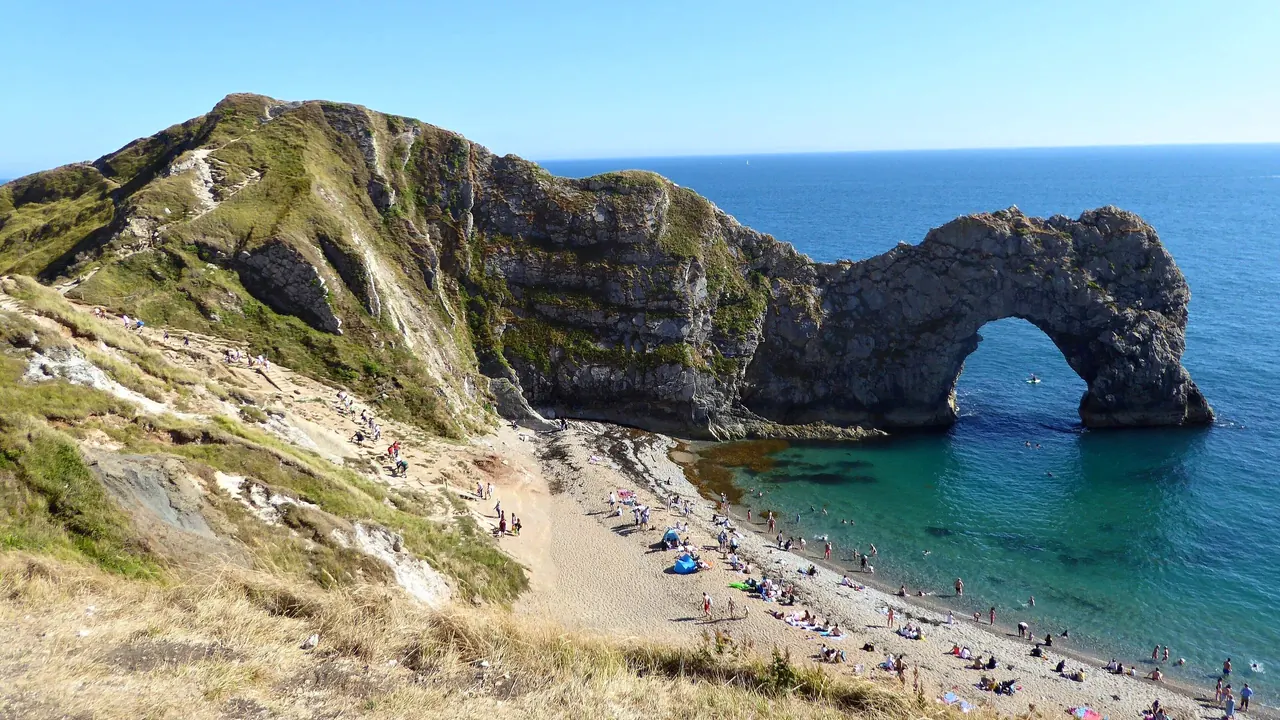
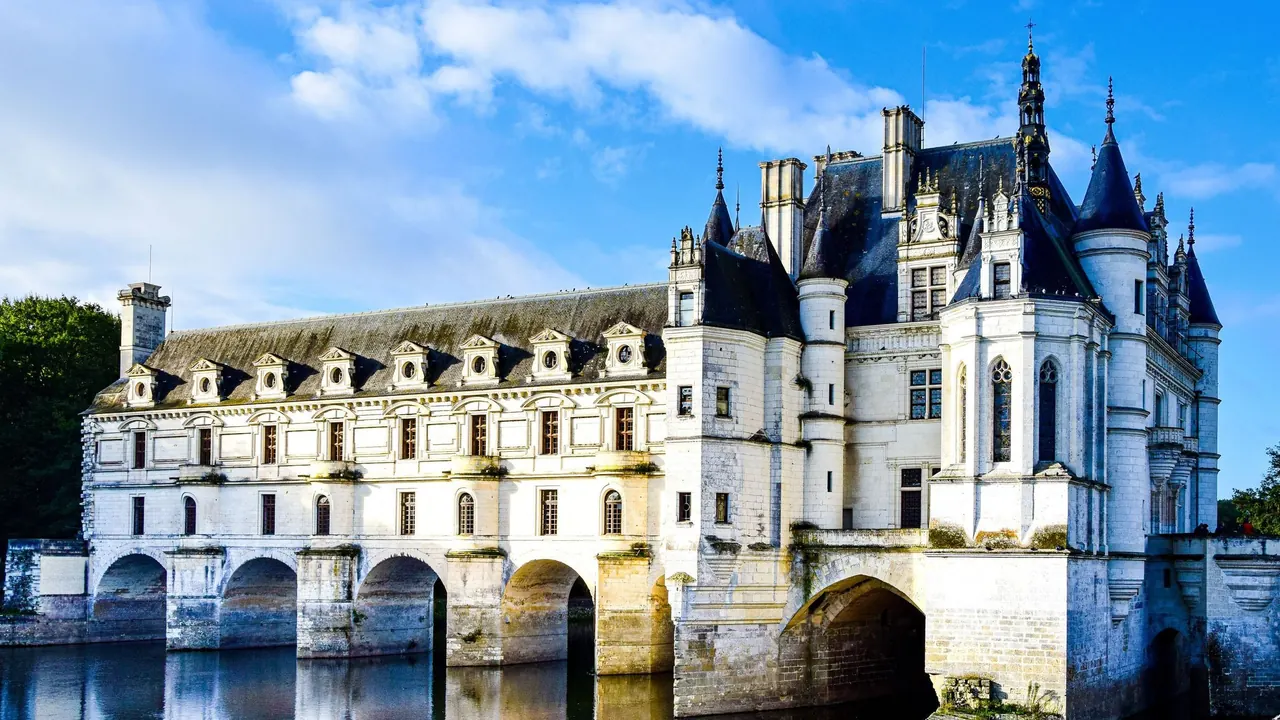
Photos: Jurassic Coast by Ethan Doyle White, CC BY-SA 4.0, cropped; Loire Valley by AXP Photography, Pexels License.
Jurassic Coast or Loire Valley?
Our verdict in twelve categories, each scored against the same fixed benchmark cities, and the climate month by month, so you can choose for your trip.
Choose Jurassic Coast for
- beaches
- nature and the outdoors
Choose the Jurassic Coast if the trip is about being outdoors by the sea. You can walk the cliff path between Golden Cap and Lulworth, hunt ammonites on the beach at Charmouth and spend summer afternoons on the sand at Studland or Weymouth. It suits walkers, families who want a traditional British seaside vacation and anyone happy with pub evenings. You will almost certainly need a car, though, and the water stays cool.
Choose Loire Valley for
- culture and sights
- day trips
- food and drink
The Loire Valley is the better pick if you want sights, food and wine: Renaissance châteaux, Fontevraud and Angers, wine cellars cut into the tufa and the town markets of Tours and Saumur. You can stay in one place and take a different outing each day. The riverside railway and cycle route make it easier to get around without driving, and it costs a little less. There is no beach to speak of.
Scoreboard
Twelve categories on one fixed scale from 0 to 100. The shaded stretch is the gap between the two.
Your match
Pick a travel style or drag the sliders, and both match scores follow your weighting.
Wins on beaches and nature and the outdoors with your weighting.
Wins on culture and sights and day trips with your weighting.
What matters to you?
Category by category
What the scores mean for a trip.
Beaches & swimming
The Jurassic Coast is a real seaside destination. Studland and Weymouth have sandy bays, Exmouth and Sidmouth have red-cliffed beaches, and Lulworth and Durdle Door have steep shingle and clear water. The sea is cool even at its warmest, so swims are short.
The Loire Valley has no beach at all. The river's currents and sandbanks make it dangerous to swim in, and the Atlantic beaches west of Nantes are a long drive from the château country. Swimming there means a lake with lifeguards, such as the Lac de Maine, or the pool at your rental.
Food & drink
Both regions cook with their own produce, but the Loire Valley has far more depth. Its wines run the length of the river, from Sancerre and Vouvray to Chinon reds and sparkling Saumur. The food matches them: rillettes, river fish in beurre blanc and goat cheeses, with serious restaurants in Tours and Angers.
The Jurassic Coast keeps things simpler. You get crab sandwiches and fish and chips on the harbours at West Bay and Lyme Regis, cream teas and Blue Vinny cheese inland, and some English sparkling wine. Away from Bridport and Lyme Bay, the choice is mostly pub menus.
Culture & sights
The Jurassic Coast's heritage is scattered and small. It has Mary Anning's fossil story in Lyme Regis, the ruins of Corfe Castle, Hardy's Dorchester and the Iron Age ramparts of Maiden Castle. These fill a rainy day well but are not a reason to come.
The Loire Valley is the reverse, a region people visit mainly for its sights. Its UNESCO-listed stretch of Renaissance châteaux is led by Chambord and Chenonceau, and Leonardo's last home at Clos Lucé is here too. Behind them come the medieval abbey of Fontevraud and the castles of Chinon and Angers. There is more here than a week can comfortably take in.
Nightlife
Neither region suits a big night out, but the Loire Valley has a little more going on. In Tours, students fill the café-bar terraces around Place Plumereau, with a few late bars and small clubs nearby, and Angers has a similar quarter. On the Jurassic Coast an evening means a harbour pub, perhaps with a folk session. Weymouth's seafront bars are the only late option, and the nearest proper night out is in Bournemouth.
Nature & outdoors
Nature is where the Jurassic Coast wins outright. Its cliffs show 185 million years of rock, from red sandstone in Devon to chalk in Purbeck, and Durdle Door, Chesil Beach and Old Harry Rocks are among the best-known landforms in Britain. The coast path, fossil hunting, Portland's sea cliffs and sailing in Weymouth Bay give plenty to do.
The Loire is softer and flatter, with willow-lined sandbanks, cliffs full of cave dwellings, vineyards and the forests and ponds of the Sologne. The best outdoor days are on the Loire à Vélo bike route or in a canoe among the river islands, pleasant rather than dramatic.
Day trips
The Loire Valley is made for day trips. From Tours you can easily reach Amboise, Blois, Chinon, Loches, Saumur and the troglodyte cave villages. Chartres is about two hours away, and Paris about an hour by high-speed train.
Day trips from the Jurassic Coast head inland, to Exeter's cathedral, Sherborne and Shaftesbury, by boat from Poole to Brownsea Island, or on the Swanage steam railway. Salisbury and Stonehenge take longer to reach. The choice is good but smaller, and most trips need a car.
Good for families
Both regions suit children, in different ways, and the Loire is slightly ahead. The Jurassic Coast is the classic bucket-and-spade choice, with Studland's shallow water, Weymouth's sandy bay, guided fossil hunts at Charmouth and the tank museum at Bovington. Against that, the sea is cold and some cliffs and beaches need close watching.
The Loire Valley offers a full day at the ZooParc de Beauval, Leonardo's machines at Clos Lucé and the magic museum facing the château in Blois. Its flat cycle route suits young riders, and many gîtes have pools. Too many formal interiors will test children's patience, though.
Getting around
The Loire Valley is the easier region to get around. Good roads put most sights within an hour of each other, and a regional railway links Orléans, Blois, Amboise, Tours, Saumur and Angers. The riverside cycle route, with luggage sent ahead, makes the bicycle a real alternative to driving.
The Jurassic Coast is long and slow by road. The lanes clog in summer, and the car parks at Lulworth fill early. Buses cover the coast in stages, so without a car the sensible plan is to stay in one town and explore the coast path on foot.
Shopping & style
Neither region is a shopping destination, and in both the best buys are local. The Loire comes out ahead with wine from the cellar doors, cheeses from the markets, Gien faience and a proper choice of shops in old Tours. On the Jurassic Coast you get Bridport's market and antiques quarter, fossils and polished ammonites at Lyme Regis and Charmouth, and seaside gift shops elsewhere.
Affordability
The Loire Valley is easier on a budget. Town hotels and gîtes are moderately priced, and set lunches and cellar-door wine are good value. The château entrance fees add up quickly over a few days, though.
On the Jurassic Coast, cottages in Lyme Regis and Purbeck charge peak rates in July and August, and parking is a steady extra cost. The coast path, beaches and fossil hunting cost nothing, and Weymouth and the campsites are cheaper places to stay.
Live music & performing arts
The Loire Valley has the fuller programme, with sound-and-light shows at Blois and Amboise, chamber music at the medieval Grange de Meslay, the Angers street-arts festival and opera in Tours. The Jurassic Coast has Weymouth's seafront pavilion theatre, small venues in Lyme Regis and Bridport and folk nights in pubs. For concerts or larger productions, you have to travel to Poole or Exeter.
Wellness & relaxation
Neither region has a spa tradition, so both offer calm more than treatments. In the Loire this means spas in converted châteaux and manor houses, often with treatments based on grapes and wine, plus long lunches and walks in the gardens of Villandry and Chaumont. On the Jurassic Coast it means a quiet cottage in Beer or Charmouth, walking by day and cold sea swims with local groups, with only a few hotel spas.
When should you go?
Pick your month. The climate figures are measured averages, not a forecast.
Jurassic Coast in July
Loire Valley in July
Daytime high, °C
Rainfall in the month, mm
Where the figures come from
Jurassic Coast's temperatures are measured 66 km from the centre, at Bournemouth Airport.
Jurassic Coast has no rain gauge within 25 km of the centre, so its rainfall comes from a gridded climate dataset read at the destination rather than from a gauge further away.
Temperature and rainfall are climate normals, averaged over the years shown. Jurassic Coast: 1991-2020 normals, Bournemouth Airport (65.7 km from centre). Loire Valley: 1991-2020 normals, Tours (20.4 km from centre).
On the Jurassic Coast, summer is short and mild. July and August reach about 22°C, warm enough for the beach on a sunny day. The sea is least bracing in August and September, though a swim is still a quick dip. From October the rain sets in heavily, close to 95mm a month through to December. The best walking months are late spring and early autumn, and May to July bring the longest, brightest days.
The Loire Valley is warmer and drier through the summer. July and August reach around 26°C and have the lowest rainfall of the year, with plenty of sun for long days on the bike, though early afternoons can be warm for walking around town. May, June and September are the most comfortable months for touring towns and vineyards. From November to February both regions are cool and dull, and neither is at its best.
Which traveller are you?
On a beach and sun trip, the Jurassic Coast is the one to pick. Summer days can be built around the sand, with a picnic, a short bracing swim and a cliff walk when cloud comes over. The Loire is inland, and a real beach day means a long drive west.
For a culture and arts trip, the Loire Valley is far richer. You could see a different great château or abbey every day for a week without repeating yourself, and summer evenings add concerts and light shows. On the Jurassic Coast, the sights fill a rainy afternoon.
On an outdoors trip, the Jurassic Coast suits anyone who wants to feel the effort: long, hilly days on foot with the sea always in view, and time on the water in summer. The Loire's outdoors is gentle, better for steady pedalling between vineyards and towns.
Before you go
| Measure | Jurassic Coast | Loire Valley |
|---|---|---|
| Official language | English | French |
| Currency | Pound Sterling (GBP) | Euro (EUR) |
| Sockets | G230 V, 50 Hz | CE230 V, 50 Hz |
| Driving side | Left | Right |
| Time zone | UTC, UTC+1 in summer | UTC+1, UTC+2 in summer |
| Emergency number | 112 or 999 | 112 |
| Main airport | Exeter International Airport (EXT)25 non-stop destinations | Tours Val de Loire Airport (TUF)5 non-stop destinations |
| Public holidays this year | 8 days | 11 days |
By the numbers
| Measure | Jurassic Coast | Loire Valley |
|---|---|---|
| Swim season, months above 21 °C | None | - |
Where else could you go?
Every comparison below shares a destination with this one, so you can follow Jurassic Coast or Loire Valley somewhere new.
- Devonvs Jurassic Coast
- Isle of Wightvs Jurassic Coast
- Cotswoldsvs Jurassic Coast
- Cornwallvs Jurassic Coast
- Pembrokeshirevs Jurassic Coast
- Normandyvs Jurassic Coast