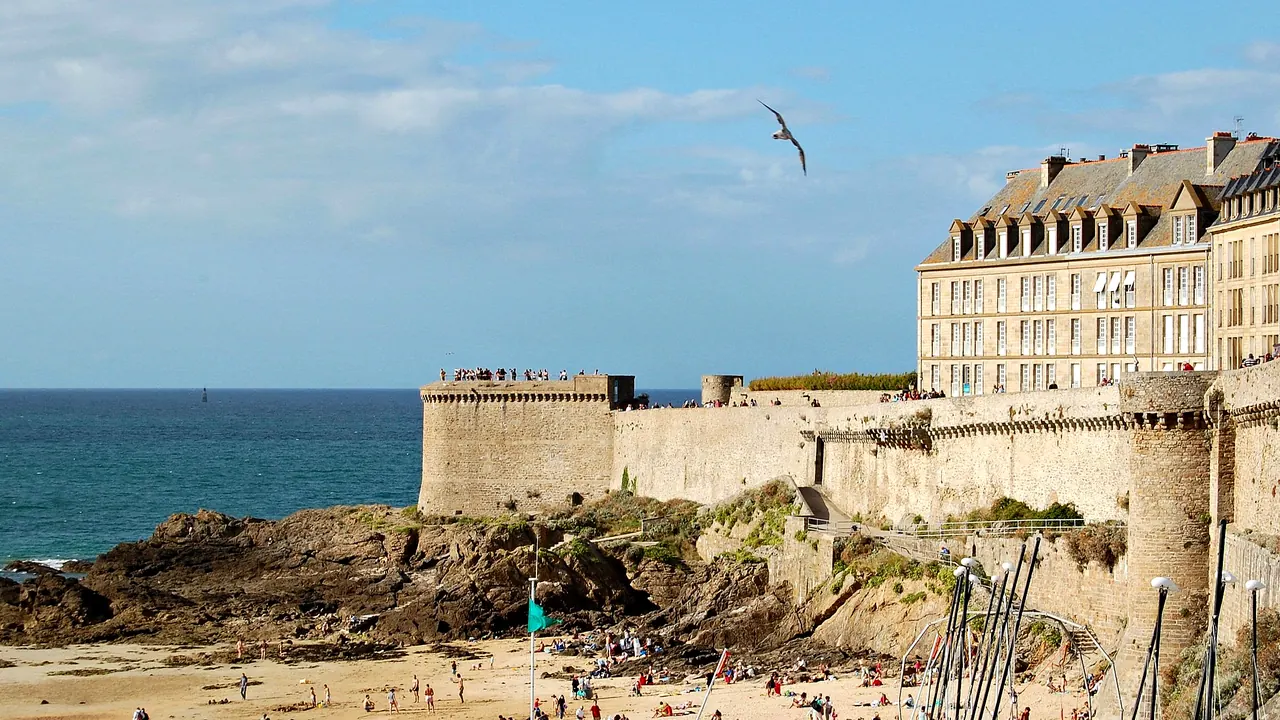
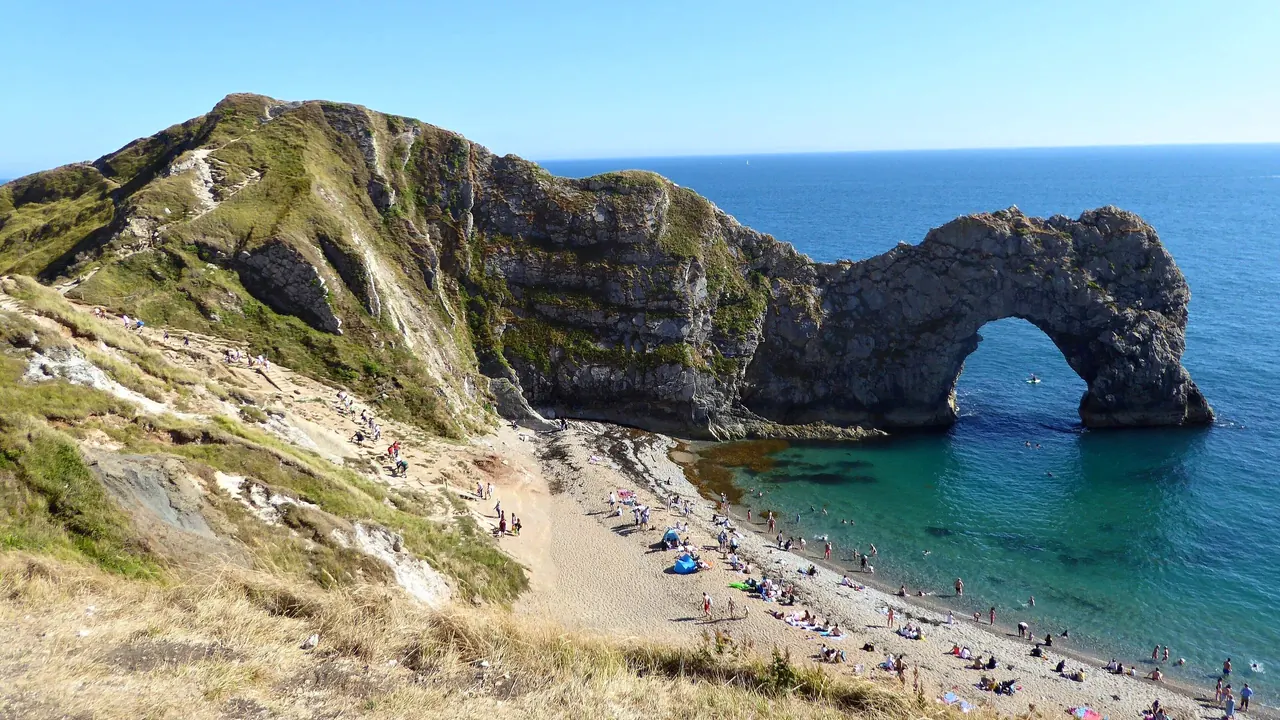
Photos: Brittany by Pline, CC BY-SA 3.0, cropped; Jurassic Coast by Ethan Doyle White, CC BY-SA 4.0, cropped.
Brittany or Jurassic Coast?
Our verdict in twelve categories, each scored against the same fixed benchmark cities, and the climate month by month, so you can choose for your trip.
Choose Brittany for
- live music and the arts
- wellness
- culture and sights
Brittany is the fuller vacation of the two. Its coast is longer and sandier, and behind it sit the menhirs of Carnac, walled towns such as Saint-Malo, Dinan and Concarneau, oyster ports and a Celtic music culture that is still very much alive. It suits travellers who want the beach by day and towns, seafood and perhaps a fest-noz in the evening. It also suits anyone who would like a seawater spa or a boat out to Belle-Île or Bréhat as part of the stay.
Choose Jurassic Coast for
- nature and the outdoors
Pick the Jurassic Coast if the cliffs themselves are the reason for going. Between Exmouth and Studland, Durdle Door, Lulworth Cove, Chesil Beach and the ammonite beaches at Charmouth make a coastline every bit as striking as Brittany's, and fossil hunting gives it an activity that Brittany does not have. It is for walkers and families who are happy with a cottage, the coast path and a pub supper, and who can manage without much nightlife, many museums or a choice of shops.
Scoreboard
Twelve categories on one fixed scale from 0 to 100. The shaded stretch is the gap between the two.
Your match
Pick a travel style or drag the sliders, and both match scores follow your weighting.
Wins on live music and the arts and wellness with your weighting.
Wins on nature and the outdoors with your weighting.
What matters to you?
Category by category
What the scores mean for a trip.
Beaches & swimming
Brittany has more sand and more choice. There are wide bays at Carnac, Quiberon and Bénodet, the long beaches of the Crozon peninsula and the pink granite coves of Ploumanac'h. Along much of the Jurassic Coast, though, the beaches between Lulworth and Charmouth are shingle and shelve steeply, and the gentle sand is found only at Studland and Weymouth.
The water is cool in both places. Brittany's sheltered Gulf of Morbihan is a degree or two kinder, but its big tides mean you need to check the timetable before choosing a beach.
Food & drink
Brittany eats considerably better. It has Cancale oysters, scallops from Saint-Brieuc, buckwheat galettes with cider served in a bowl, salted-butter pastries, and a proper restaurant scene in Rennes around the Place des Lices market.
The Jurassic Coast's best meals are simpler. Think crab sandwiches and fish and chips on the harbours at West Bay and Lyme Regis, Blue Vinny cheese and cream teas inland, and tastings of English sparkling wine. Away from Bridport and Lyme Bay, the village pub menu is usually all there is.
Culture & sights
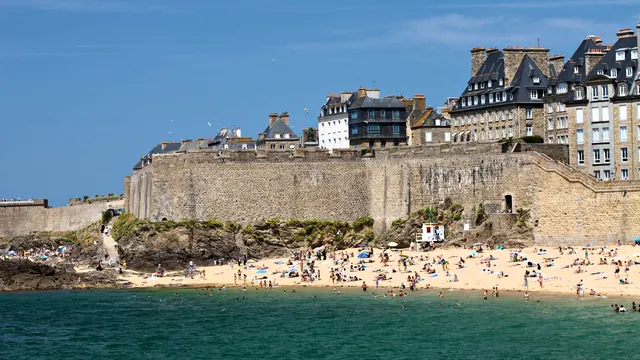
Brittany has much more history to visit. Carnac's thousands of menhirs are among Europe's great prehistoric sites, and Saint-Malo, Dinan, Josselin and Concarneau's Ville Close add ramparts, castles and half-timbered streets. The parish closes of Finistère show a distinct Breton identity.
On the Jurassic Coast the story is mostly told in rock. The main sights are the fossil displays at Lyme Regis and Charmouth, the ruin of Corfe Castle and Maiden Castle near Dorchester. Neither region is a museum destination, but Brittany gives you far more towns worth an afternoon.
Nightlife
Neither coast is built for late nights, but Brittany does have Rennes, where students fill the bars of Rue Saint-Michel from Thursday and a few clubs stay open late. Its village fest-noz dances make for a night out you will not find elsewhere.
On the Jurassic Coast, Weymouth's seafront is the only strip of bars, and most villages close up by eleven. The pleasures here are a folk session in a harbour pub and an early night.
Nature & outdoors
These two are evenly matched outdoors, and the difference is the kind of coast. Brittany's GR34 passes granite headlands at Pointe du Raz and Cap Fréhel and looks out over islands such as Ouessant and the Glénan. It adds the gannets of the Sept-Îles, surf on the Finistère beaches and kayaking among the islands of the Gulf of Morbihan.
The South West Coast Path is steeper and more varied in its rock. It runs from red Devon sandstone through ammonite-rich clay to the chalk of Durdle Door and Old Harry Rocks, and fossil hunting and Portland's sea-cliff climbing give it a character of its own.
Day trips
Brittany is the better base for outings, largely because of the sea. Ferries and boats run to Belle-Île, Île aux Moines, flower-covered Bréhat and Ouessant. Mont-Saint-Michel is about an hour from Saint-Malo, and Quimper, Locronan and Pont-Aven make an easy loop in the west.
On the Jurassic Coast the trips mostly head inland, to Exeter, Sherborne or Shaftesbury, or across Poole Harbour to Brownsea Island. Salisbury and Stonehenge make the longest and best-known day out. Almost all of these need a car.
Good for families
Both are traditional seaside regions with campsites and cottages built around families, and Brittany has the slight edge. It offers sandy rock-pool beaches, sailing schools for children and Océanopolis in Brest for wet days.
The Jurassic Coast's highlight for children is fossil hunting at Charmouth. Add donkeys on Weymouth sands, the tank museum at Bovington and the Swanage steam railway. Its steep cliffs and falling rock call for closer watching than most Breton beaches.
Getting around
Brittany is noticeably easier to get around. Fast trains reach Rennes, regional lines continue to Saint-Malo, Vannes, Quimper and Brest, and the dual carriageways are free of tolls. You still need a car for the villages and megaliths.
On the Jurassic Coast, the drive from end to end is longer than the map suggests. The roads are winding lanes that clog in summer, and the car parks at Lulworth and Durdle Door fill early. Without a car, you have to piece the coast together from buses in stages.
Shopping & style
Neither is a shopping destination, but Brittany has more to take home. You can buy Quimper faience, striped sailor tops, Guérande salt and salted caramels, and Rennes has department stores and its big Saturday market. On the Jurassic Coast the best of the shopping is Bridport's street market and antiques quarter, polished ammonites in Lyme Regis, and seaside gift shops.
Affordability
Brittany is the cheaper of the two. Gîtes, campsites, crêperies and markets keep daily costs moderate, and only the seafood platters and the summer resorts push the bills up. June and September are easier still.
In high summer, cottages in Lyme Regis and Purbeck charge peak rates and short stays are hard to find, and parking adds up day after day. The free coast path and beaches, and the cheaper beds in Weymouth, help to soften the cost.
Live music & performing arts
Brittany's living Celtic tradition gives it far more to hear. There are bagad pipe bands and fest-noz dances, and summer brings the Festival Interceltique in Lorient, Les Vieilles Charrues and the Festival de Cornouaille. Rennes adds an opera house, a national theatre and the Transmusicales in December.
On the Jurassic Coast, live performance means Weymouth's pavilion theatre, pub folk nights and small summer festivals in the market towns. For anything bigger you have to go to Poole or Exeter.
Wellness & relaxation
Brittany has a real spa tradition. Thalassotherapy began at Roscoff, and seawater spas with heated pools and algae wraps line the seafronts of Quiberon, Carnac, Dinard and Perros-Guirec.
The Jurassic Coast has no bathing culture beyond a few hotel spas and cold-water swimming groups. What it offers instead is quiet. A cottage in Beer or a Purbeck hamlet outside August, with walking by day, is restful, but there is little in the way of treatments.
When should you go?
Pick your month. The climate figures are measured averages, not a forecast.
Brittany in July
Jurassic Coast in July
Daytime high, °C
Rainfall in the month, mm
Where the figures come from
Brittany has no rain gauge within 25 km of the centre, so its rainfall comes from a gridded climate dataset read at the destination rather than from a gauge further away.
Brittany's sunshine is measured 89 km from the centre, at Rennes.
Jurassic Coast's temperatures are measured 66 km from the centre, at Bournemouth Airport.
Jurassic Coast has no rain gauge within 25 km of the centre, so its rainfall comes from a gridded climate dataset read at the destination rather than from a gauge further away.
Temperature and rainfall are climate normals, averaged over the years shown. Brittany: 2004-2020 (sunshine 1991-2020, rainfall 1991-2020) normals, Vannes-Meucon (8.1 km from centre). Jurassic Coast: 1991-2020 normals, Bournemouth Airport (65.7 km from centre).
The two coasts follow the same Atlantic rhythm. Only July and August are warm enough for the beach to feel like summer, and even then a swim is brisk. Brittany runs a little warmer, with highs around 24°C in July and the sea at 18°C. On the Jurassic Coast the July high is nearer 22°C and the sea only reaches 17°C, in August and September. Neither place ever gets too hot for walking, and spring and early autumn are the best months for the coast paths.
On the Breton coast the sunshine lasts longer into September, while the Dorset and Devon shore dims sooner. In both places the rain arrives in October. It peaks in Brittany in November at about 121mm, and winters are mild but grey and wet. Winter on the Jurassic Coast does have one reward: the storms bring down fresh fossils from the cliffs.
Which traveller are you?
On a culture and arts trip, Brittany is the clear choice: the stone rows of Carnac, the ramparts of Vitré, Quimper's cathedral and, in summer, the Lorient and Cornouaille festivals. The Jurassic Coast has Corfe Castle, Hardy's Dorchester and little live performance.
For a relaxing and wellness trip, Brittany suits a rest built around being looked after: a week of seawater treatments in a calm spring or autumn, with a day on car-free Bréhat. On the Jurassic Coast you make your own calm, and a yoga retreat in the Dorset hills is the closest thing to a programme.
For fossil hunters, the Jurassic Coast has no rival here. Ammonites wash out of the cliffs at Charmouth and Lyme Regis after storms, guided walks show you where to look, and Lyme's museum tells Mary Anning's story. Brittany's granite shore offers nothing comparable.
Before you go
| Measure | Brittany | Jurassic Coast |
|---|---|---|
| Official language | French | English |
| Currency | Euro (EUR) | Pound Sterling (GBP) |
| Sockets | CE230 V, 50 Hz | G230 V, 50 Hz |
| Driving side | Right | Left |
| Time zone | UTC+1, UTC+2 in summer | UTC, UTC+1 in summer |
| Emergency number | 112 | 112 or 999 |
| Main airport | Nantes Atlantique Airport (NTE)97 non-stop destinations | Exeter International Airport (EXT)25 non-stop destinations |
| Public holidays this year | 11 days | 8 days |
By the numbers
| Measure | Brittany | Jurassic Coast |
|---|---|---|
| Population | 4,687,381 | - |
| Swim season, months above 21 °C | None | None |
Where else could you go?
Every comparison below shares a destination with this one, so you can follow Brittany or Jurassic Coast somewhere new.
- Devonvs Jurassic Coast
- Isle of Wightvs Jurassic Coast
- Cotswoldsvs Jurassic Coast
- Cornwallvs Jurassic Coast
- Pembrokeshirevs Jurassic Coast
- Normandyvs Jurassic Coast